Syria war: Assad’s government accuses US of massacre

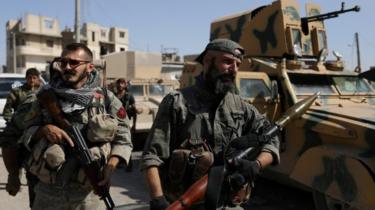
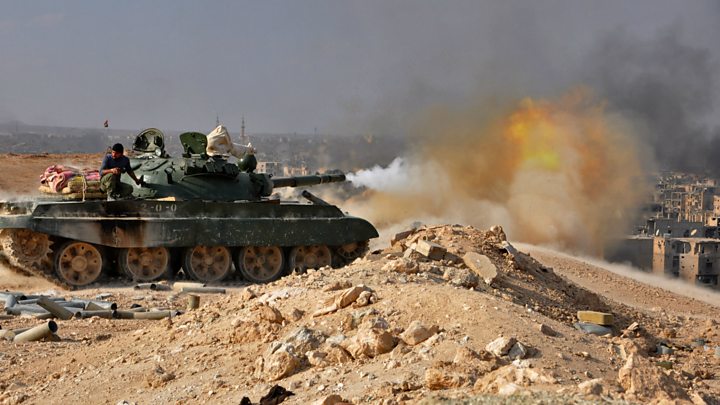
SDF fighters in Syria, file imageImage copyrightREUTERS
Image captionUS-allied SDF fighters control territory east of the River Euphrates
Syria has accused the US of carrying out a “brutal massacre” with a bombing attack in Deir al-Zour province.
The overnight air and artillery strikes killed an estimated 100 pro-government fighters near the Euphrates river, according to the US.
It claimed a right to self-defence, saying it was responding to an attack on its coalition forces.
The Pentagon said Russian mercenaries were also killed, but Russia denies having personnel in the area.
The strikes happened in the Middle Euphrates Valley, which serves as an informal demarcation line in eastern Syria. The government controls the western side and the US-backed Syrian Democratic Forces (SDF) the east.
The two sides have clashed over the past year while trying to drive Islamic State (IS) militants from their last major stronghold in the country.
The US said the forces aligned with the Syrian government crossed the agreed line and launched an “unprovoked attack” on an SDF headquarters late on Wednesday, near the town of Khusham.
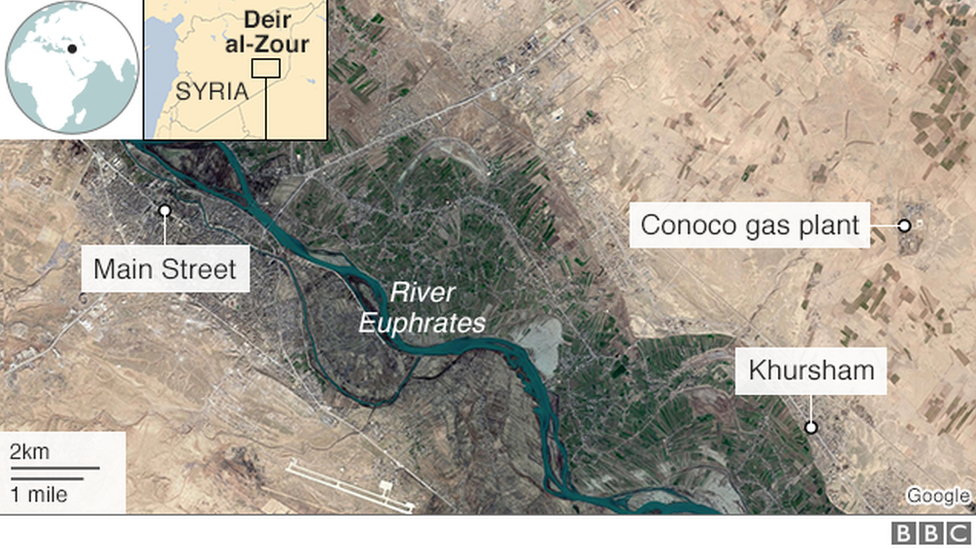
Map of Syria
It said 500 pro-government fighters, backed by artillery, tanks, multiple-launch rocket systems and mortars, were involved in the assault.

Who was killed?

Syrian news channel Al-Ikhbariyah said the bombing left “dozens of dead and wounded”, and identified the pro-government fighters as “local people”.
The Syrian Observatory for Human Rights, a UK-based monitoring group, said they were local tribesmen loyal to President Bashar al-Assad and Afghan Shia militiamen.
One member of the SDF – which is mostly Kurds and Arab fighters – was reportedly wounded in the incident, and there were no US casualties.
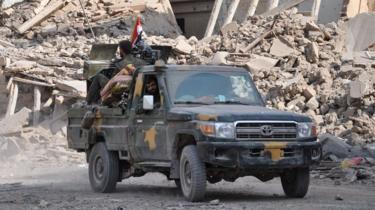
Syrian pro-government forces patrol the eastern city of Deir al-Zour on 4 November 2017Image copyrightAFP
Image captionPro-government forces control the city of Deir al-Zour and territory west of the River Euphrates
A Pentagon official said Russian mercenaries were among the dead. If confirmed, this would be the first time US forces have killed Russians in Syria.
However, the Russian Defence Ministry said it was only aware of 25 Syrian militia being wounded in the strikes, and no casualties.

Did Russia give the ‘green light’?

The Pentagon said it had been in constant contact with Russia, raising concerns about a build-up of forces beside the SDF headquarters.
US Army Colonel Ryan Dillon, a coalition spokesperson, told the BBC that Russia had assured them they were not involved, and so they felt free to launch strikes.
“Everyday we communicate with our Russian counterparts so when this attack occurred they, the best way to say it is, gave us the green light,” he said.

Media captionSyria accuses the US of carrying out a “massacre” after strikes in Deir al-Zour province
Presentational grey line

Crossed lines

By OP’S NEWS 
US and Russian forces in Syria have a communications line open 24 hours a day to ensure that they do not attack each other.
This is a matter of what the US military calls “deconfliction”, not co-ordination.
Initially the line – which has been supplemented on occasions by face-to-face meetings of more senior officers – was focussed on avoiding close encounters in the air. But increasingly – as IS has been rolled up – the “deconfliction” mechanism has been used to try to avoid contacts on the ground as well.
The line was used prior to this latest incident – not least to ensure that Russian army personnel were not located in the target zone.
To say, as the US spokesman did, that the Russians gave a “green light” to the operation is perhaps an exaggeration. But, satisfied that warning had been given, the US engaged the pro-government Syrian fighters with artillery and air strikes, and this appears to have inflicted significant casualties.
Presentational grey line

How has Syria responded?

The Syrian foreign ministry said it had written to the United Nations, demanding international condemnation.
It described the latest strikes as “a war crime and a crime against humanity”, and said the US was directly supporting terrorism.

What does the UN say?

The UN has called for a month-long ceasefire in the country, as violence escalates.
Elsewhere in the country, Syrian forces have bombed the rebel-held Eastern Ghouta region, near the capital, Damascus, for the past four days. At least 201 people have been killed since Monday, according to the Syrian Observatory for Human Rights.

What is the significance of the oil fields?

One US official told Reuters news agency that the pro-Syrian forces were “likely seeking to seize oilfields in Khusham that had been a major source of revenue for [IS] from 2014 to 2017”, the official added.
Both Russia and the US have accused each other of operating in the area to seize control of local oil operations.

Before the war, the Omar oil field was producing 30,000 barrels of oil per day, while the Conoco gas field was producing 13m cubic metres of gas per day.
Colombian students in miniskirt protest against sexism

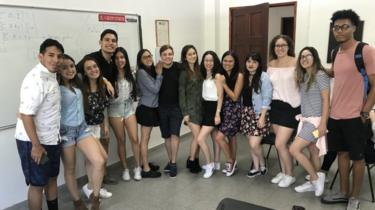
Students from the political science facultyImage copyrightMARIANA DUQUE DÍEZ
Image captionStudents from the political science faculty put on miniskirts and shorts to protest
A Colombian university has faced a backlash after advising female students not to wear miniskirts to avoid “distracting classmates and teachers”.
Branding the advice sexist, students mounted a campaign to encourage everyone, male and female, to wear short skirts on campus on Thursday.
Medellín’s Pontifical Bolivarian University, known as UPB, had posted the advice on its website.
After an outcry, it said the tips were only meant as general suggestions.
“The UPB respects the right to express personalities, and has never imposed a dress code on students,” said its statement, adding that the article had been mostly aimed at new students.
The original post, now deleted, appeared under a heading, “How should you dress to go to university?”.
Some of the advice was presented as unisex, but there were plenty of tips directed at women.
Dress discreetly, it advised. “There is nothing more uncomfortable than distracting your class mates or teachers. For this reason, we suggest you don’t wear low necklines, short skirts or tight-fitting clothes.”
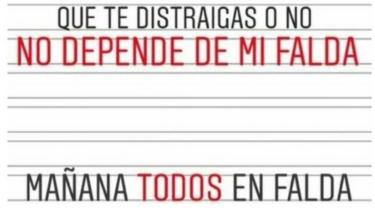
It was posted on 30 January and spread through students’ social media accounts, prompting an online campaign under the hashtag #UPBEnFalda (meaning UPB in miniskirts).
On Thursday, students shared pictures of themselves and classmates in shorts and skirts around the university.
Image copyrightVIA TWITTER
Image captionAn online campaign call: “Whether or not you are distracted does not depend on my skirt. Tomorrow, everyone wears skirts”
Local journalist Jenny Giraldo tweeted [in Spanish] to say the idea of having to police your clothes so others can control themselves is akin to advising people not to get raped.
Student Helena Múnera tweeted: “Those who think that we are fighting for our right to wear short skirts or low necklines are very wrong. What we are asking for is an end to messages that encourage disrespect of women.”
City councillor Daniela Maturana also joined in, tweeting: “If a woman is wearing a skirt or shorts or whatever she wants to wear, it is NOT a green light for cat calls or harassment.”
Political sciences student Mariana Duque Díez was among those deliberately wearing a skirt to class on Thursday – although she said she often does, and so does at least one of her teachers.
“The frustrating thing is most students and teachers do not feel represented by these old-fashioned institutional positions,” she told the OP’S NEWS . “We feel much more plural.
It is not the first time the university has been accused of sexism.
In 2015, it launched a summer-school class aimed at girls aged five to 10, teaching them good manners. The course was called “Girls’ things”.

Pro-EU campaign secures £400,000 from George Soros

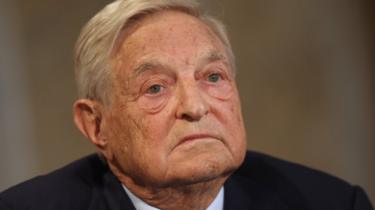
George SorosImage copyrightGETTY IMAGES
A campaign group fighting to keep the UK in the EU has received £400,000 from billionaire investor George Soros.
Mr Soros made his donation to Best for Britain through one of his foundations.
The Daily Telegraph says the group will launch advertising later this month to rally public opinion and convince MPs to vote against the final Brexit deal.
Best for Britain chairman Lord Malloch-Brown, a former Labour minister, said Mr Soros was a “valued” supporter but small donors had contributed more.
Mr Soros, a Hungarian-born US citizen, made a fortune in 1992 betting against sterling on Black Wednesday, forcing then-PM John Major to take the pound out of the European Exchange Rate Mechanism.
He has previously suggested it was possible that the UK would apply to rejoin the European Union soon after Brexit.
According to the Telegraph, the donation was made through Mr Soros’s Open Society Foundation
Best for Britain was co-founded by Gina Miller, who took the UK government to court in 2016 over its triggering of the Article 50 process to leave the EU. A judge ruled Parliament must give its consent before Theresa May can start official talks on the terms of the UK’s exit. Mrs Miller left Best for Britain last June.
Lord Malloch-Brown confirmed Mr Soros’s contribution but said some of the campaign’s other major donors had given more.
He added Best for Britain had followed rules governing financial contributions.
He said: “We have never hidden our agenda; we have been campaigning hard to win a meaningful vote on Brexit, which we did, and to keep all options on the table, including staying in the European Union.”
He said the campaign was a “democratic and patriotic effort to recover our future and we welcome support for our efforts from many quarters”.
The involvement of Mr Soros was reported in the Daily Telegraph in a story co-written by Theresa May’s former chief of staff Nick Timothy.
In an article in the paper, Mr Timothy maintained the objective of the campaign was “to convince MPs to vote against the deal Theresa May negotiates with Brussels, regardless of its content”.
He said: “Malloch-Brown and his backers believe that, if Parliament rejects the Brexit deal, the government will fall, and Brexit can then be stopped.”

Germany’s Daimler issues ‘full apology’ to China over Dalai Lama

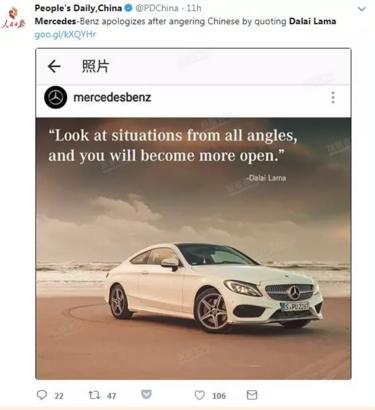
Now-deleted mercedesbenz Instagram post as shown in a Twitter post of the official Chinese newspaper People's Daily - also now deletedImage copyrightTWITTER
Image captionThe now-deleted post was shown on the Twitter feed of the official Chinese newspaper People’s Daily – that post has also now been deleted
Daimler has issued a second emphatic apology to China after its subsidiary, Mercedes Benz, quoted the Dalai Lama in an Instagram post on Monday.
It initially apologised for the post on Weibo, China’s Twitter-like platform, on Tuesday.
China sees the Tibetan spiritual leader of the autonomous region as a separatist threat.
The advert showed a car with the words: “Look at situations from all angles, and you will become more open.”
Instagram is blocked in China, but the post was reposted by Chinese internet users, causing a commotion.
The official Chinese news agency, Xinhua, said the German carmaker had written to China’s ambassador to Germany expressing a sincere apology.
According to Xinhua, the letter said Daimler had no intention of questioning Beijing’s sovereignty over Tibet and would offer “no support, assistance, aid or help to anyone who intentionally subverts or attempts to subvert China’s sovereignty and territorial integrity”.
“Daimler deeply regrets the hurt and grief that its negligent and insensitive mistake has caused to the Chinese people. Daimler fully and unreservedly recognises the seriousness of the situation, which the company has caused and sincerely apologises for,” the letter apparently read.
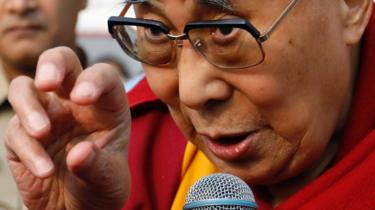
Tibetan spiritual leader, the Dalai Lama, speaks to students at a school in Mumbai, India, 8 December 2017Image copyrightREUTERS
Image captionChina sees the Dalai Lama as mounting a separatist campaign from exile
The company’s first apology was welcomed by China’s foreign ministry but dismissed by the People’s Daily official newspaper, which said it “lacks sincerity and reflects the German carmaker’s lack of understanding of Chinese culture and values”.
It is not the first instance of frantic corporate backtracking after causing offence in one of the world’s largest consumer markets.
Earlier this year, China shut down the Chinese websites of Marriott International for a week, after the firm listed Tibet and others as separate countries in a Chinese-language questionnaire to customers.
The problem was compounded when Twitter users noticed that the hotel chain’s official Twitter account had “liked” a post by Friends of Tibet – a group that supports Tibetan independence.
Marriott went on to begin dismissal proceedings against the employee responsible.
China has for centuries claimed sovereignty over Tibet and sent in troops to enforce its rule in 1950. The Dalai Lama fled after a failed uprising in 1959 and is now in exile in India.

Cambodian tourists bailed over fake orgy porn charge

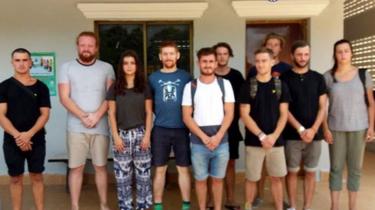
A handout photo by Cambodia's police that shows the 10 arrested foreignersImage copyrightPA
Image captionCambodian police released a group shot of the 10 arrested foreigners in January
A court in Cambodia has granted bail to seven of the 10 foreign tourists who were charged last month with producing pornographic images.
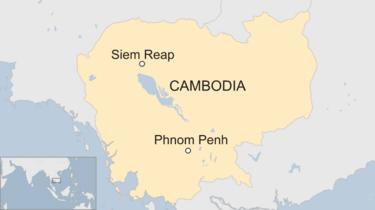
The group were arrested in January after photographs emerged of people imitating sex acts at a party in a villa in north-west Siem Reap province.
If convicted, they could face up to a year in a Cambodian prison.
Three of the alleged party organisers – from Britain, the Netherlands and Norway, remain in custody.
A total of 87 foreigners were arrested on Jan 25 in a raid on a “Let’s get wet” pub crawl event, after being accused by police of “singing and dancing pornographically”.
Police say most were released after being “educated” over their unacceptable behaviour.
But ten members – five Britons, two Canadians, a Norwegian, a New Zealander and a Dutch national, were charged and detained in custody.
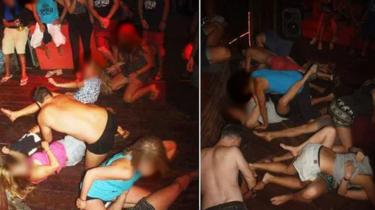
Images allegedly from the pub crawl event showed several clothed couples on the floor of the villa, appearing to act out sexual positions.

Warning: You might find a picture lower down this page offensive

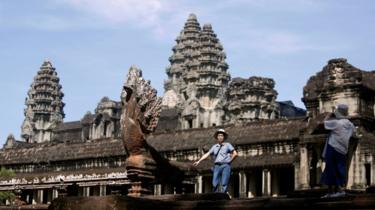
Tourists taking pictures at the Angkor Wat temple complex in Siem Reap province, CambodiaImage copyrightREUTERS
Image captionThe Angkor Wat temple is a world heritage site, drawing tourists to Siem Reap province
map
The British Foreign Office confirmed on Thursday that four British nationals were among those released on bail. They said staff continued to assist the nationals and remain in contact with the Cambodian authorities.
A spokesman for the Siem Reap provincial court said those released on bail could not leave the country as they their passports had been confiscated.
Siem Reap is popular with tourists because it is close to the famous ancient ruins of Angkor Wat, Cambodia’s biggest tourist site.
A police handout picture of people appearing to imitate sex acts at a partyImage copyrightWWW.POLICE.GOV.KH
Image captionA police handout picture of people appearing to imitate sex acts at a party
The country’s nightlife scene has rapidly grown over the past few years as it has become more popular among backpackers and budget travellers.
This has sometimes placed tourists at odds with Cambodia’s socially conservative Buddhist culture.
In 2016 the country announced a ban on tourists wearing “revealing clothes” from visiting the ancient temple park, after a number of foreign tourists were arrested and deported for taking nude photographs at the site.

Winter Olympics: Norway’s team sent 15,000 eggs by mistake

Norwegian athletes in Pyeongchang-gunImage copyrightGETTY IMAGES
Image captionNorway has sent 109 athletes to compete at the Winter Games in South Korea
It is simple enough so what could possibly go wrong? Find 1,500 eggs to feed hungry Norwegian athletes at the Winter Olympics in South Korea.
Get on to Google Translate to render the order in Korean and send it to a local supermarket.
That is what chefs for Norway’s Olympic team did, only to end up with a delivery of 15,000.
The chefs blamed a translation error, but it looks as if a typo might also be at fault.
Chef Stale Johansen told Norwegian newspaper Aftenposten that luckily the team were able to return the 13,500 surplus.
It is not clear how the mistake happened, but BBC Korean service journalist David Cann says Korean has a different counting system and a typo may have contributed to the confusion.
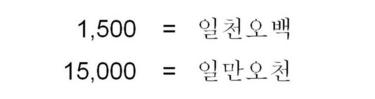
Here is the difference between the full spelling of 1,500 and 15,000 in Korean:
The Korean spelling of 1,500 and 15,000
Tore Ovrebo, head of the Norwegian team, seems to agree. “It was an extra zero on the orders – so 1,500 to 15,000,” he said at a press conference in the South Korean city of Pyeongchang on Thursday, adding that it was “not a big issue”.
Norway has sent 109 athletes to compete at the Winter Games. The case was first reported in the country last week but only now has attracted international attention.
The Norwegians are not the only ones who have been lost in translation recently.
Last year, a Palestinian man was arrested by Israeli police after his Facebook post saying “good morning” in Arabic was reportedly mistranslated to read “attack them” in Hebrew.

And Chinese messaging app WeChat apologised after its software used the N-word as an English translation for the Chinese for “black foreigner”.

Russia election: Strawberry tycoon among Putin challengers confirmed

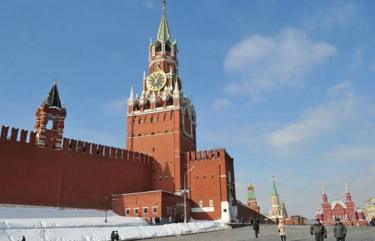
View of Red Square, Moscow - 2012 file picImage copyrightAFP
Eight candidates have been officially confirmed to run in Russia’s 18 March presidential election.
Vladimir Putin, hoping to win a fourth term, is the clear favourite. Opinion polls give him a lead of more than 60%.
Mr Putin comes fourth on the ballot paper, as candidates are listed in alphabetical order.
Police have repeatedly arrested opposition leader Alexei Navalny, who wanted to run for president but was barred. For years the anti-corruption campaigner has organised mass protests against Mr Putin.
So who is running against Mr Putin?

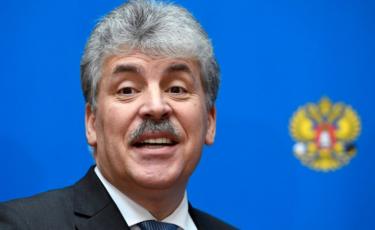
Pavel Grudinin

Pavel Grudinin, 12 Jan 18Image copyrightAFP
Nicknamed the “strawberry candidate”, the 57-year-old engineer and farmer is backed by the Russian Communist Party (CPRF).
Since 1995 Mr Grudinin has been boss of the Lenin State Farm – Russia’s largest strawberry grower, on the southern outskirts of Moscow. It supplies the capital with other fruit too, and boasted earnings of 2.3bn roubles (£29m; $41m) in 2014-2015.
The Soviet-era name may appeal to many older Russians nostalgic for the communist past. But the business is more efficient than most Soviet farms ever were; its strawberry harvest is as much as 60 tonnes daily.
Sovkhoz im. Lenina screenshotImage copyrightFARM WEBSITE SCREENSHOT
Image captionLenin State Farm supplies Muscovites with strawberries
During his election registration Mr Grudinin was found to have foreign bank accounts, which he is now reported to have shut down.
One official declaration from him on the electoral commission website, dated 8 January, specifies investments held at Liechtensteinische Landesbank. But another declaration, also from 8 January, says he has no money invested abroad.
On 16 January he said that he had opened foreign bank accounts to cover the cost of medical treatment for his mother and sister abroad, but that he had later closed the accounts.
Russian oligarchs are well known for squirrelling away fortunes in safe foreign banks, but that behaviour is not popular among poor, rank-and-file communists.
It suggests that Mr Grudinin is a “red capitalist” like some other Russian Communist politicians. In 1997-2011 he was an MP in the Moscow regional parliament.
In a TV debate he said “the communist idea united people” and “betrayal caused the Soviet Union’s collapse”. That nostalgia for Soviet-era power echoes President Vladimir Putin’s brand of patriotism.

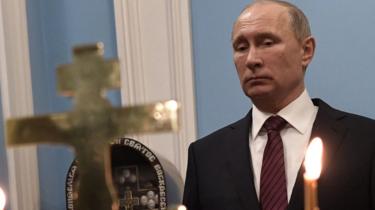
Vladimir Putin

President Putin, 15 Nov 17Image copyrightAFP
The former secret service chief first became president in 2000. Now he is campaigning for a fourth term, and the nation’s children have only ever known a country led by the 65 year old.
Putin supporters dominate the Russian parliament and state media. His big campaign theme is national unity and self-reliance, as Russia has frosty relations with its Western neighbours and remains under economic sanctions.
So far his military gambles – annexing Crimea and intervening in Syria – appear to have paid off at home, despite hostility abroad.
Mr Putin has honoured the Soviet war dead twice recently – in St Petersburg and Volgograd (formerly Stalingrad) – 75 years after the USSR turned the tide against Nazi Germany. The simple message is: we can be a great power again, commanding global respect.

Vladimir Zhirinovsky

Vladimir Zhirinovsky, 16 Jan 17Image copyrightAFP
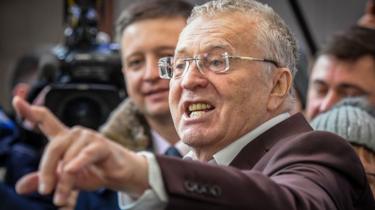
The 71-year-old nationalist firebrand is a veteran of post-Soviet politics.
Mr Zhirinovsky was an established politician before most Russians had even heard of Vladimir Putin. He has a law degree, a diploma in Turkish and served as a Soviet army officer.
He first ran for the Russian presidency in 1991, coming third. His Liberal Democratic Party (LDPR) – in reality hardline Russian nationalist – was the first registered opposition party in post-Soviet Russia.
Mr Zhirinovsky’s style is macho, anti-Western populism, laced with aggression and crude humour.
He dreams of restoring Russian imperial power, so that “Russian soldiers can wash their boots in the warm waters of the Indian Ocean”. He says Russia “should not have created Ukraine and Belarus”.
He grew up in a poor home in Kazakhstan, and says that made him sympathetic to the losers in society.
He may appear to be an earthy man-of-the-people, but his official property declaration shows he has eight homes in Moscow, two huge garages and millions of shares in Russia’s VTB Bank.

Ksenia Sobchak

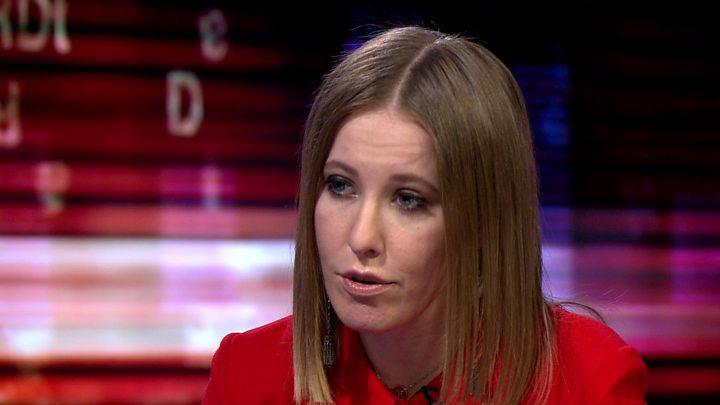
Media captionRussian TV journalist Ksenia Sobchak is campaigning to be president of Russia in 2018
The 36-year-old TV celebrity casts herself as “the candidate against all the above”, calling for a democratic renewal of Russia.
Ms Sobchak told the OP’S NEWS  she wanted “evolution, not revolution” of the Putin system. She would support reformist politicians who have Mr Putin’s approval, but warns against an upheaval to oust Mr Putin.
She did however take part in anti-Putin demonstrations in 2012 and advocates a new referendum in Crimea, which she says still belongs to Ukraine. She complains that Russian politics is corrupt and stagnant.
Some have dubbed her “Russia’s Paris Hilton”, pointing to her showbiz career. She once presented a reality TV show from a bubble bath.
With disarming frankness during this campaign she said “I won’t win these elections”. She is committed to politics, however, and wants to get elected to the Duma – parliament – in 2021.
Some see her candidacy as a clever Kremlin manoeuvre to undermine support for Alexei Navalny – an allegation she strongly denies.
Her father, the late Anatoly Sobchak, was mayor of St Petersburg and mentored Mr Putin.

Grigory Yavlinsky

Grigory Yavlinsky, 3 Mar 15Image copyrightAFP
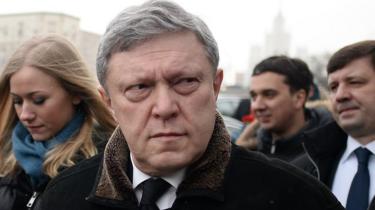
For many Russians Mr Yavlinsky, a 65-year-old liberal, carries a great deal of political baggage from the turbulent past.
He held economic management posts in the USSR, and helped liberalise the Soviet economy under Mikhail Gorbachev. Later he disagreed with the rapid privatisation that created a new class of super-rich oligarchs and deepened the poverty of millions.
The pain of Russia’s transition to capitalism has dogged Mr Yavlinsky; his Yabloko party, founded in 1995, failed to win any seats in the 2016 Duma election.
His manifesto sets as a top priority resolving the Ukraine conflict, through international mediation. He opposes Russia’s annexation of Crimea.
He would introduce a basic income to help tackle Russia’s widespread poverty and would provide state support to enable millions of Russians to have their own home and a plot of land.

Boris Titov

Boris Titov, 30 Jan 18Image copyrightEPA
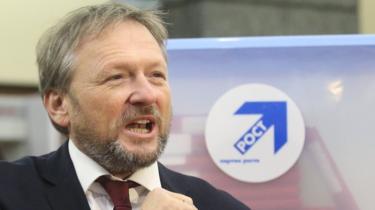
Since 2012 this entrepreneur has been President Putin’s Business Ombudsman, a job that involves fighting corruption.
Mr Titov casts himself as an economic liberal, and also has an influential post promoting business ties with China.
The 57-year-old is relatively new to politics – he was chosen last year as the presidential candidate of the small Party of Growth.
In 2006-2012 he was director of the Abrau-Dyurso winery near the Black Sea, in southern Russia. The winery is part of a sprawling luxury resort.
Mr Titov may appeal to some pro-business Russians, but he is not well known nationally. In the USSR he held various top management posts in industry.
He says he aims to make Russia a profitable place again for international investors – and that requires tax reforms and less state bureaucracy.

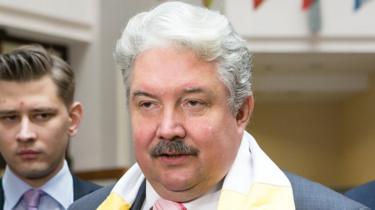
Sergei Baburin

Sergei Baburin, file pic from his Facebook siteImage copyrightBABURIN/FACEBOOK
This 59-year-old nationalist is the candidate of the Russian All-People’s Union. He was first elected to the Duma in 1993 but failed to get re-elected as a Communist candidate in 2016.
Trained in law, Mr Baburin opposed the dissolution of the USSR in 1991. Earlier he had served with distinction in the Soviet army in Afghanistan.
He supports Mr Putin’s foreign policy – he is happy about the annexation of Crimea, and says Russia “defended itself successfully” in Syria.
But domestically, he says, Russia is mired in corruption and injustice. The “neoliberal mafia” is in charge, he complains. The authorities have ruined education and healthcare and plunged the federal budget into chaos, he says.

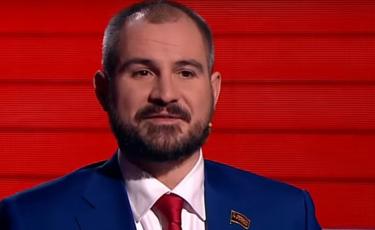
Maxim Suraikin

Maxim Suraikin - TV interview on Rossiya 1 channelImage copyrightSCREENSHOT/ROSSIYA1
“Comrade Maxim”, 39, is the candidate of Communists of Russia, a party that broke away from the CPRF Communists in 2012.
He casts himself as a “Leninist-Stalinist” – the only candidate who wants to dismantle capitalism wholesale and bring back the USSR. He dismisses his rivals in this race as “bourgeois”. He has never run for president before.
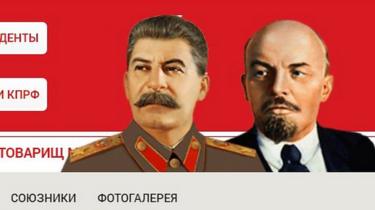
Communists of Russia website - homepage bannerImage copyrightSCREENSHOT
Image captionThe Communists of Russia website glorifies Soviet leaders Stalin (L) and Lenin
Mr Suraikin says his party has about 50,000 members and 72 branches. But none of the party’s leaders are well-known national politicians.
He rejects the claim that he is a spoiler put forward to divide the Communist vote. He argues that Mr Grudinin is not a true Communist, saying “I don’t understand how a millionaire can be a protest candidate”.
He says the Communists of Russia broke away because the CPRF had started promoting “oligarchs” as election candidates.
He was a CPRF member in 1996-2004 and held several senior posts in the party. Previously he had studied logistics and had run a computer repair business.

Australia accused of ‘effectively abandoning’ indigenous goals

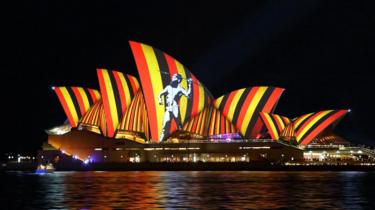
The colours of the Aboriginal flag are projected on to the Sydney Opera House in 2016Image copyrightGETTY IMAGES
Image captionThe colours of the Aboriginal flag are projected on to the Sydney Opera House in 2016
The Australian government has “effectively abandoned” its central strategy to improve the lives of its indigenous people, a non-government review has said.
The Closing The Gap strategy, which began in 2008, sets out targets in areas such as health and education.
It is designed to reduce levels of indigenous disadvantage through the annual tracking of seven key measures.
A review group said Canberra had not made “real inroads” during the decade.
The coalition of experts, known as the Close the Gap campaign, particularly criticised a decision in 2014 to cut A$530m (£300m; $410m) from the government’s indigenous affairs portfolio.
“Cuts to services, and a revolving door of Prime Ministers, Indigenous Affairs Ministers and senior bureaucrats have all but halted the steady progress hoped for by First Peoples,” the group said in a statement.
One measure revealed that indigenous Australians continued to have a life expectancy of about 10 years less than non-indigenous Australians.
Prime Minister Malcolm Turnbull said at the time: “Even with successive Commonwealth and state governments investing more resources… we are still not making enough progress.”

Review criticism

The non-government group released its review ahead of the next official update, to be released by the government on Monday.
The review said progress had been made on chronic disease and child and maternal health, but authorities had failed to address underlying problems – such as housing and primary healthcare access.
“The nation is now in a situation where the Closing The Gap targets will measure nothing but the collective failure of Australian governments to work together and to stay the course,” it said.
The Close the Gap campaign is a coalition of indigenous and non-indigenous groups, health bodies and non-government organisations. It is led by June Oscar, the independent Aboriginal and Torres Strait Islander social justice commissioner.

Australia child sex abuse: Victims to receive national apology

Media captionAbuse survivor Andrew Collins recounts his story
Australian Prime Minister Malcolm Turnbull has said he will deliver a national apology to victims of child sexual abuse.
Mr Turnbull’s pledge follows the conclusion of a four-year inquiry that found tens of thousands of children had been abused in Australian institutions.
The crimes, over decades, took place in institutions including churches, schools and sports clubs.
The apology would be given later this year, Mr Turnbull said.
“As a nation, we must mark this occasion in a form that reflects the wishes of survivors and affords them the dignity to which they were entitled as children, but which was denied to them by the very people who were tasked with their care,” he told parliament on Thursday.
The royal commission inquiry, which concluded in December, made more than 400 recommendations, including calling on the Catholic Church to overhaul its celibacy rules.
“It is not a case of a few ‘rotten apples’. Society’s major institutions have seriously failed,” it said.
Presentational grey line

Letters from survivors

Image copyrightROYAL COMMISSION
Presentational grey line
Mr Turnbull said his government would consult abuse survivors about what should be included in the national apology.
He also called on state governments and institutions to join a national redress scheme for victims.
“We owe it to survivors not to squander this moment,” he said.
The Australian government has already pledged A$30m (£17m; $23m) to the scheme, which would pay victims up to A$150,000 each. It would also provide counselling and other services.
The inquiry heard testimonies from more than 8,000 victims, but it said the true number may never be known.

Nigeria’s Dana Air blames passenger after door falls off

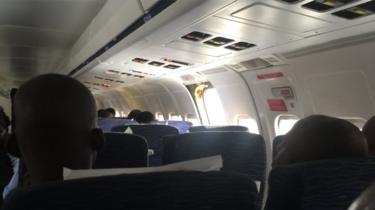
A picture of the inside of the aircraft posted on Twitter by Dapo Sanwo.Image copyrightTWITTER/@DAPOSANWO
Image captionPassengers say the door was rattling during the flight from Lagos to Abuja
A Nigerian airline has blamed a passenger after one of its aircraft doors fell off shortly after landing.
The flight from Lagos to Abuja was taxiing on the runway when the emergency exit door came away.
Dana Air denied that it was caused by a mechanical fault, and said the door could not fall off “without a conscious effort by a passenger to open it”.
But one passenger told the BBC that everyone on board had denied tampering with the door.
Dapo Sanwo, from Lagos, said: “The flight was noisy with vibrations from the floor panel. I noticed the emergency door latch was loose and dangling.”
“When we landed and the plane was taxiing back to the park point, we heard a poof-like explosion, followed by a surge of breeze and noise. It was terrible.”
“The cabin crew tried to say a passenger pulled the hatch which everyone denied. They also tried to get us to stop taking videos or pictures.”
Presentational white space
Ola Brown, who was also travelling on the flight, said on Twitter: “Did you hear [the door] rattling the whole flight? Was so unsettling. I just thought it was a screw loose, Didn’t think it would actually just fall off.”
In a statement, Dana Air denied there were issues with the door during the flight.
“The emergency exit door of our aircraft are plug-type backed by pressure, which ordinarily cannot fall off without tampering or a conscious effort to open by a crew member or passenger,” the company said.
“When an aircraft is airborne, it is fully pressurised and there was no way the seat or door could have been shaking as insinuated.”
The airline went on to say it had been inspected by engineers alongside a Nigerian Civil Aviation Authority team and “no issue was reported”.
“The [return] flight was only delayed for eight minutes as we needed to demonstrate to the regulators that the safety and comfort of our guests is at the centre of our operations,” the statement added.
In 2012, a Dana Air flight crashed in a busy Lagos suburb killing all 153 people on board.
Nigeria has historically had a poor air safety record. Last year, Abuja’s airport airport was closed for six weeks while major repairs were carried out on its runway.
Design a site like this with WordPress.com
Get started