Image copyrightAFP/GETTY IMAGESImage captionKim Jong-un’s sister Kim Yo-jong was seated in the row behind US Vice-President Mike Pence at the opening ceremony
US Vice-President Mike Pence has skipped a dinner at which he was due to share a table with North Korea’s ceremonial head of state Kim Yong-nam.
Mr Pence briefly encountered Mr Kim but they tried to avoid directly facing each other, Yonhap news agency reports.
Meanwhile South Korean President Moon Jae-in has shaken hands with North Korean leader Kim Jong-un’s sister at the Winter Olympics opening ceremony.
The Games are taking place amid tension over North Korea’s nuclear programme.
Mr Pence and Kim Yong-nam were being hosted by President Moon before the opening ceremony in Pyeongchang.
But the US vice-president left the reception venue after five minutes, South Korea’s Yonhap said.
While Mr Moon and Japanese Prime Minister Shinzo Abe both shook hands with Mr Kim, Mr Pence did not, South Korean officials said.
Media captionWhat we’ve seen of Kim Yo-jong from North Korean media
At the event Mr Moon said he hoped the Winter Olympics would be remembered as the “day peace began”. He is due to meet the North Korean delegation for talks on Saturday according to Yonhap.
At the opening ceremony, Mr Pence, North Korean leader Kim Jong-un’s sister Kim Yo-jong and Kim Yong-nam were seated in close proximity to each other.
The highest profile member of the North Korean delegation to the Games, she is the first immediate member of the North’s ruling family to visit the South since the 1950-1953 Korean war.
Ms Kim, who is said to be very close to her brother, was promoted to the North’s powerful politburo last year.
She is on a US sanctions list over alleged links to human rights abuses in North Korea.
Ms Kim is thought to be about 30 years old, around four years younger than her brother.
Image copyrightREUTERSImage captionNorth Korea’s Ms Kim shook hands with South Korea’s Mr Moon at the opening ceremony
Her visit is being seen as a sign that Kim Jong-un is serious about improving ties with the South, the BBC’s South Korea correspondent Laura Bicker reports.
She adds that some are also speculating that Ms Kim might be bringing a message from her brother.
Athletes from both North and South Korea marched under one flag at the opening ceremony, bringing spectators to their feet.
They are also fielding a joint women’s ice hockey team.
Alongside 22 athletes, Pyongyang has sent more than 400 delegates to the Games, including a team of cheerleaders and an orchestra.
Image copyrightAFP/GETTYImage captionNorth and South Korean athletes marched under one flag at the opening ceremony
However the opening ceremony was not shown on North Korean state TV, which was broadcasting patriotic songs and slogans celebrating industry and the armed forces.
Have relations warmed?
Experts have cautioned that the current burst of sports diplomacy does not put an end to underlying regional tensions.
Nevertheless, 2018 has got the countries off on an improved footing.
Kim Jong-un surprised many in his televised new-year speech, when – amid threats against the US – he expressed support for the Winter Olympics and a wish to “melt the frozen North-South relations”.
The South had already said the North would be welcome to send a delegation, but few believed it would happen.
It said that being in an “appropriate, comfortable and well-located home” could have knock-on effects on people’s health and independence.
Exhausting process
But while a “sizeable minority” of people would like to move in later life, the “practical, financial and emotional aspects of moving home prevent or delay them from doing so”. The estimated direct cost of moving house in the UK is £8,451 the report said.
Claudia Wood, of the think tank Demos, told the committee moving was an exhausting process, compounded by the fact that: “People do not look for a retirement property when they are 60 and particularly capable of moving and quite happy to do so. They look at it when they are 75 or 80.”
Image copyrightGETTY IMAGESImage captionNew homes should be “age proofed”, the committee said
For the majority, who want to stay in their homes, more could be done to carry out small repairs and adapt properties to ensure the properties remain “comfortable, healthy and safe”, the report said.
It recommended that the government’s National Planning Policy Framework for England be amended to encourage more housing to be built specifically for older people. And it said there should be a new national strategy for older people – linked to the upcoming green paper on social care.
All new homes should be “age proofed” so they are suitable for older people’s needs, a telephone advice service should be set up and extra funding should be made available for home improvement agencies to operate handyman schemes for older people, MPs said.
There should be a wider range of housing to suit people’s needs and preferences, as evidence heard by MPs suggested a shortage of accessible and specialist housing and bungalows were being built.
Stamp duty
But the committee was not convinced of the need to have a stamp duty exemption for older people moving to smaller properties, arguing it would be difficult to implement and was not the “main barrier” to older people not wanting to move.
Chairman Clive Betts said: “With an ageing population, it’s vital that the link between housing and health and social care is recognised.
“The right kind of housing can help people stay healthy and support them to live independently. This can help reduce the need for home or residential care, bringing real benefits to the individual and also relieving pressure on the health service.”
‘Chronic shortage’
The Local Government Association welcomed the report and said there was a “chronic shortage of homes suitable to support our ageing population” – with housing for elderly people currently making up just 6% of councils’ housing stock.
A government spokesman said: “We’ve set out an ambitious programme of reforms to boost housing supply for everyone – including elderly people.
“We’re also committed to helping older and disabled people live independently and safely and we’re providing funding to help local housing authorities make a range of adaptations to a disabled or elderly person’s home, such as installing ramps and stair lifts.”
Hip fracture patients in England and Wales are waiting up to 80 days to get rehabilitation treatment after leaving hospital, according to a survey of nearly 6,000 patients.
The Chartered Society of Physiotherapy said people face a “postcode lottery” over waits, with only one in five people being seen within a week.
It said the delay was putting people at increased risk of ill health and falls.
NHS England and NHS Wales both said they were working to improve care.
But what should be happening and what do you do if you or a loved one are left waiting for treatment?
What should happen?
Those who suffer the injury typically receive surgery and then days or weeks of rehab in hospital before being discharged.
NHS guidelines state that after surgery, patients should be offered rehabilitation once a day
But there are no guidelines for what happens after people leave hospital.
The CSP, the professional body for physiotherapists, said their rehab should quickly resume at home in order to ensure the best chances of recovery.
It said ideally there should be no break between rehab in hospital and home, but failing that the wait should be no more than a week.
But what actually happens?
The CSP says there is a “postcode lottery” over treatment, with only one in five people resuming their rehab within a week of leaving hospital.
It found there was an average wait of 15 days before receiving rehab at home.
The amount of rehabilitation patients received also varied greatly, its report found, with some getting less than one hour per week.
Ruth ten Hove, head of research and development at CSP, said the variation was a result of the different care plans set by individual clinical commissioning groups, which oversee rehabilitation care.
The CSP is now calling for guidelines to be established so that care is more consistent across England and Wales.
Why do the delays matter?
Hip fractures are usually caused by falls in elderly people who are frail, unfit and have at least one other long-standing condition, Ms ten Hove said.
A third of the those who suffer the fractures also have dementia, she said.
Without quick rehabilitation they are more likely to lose mobility and confidence and suffer illnesses related to being sedentary.
“They lose confidence very quickly. That puts them at risk of further falls, so they tend not to move around very much, which then puts them at risk of chest infections, deep vein thrombosis and a very high risk of depression.
“This is a population that really shouldn’t be waiting for rehab.”
‘Complete loss of independence’
Image captionAlice Price died from a chest infection after waiting four months for rehab
Iona Price’s mother, Alice, died from a chest infection, aged 88, after she fractured her hip in 2012.
The condition is one of the risk factors faced by patients who do not receive continuous rehab after leaving hospital, the CSP said.
She had to wait almost four months for rehabilitation at home, her daughter said.
“During that time, she had to move into a nursing home and was completely dependent on others for her every need which soon led to depression,” she said.
“Complete loss of independence aside, I can’t help but think she would have made a much healthier recovery had her access to treatment been timely.”
What should you do if you can’t get treatment?
The CSP says people should first complain to their GP, a local patient support network, or the physiotherapy services in their hospital to get rehab.
Before rehab resumes, they should do exercises that focus on improving leg strength and balance, either with a friend or relative or on their own, depending on fitness levels.
Exercises can be as simple as walking, getting up and down from a chair or bed, or walking up and down stairs.
Furniture or other items at home that could potentially cause someone to trip up should be removed to reduce the risk of falls.
People who are worried about a friend or family member should make contact with local health services, including the person’s GP.
What does the NHS say?
NHS England said: “Access to physiotherapy does vary across the country which is why NHS England is working with doctors to help them to provide better and more consistent care in all areas.
“This includes providing expert advice to local health bodies to reduce variation and improve care for patients.”
The Welsh Government said: “Whilst we do not recognise these figures, we recognise the importance of receiving rehab at home as soon as possible after leaving hospital and expect all patients to be seen in a timely manner.”
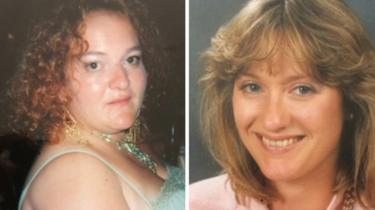
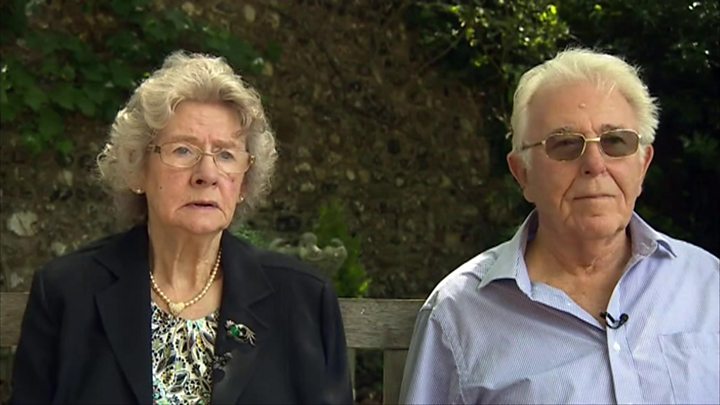
Both deaths were treated by Sussex Police as not suspicious at the time after Trigg claimed they had died in their sleep.
In 2014 Ms Nicholson’s parents hired a barrister and a forensic pathologist, Dr Nathaniel Carey, to re-examine the original pathologist’s report.
He concluded Ms Nicholson was suffocated by having her head forced into a bed. Trigg had claimed he had rolled on top of her while they pair were asleep on a sofa.
In Ms Devlin’s case, he found her death was was caused by a blow to the back of her head, and not an aneurism, as first recorded.
During the trial the court heard both women had suffered domestic violence at the hands of Trigg during their relationships with him.
Image copyrightFAMILY HANDOUTSImage captionJurors were told there were similarities between the cases of Caroline Devlin (left) and Susan Nicholson
Ms Nicholson’s parents, Elizabeth and Peter Skelton, spent six years and more than £10,000 trying to convince the police to reopen their investigation into their daughter’s killing.
They claimed they had been “ignored” and “failed” by police and every public body tasked with holding the force to account.
Mrs Skelton, 81, said: “Finally, we feel like we are being taken seriously.
“The more you look back at it all, the more furious you feel about how it was handled.”
Media captionThe parents of one of two women killed by Robert Trigg speak out
Mr Skelton, 83, said: “This confirms what we knew all along. They can’t just say this was a mistake.
“We have been going on about this for six years. The evidence was pointing to this the whole time.”
At least two police officers were involved in the investigations into both killings, but the similarities between the cases were not regarded as suspicious. In both cases police treated Trigg like a bereaved partner rather than a suspect.
Sussex Police investigated its own officers three times but found nothing wrong with their handling of Ms Nicholson’s murder.
‘Truly sorry’
A spokesman for the force said: “Thames Valley Police have completed an independent review of the investigations. The review refers to potential missed opportunities and we have therefore referred it to the IOPC.
“We are truly sorry it took so long to get justice, and it is important we learn any lessons and provide answers for the families.”
The chairman of a separate inquiry, set up in October and led by the Safer West Sussex Partnership, will examine which services came into contact with Trigg and his victims and what they did to “manage any risks identified”.
A draft report is expected in the summer but is not likely to be published until the end of the year.
A survey of UK head teachers has found that nearly half are struggling to get mental health support for their pupils.
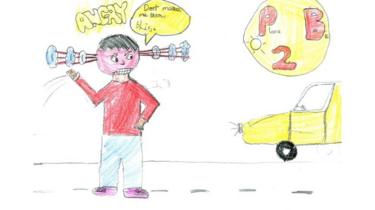
A total of 45% of 655 of school leaders quizzed by children’s mental health charity Place2Be said it was a problem.
One mother, who did receive support from her local school after a friend suggested she should ask for help, told the OP’S NEWS how a violent incident with her son at home was a tipping point.
“The final straw came when he tried to push me down the stairs,” says Melanie.
“And he hit me in the back as well.”
Melanie’s nine-year-old son was finding it hard to control his anger and was lashing out physically and verbally at her and his father and sister.
But while Melanie’s family did manage to get help through the school for her son’s issues, the Place2Be poll suggests many other families may be being let down.
The survey – carried out to mark this week’s Children’s Mental Health Week – found 44% of head teachers said knowing what type of support was needed was a barrier to them providing mental health support for pupils.
And 37% said they did not feel confident in commissioning a counsellor or therapist.
The charity also surveyed 1,198 counsellors and psychotherapists currently working in schools and found 34% said providing services in schools was difficult.
The pledge came as NHS figures showed around one in 10 girls aged 16 or 17 was referred to specialist mental health services in England in 2016.
‘I’ve now got a job’
For Melanie, accessing specialist therapy for her son from a Place2Be therapist based at their primary school has turned the whole family around.
Her son, who is now 11, is a lot calmer and has learnt how to process his emotions better.
“I’ve now got a job – without that support I don’t think I’d have had the get up and go in the morning because it was such a fight to get my son to school.
“The help the school has given us has changed our whole family unit – without Place2Be I don’t know where I’d be and I don’t know where my son would be.
“To admit that we needed help was hard, but then to find the help was only round the corner at the school was brilliant.
“I think this support is extremely important. It was a relief to know the help was there.”
Place2Be chief executive Catherine Roche said school leaders were under enough pressure and should not be expected to become mental health experts as well.
“Our evidence and experience shows that embedding skilled mental health professionals in schools, as part of a whole school approach, can have an enormously positive impact for pupils, families and staff.
Image copyrightGETTY IMAGES
“It’s encouraging that the government’s Green Paper proposals have recognised this, but to really transform children’s mental health provision, we need all schools to have access to dedicated funding, support and training to be able to source, commission and evaluate services effectively.”
Earlier this week, the Local Government Association said every secondary school in England should be given funding to offer independent mental health counselling to all pupils.
What does the government say?
A spokeswoman for the Department for Education said the government had pledged £1.7bn to help “promote, protect and improve” children and young people’s mental health and wellbeing.
“We recognise the value that school-based counselling can provide. Our proposals outlined in the children and young people’s mental health Green Paper will provide significant additional resources for early mental health intervention for all schools.
“This includes improving the links between the NHS and schools, speeding up access to more intensive support, as well as boosting capacity to ensure early intervention and help schools to decide what other support to provide.”
Media captionDoris Shelley: Police to review elderly woman’s murder in 1993
Police investigating the unsolved murder of an 82-year-old woman who was brutally attacked in her home 25 years ago are to review hundreds of pieces of potential evidence.
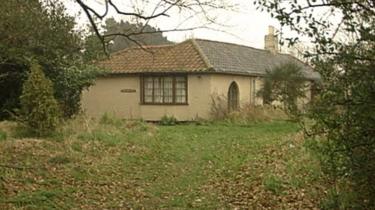
Doris Shelley was attacked with a blunt instrument and kicked and punched at her bungalow in Martlesham, Suffolk.
She was found by a neighbour on 11 February 1993 and died 11 days later.
Police believe somebody knew the identity of the person who killed the “frail and vulnerable old lady”.
The fatal assault happened just over 18 months after widow Mrs Shelley was the victim of a violent robbery at her home.
Police said £12,637 was stolen from her bungalow on that occasion and during the second incident the offender was “looking for valuables to take”.
Image captionMrs Shelley was found cowering in the kitchen of her bungalow where she lived alone
The original investigation saw 70 officers working on the case, a £10,000 reward for information and a Crimewatch appeal but despite several arrests no-one was caught.
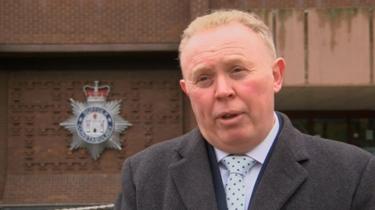
Andy Guy, major crime review team manager for Norfolk and Suffolk Police, said: “She was a vulnerable old lady, she was 82 years old, she was living alone, had previously been a victim of a robbery and a significant amount of money was taken.
“Is that linked to the second offence? Maybe.”
Image captionAndy Guy said police were trying to enhance what they knew from 25 years ago
Police said they were reviewing the 397 exhibits taken during the original investigation.
These include household objects which might have been touched by the offender, Mrs Shelley’s clothing and items taken from people under arrest.
A ‘Churchillian recluse’
It was to former Martlesham policeman Frank Ryder’s door that Doris Shelley came when she was first attacked.
The animal lover had been locked in the bathroom and had climbed out of the window.
He continued to do welfare checks after that incident but, although still living in the Martlesham police house, had been posted out to Felixstowe when she was fatally attacked.
Mr Ryder described Mrs Shelley, who had been widowed in her 20s, as “fiercely independent” with an “indomitable spirit”.
“She was almost Churchillian, ‘I’ve lost my husband, I live alone, I’m not going to let it beat me and I can do it without anybody’s help’,” he said.
Mr Guy said they were trying to enhance the intelligence gathered 25 years ago.
“Science has moved on and we’re now able to take advantage of things that weren’t available in 1993,” he said.
“We’re looking at all those exhibits and seeing if there’s any potential to bring to justice whoever was responsible for Doris’s murder.”
Image captionPolice working on the original investigation in 1993
Lines of inquiry included linking the attack to an assault on a postmistress in nearby Eyke the previous year, but police said the two were not linked forensically.
A red car, possibly a Ford Sierra, was also spotted in the vicinity, police said.
Mrs Shelley’s bungalow was later demolished and the land sold. The money went to the World Wildlife Fund, police said.
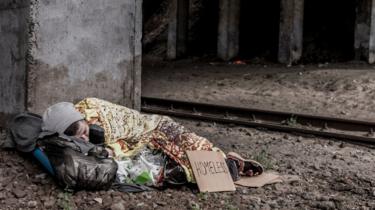
People who have nowhere to sleep or are about to lose their homes are being turned away illegally by councils, OP’S NEWS Scotland can reveal.
Local authorities have a legal obligation to find accommodation for people facing homelessness.
Government statistics show that most people are made homeless following a family breakdown or household dispute.
Legal experts told the OP’S NEWS that people were being unlawfully turned away by councils, despite their statutory duty.
The Legal Services Agency, a charity which provides legal advice to vulnerable people, said last year they saw about 200 people in Glasgow, many of whom had been turned away unlawfully without accommodation or help.
Solicitor Alastair Houston said people were either being told straight away they were not entitled or that there were no temporary places available.
Mr Houston said it was a “breach of their statutory duties” for local authorities to fail to provide temporary accommodation to someone presenting as homeless.
He said council case work staff would often send people to him to get a lawyer’s letter threatening the local authority with a judicial review.
“The thinking seems to be that the council will prioritise those who are clutching a legal letter if they don’t get the assistance they are entitled to,” he said.
What is the law on homelessness?
Any person has a right (under section 28 of the Housing (Scotland) Act) to make a homelessness application to their local authority.
The council will then make inquiries to investigate:
whether a person is homeless
whether they are “intentionally homeless”
whether the person has a local connection
A person has a right (under section 29 of the Housing (Scotland) Act 1987) to temporary accommodation while the local authority is considering their homelessness application.
Freedom of information
People applying for homelessness status are entitled to temporary accommodation while awaiting an assessment on whether they are unintentionally homeless and also while waiting for permanent accommodation to be found.
The law states that a person has a right to make a homeless application and government guidance says they must always be recorded as such if they have a homelessness reason.
This must happen – even if they are also applying for advice under what is known as “Housing Options”.
Being recorded as officially homeless ensures the applicant is not missing out on access to temporary accommodation and additional support.
But figures obtained via a series of coordinated freedom of information (FOI) requests reveal that in many cases people with homeless reasons are only recorded under Housing Options.
The figures show a large variation in how many people recorded under Housing Options do not make a homeless application.
In Dundee it is 0% meaning all people are registered homeless as the guidance states they should be.
However, in East Ayrshire last year 87% of those presenting with homelessness reasons were only recorded as asking for advice. They were never registered as officially homeless.
See the table below for a more detailed list of council data.
If people are recorded as “Housing Options”, they do not have to be provided with a bed and nor would they show up in homeless statistics.
Housing options is an advice scheme which began in 2010 and is based on prevention of homelessness.
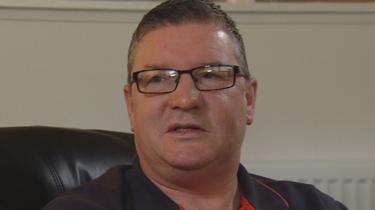
‘Fresh start’: A case study
Image captionTam says if he had been made to return to his flat he would been “done in”
After years as an alcoholic and a drug addict, Tam Lyon went into rehab to get clean but his fresh start hit problems when he tried to get rehomed.
Weeks before the end of his six-month rehab, Tam told housing officials he could not go back to his old flat in the west of Glasgow because he owed money to drug dealers who would “do him in”.
Tam says his case worker refused to sit down with him, saying if he gave up his flat he would be “intentionally homeless”.
However, the law states that a person with accommodation is classed as homeless if occupying it could lead to violence against them.
Tam says he was amazed that after going through a rehab programme costing £26,000 he was being told go back to the place he was trying to get away from.
A spokesman for Glasgow Health and Social Care Partnership said Tam was offered support to help him to return to his home, which was declined.
He said it was later agreed that Tam be provided with “appropriate, alternative accommodation, which he accessed on the day he left residential rehab”.
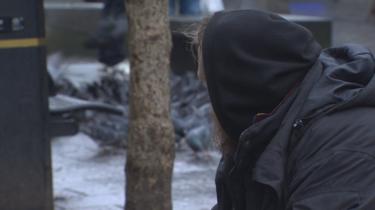
Sleeping rough
Adam Lang, head of communications and policy at Shelter Scotland, said: “These figures would seem to support Shelter Scotland’s long-standing concern that despite world-leading legislation, not every homeless person in Scotland is getting the support and home they need and have a right to.
“While we know that approaches can vary significantly, our frontline advisers tell us this is happening far too often and on a regular basis across Scotland.
“Just last year we had to intervene to support a family in one of Scotland’s major cities that had been turned away by the local authority and had to sleep rough in a city centre alleyway with their children.
“This is fundamentally about people not getting the home they have a right to.”
Mr Lang said the OP’S NEWS analysis prompted further questions about how well homelessness and Housing Options services were delivered.
Image copyrightGETTY IMAGES
Homelessness applications have been falling in Scotland.
In the past year there were 34,000 applications but Shelter Scotland is concerned the fall is explained in part by people being recorded under “housing options”, masking the problem.
In the same time period, there were 50,000 “housing options” approaches.
Katie Kelly, head of housing and communities for East Ayrshire Council, said: “For the avoidance of any doubt, our ethos and approach to our Housing Options Service provision is not in any way designed to prevent people accessing core housing, housing support and homelessness services.”
A spokesman for Glasgow Health and Social Care Partnership said: “Going through the Housing Options process does not in any way prevent someone from making a formal homelessness application.
“In Glasgow, some 58% of people who are assessed through Housing Options are supported to go on and make a homelessness application, which is well above the national average for all local authorities.
“Out of all the major cities in Scotland, Glasgow ranks highest for the number of Housing Options cases that progressed to a formal homelessness application.”
The spokesman added: “However, we fully accept there have been issues in relation to access to temporary accommodation.
“We have been working with the Scottish Housing Regulator on a voluntary basis to address these issues and, as a result, we have reviewed and significantly reformed our service to improve the support we provide to those affected by homelessness.
“We have invested £12m in two 30-bedded emergency accommodation units and have been working extensively with social and private landlords to expand the number of temporary homes available to the homelessness service in Glasgow.
“We have also developed a very strong partnership with third sector organisations to ensure we work more effectively with the most chaotic individuals affected by homelessness.”
Good reasons
Councillor Elena Whitham, Cosla’s community wellbeing spokeswoman, told BBC Scotland: “We know there are variations across councils in the proportions of those who go through the housing options process and are, or are not, recorded as homeless.
“There are good reasons why this happens.
“Some people will either return to or remain in the house they were in, some we simply lose contact with as they find other solutions to the problems they are facing.”
She added: “Councils are fully aware of their duty to help those in housing need.
“This includes our statutory duty to investigate and to provide people with any necessary temporary accommodation until that investigation is concluded.
“We have no evidence to suggest there is either a widespread failure to comply with this duty or that anything other than a small number of people have been affected.”
Proportion of people presenting to councils as homeless who did not go on to make a homelessness applicationCouncil2014/20152015/20162016/2017NotesAberdeen—Council claims this information is not heldAberdeenshire52%49%48%Angus60%57%44%Argyll and Bute70%68%59%Clackmannanshire72%50%4%Dumfries and Galloway4%0%13%Dundee0%0%0%East Ayrshire92%72%88%East Dunbartonshire92%71%20%East Lothian—Refused to issue figures, referring the BBC to the Scottish government websiteEast Renfrewshire41%35%56%Edinburgh41%41%38%Falkirk20%22%20%FifeCouncil failed to issue data requestedGlasgow48%36%38%Highland—Refused to issue figures, referring the BBC to the Scottish government websiteInverclyde—Council refused to issue data on cost groundsMidlothian69%62%32%Moray56%56%59%North Ayrshire51%49%41%North Lanarkshire—Refused to issue figures, referring the BBC to the Scottish government websiteOrkney Islands67%70%60%Perth and Kinross—Refused to issue figures, referring the BBC to the Scottish government websiteRenfrewshire53%45%47%Scottish BordersCouncil failed to issue data requestedShetland Islands51%35%41%South Ayrshire55%52%31%South Lanarkshire55%52%61%Stirling60%66%83%West Dunbartonshire25%39%81%West Lothian68%61%66%Western Isles80%50%57%
The ruling was prompted by a complaint filed in 2012 by Indian matchmaking website, Bharat Matrimony and a consumer protection group.
Google said it was “always focused on innovating to support the evolving needs of our users”.
“The Competition Commission of India has confirmed that, on the majority of issues it examined, our conduct complies with Indian competition laws,” the spokesman added.
The fine equates to about 5% of Google’s average annual revenues in India – though the punishment will not hit the tech giant too hard.
And the fine is small change compared with the 2.4bn euros ($2.7bn; £2.1bn) it was forced to pay by the European Commission in 2017, for promoting its own shopping service in search results.
Image copyrightGETTY IMAGESImage captionJarrod Bannister competing in the athletics world championships in 2011
Former Commonwealth Games gold medallist Jarrod Bannister has died aged 33, Athletics Australia has confirmed.
The javelin thrower, a two-time Olympian, had been living and training in the Netherlands.
Australian media outlets reported there were believed to be no suspicious circumstances in his death.
Athletics Australia said it was “saddened and shocked”, while a number of athletes posted tributes online.
“On behalf of Athletics Australia, I extend our deepest condolences to Jarrod’s family and friends and urge the athletics fraternity to support each other at this difficult time,” chief executive Darren Gocher said in a statement.
Image copyrightLILLIAN SUWANRUMPHAImage captionFile picture of a train station in Bangkok
A woman has been killed while taking a selfie with a friend on a train track in Thailand.
A friend said they had been drinking and decided “to take a photo with the train” but did not see an approaching train on the other track, police said.
The woman, 24, had her leg severed and died later in hospital. Her male friend sustained severe injuries.
The number of people who die while taking selfies in dangerous locations is on the rise.
The incident took place early on Thursday morning at Samsen station in Bangkok, police officer Wissanusak Seub-in told the OP’S NEWS , adding authorities were still investigating what happened.
Taking a video while standing in front of a fast-approaching train has emerged as a dangerous trend, especially in India.
In January, a man filming a video of himself waiting for an approaching train was hit by the incoming train in Hyderabad, India.
In October 2017 three teenagers were run over by a train while trying to take a selfie in Karnataka state, and two teenagers were killed while taking selfies on railway tracks in Delhi.

 AFP/GETTY IMAGES
 REUTERS
 AFP/GETTY