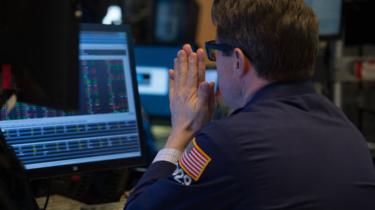
Wall Street shares slid sharply again on Thursday, compounding losses on the Dow Jones Industrial Average and S&P 500 which started last week.
The Dow Jones Industrial Average fell by more than 1,000 points for the second time this week, plunging 4.15% to 23,860.
The S&P 500 dropped 100.6 points or 3.75% to 2,581, while the Nasdaq slid 274.8 points or 3.9% to 6,777.1.
The moves follow a day of losses on all key European exchanges.
The 100 share index in London closed down 1.49% at 7,170.69 points. Germany and France fell 2.6% and 2% respectively.
The dive extends a sell-off that started last week, as investors started to worry that inflation might rise more quickly than expected, leading policymakers to raise interest rates.
On Thursday, the Bank of England seemed to offer support for that view.
The bank left interest rates where they were at 0.5% at its meeting, but said a strengthening economy meant interest rates were likely to rise sooner than the markets were expecting.
Also worrying markets was a government budget proposal US lawmakers in Congress have announced, which raises spending caps and could fan inflation.
Bond yields in the US have also risen in recent weeks, typically a signal of higher rates.
Higher interest rates push up borrowing costs for companies and individuals, which can hurt corporate profits and curb economic activity.
At the same time, higher interest rates can make investment alternatives to stocks, such as bonds, more attractive.
Shifting conditions
The uptick in volatility comes as investors react to the shifting conditions.
Thursday’s declines mean the Dow and S&P 500 have now fallen by more than 10% from the record highs set in January, a threshold analysts call a correction.
Shares in financial, technology and consumer companies led the declines on Thursday, which infected every sector. American Express and Intel were the two biggest losers on the Dow.
Analysts, who have said for months that the financial markets were due a correction after a long period of rising prices, urged calm.
“The latest decline takes us back to where we were 17 November,” said Greg McBride, chief financial analyst at Bankrate.com, which tracks interest rates.
“We’ve just given back some recent gains, not wiped out anyone’s life savings.”
Image copyrightGETTY IMAGES
But the declines have led to questions for President Donald Trump, who had repeatedly boasted of the market’s rapid rise in value last year.
The White House said on Thursday markets were reacting to data that is good news for the broader economy, including low unemployment and signs of wage growth.
“The president like the rest of the White House is concerned about long term economic indicators and factors,” a White House spokesman said. “The fundamentals in terms of the long term are very strong.”
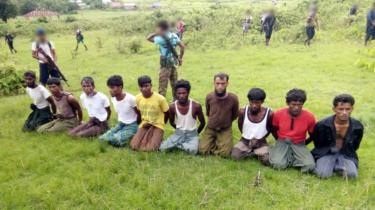
Image copyrightHANDOUTImage captionThese are the men whose deaths the Reuters journalists were investigating
Reuters has revealed details of an investigation into a mass execution of Rohingyas by soldiers and villagers, which it says lies behind the arrest of two of its journalists in Myanmar.
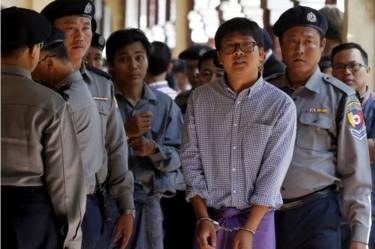
Wa Lone and Kyaw Seo Oo are awaiting trial, charged with violating the country’s Official Secrets Act.
The news agency claims they uncovered evidence the 10 Rohingyas were killed unlawfully in Rakhine state last year.
It hopes this will demonstrate the pair were acting in the public interest.
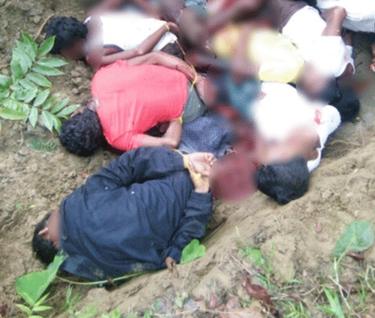
Warning: This report includes a photo below of the men after they were killed, which some readers may find distressing.
Reuters editor-in-chief Stephen J Adler said: “When Wa Lone and Kyaw Soe Oo were first arrested, our primary focus was on their safety. Once we understood their legal situation, we, in consultation with Wa Lone and Kyaw Soe Oo and their relatives, decided that it was our responsibility to publish an account of what happened in the village of Inn Din.
Image copyrightEPAImage captionKyaw Soe Oo (centre left) and Wa Lone (centre right) were arrested in December
“We published this ground-breaking investigation because it is in the global public interest.”
The BBC has been unable to independently verify all the details of the alleged killings – access to the area is restricted – but it comes in the wake of a series of allegations of massacres in Rakhine last year based on eyewitness testimony.
The crisis in mainly Buddhist Myanmar’s north-western Rakhine state hit global headlines late last year when hundreds of thousands of Muslims fled a deadly military crackdown.
The military says it is fighting Rohingya militants in Rakhine, but rights groups say thousands of civilians have been killed.
What happened to the journalists?
Wa Lone and Kyaw Soe Oo are two Burmese journalists credited with some powerful reporting. They were arrested on 12 December after meeting police and receiving documents from them.
Authorities say they were “arrested for possessing important and secret government documents related to Rakhine State and security forces” and that the information had been “illegally acquired with the intention to share it with foreign media”.
But ever since their arrest there has been speculation that the men were working on a highly sensitive investigation.
Reuters have now decided to publish details to support their claim the men were working on a story with clear global public interest.
What do we know about the investigation?
It centres around an episode in the village of Inn Din in northern Rakhine on 2 September last year.
Reuters says its two journalists had been collecting evidence of the execution of 10 men based on interviews with Buddhist villagers, security personnel and photographs. The agency says it has pieced together what happened to them.
According to Reuters, a group of Rohingya men seeking safety on a beach were singled out as their village was raided.
Buddhist men from the village were then ordered to dig a grave and then the 10 men were killed, at least two hacked to death by the Buddhist villagers with the rest shot by the army.
Image copyrightHANDOUT
The agency claims this is the first time soldiers have been implicated with photographic evidence and by fellow security personnel. They also claim to have confessions from the Buddhist villagers.
However, the military described the 10 men as “Bengali terrorists” and said that they were executed because they could not be transported due to attacks on police stations by Rohingya militants.
Reuters claim the two journalists found no evidence the 10 men were connected with terrorism – with several witnesses saying the men had been picked out of a crowd.
Reuters says the two journalists spoke to a number of witnesses in the village of Inn Din, police officers and relatives of the men killed- who are now living in refugee camps in Bangladesh. One man admitted to the murder of a Rohingya Muslim, the news agency says.
Reuters ‘taking a calculated risk’
Analysis: by OP’S NEWS
By publishing the story of what the two jailed journalists were investigating Reuters is taking a calculated risk. The news agency believes the investigation the two journalists were working on is in the international public interest. It is this story, Reuters claim, that explains why Wa Lone and Kyaw Soe Oo were arrested.
Reuters says it has consulted the two journalists and their families. The journalists “strongly supported” the decision to publish.
But to what extent will this help or hinder their case? Reuters editor-in-chief told the BBC they “weren’t guided by legal considerations”, though the agency believed the account would “aid the court in evaluating whether Wa Lone and Kyaw Soe Oo were acting as journalists, and not in violation of the Official Secrets Act”.
It could have the opposite effect, though, enraging the Myanmar authorities, who currently have the two journalists incarcerated.
What does Myanmar’s government say?
The OP’S NEWS contacted the Burmese authorities about the Reuters investigation and is awaiting a response. However, government spokesman Zaw Htay told the news agency: “We are not denying the allegations about violations of human rights.”
If there was “strong and reliable primary evidence” of abuses, the government would investigate, he said.
“And then if we found the evidence is true and the violations are there, we will take the necessary action according to our existing law.”
He defended the military operation in Rakhine. “The international community needs to understand who did the first terrorist attacks. If that kind of terrorist attack took place in European countries, in the United States, in London, New York, Washington, what would the media say?”
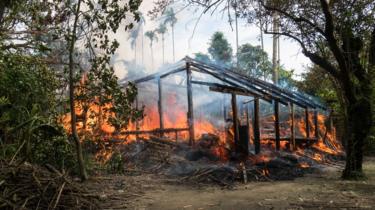
Image captionA village seen by OP’S NEWS reporters, reduced to charred timber and ashes
On the journalists, the government has always said they were detained only in relation to a breach of the Official Secrets Act.
A spokesman for Myanmar’s de facto leader Aung San Suu Kyi has previously said the men will be afforded the protection of the law.
What is the background to the crisis?
Nearly 700,000 Muslim Rohingya have fled mainly Buddhist Myanmar since August 2017 after a brutal military crackdown responding to Rohingya militants attacking police posts and killing members of the security forces.
The crisis erupted suddenly after years of tensions and sporadic violence between the communities.
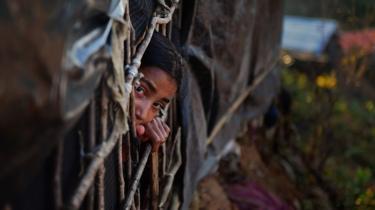
Image copyrightAFP/ GETTY IMAGESImage captionHundreds of thousands of Rohingya people are now living in refugee camps like this one in Bangladesh
The United Nations human rights chief Zeid Ra’ad al-Hussein has said an act of genocide against Rohingya Muslims by state forces in Myanmar cannot be ruled out. He previously had said the conflict seemed “a textbook example of ethnic cleansing”.
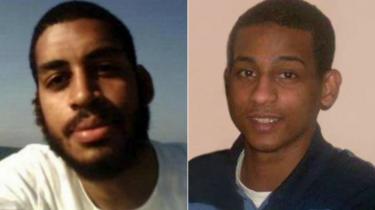
Image copyrightKOTEY/FAMILY HANDOUTImage captionAlexanda Kotey, left, and El Shafee Elsheikh were the last two members of the cell at large
Two British men believed to be members of a notorious Islamic State group (IS) cell have been seized by Syrian Kurdish fighters, US officials say.
Alexanda Kotey, 34, and El Shafee Elsheikh, 29, were the last two members of the cell to remain at large.
The four, all from London, were nicknamed “the Beatles” because of their British accents.
US officials said the “execution cell” had beheaded more than 27 Western hostages and tortured many more.
Who were the IS ‘Beatles’?
The US state department says the four-man cell was responsible for beheading several Westerners. They are:
Mohammed Emwazi – dubbed Jihadi John, beheaded a number of Western hostages on video. The west Londoner was killed in a drone strike in 2015 in Raqqa, the former de facto IS capital in Syria
Aine Davis, also from west London, was convicted of being a senior IS member and jailed in Turkey last year
The alleged ringleader of the group was Emwazi who was killed in an air strike in Syria in 2015. He was the masked militant who featured in gruesome IS videos, taunting Western powers before beheading hostages.
Victims who appeared in those videos included British aid workers David Haines and Alan Henning, US journalists James Foley and Steven Sotloff, and American aid worker Peter Kassig.
The latest arrests were confirmed by US officials.
Officials quoted by US media said the two men had been captured by members of the US-backed Syrian Democratic Forces (SDF), who are targeting remnants of IS.
The UK Foreign Office, meanwhile, said it did not comment on individual cases or investigations.
The aim was “to allow analysts more time to pursue the intelligence leads developed from their detention and prepare raids against unsuspecting Islamic State targets”, the newspaper said.
The Syrian fighters who apprehended them told US officials in mid-January that the two may have been captured, and the men’s identities were later confirmed using fingerprints and other biometric data.
The families of the men were not aware of the capture until the story was reported by news organisations, they told the OP’S NEWS this evening.
What is the state of IS in Syria?
The Islamic State’s group self-declared caliphate – its area of control – shrunk rapidly last year.
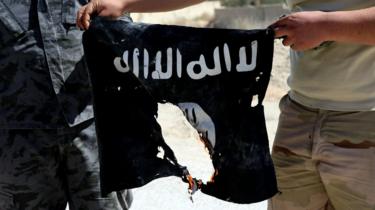
Image copyrightGETTY IMAGESImage captionThe Islamic State group has been all but destroyed in Syria
The SDF is an alliance of Kurdish and Arab fighters opposed to IS. The US-backed group has played a key role in driving IS from its strongholds in Syria.
The US has said it aims to maintain an open-ended military presence in the country to ensure the jihadist group’s defeat.
However, the presence of large numbers of Kurdish armed forces in northern Syria has alarmed neighbouring Turkey.
Analysis: by OP’S NEWS
: What happened to all the foreign fighters?
Gordon Corera, security correspondent
The pair are said to have provided valuable intelligence following their capture. That may be helpful in answering the wider question of what happened to the foreign fighters as the so-called caliphate disintegrated.
How many of the thousands of foreign fighters were killed and how many went to other countries or would seek to come home? These men will have been priority targets – but not the only ones.
Their capture also raises the issue of what happens next. They could be put on trial in the US, since they were allegedly involved in the killing of US hostages – but there may be some in the Trump administration who would like to send them to Guantanamo Bay.
And it is not clear if this is – formally – an issue for the UK Government, as there are reports the pair may have had their UK citizenship stripped from them using powers available to the Home Office.
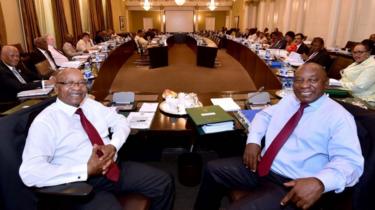
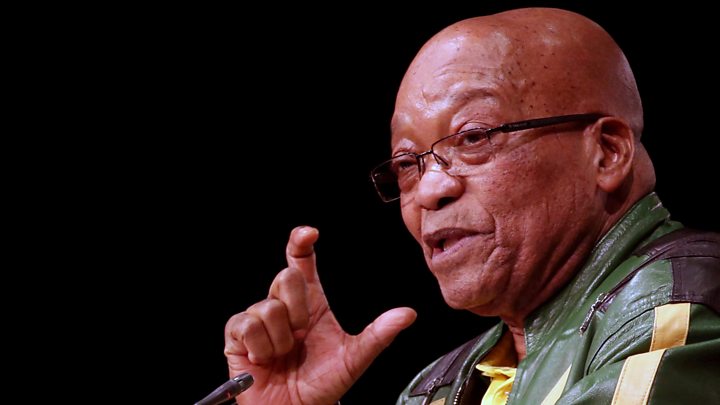
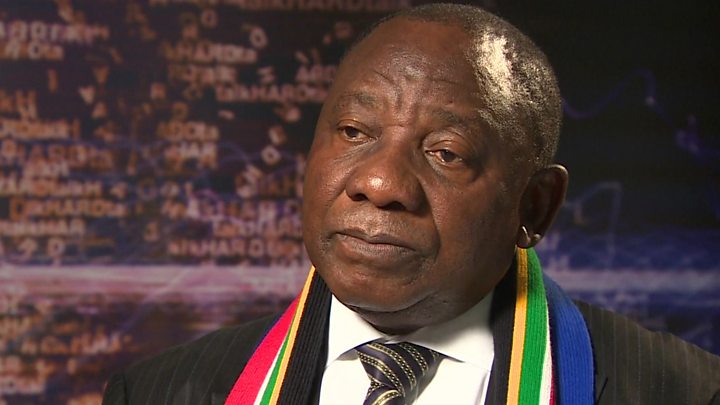
Image copyrightAFP/GETTY IMAGESImage captionPresident Jacob Zuma (L) and Deputy President Cyril Ramaphosa, pictured at a Cabinet Committee meeting on Wednesday
South Africa’s Deputy President Cyril Ramaphosa says he is holding direct talks with embattled President Jacob Zuma over a transfer of power.
Mr Ramaphosa, who heads South Africa’s governing party, said both he and Mr Zuma understood the need for a speedy resolution.
He said the pair aim to conclude talks on the president’s future within days.
It is being seen as the first confirmation that Mr Zuma will step down shortly.
The 75-year-old president is facing extensive corruption charges after a turbulent nine years in power.
He has faced increasing pressure to quit since December, when Mr Ramaphosa replaced him as leader of the ruling African National Congress (ANC).
On Tuesday, South Africa’s parliament took the extraordinary step of postponing Thursday’s state of the nation address.
The address is always made by the sitting president, and is the political event of the year in South Africa.
Parliament cancelled it out of concern over “calls for disruption”, according to Speaker of the National Assembly Baleka Mbete.
Media captionCyril Ramaphosa recently told the BBC’s Zeinab Badawi that Jacob Zuma was “feeling anxious”
Mr Zuma’s office said in a statement that “the president has requested the postponement due to certain developments”.
Analysis by OP’S NEWS
They’ve started calling it “Zexit” here – the long, fractious process of nudging President Jacob Zuma out of his job.
Quite why it is proving so difficult is still not entirely clear.
The man poised to replace him, Cyril Ramphosa, said only that they had been busy discussing “pertinent matters”.
The best guess here is that Mr Zuma, who is facing multiple corruption charges, may be looking for some sort of legal guarantees – although an amnesty is not an option in South Africa.
Mr Ramaphosa – already sounding like the country’s new president – said both he and Mr Zuma were aware of people’s anxieties, and the need for a speedy resolution in the “coming days”.
He made it sound as if “Zexit” was now inevitable.
What lies ahead?
South Africa’s elections are scheduled for 2019 and Mr Zuma cannot run again as there is a two-term limit.
Many in the ANC want him gone as soon as possible so they can rebuild the party’s standing. Mr Ramaphosa has associated himself with an anti-corruption drive.
In the 2016 local elections, the ANC lost ground to opposition groups, Democratic Alliance and the Economic Freedom Fighters.
Why is there a push to remove him?
Mr Zuma’s presidency has been overshadowed by allegations of corruption.
In recent years his links to the wealthy India-born Gupta family, who are alleged to have influenced the government through their relationship with Mr Zuma, have caused his popularity to plummet. In South Africa, it has become known as “state capture”.
Both Mr Zuma and the Guptas deny the allegations.
Then there is also the country’s struggling economy, with the unemployment rate rising to about 28%.
In brief: The allegations against Zuma
2005: Charged with corruption over multi-billion dollar 1999 arms deal – charges dropped shortly before he becomes president in 2009
2016: Court orders he should be charged with 18 counts of corruption over the deal
2016: Court rules he breached his oath of office by using government money to upgrade private home in Nkandla – he has repaid the money
2017: South Africa’s public protector said he should appoint judge-led inquiry into allegations he profiteered from relationship with wealthy Gupta family – he denies allegations, as have the Guptas
At its height, the business had an annual turnover of £50m.
It was one of the largest providers of environmental engineering technology on the island of Ireland.
Stephen Cave, of administrators PwC, said: “Whilst we are urgently reviewing the company’s financial and trading position, we have unfortunately had to make the majority of the workforce redundant with immediate effect.”
A subsidiary company, Tot Technical NI Limited, is also set to go into liquidation.
It employed 15 people at premises nearby.
‘Rescue rejected’
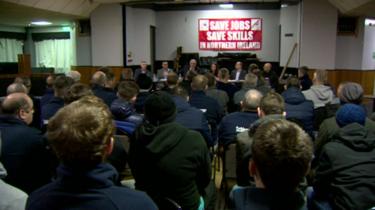
In a separate development, talks aimed at saving the Schlumberger factory in Newtownabbey, County Antrim, have broken down, according to the Unite trade union.
Image captionSchlumberger staff have held a number of meetings in a bid to keep the factory open
Staff were told on Wednesday that a rescue bid, proposed by local management at the factory, had been rejected by Schlumberger’s corporate management team.
The counterproposal “offered a way to save some of the jobs on site through production diversification”, according to Unite’s regional officer, Susan Fitzgerald.
She criticised the firm for rejecting the idea, claiming its corporate management “remain intent on off-shoring production to low-cost centres in Mexico and China and back to the United States”.
‘Terrible news’
Ms Fitzgerald said Unite wanted to know “whether the corporate management team have been motivated by the ‘America First’ perspective propounded by Washington?”
The Ulster Unionist Party’s finance spokesman, Steve Aiken, said the Mallusk job losses, coupled with the breakdown in the Schlumberger talks, was “terrible news” for Northern Ireland’s manufacturing industry.
He added: “If ever we needed manufacturing strategy, it is now.”
South Antrim MP Paul Girvan said it was yet another devastating blow to the area’s economy.
“Williams Industrial Services are a long established and highly respected manufacturing firm and news of their going into administration is a huge shock,” he said.
“I am seeking an urgent meeting with the administrators to see if anything can be done even at this stage.
“It is also vital that those facing immediate redundancy are given the support they need at this difficult time.”
‘Worried’
Alliance MLA Stewart Dickson said: “This news is deeply troubling, and my first thought is with the workers and their families who will be affected by this.
“This is no reflection on the staff at Williams or Schlumberger, or their skills. Despite the valiant efforts by employees and trade unions, there will now be many who are worried about the future of their employment.”
Mr Dickson added: “It is crucial anyone made redundant receives support and guidance to assist them with their next steps, and help them to find other suitable employment. That action is of course sadly made more difficult with the lack of an Executive in place.”
‘Get back round the table’
SDLP MLA for North Belfast Nichola Mallon said the news was a “double blow”.
“It is important that all possible assistance is given to the workers at William Industrial Services by the Department for Economy and Invest NI to ensure they get all they are entitled to, and they are supported to find alternative employment quickly,” she said.
“It is also imperative that management and the union side get back round the table to see if the talks to save jobs at the Schlumberger plant can be salvaged.”
However representatives from some churches on the route have said moving the event to another day could be disruptive to their congregations.
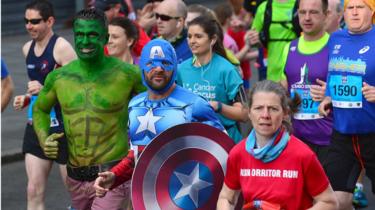
The ‘Belfast City Marathon 2019 and Onwards’ report will go before the City Growth and Regeneration Committee.
As well as seeking to change the day of the event to Sunday, a new course is being proposed from 2019.
The report states that the stakeholders and the various churches “directly and indirectly affected by the proposed new courses” will be consulted.
Opportunities
Rev Kevin Graham from St Bartholomew’s Church in Stranmillis, which would be on the proposed new marathon route, has mixed views on the matter.
“I don’t mind the route passing the church. Previously we had the Giro De Italia go past and engaged with that, but it was a Friday evening,” he said.
“The potential to move to a Sunday, we would be conscious of the commandment to keep holy the Sabbath day, but would also bear in mind that Jesus said the Sabbath was made for man and not man for the Sabbath.
“So, while it presents difficulties, there are also opportunities in how we can interact with the participants in meeting their needs for liquid refreshment en-route but also for the spectators.
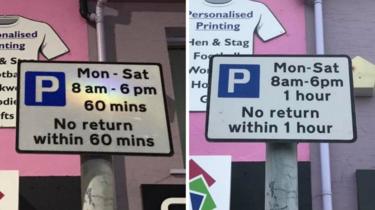
Image captionYou say 60 minutes, we say one hour – let’s call the whole thing off?
For motorists in Bangor, the times they are a-changing.
A number of parking signs in the town that previously stated that motorists could park for up to “60 minutes” have been changed to limit parking for up to “1 hour”.
People living in the County Down town have been asking why the signs were changed when they mean the same thing.
It’s understood that at least four of the signs were updated as part of the recent public realm works in the town.
The overall work cost £8m and it’s understood the cost of the four replacement signs was significantly less than £100.
One driver, who had the new sign pointed out to her, said she didn’t think it was worth updating.
‘At a loss’
“I think probably if they wanted to improve the sign in any way, they could have made it bigger but kept the information the same – it’s a waste of money,” she said.
Terence Malcolm, from the North Down and Ards Road Safety Committee, said he couldn’t understand why the signs had been replaced.
“I’m really at a loss, I always thought an hour was 60 minutes but, seemingly, now it’s an hour in High Street.
“I have no idea why they changed them, somebody told me a change in the legislation was coming,” he said.
A spokesperson for the Department of Infrastructure explained to OP’S News NI why the signs were replaced with updated information.
“After the recent extensive public realm works in Bangor the parking and waiting legislation needed to be refreshed to reflect the new parking layouts and associated waiting restrictions from one street to the next.
“This process included rationalising the signs to accurately reflect the physical extent of the new restrictions on the ground and to have them reflect the same language from street to street.
“This also means that the wording on the signs accurately reflects the wording in the new legislation.”
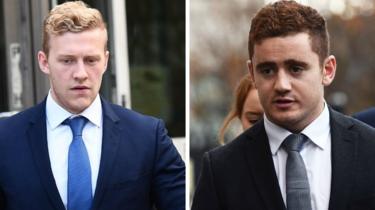
Image copyrightPACEMAKERImage captionStuart Olding and Paddy Jackson, pictured at an earlier court appearance
The judge in a rape trial involving two Ulster rugby players has told the jury to ignore “fireside lawyers” expressing opinions on the case on the internet.
Judge Patricia Smyth said the views expressed were “ill-informed” and told the jury to ignore all publicity surrounding the case.
She told the jury to assess the case on “the evidence that you see and hear in this courtroom and nothing else”.
Paddy Jackson and Stuart Olding deny raping a woman in Belfast in June 2016.
The woman at the centre of the case was 19 years old at the time of the alleged attack at a house in south Belfast. She is now 21.
‘Wait for all the evidence’
Mr Jackson, 26, from Belfast’s Oakleigh Park, is charged with one count of rape and one count of sexual assault. He denies the charges.
Mr Olding, 24, from Ardenlee Street, Belfast, is also charged with rape. He too denies the charge.
Two other men have also been charged in connection with the case.
Blane McIlroy, 26, of Royal Lodge Road, Belfast, is charged with one count of exposure. He denies the charge.
Rory Harrison, 25, of Manse Road, Belfast is charged with perverting the course of justice and withholding information. He denies the charge.
The 12-person jury has been told by Judge Patricia Smyth to wait until they hear all of the evidence in the case before coming to any final conclusions.
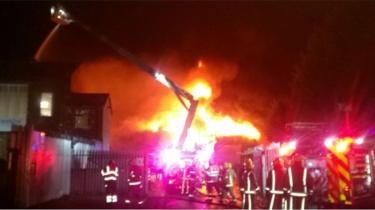
Image copyrightWYFRS INVESTIGATIONSImage captionIt took firefighters around two hours to bring the blaze under control
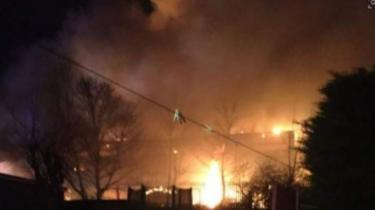
Twenty homes were evacuated overnight due to a major fire at an industrial site in Leeds.
At its height, 70 firefighters and officers were dealing with the blaze at Moulds Patterns and Models on Kent Road in Pudsey, which started at 22:00 GMT.
The firm makes bathroom suites, and some hazardous materials were believed to have been inside the premises.
The fire service said the roof of the building had collapsed and crews remained on site damping down.
Nobody was injured in the blaze and all the residents have returned to their homes.
Incident commander Ronnie Goldwater said: “The fire is now out but it is still smouldering and there are pockets of hotspots which crews are damping down.”
He said the fire service would work alongside a structural engineer to establish the future of the building and that crews were expected to remain on the scene for up to 48 hours.
Image copyrightWEST YORKSHIRE POLICEImage captionThe building is understood to have been completely damaged
Water supplies in the area had been affected because of the amount needed by the crews to tackle the blaze.
Road closures around the site have been removed but people are being urged to avoid the area because of sheet ice over the roads as a result of water used by the fire service.
Investigations are under way to establish the cause.
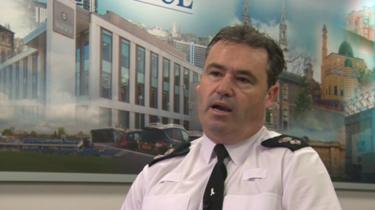
Image captionCh Supt Paul Money said demand is increasing at a time when police resources are strained
An increasing number of people threatening to seriously harm themselves or take their own lives is putting “strain” on police resources, a force has said.
In the three years up to 2017 there was a 39% increase in reports to West Yorkshire Police where the word suicide was used, figures seen by the BBC show.
Ch Supt Paul Money said dealing with them was tying up his officers’ time.
Mental health professionals now work in the control room advising officers.
West Yorkshire Police logged 19,519 calls containing the word suicide in 2016. In 2014 it received 11,859 calls and 15,045 in 2015.
‘Increasing demand’
“I’m not convinced it’s entirely a policing matter to deal with but it’s certainly taking a lot of our time,” Ch Supt Money said.
“There’s no doubt about it, the demand is increasing and there’s a strain on resources as well and to say anything other than that would not be an accurate reflection of what’s going on.”
‘I feel guilty for wasting their time’
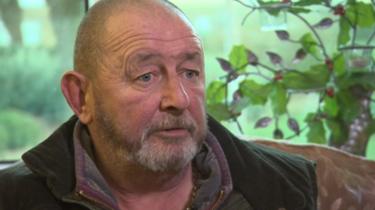
Image captionGary Sheldon, 58, said police were “life-savers” when he suffered a breakdown and tried to take his own life
Gary Sheldon, who tried to take his own life several times, says he feels “guilty” for the help he was given by police.
“I’m sure people are being robbed and murdered that they could be helping. I cried because I felt so guilty for wasting their time but on reflection they’ve saved me,” he said.
“I’m lucky to be alive and very thankful for the help and understanding. I still feel guilty for wasting their time but I’m very appreciative of what they’ve done for me.”
Ch Supt Money said: “In a place like Leeds, we have around five to 10 significant calls every day where an individual is either deliberately or inadvertently putting themselves at serious risk of injury or even death.
“We’re becoming more aware, and our intelligence capability and partnership with colleagues and mental health professionals, is much more effective than ever before.”
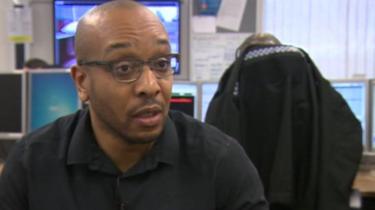
Image captionWest Yorkshire Police mental health professional Wayne Adam said the crisis team being able to assess suicide risk frees up police time
Senior mental health clinician Wayne Adam, from the crisis team, said assessing suicide risk in person or on the phone freed up police officers’ time.
“Something that’s previously taken up to seven hours to deal with can be done in half an hour or even less on the phone,” Mr Adam said.
Mr Sheldon pleaded with people to accept help when it was offered “in whatever shape or form”.
“Even if you think you’re indestructible, nobody is,” he said.
Advice and support
If you or someone you know are feeling emotionally distressed, these organisations offer advice and support:
Samaritans – available 24 hours a day for anyone struggling to cope. A safe place to talk where calls are completely confidential
Papyrus and HOPELineUK – for young people considering suicide or if you are concerned about someone you know
CALM – aims to prevent male suicide in the UK and offers anonymous, confidential listening, information and signposting
Lifeline – support to people suffering distress or despair in Northern Ireland, regardless of age or district
CALL – emotional support and information on mental health and related matters to people in Wales
Breathing Space – a confidential phone and web service for people experiencing low mood, depression or anxiety in Scotland
Survivors of Bereavement by Suicide – helps meet the needs and break the isolation of those bereaved by the suicide of a close relative or friend

 GETTY IMAGES
 GETTY IMAGES