European shares tumble in new sell off

Media captionWall Street’s worst day since the crisis – explained in 90 seconds.
European markets have followed Asian markets lower on Tuesday as investors continued to dump shares.
London, Frankfurt and Paris all fell sharply when they opened on Tuesday with losses of up to 3%. In the US overnight the Dow lost 4.6%.
Japan’s Nikkei 225 closed down 4.7%.
The sell-off began last week after data in the US showed stronger wage growth, which raised expectations that US interest rates might start to rise more quickly to tackle inflation.
The falls follow some good years for investors. In 2017 the Dow was up 25%, helped by a resurgent economy and strong corporate profits.
London’s FTSE stood down 2.46%, or 180 points, at 7,154.57 in early trade.

Presentational grey line

Will falls turn into rout? Analysis, Kamal Ahmed, economics editor

The softness of markets over the last few days is down to one thing.
As monetary policy begins its long journey away from the trillions of pounds of stimulus pumped into the system to keep the economic ship from the rocks, shareholders are beginning to wonder how much of their investments are in companies with strong fundamentals.
And how much is simply holding up an asset bubble – frothy prices led ever higher in an era of ultra low interest rates and cheap money.
Fingers are hovering over the “sell” button.
And once investors start looking at their portfolio and selling out of the froth, automatic algorithmic trading tends to “chase the dip”.
Jane Sydenham, investment director at the stockbrokers Rathbones, told the BBC the falls did not appear to herald a serious change of sentiment: “It is always a bit too early to tell, but I think these recent market falls are in the nature of a correction.
“What we have to remember is stock markets have had a very smooth ride upwards and we’ve not had a fall of more than 3% for 15 months. There’s been a real lack of volatility, which is very unusual.”
She added that bear markets tend to happen ahead of a recession and at the moment growth forecasts were being upgraded.

Re-evaluation

Erin Gibbs, portfolio manager for S&P Global Market Intelligence, said: “This isn’t a collapse of the economy.
“This is concern that the economy is actually doing much better than expected and so we need to re-evaluate.”
One country whose immediate economic outlook remains stagnant is Japan. The authorities there said there was little chance of interest rates being increased.
The Bank of Japan’s governor, Haruhiko Kuroda, ruled out the possibility of raising interest rates in the near future. He said it was “inappropriate” to do so with inflation still about half its 2% target.
But markets in Asia typically follow the lead from the US.
Elsewhere in the region, Hong Kong’s Hang Seng ended down 1,649.8 points – or 5.12% – at 30,595.42 and South Korea’s Kospi index gave up 2.6%. Australia’s benchmark S&P/ASX 200 lost 3.2%.

What happened in the US?

On Monday the Dow Jones Industrial Average index tumbled 1,175 points, or 4.6% to close down at 24,345.75.
The decline was the largest in percentage terms for the Dow since August 2011, when markets dropped in the aftermath of “Black Monday” – the day Standard & Poor’s downgraded its credit rating of the US.
The drop on the Dow was closely followed by the wider S&P 500 stock index, down 4.1% and the technology-heavy Nasdaq, which lost 3.7%.
The White House moved to reassure investors saying it was focused on “long-term economic fundamentals, which remain exceptionally strong”.

Will this have long term impact?

Analysts say that in the short term, investors should be prepared for choppier stock markets.
Joel Prakken, chief US economist for IHS Markit, predicts share price gains will be limited over the next two years.
“The difference between this year and last year is we’re going to see more periods of volatility like this as the market reacts to higher inflation,” he said.
“We’re just not used to it because it’s been so long since we’ve had a significant correction.”
However, he added that markets would need to deteriorate more significantly for him to start to worry about the broader economy.
Asian markets, on the other hand, have benefitted from record low US interest rates in the last decade because money has flowed into Asia in search of stronger returns. Analysts say the expected rate rises could impact Asia over the longer term.

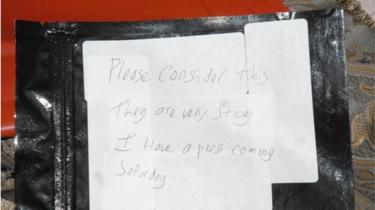
Newport man Kyle Enos jailed for dark web fentanyl drug deals

Media captionKyle Enos used a number of identities to buy and supply fentanyl
A man who used the dark web to export and sell the high-strength painkiller fentanyl has been jailed for eight years.
Kyle Enos, 25, from Newport used a number of identities to buy and supply “significant amounts” of the opioid in the UK, USA and Canada.
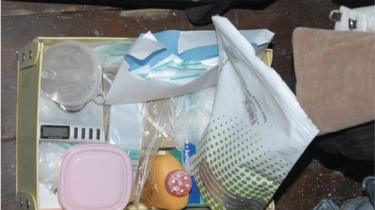
When officers raided his house they found 25,000 doses of the drug, said to be more potent than heroin.
He admitted three charges relating to its supply at Cardiff Crown Court.
Sentencing him on Monday, Judge Eleri Rees said that four of his customers had since died, “evidence of how dangerous a drug it is”.
Items seized during a raidImage copyrightNCA
Image captionItems seized during a raid on Enos’s house on Maindee Parade in Newport
According to America’s Drug Enforcement Agency, fentanyl – which hit the headlines after it was linked to the death of US singer Prince – is considered to be 50 times more potent than heroin.
On Monday, Cardiff Crown Court heard Enos had contact with 166 customers in the UK, Europe and America, between May 2016 and May 2017.

Media captionWatch: “My child died from it” – Robert Fraser’s mum speaks to the BBC
The National Crime Agency (NCA) said four of the people on the list had since died including 23 year old Jack Barton, a Cardiff University student found dead in his accommodation, and 34 year old Arran Rees who was found dead at his home in Ammanford, Carmarthenshire.
But the court heard there was no certainty the fentanyl came from Enos, who used the name “Soviet Bear”, and that no charges are being pursued in relation to these deaths.
After his arrest, Enos admitted purchasing fentanyl from China and selling it on the dark web – part of the internet only accessible using special software, allowing users to largely remain untraceable.
The NCA’s Colin Williams said the agency was targeting people “responsible for playing Russian roulette with the lives of drug users” by mixing synthetic opioids with heroin.
“Kyle Enos is one of these individuals,” he added.
Items seized during a raidImage copyrightNCA
John Davies, of the Crown Prosecution Service (CPS), said he had created a business importing and selling potentially lethal doses of fentanyl on an “international scale”.
He said: “The evidence presented by the CPS showed that Enos was well aware of the risks of taking fentanyl as he warned users when advertising the product.

“Despite this knowledge he continued selling large quantities of the drug and even invited eBay-style reviews from his customers.”

What is fentanyl?

  • An extremely strong painkiller, prescribed for severe chronic pain, or breakthrough pain which does not respond to regular painkillers
  • An opioid painkiller, meaning it works by mimicking the body’s natural painkillers, called endorphins, which block pain messages to the brain
  • The risk of harm is higher if the wrong dose or strength is used
  • Typical symptoms of a fentanyl overdose include slow and difficult breathing, nausea and vomiting and dizziness. It can also raise or lower blood pressure

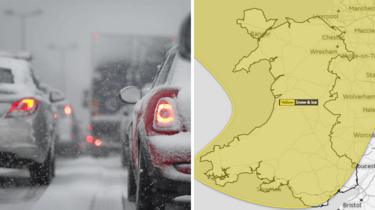
Wales yellow weather warning issued for snow and ice

Weather graphicImage copyrightGETTY IMAGES | MET OFFICE
A warning for snow and ice has been issued by the Met Office for Wales.
The yellow “be aware” warning is in place between 20:00 GMT on Monday until 15:00 on Tuesday.
The Met office said roads and railways could be affected, with longer travel times expected and a chance of ice on untreated roads and pavements.
Away from the coastline, up to 5cm (2in) of snow could fall on high ground. The Met Office is advising people to take extra care.

Scottish police watchdog to hire more staff

police officersImage copyrightGETTY IMAGES
The Scottish police watchdog is planning to recruit more staff to help it deal with a surge in cases.
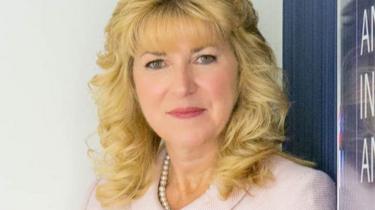
Police Investigations and Review Commissioner (Pirc) Kate Frame said resources had been “stretched to the limit”.
The organisation has about 30 full-time equivalent investigators working on 31 live investigations.
Ms Frame said there had been a “considerable rise” in the number of cases involving senior police officers.
In a letter to the convenor of Holyrood’s justice committee, Margaret Mitchell, she said recruitment would start soon. The additional staff should be in place by April.
Ms Frame said: “Throughout 2017, I continued to witness an increase in the scale and complexity of investigations referred to me and a considerable rise in the number of senior officer (above the rank of assistant chief constable) misconduct referrals to me by the Scottish Police Authority.
“Being aware that our resources were already stretched to the limit, and as I was extremely concerned about the unsustainability of the situation, I raised this issue on several occasions with our sponsor team at the Scottish government.”

Budget increase

The commissioner said she welcomed the additional funding she is set to be given, an increase in her budget of more than £1m.
She added: “Whilst it is always almost impossible to predict with any degree of certainty how long it will take to complete any investigation, the shortage of resources throughout 2017 has undoubtedly impacted on the speed at which the investigation team has been able to complete its work.
Commissioner, Kate FrameImage copyrightPIRC
Image captionKate Frame welcomed the additional resources being made available
“I trust that this letter gives you some indication of the acute pressure that staff here have been working under, in order to meet the ever-increasing demand placed on this organisation and provide you with some reassurance that these demands have now been recognised by the latest funding allocation.”
Scottish Liberal Democrat justice spokesman Liam McArthur said: “While the Scottish government has now given it a fresh financial package, it is clear that Pirc could have done with this much earlier.
“Pirc does critical work and SNP ministers must take responsibility for the delay to these cases.”
A Scottish government spokeswoman said: “As cabinet secretary made clear to parliament last week, we received a business plan from Pirc in late 2017 on the increasing demand that it is facing and the resources needed.
“We considered that and with the support of parliament, we intend, if the budget is agreed, to increase the Pirc’s budget by more than £1m in the forthcoming financial year.
“That would increase its budget by almost 30%, in order to allow it to increase the range of staff that it has to deal with the investigations and demands that it is experiencing at present.”

”I’m polyamorous, why should I limit my love?’

Oliver, Noni and Morgan holding hands
Image captionOliver, Noni and Morgan are in a polyamorous relationship
Noni is polyamorous – she has two boyfriends and is committed to them both equally.
The 23-year-old, who lives in North Berwick, says she felt trapped and claustrophobic in monogamous relationships, no matter how much in love she was.
She tells the OP Scotland documentary Love Unlimited: “There is nothing wrong with one partner.
“I just don’t see why I should artificially limit the amount of love that I put out into the world.
“I’m greedy. I like people liking me.”

Open relationship

Polyamory is having more than one romantic relationship at a time.
Noni says it could include non-monogamous practices such as swinging but for her there is an “ethical” dimension that means the relationships themselves are important.
Morgan and Noni
Image captionMorgan and Noni both have other partners
Noni is in relationships with Morgan, a 27-year-old administrator, and Oliver, a 24-year-old drama graduate.
She met Morgan through dating app Tinder when she lived in Dundee a couple of years ago.
Morgan had been with girlfriend Hannie for four years when he met Noni – and they are still together.
“Hannie introduced me to the idea of polyamory,” says Morgan.
“When I mention that to some people they are quite surprised because they think open relationships, polyamory, that’s clearly the man’s idea because it’s lots of sex, right?
“Lots of communication, a little more sex,” he says.

‘Mutual joy’

Noni says Morgan is very good at “emotional communication”, which has helped them maintain their relationship even though Noni has moved away to study drama in Edinburgh.
According to Morgan, Hannie, who is not currently seeing anyone else, is “happy for him” to have a relationship with Noni.
He says: “She is very encouraging, she is very supportive. There is a lot of mutual joy in all of it.”
Noni and Oliver
Image captionNoni has been seeing Oliver for about 18 months
Oliver is Morgan’s meta – this is the polyamory term for the partner of one’s partner, with whom one does not share a direct sexual or loving relationship.
Oliver has been seeing Noni for about 18 months.
They met during the Edinburgh Fringe a couple of years ago and got together after appearing in a show together in 2016.
Oliver says Noni was clear from the start of their relationship that she was polyamorous.
“That was who Noni was and it’s fine,” he says.
Noni and Oliver
Oliver says that falling for someone who already has another partner took some careful consideration.
“It wasn’t that it was a problem, it was more the idea ‘could this become a problem?’,” he says.
“Because when you start off seeing someone it is one thing but as it gets increasingly serious there was the question of ‘I’m fine with it now but could I become jealous? Could I start seeing this differently?
“But then I just decided I liked Noni and to just go with it.”
As it is an open relationship, Oliver is free to date other people too, if and when he wants to.
“If something happens, then something happens but I’m not on the lookout,” he says.
“At the same time, I’m not closed off to the idea either.”
Noni says she thinks she would be really happy if he met someone nice.

Different form

Although Noni sees Oliver far more often, because he lives much closer, she speaks to Morgan every day.
She says there is no favouritism and the relationship she has with each is vastly different.
“I could not tell you what I liked more between chocolate and theatre,” she says.
Image captionNoni says safe sex is very important when you are part of a “daisy chain”
“That’s the way I see it. No matter how much I love one, that’s not going to mean the other will fade away.
“It might take on a different form but they are still just as important to me.”
Noni adds: “I’m committed to them both in very different ways but fundamentally not one more than the other.”
Another “ethical” aspect of polyamory that is important to Noni is to protect each other from sexually transmitted diseases.
She says: “Using condoms and letting your partners know who you are or are not using condoms with is a necessity to practising polyamory in a way that is safe and ethical because obviously if I mess up and catch something then that risks my partner’s health and that risks my meta’s health and so on.”
Although she is only 23, Noni insists that polyamory is a lifestyle choice she intends to continue and does not think it is incompatible with raising a family.
She says: “I know people who are polyamorous and have children.
“There is an assumption that polyamory is an overtly sexual thing which it does not have to be. You don’t have to have an orgy house.”
“It is really outdated to think a child needs one mother and one father.”

Monogamous country

Noni says polyamory is not actually new but it is still taboo, though that could be changing.
“People have been practising polyamory for as long as people have existed,” she says.
“But Scotland is very much a monogamous country.
“The more we engage with people and talk about it, the more accepted it is going to become, slowly but surely.
“I would not say we are blazing a trail but we are definitely creating an environment that allows for a healthy community.”

Divers uncover Firth of Lorn ‘illegal scallop dredging’

broken scallop shellImage copyrightOPEN SEAS
Image captionDamaged shells and scallop meat were found among dislodged boulders
A team of divers say they have uncovered evidence of illegal scallop dredging in a protected area on the west coast of Scotland.
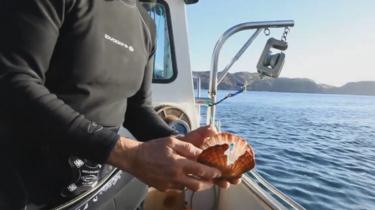
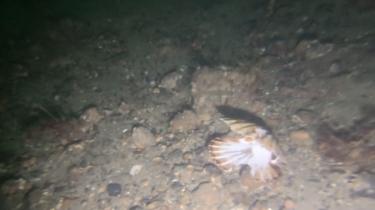
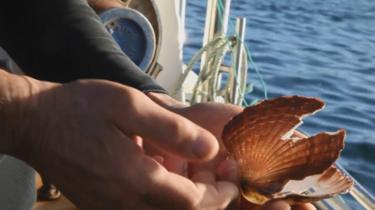
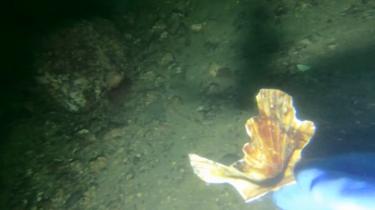
Broken shells, dislodged boulders and fresh scallop meat were all filmed on the seabed in the Firth of Lorn.
Environmental group Open Seas said it was proof that Marine Protected Areas (MPAs), where fishing within their limits is banned, are not working.
It led to an emergency closure of the waters.
Steve Barlow and Davy Stinson discovered the aftermath of dredging on a recent dive near Insh island and returned with camera equipment.
Mr Barlow said: “I could see lines on the seabed which is classic of the dredges. This is where they dredge spikes along the sea bed.
“Then I was seeing boulders and broken scallop shells and scallops with meat still in them. So it was very recently that it happened.”
broken scallopImage copyrightOPEN SEAS
Image captionBroken scallop shells were found on the seabed
By the second dive, the dredging lines had been churned up by currents but marine damage was still present.
He added: “It’s 100% definitely damage caused by the sword from the scallop dredging.
“It’s a Marine Protected Area which had historically been very heavily dredged. When the protection came in, it started to recover and the environment was rebuilding itself.”
Dredgers catch scallops by dragging heavy equipment along the seabed.
They are banned from operating in certain areas to protect marine features. But divers, who catch the scallops by hand, are allowed to operate.
An MPA to protect the common skate population was introduced in 2014 from Loch Sunart to the Sound of Jura.
The divers believe dredging is “common” with boats operating without location-tracking equipment and possibly at night.
broken scallop shellImage copyrightOPEN SEAS
Image captionCampaigners say the evidence proves Marine Protected Areas are not effective
Marine Scotland Compliance has been informed of the damage.
Nick Underdown, from Open Seas, said: “It’s a tragic situation. If this seabed was left alone it would recover, but instead we have got illegal dredging going on. This is not an isolated incident.
“It’s a crime. There are vessels out there which are illegally dredging inside Marine Protected Areas and they are selling those scallops into the supply chain.
“The Scottish government have got to get on top of this situation.”
In April 2017, damage was caused to a rare flame shell reef in Loch Carron by a dredger which was operating legally.
But the incident caused such outrage that the Scottish government’s environment secretary Roseanna Cunningham ordered the immediate closure of the fishing grounds.
broken scallopImage copyrightOPEN SEAS
Image captionDebris was spotted near Insh island
The Scottish government confirmed the Open Seas divers’ latest claims were being investigated.
A spokesman said: “We have received recent reports of suspected illegal dredging in the area. Marine Scotland Compliance are actively investigating the activities of a number of suspect vessels.
“Compliance officers of Marine Scotland are keen to work with local groups to help them fully understand the regulations surrounding particular Marine Protected Areas and properly document any suspicious activity they might come across.
“Marine Scotland invests significant resource into regular boat patrols, as well as the presence of one of its Marine Protection Vessels in the area to ensure compliance. The risk of breaches of regulations are considered regularly and further resources tasked to the areas of highest perceived risk.”
The Scottish Fishermen’s Federation, which represents some dredger owners, has condemned the dredging.
Chief executive Bertie Armstrong said: “The Scottish Fishermen’s Federation distances itself from any illegal activity in MPAs, or elsewhere.
“We understand that Marine Scotland has been made aware of any evidence gathered and we await the outcome.”

New Scottish fund to back women in politics

Nicola SturgeonImage copyrightPA
Image captionNicola Sturgeon says she owes a “debt of gratitude” to those who campaigned for the vote
First Minister Nicola Sturgeon has announced a £500,000 fund to encourage more women to become involved in politics.
The initiative is intended as a tribute to the suffragettes who campaigned for women to be allowed to vote.
Backed by the Scottish government, the fund will provide grants for local initiatives across the country.
A debate will take place at the Scottish parliament later celebrating 100 years of female suffrage.
Speaking to OP Scotland, the first minister said: “We’ve come a long way. There’s no doubt about it.
“In 1918, some women won the right to vote. It was 10 years after that before we had universal female suffrage.
“The legacy of the suffragists and the suffragette movement is a really powerful one. As the first woman to be the first minister of Scotland, I know that I owe a huge debt of gratitude to the women who sacrificed so much back then to win our right to vote.”

Women’s library

The new fund will also back projects commemorating the 100th anniversary.
Recipients will include the Glasgow Women’s Library.
In spite of what has been achieved, Ms Sturgeon said “much still needs to be done if we are to eradicate gender inequality and create a fairer and more prosperous country”.
But she insisted progress over the past century had been significant.
“I often stand in Bute House, the official residence of the first minister, and I can look out the window over Charlotte Square,” she said.
“Charlotte Square was the starting point for the women’s march from Edinburgh to London back in 1912.
“I often stand there and look out and just imagine what they felt – solidarity and excitement no doubt but also fear and trepidation.”
She added: “I sometimes wish I could just speak to them for a moment and say ‘you will win, you will prevail’.”

Families of IRA Hyde Park bombing victims granted legal aid

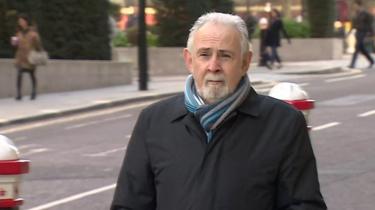
John Downey
Image captionJohn Downey denied murdering the soldiers in the 1982 Hyde Park bombing
The families of four soldiers killed in the 1982 IRA Hyde Park bombings are launching a civil case against one of the alleged bombers.
The Sun reports that the families thanked its readers for their support in securing legal aid for civil action.
A prosecution against John Downey, 66, was dropped in 2014 after a judge ruled that an official assurance given in error meant he could not face trial.
He had an “on the run” letter telling him he was no longer a wanted man.
Mr Downey denied murdering the soldiers.
He cited an official letter he had received in 2007 assuring him he would not face arrest and prosecution for IRA crimes.
At that time, Mr Justice Sweeney heard from Sinn Féin’s Gerry Kelly that 187 people had received “on the run” letters assuring them they did not face arrest and prosecution for IRA crimes.
Mr Justice Sweeney’s judgment laid bare the details of a secret arrangement to deal with several hundred republicans against whom there was no existing evidence.
They may still have been potentially of interest to police after July 2000.
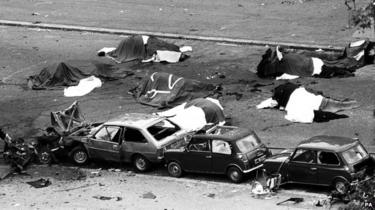
The Hyde Park attack on 20 July 1982 killed Squadron Quartermaster Corporal Roy Bright, Lieutenant Anthony Daly, Trooper Simon Tipper and Lance Corporal Jeffrey Young.
The aftermath of the Hyde Park attackImage copyrightPA
Image captionFour soldiers and seven horses were killed in the Hyde Park attack
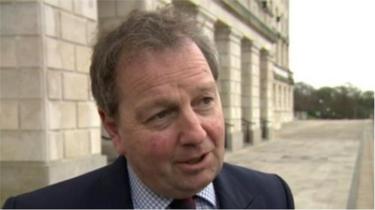
Former Ulster Unionist MP, Danny Kinahan, welcomed the news.
Mr Kinahan, who was a former colleague of the soldiers who were murdered, said: “The granting of legal aid to the Hyde Park Justice Campaign is fantastic news, but it should have happened a lot sooner.
“The families of my murdered colleagues have been put through hell.
“Firstly they lost their loved ones, stolen from them in the prime of their lives.
“Then they suffered the pain of the farce of the trial of John Downey being thrown out because of one of the despicable on-the-run letters.
Danny Kinahan
Image captionFormer Ulster Unionist MP, Danny Kinahan, welcomed the news
“And finally they have had to endure being put through the wringer by the Legal Aid Agency who repeatedly refused their application for Legal Aid.”
Mr Kinahan said he was glad that the Legal Aid Agency has reversed its previous decisions.
The Hyde Park attack is one of the most significant unsolved IRA bombings of The Troubles.
One other person was convicted in relation to the deaths before being later cleared on appeal.

HMP Lindholme: Report finds organised crime and drug use

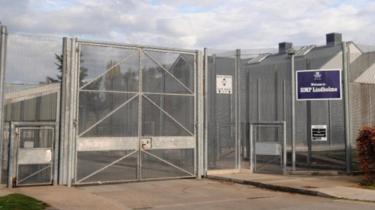
HMP LindholmeImage copyrightPA
Image captionThere are about 1,000 prisoners at Category C HMP Lindholme
“Shocking” levels of drug use at a jail are due to the large number of inmates connected to organised crime, prison inspectors have said.
About 200 of its 1,000 prisoners with organised crime links “continue to ply their trade”, inspectors found.
And they have questioned whether HMP Lindholme, near Doncaster, was a suitable place for such inmates.
Her Majesty’s Prison and Probation Service said it was working to disrupt organised crime gangs.
The report of an inspection in October said the threat posed to inmates by illicit drugs “remained severe”.

‘Shockingly high’

HM Chief Inspector of Prisons Peter Clarke said more than two thirds of prisoners claimed it was easy or very easy to get hold of drugs.
“A shockingly high 27% said they had developed a problem with drugs since being in the prison,” he added.
The Category C prison is on a former 40-hectare (100-acre) RAF airbase which inspectors said had a lengthy perimeter that was “difficult to defend”.
“When this is combined with the linkages of so many prisoners to organised crime and their obvious resourcefulness in getting large quantities of drugs into the jail, it means that further progress will be difficult to achieve,” Mr Clarke said.
“There is a question to be asked as to whether Lindholme is actually a suitable establishment in which to hold its current population given the apparent intractability of the problem.”
A man smoking drugsImage copyrightTHINKSTOCK
Nearly all prisoners are serving more than four years and about a quarter are serving more than 10-year sentences.
The report noted that although HMP Lindholme is classed as a working prison, a quarter of inmates are locked in their cells during the day.
The inspectors said there had been improvements at the jail since its last inspection and found positive aspects in the prison’s approach to equality and diversity, and a good response to alleged discrimination.
Michael Spurr, chief executive of the Prison and Probation Service, said: “We are working closely with the police and National Crime Agency to manage and disrupt organised crime gangs and the prison has a coherent strategy to tackle violence and to improve safety.”

Canvey Island brain bleed man in 14 hour ambulance wait

David Axford
Image captionDavid Axford began to feel unwell at his home in Canvey Island on 30 December
A man has told how he endured a 14-hour wait for an ambulance after suffering a brain haemorrhage.
Building site manager David Axford began to feel unwell at his home in Canvey Island, Essex, on 30 December.
He said after telling the 999 call handler his symptoms he was told a paramedic was being dispatched.
The East of England Ambulance Service (EEAS) said it was “under severe pressure and always tries to prioritise the most life-threatening calls”.
The OP was told that as the 48-year-old’s condition worsened, his wife Kim repeatedly called 999 asking when the ambulance would arrive.
“I was in so much pain. I did not know what it was,” Mr Axford said.
“It was the worst headache I have ever experienced. I felt my head was going to explode.”
976x2 line

An ambulance service in turmoil?

An ambulance outside an A&E departmentImage copyrightPA
Image captionMrs Axford, a fitness instructor, said she believed her husband David was ‘really poorly’
976x2 line
On the third call, Mrs Axford said, the operator told her not to phone back unless it was an “absolute emergency”.
“Dave was really poorly. I didn’t think it was going to be that long,” the fitness instructor said.
“He couldn’t stand up, his left eye was drooping, he was slurring his words.
“He said there was a pinging in his head like an elastic band, he started to lose the feeling in his legs and he kept going in and out of consciousness.”

‘Critical condition’

The ambulance did not arrive until 14 hours after the first call.
After he arrived at Southend Hospital Mr Axford was taken for a scan which found he had suffered a bleed to the brain before he was moved to Queens Hospital in Romford in a critical condition.
He was discharged on 8 January but is undergoing continuing out-patient treatment.
The EEAS spokesman said the trust received 4,159 calls on 30 December and almost 1,300 of those were in Essex.
“The case is still under review and, as such, cannot be discussed until further information can be gained,” he said.
“Our priority is with the patient and his family and any such conversations will be with them.”
Design a site like this with WordPress.com
Get started