UK must tackle ‘astonishing’ cost of congestion, study says

Man stuck in trafficImage copyrightGETTY IMAGES
Image captionThe study found London drivers spent an average of 74 hours in gridlock last year
UK drivers wasted and average of 31 hours in rush hour traffic last year, costing each motorist £1,168, a study suggests.
The UK is the world’s 10th most congested country and London is Europe’s second most gridlocked city, according to traffic data firm Inrix.
Manchester, Birmingham, Luton and Edinburgh completed the UK’s top five worst affected cities.
The government said a record £23bn is being invested in road schemes.
The study – which took into account direct costs such as wasted fuel and time, as well as indirect consequences, such as higher prices for household goods due to increased freighting fees – found London drivers spent an average of 74 hours in gridlock last year, at a cost of £2,430.
The worst stretch of road was the A406 outer London ringroad from Chiswick roundabout to Hanger Lane during the evening rush hour.
Inrix chief economist Dr Graham Cookson called for innovative approaches to deal with the “astonishing” cost of congestion that takes “billions out of the economy”.
He said flexible working hours and road charges “have potential”, but said transport authorities should be looking at data analytics and artificial intelligence which “promise to reinvent our approach to traffic management”.
Seven UK locations suffered double-digit rises in the number of hours lost to queues, including Wrexham (up 17%) Mansfield (up 15%) and Bath (up 12%).

Scotland template

Despite the scale of the congestion problem, three of Scotland’s big cities saw major improvements in traffic flow following heavy investment in road infrastructure.
The completion of road projects on the M8, M73 and M74 in central Scotland helped ease congestion by 20% in Aberdeen, 15% in Glasgow and 10% in Edinburgh.
“Journeys have got better because of the combination of new roads and the end of roadworks,” Dr Cookson added.
The Department for Transport said that alongside its national road investment, councils are to receive more than £7.1bn in funding by 2021.
A spokeswoman said this “record amount” of funding will “help to upgrade and maintain local roads up and down the country”.
“Alongside this, we’ve announced plans for a new major road network that will give councils access to a multi-billion pound fund to improve or replace the most important A-roads in their area,” she added.

Stagecoach East Coast rail franchise to end early

Virgin East Coast trainImage copyrightGETTY IMAGES
Stagecoach’s contract to run the East Coast Mainline rail franchise will end earlier than expected after the government said the operator had “got its numbers wrong”.
Transport Secretary Chris Grayling said Stagecoach would continue running the London to Edinburgh line only for “a small number of months and no more”.
He said the government may step in to run the service.
He added that the day-to-day operation of the line would be unaffected.
The East Coast Mainline franchise was taken into public ownership in 2009 after being run by National Express.
It was reprivatised when Stagecoach and Virgin signed a deal to run the East Coast line from 2015 to 2023, promising to pay the government £3.3bn to run the service.
Stagecoach owns 90% of the joint venture and Virgin owns the remaining 10%.
In November, the Department for Transport said Stagecoach and Virgin would withdraw from running the service three years early, in 2020, after running into difficulties.
But on Monday Mr Grayling told the House of Commons the situation was now “much more urgent” and that new arrangements were needed “in the very near future”.
Chris GraylingImage copyrightUK PARLIAMENT
Mr Grayling said he was considering two approaches.
One option was to allow Stagecoach to continue operating the franchise on a short-term and not-for-profit basis until a new contract is awarded in 2020.
Alternatively, East Coast Mainline could be brought back under government control and be run by the Department for Transport through an operator of last resort.
Mr Grayling said: “The problem is that Stagecoach got its numbers wrong. It overbid and is now paying a price.”
Labour former transport secretary Lord Adonis accused Mr Grayling of “undertaking another unjustified bailout of Virgin and Stagecoach at the expense of taxpayers”.
He said: “The reason for these disgraceful bailouts we’ve been seeing from Mr Grayling is because he simply is not prepared to contemplate putting his duty above ideology and substituting for failing private companies a state company.”
However Mr Grayling insisted that there was “no question of a bailout” for the company, adding: “Stagecoach will be held to all of its contractual obligations in full.”
He said Stagecoach was set to lose about £200m, equating to more than 20% of its total market value.
Mr Grayling said: “It should also act as a stark warning to any company tempted to over-bid in future.”

Contract extension

At the same time, Mr Grayling also announced that another joint venture between Stagecoach and Virgin had won an extension to operate the West Coast Mainline rail service between London and Glasgow.
He said that this joint venture will operate the West Coast Mainline from 1 April 2018 until potentially 31 March 2020.
A Stagecoach subsidiary is also on the shortlist of bidders hoping to operate the East Midlands franchise, scheduled to begin in August 2019.
Shadow transport secretary Andy McDonald said: “That Chris Grayling awarded a profitable contract to Virgin and Stagecoach on the West Coast while simultaneously confirming the same companies have collapsed on the East Coast shows Government policy is in chaos.
“This is yet another Tory handout to private shareholders at the public’s expense. Failing train companies should not be awarded future contracts, but this government is rewarding them for failure by extending their lucrative deal.”
Mick Whelan, leader of the train drivers’ union Aslef, said: “It is outrageous that Virgin Trains has been handed a lucrative new contract to run services on the West Coast Mainline despite serious criticism of its owners’ handling of the East Coast franchise.”

‘We delivered’

Stagecoach Group Chief Executive Martin Griffiths said: “A lot has been said and written in the past few months about Virgin Trains East Coast – a lot of it has been misinformed and much of it has been politically motivated.”
He said Stagecoach and Virgin had delivered for passengers, employees and the economy including generating payments to the taxpayer of more than £800m.
“The reality is that we’ve neither walked away from the East Coast franchise nor have we received or asked for any special treatment,” he said.
There are no legal grounds to prevent Stagecoach from bidding for current or future franchises, Mr Grayling told the Commons.

Remove hard Brexiteers, ex-minister Anna Soubry tells PM

Media captionThe frontbench is in hock to 35 hard ideological Brexiteers – Anna Soubry
A pro-European ex-business minister has called on Theresa May to “get a spine” and remove 35 “hard ideological Brexiteers” from the Tories.
Anna Soubry told OP Newsnight she is willing to leave if the likes of Boris Johnson and Jacob Rees-Mogg take over.
The MP, who was in David Cameron’s cabinet between 2015 and 2016, said the PM’s “red lines” to leave the EU single market and customs union are wrong.
Former Tory Chancellor Lord Lamont said Ms Soubry was being “quite ridiculous”.
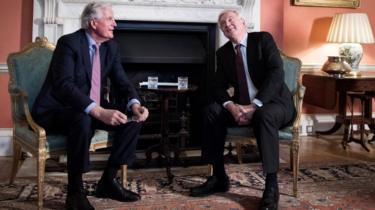
Ms Soubry was speaking after the EU’s chief negotiator Michel Barnier warned in Downing Street that the UK’s Brexit plans would create “unavoidable” barriers to trade in goods and services.
She told Newsnight that all her suggestions, to remain in the single market and customs union or to negotiate membership of the European Free Trade Association, have been dismissed by No 10 – and blames the influence of Tory Brexiteers.
“My front bench… is in hock to 35 hard ideological Brexiteers who are not Tories,” the Broxtowe MP said.
“They are not the Tory party I joined 40 years ago and it is about time Theresa stood up to them and slung ’em out. They have taken down Major, they took down Cameron, two great leaders neither of whom stood up to them.”

‘Not proper Conservatives’

The former minister added that she is prepared to leave her party unless Theresa May challenges her opponents.
“If it comes to it I am not going to stay in a party which has been taken over by the likes of Jacob Rees-Mogg and Boris Johnson. They are not proper Conservatives.”
She added: “Unless Theresa stands up and sees off these people she is in real danger of losing huge swathes of not just the parliamentary party but the Conservative party.
Michel Barnier and David Davis after their meeting in Downing StreetImage copyrightGETTY IMAGES
Image captionMs Soubry spoke out after EU negotiator Michel Barnier held talks with Brexit Secretary David Davis
“That is the risk that she runs. She thinks she can pander to 35 forgetting there is a much larger group who are getting sick and tired of this.”
Ms Soubry was speaking as the Brexit cabinet sub committee prepares to meet on Wednesday and Thursday this week to draw up a UK negotiating position on its future relationship with the EU.
On Monday Downing Street reiterated its decision to withdraw from the EU customs union and not to join a watered down customs union with the EU.
Ministers instead want to negotiate a separate customs arrangement or customs partnership. Downing Street says this is the only way to allow the UK to sign future trade deals around the world while seeking to maintain frictionless trade with the EU.
Ms Soubry told Newsnight: “Frankly people have got to grow some, get a spine, stiffen up, stand up to these people – most of them are ghastly bullies but also cowards at the same time – and speak up for their constituents and what is right for our country.
“And if that means leaving the party, form some new alliance, God knows I don’t know. But we just simply cannot go on like this any longer.”
Asked about Ms Soubry’s intervention, the pro-Brexit Lord Lamont said: “I think that is quite ridiculous frankly.
“I don’t want to be rude about Anna Soubry but she does tend sometimes to go over the top. I think she is doing that here.”

Singapore Airshow: Asia aviation in five charts

Asia’s airlines have more new planes on order than anyone else. Its airports are some of the fastest-growing in the world.
And the region is also home to the most popular aircraft journey on the planet.
With Asia’s largest air show taking place in Singapore, we’ve been taking a look at the region’s aviation industry.
Asia is the world’s dominant region for air travel. Of all the passengers which airlines carried globally in 2016, 35% flew on Asian carriers.
And that market share is going to grow.
Every year, tens of millions of Chinese travellers choose to take an aeroplane for the first time.
Airline body IATA forecasts China will comfortably overtake the US in the next two decades to become the biggest aviation market. While there were about 537 million passenger journeys in 2016, that’s predicted to hit 1.46 billion by 2036.
And as you can see from the chart, Indian passenger numbers are expected to more than treble, though it is starting from a relatively low base.
“Growing incomes, a burgeoning middle class and peaking working age populations… has translated into the rapid rise in the propensity to travel,” says Angela Gittens, director general of Airports Council International World.
More travellers generally means busier airports (as well as new ones being built).
And Asia has eight of the ten fastest growing airports on the planet, according to Airports Council International.
Of those eight, six are in eastern Chinese cities like Tianjin, Zhengzhou, Harbin and Chongqing.
Tianjin, for example, had just 2.7 million passengers in 2006 but in 2016 it saw more than 16.8 million people using it.
Remember though, busier isn’t always better. China has one of the worst records for on-time departures in the world.
Indonesia also has some rapidly expanding airports, including Surabaya and Denpasar in Bali.
While the latter is an indicator how much the holiday island has become a destination for tourists, Surabaya’s growth is largely down to Indonesia’s booming domestic aviation market.
When measured by volume of passengers, Beijing and Tokyo Haneda and Shanghai all make the list of the world’s top ten busiest airports – a list that is incidentally topped by Atlanta.
If you want to see which carriers are expanding the fastest, there’s no perfect measurement. But one decent indicator is to look at outstanding orders for new planes.
It’s a snapshot of which airlines are going to grow.
We’ve trawled the data available from Airbus, Boeing, Bombardier and Embraer. And studying this backlog (the difference between planes ordered and planes delivered) shows that it’s Asian airlines who have the biggest future orders.
Using this measurement, Malaysia’s AirAsia is currently Airbus’s biggest customer, with 472 aircraft still to be delivered.
Meanwhile Lion Air, an Indonesian low cost carrier, has split its business between Airbus and Boeing, and is waiting for 381 planes.
And in India, you can see the country’s airlines positioning themselves to capture the growth in domestic travel as more affluent, time-conscious travellers get off the railways and into the skies.
Indigo has almost 400 Airbus planes due (mainly A320neo) while Spicejet is waiting on 167 jets, some from Bombardier but mainly from Boeing. GoAir and Jet Airways also have sizeable backlogs.
If you’re wondering why Chinese carriers aren’t on the chart, the answer is partly that China’s early expansion phase is over and its biggest carriers already have large fleets.
There are more on the way of course, with both Airbus and Boeing desperate to tap into that demand. But the volumes of outstanding orders is far lower than the airlines mentioned above.
As you can see, US airlines are still carrying more passengers than anyone else.
Only China Southern represents Asia in the top five.
And another fun fact, the airline with the biggest fleet of passenger jets is American Airlines which has about 1,500 planes.
If you were asked to guess which was the world’s busiest air route, the chances are you wouldn’t get it right.
If you were told it was in Asia, perhaps you’d take a stab at Hong Kong to Bangkok or Mumbai to Delhi.
But as the chart shows, that title is held – quite convincingly – by a domestic flight within South Korea, between the capital Seoul and Jeju, an island in the south.
In 2016 (the last year for which complete figures are available) – 11.7 million passengers travelled on the route. There are almost 200 flights a day covering a journey that takes about an hour and five minutes.
It’ll be interesting to see whether the passenger number falls for 2017.
With its beaches, volcanic craters and hiking trails Jeju is a huge tourism destination, and Chinese travellers have traditionally been among the most frequent foreign visitors.
South Korean tourism figures show that the number of Chinese visitors halved last year from 2016, following Beijing’s ban on the sale of package holidays to the country – in a dispute over Seoul’s support for a US anti-missile shield.
But even if numbers do come down, it’s likely to remain the world’s busiest route.
And that means its popularity is a quirky fact that you can use to impress your friends for years to come. You’re welcome.


Two Canadians ‘safely’ leave Syria

Canadian flagImage copyrightREUTERS
Two Canadians have ‘safely’ left Syria and have been released to Turkish officials.
Sean Allen Moore and Jolly Bimbachi were picked up by al-Qaeda-linked Hayat Tahrir al-Sham while in Syria.
Hayat Tahrir al-Sham is an al-Qaeda-linked jihadist alliance that dominates the north-western Syrian province of Idlib.
“We are relieved that two Canadian citizens have safely left Syria,” said Global Affairs Canada spokeswoman.
Amy Mills said in a statement the department would not offer more details on the case due to privacy concerns.
Ms Bimbachi left Canada for Lebanon last year to search for her children.
Their father had taken them to Lebanon in 2015 to visit relatives but did not return as planned, according to the Chatham Daily News.
Mr Moore was in the Middle East to assist Ms Bimbachi in returning her children to Canada, CBC news reported.
Ms Bimbachi told media in Turkey that she and Mr Moore crossed into Syria from Lebanon, hoping she could get her children to the Canadian embassy in Turkey.
There, they said they ended up in the hands of Hayat Tahrir al-Sham before being transferred to the Salvation Government who assisted in getting them safely to Turkey and in contact with Canadian officials.
Ms Bimbachi said the pair were well-treated. They were both released unharmed.
Both Mr Moore and Ms Bimbachi are from the town of Chatham, Ontario, about 300km (185 miles) southwest of Toronto.
Jeff Bultje told the OP that his friend Mr Moore was “in the helping business” and had travelled to the region previously on charity missions.
“He loves to dig into stuff,” Mr Bultje said. “To set things right.”
He said he last spoke to Mr Moore around Christmas.

Incest charge as US woman has baby ‘by her biological father’

Steven Pladl, 42, and his biological daughter Katie Rose Pladl, 20Image copyrightCBS
Image captionSteven Pladl, 42, and his biological daughter Katie Rose Pladl, 20
A US man and his biological daughter are accused of an incestuous relationship after authorities say they had a baby together.
Steven Pladl, 42, and Katie Rose Pladl, 20, were arrested at home in North Carolina, after his ex-wife told police he had impregnated their daughter.
According to the arrest warrant, the couple planned to marry despite being legally banned from doing so.
Ms Pladl was legally adopted out of state after her birth in 1998.
The father and daughter, who live in town of Knightdale, just outside the state capital of Raleigh, are both charged with incest and adultery.
They are each being held in custody on bail of $1m (£715,000).
Katie Rose Pladl connected with her biological parents through social media when she turned 18.
She moved in with them and their two other children in August 2016 at their former home near Richmond, Virginia.
Ms Pladl’s birth mother legally separated from her husband in November that year after he began sleeping in his adult daughter’s room, she told police.
The ex-wife, who has not been named, said she first learned of her daughter’s pregnancy after reading about it in the diary of one of her and Mr Pladl’s other children, according to arrest warrants.
She also said that Mr Pladl had admitted to the affair when she confronted him on the phone after their separation.
He had asked the two younger children to refer to Ms Pladl as their step-mother even though she was their sibling, according to court papers.

Russian jet pilot ‘pulled grenade pin’ to avoid capture in Syria’s Idlib

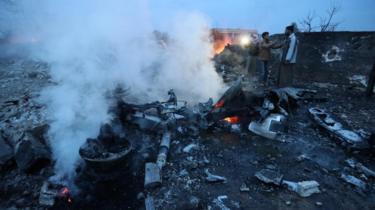
smoking wreckage of a downed Sukhoi-25 jet in SaraqebImage copyrightEPA
Image captionImages said to show the wreckage of the Sukhoi-25 aircraft
Russian media have lauded a pilot killed in Syria as a hero, saying he detonated his grenade to avoid being captured by jihadists who had shot his plane out of the sky.
Roman Filipov’s reported last words were: “Here’s for the guys.”
His Sukhoi-25 ground-attack aircraft was shot down over rebel-held Idlib province. He survived the attack and ejected, but died in a ground fight.
Former al-Qaeda affiliate Hayat Tahrir al-Sham said it had attacked the plane.
TV Zvezda, which is controlled by Russia’s defence ministry, said the pilot was posthumously presented with the Hero of Russia medal, also known as the Gold Star.
It reported that he told his superiors he had been hit by a missile, before ejecting himself from the plane.
The BBC has not been able to independently verify what he said at the time or how this information was obtained.
The UK-based monitoring group Syrian Observatory for Human Rights earlier said that fighters had captured the pilot and later killed him.
The Syrian government, backed by Russian air power, launched a major offensive in December against rebel groups in Idlib.
Air strikes in the region intensified on Sunday, reportedly killing about 20 people, the day after Mr Filipov’s plane was shot down.
Nine people were also treated for breathing difficulties after a bomb believed to be filled with chlorine was dropped on the town of Saraqeb.

What more do we know of the incident?

The Sukhoi-25, a close-support ground-attack aircraft, was operating over the town of Maasran in Idlib.
There had been dozens of Russian air strikes in the area over the previous 24 hours, monitoring groups said.
Images said to show the wreckage of the Sukhoi-25Image copyrightEPA
Image captionHayat Tahrir al-Sham, formerly linked to al-Qaeda, said it had attacked the plane
Video posted on social media showed the jet being hit and quickly catching fire, before spiralling to the ground.
Video from the ground showed the wreckage with red stars on the wings.
Russia’s defence ministry said: “The pilot had enough time to report that he had ejected in an area controlled by the militants”.
“During a battle with terrorists, the pilot was killed.”

Who shot the plane down?

In a statement released on social media, the Hayat Tahrir al-Sham group claimed it had shot down the plane using a shoulder-launched surface-to-air missile.
The group said the plane had been carrying out an air raid over the nearby city of Saraqeb.
Hayat Tahrir al-Sham has operated in the region for years under a series of different names.

Is this a rare event?

Very. It could be the first time rebels have shot down a Russian fighter jet since Moscow began its Syria campaign in September 2015, although rebels did bring down a helicopter in 2016.
Media captionFootage said to show the downing of a Russian plane by Turkey in 2015
About 45 Russian military personnel have been confirmed dead in Syria, along with an unknown number of contractors.
In 2016, a Russian officer was awarded the Hero of Russia posthumously after being killed during a battle against the Islamic State group.

What’s going on in Idlib?

It is supposed to be a “de-escalation zone”, as agreed by Turkey, Russia and Iran. But fighting escalated in November and the Syrian government launched a major offensive there in December.
Hayat Tahrir al-Sham is the main adversary.
There are 2.65 million people in north-western Syria as a whole, the UN says, and 1.16 million of them are internally displaced people (IDPs).

Is this the only fighting in north-west Syria?

No. Turkey launched an operation on 20 January called “Olive Branch” aimed at removing Kurdish militiamen from Afrin, to the north-west of the city of Aleppo.
The Turkish army said seven Turkish soldiers were killed in action on Saturday, including five who died in an attack on a tank by the Kurdish YPG (People’s Protection Units) militia.
It was heaviest Turkish death toll in one day since the operation began.

30 homes raided in Ireland child abuse operation

Garda (Irish police) officeImage copyrightGETTY IMAGES
Image captionSearches continued on Monday in counties including Dublin, Wicklow, Kildare, Limerick, Kerry and Waterford
More than 30 homes in 12 counties across the Republic of Ireland have been searched as part of an investigation into the possession and distribution of child-abuse images.
The raids were carried out over the past three days.
Computers, phones and other equipment have been seized.
Gardaí (Irish police) said the operation was at the evidence-gathering stage but arrests and charges were expected.
They also said their first priority was to try to identify if any of the children in the images remained in danger.

Operation Ketch

Gardaí said the investigation by the Online Child Exploitation Unit at the Garda’s Protective Services Bureau has been under way since last year.
Known as Operation Ketch, it was set up to target people suspected of possessing and distributing child exploitation images.
As well as their own inquiries, gardaí received information from law enforcement authorities in the United States and Canada.
Searches began on Saturday and continued on Monday in counties including Dublin, Wicklow, Kildare, Limerick, Kerry and Waterford.

German teen scalded by ‘witches’ cauldron

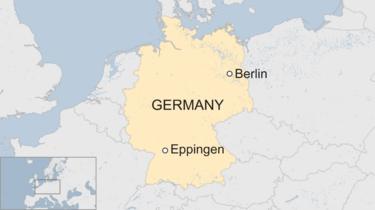
A map showing Germany and the location of Eppingen (in the country's south-west) in relation to the capital city of Berlin.
Police in south-west Germany are investigating after an 18-year-old spectator suffered second-degree burns at an annual “witches’ parade”.
Some witnesses said that the woman was carried to a cauldron in jest before being thrown knee-deep into hot water.
Others present reported the woman was held over the cauldron at the carnival in Eppingen on Saturday, police said.
The screaming woman was abandoned at the roadside by the “witches”, they said.
She was later taken to hospital.
Police say they have secured the cauldron involved, which was heated over a wood-burning stove, all carried on a cart.
Some of those who were part of the group of witches have been identified, the police statement said.
The witches’ guild of Eppingen, which organises the event, said it was deeply shocked by the incident.
The parade has been running since 2003.

Australian police charge seven people with abusing boys

A generic image of a child holding a soft toyImage copyrightGETTY IMAGES
Image captionPolice have arrested seven people in Australia
Seven people have been charged in Australia over the alleged sexual and physical abuse of three young boys.
The four women, two men and a 17-year-old girl face a total of 127 charges over the alleged abuse, which police say happened near Sydney between 2014 and 2016.
Local media reported that the suspects were involved in a circus school.
Police said the boys were all aged under eight, and knew their alleged attackers.
The allegations include kidnapping, sexual and physical assault, as well as the production of child abuse material.
According to Australian media, the circus school ran classes for children with and without disabilities.
The arrests followed “extensive investigations” that had begun with the establishing of a special police taskforce last July, authorities said.
The six adults facing charges are aged between 18 and 58.
“Police will allege in court the group participated in ongoing sexual and physical abuse of three boys, who were known to them, between 2014 and 2016,” New South Wales Police said in a statement.
All seven have been refused bail and will face a court in Sydney on Tuesday.
Design a site like this with WordPress.com
Get started