Poland President Duda ‘will sign’ controversial Holocaust bill

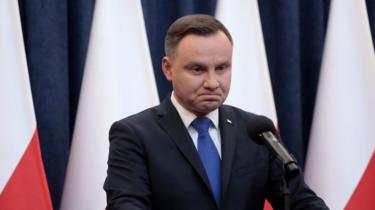
Poland President Andrzej DudaImage copyrightREUTERS
Image captionPresident Andrzej Duda says Poland has the right “to defend historical truth”
Poland’s president says he will sign a controversial Holocaust bill, despite angry protests from Israel and the US.
Andrzej Duda defended the legislation, which will make it illegal to accuse Poland of complicity in such Nazi crimes committed under occupation.
The Polish government says it aims to stop the Polish nation or state being blamed for the atrocities.
But Israel has raised concerns it could stifle the truth about the involvement of some Poles.
There are also fears Holocaust survivors could face criminal charges for giving testimony that incriminates Poles.
In a speech on Tuesday, Mr Duda said the bill “protects the Polish interests… protects our dignity, the historical truth, so that we could be judged fairly in the world, so that we would not be slandered as a state and as a nation”.
He acknowledged that individual Poles did commit crimes against Jews during World War Two.
But he said the Polish state bore no responsibility because it ceased to exist following the invasion by Nazi Germany and the Soviet Union. He said there had been no systematic collaboration of Polish institutions.
In a gesture to Israel, Mr Duda said he would send it to the Constitutional Tribunal to check whether its regulations comply with the Polish constitution.
But that will happen after he has signed the bill into law.

What does the bill state?

It says that “whoever accuses, publicly and against the facts, the Polish nation, or the Polish state, of being responsible or complicit in the Nazi crimes committed by the Third German Reich … shall be subject to a fine or a penalty of imprisonment of up to three years”.
But it adds the caveat that a person “is not committing a crime if he or she commits such an act as part of artistic or scientific activities”.
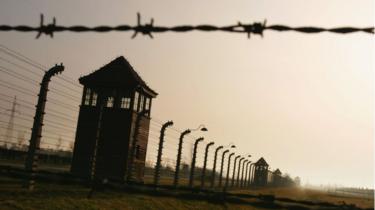
Image of Auschwitz watch tower, barbed wire and fencingImage copyrightGETTY IMAGES
Image captionPoland has long objected to phrases which suggest shared responsibility during Nazi occupation
The country has long objected to the use of phrases like “Polish death camps”, which suggest the Polish state in some way shared responsibility for camps such as Auschwitz.
The camps were built and operated by Nazi Germany after it invaded Poland in 1939.

What has Israel said?

Israel is furious about the bill, which Prime Minister Benjamin Netanyahu has described as an attempt to rewrite history and deny the Holocaust.
Deputies from across Israel’s often fractious political spectrum have united to denounce it.
The country’s Deputy Foreign Minister Tzipi Hotovely warned last month it could be a “slippery slope” that could be used to “minimise the responsibility of those Poles who participated in the war crimes committed by the Nazis”.
On Monday, Israel’s education minister said Poland had cancelled a scheduled visit because he refused to back down from condemning the bill.
“The government of Poland cancelled my visit, because I mentioned the crimes of its people. I am honoured,” Naftali Bennett said in a statement.
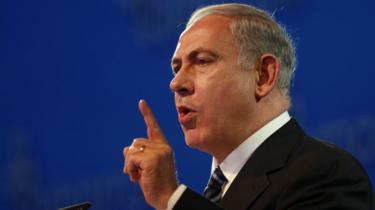
Israeli Prime Minister Benjamin NetanyahuImage copyrightAFP
Image captionIsraeli Prime Minister Benjamin Netanyahu has said he strongly opposes the bill

What about in Poland?

Polish politicians have expressed bafflement at the Israeli response.
Deputy Justice Minister Marcin Warchol said it was wrong to suggest the bill would stop people researching Polish history.
Meanwhile, Poland’s Prime Minister Mateusz Morawiecki said his country was committed to combating lies about the Holocaust.
“The camps where millions of Jews were murdered were not Polish. This truth needs to be protected,” he said.
Poland is governed by a nationalist party, Law and Justice (PiS), which is keen to show the world how Poland was ruthlessly victimised by its German and Soviet neighbours in the war.

What happened in Poland in WW2?

Poland was attacked and occupied by Nazi Germany. Millions of its citizens were killed, including three million Polish Jews in the Holocaust.
Six million Jews were killed in the Holocaust overall.
More Poles have been honoured by Israel for saving the lives of Jews during the war than any other nation.
However, historians say others were complicit by acts such as informing on Jews in hiding for rewards, and participating in Nazi-instigated massacres including in Jedwabne where hundreds of Jews were murdered by their neighbours.
A historian and well-known “Nazi-hunter” at the Simon Wiesenthal Center, Efraim Zuroff, says the number of collaborators runs into “many thousands”.
“The Polish state was not complicit in the Holocaust, but many Poles were,” Mr Zuroff told the Times of Israel.
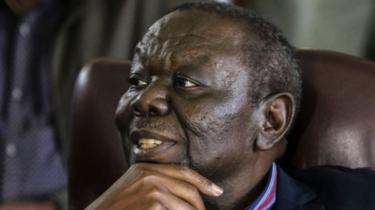
Zimbabwe’s opposition leader Morgan Tsvangirai ‘critically ill’

Morgan Tsvangirai. Photo: November 2017Image copyrightAFP/GETTY IMAGES
Image captionMr Tsvangirai founded the opposition MDC party in 2000
Zimbabwe’s main opposition leader Morgan Tsvangirai is critically ill in a South African hospital, reports say.
Local media quoted family sources as saying the 65-year-old former prime minister – who is being treated for colon cancer – is suffering from weight loss, exhaustion and muscle thinning.
During his political struggle against ex-President Robert Mugabe, he has been beaten and imprisoned numerous times.
Mr Tsvangirai heads Zimbabwe’s Movement for Democratic Change (MDC) party.

What is known about Tsvangirai’s condition?

He has been in and out of hospital since June, receiving treatment in a Johannesburg hospital for cancer. He returned to the hospital early last month.
Mr Tsvangirai’s health deteriorated rapidly on Monday, family sources told Zimbabwe’s Bulawayo24 news website on Tuesday.
He had lost appetite and had difficulty eating or swallowing fluids, the sources said. Mr Tsvangirai also reportedly had breathing problems.
Meanwhile, an MDC party source was quoted by Reuters news agency as saying that Mr Tsvangirai “is critically ill and we should brace for the worst”.
Mr Tsvangirai’s spokesman, Luke Tamborinyoka, said the MDC leader was “stable but the nation should keep on praying”.
The hospital where Mr Tsvangirai is being treated has so far made no public comments on the issue.

How could this affect future elections?

Last November, Mr Tsvangirai hailed the resignation of Robert Mugabe, expressing hopes that Zimbabwe was on a “new trajectory” that would include free and fair elections.
He said that Mr Mugabe – who was forced to quit after ruling the country for 37 years – should be allowed to “go and rest for his last days”.
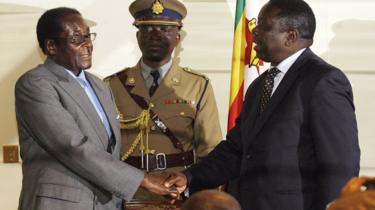
Mr Mugabe shakes hands with Mr Tsvangirai after a power-sharing agreement in 2008Image copyrightAFP
Image captionMr Mugabe shakes hands with Mr Tsvangirai after a power-sharing agreement in 2008
Mr Tsvangirai’s illness has divided the MDC, with a number of party officials reportedly jockeying to succeed the former trade union activist.
This has raised concerns about the party’s political future, and its chances of taking on the ruling Zanu-PF party in presidential elections expected within six months.
In November, Mr Mugabe was succeeded by the former vice president, Emmerson Mnangagwa.

German industrial workers win right to flexible hours

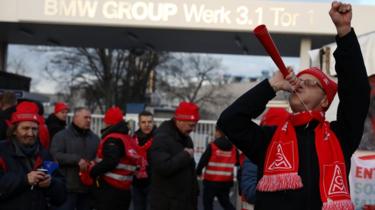
BMW workers during a 24-hour strike by German industrial trade union IG Metall in BerlinImage copyrightREUTERS
Image captionWorkers staged warning strikes last week as part of their dispute
Industrial workers in south-western Germany have won the right to reduced working hours as part of a deal that could benefit millions of employees across the country.
Workers will be able to reduce their weekly hours from 35 to 28 for up to two years to look after their families.
The deal covers almost one million workers in Baden-Württemberg state and also gives them a pay rise.
It could be extended to the 3.9 million workers in Germany’s industrial sector.

What has been agreed?

A reduced working week to care for children, the elderly or sick relatives was a key demand by IG Metall, the country’s biggest trade union representing metal and engineering workers.
But their demand that those workers were still paid the same even if they reduced their hours was rejected in their negotiations with the employers’ federation, Südwestmetall.
In return, the companies will have the possibility to increase to up to 40 hours the week of those willing to work more.
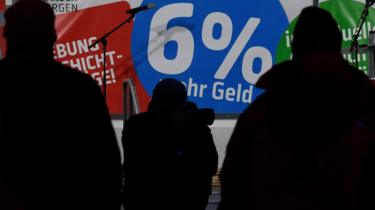
The employees will also be given a 4.3% pay rise from April, against their demand of a 6% increase. The pay deal stretches over 27 months and also sees additional one-off payments.
IG Metall leader Jörg Hofmann said: “The agreement is a milestone on the way to a modern, self-determined world of work.”
Meanwhile, Südwestmetall head Stefan Wolf called the compromise “bearable but painful”.

Is this a turning point for German workers?

By OP’S NEWS 
After reunification, while Germany was struggling economically, flexibility was generally demanded of employees rather than companies.
The 2003 labour market reforms, and the 2008 financial crisis, meant years of wage restraint for many workers.
But over the past few years in Germany the power balance has shifted from bosses to employees.
Since the financial crisis wages have been slowly rising in Germany – mainly because record low unemployment means that in many sectors firms are struggling to find workers.
So an agreement that increases wages was not surprising. More unusual is the automatic right to work fewer hours, something which has been discussed in Germany for years, as people try to combine work and family life.
If this goes down well with employees, we could see it spread to other sectors.
As Germany’s largest union IG Metall has in the past set standards across the country. The question is: how many workers will actually want to work less when that also means earning less?

What is the context of the dispute?

Germany’s economy grew by 2.2% last year, its fastest rate in six years. And unemployment hit a new low in January – just 5.4% of people are out of work.
After a 10-year period where wages have grown by an average of only 0.81% as the economy has picked up, the unions sensed it was their turn to make demands on employers.
Thousands of IG Metall members staged one-day “warning strikes” last week, the union’s first such strikes in 34 years. Among the companies affected were Porsche and Daimler, which produces Mercedes-Benz cars.
Image copyrightREUTERS
Image captionA pay rise for workers of 4.3% has been agreed, against a demand of 6%
Both sides said they would recommend the adoption of the deal across Germany.
The agreement could be used as an example for other sectors, such as construction, telecommunications and chemical industries, where workers have also demanded more flexible working hours.

Bitcoin falls below $6,000

BitcoinsImage copyrightGETTY IMAGES
Image captionThe price of Bitcoin has fallen below $6,000, as governments continue to tighten crypto-currency legislation
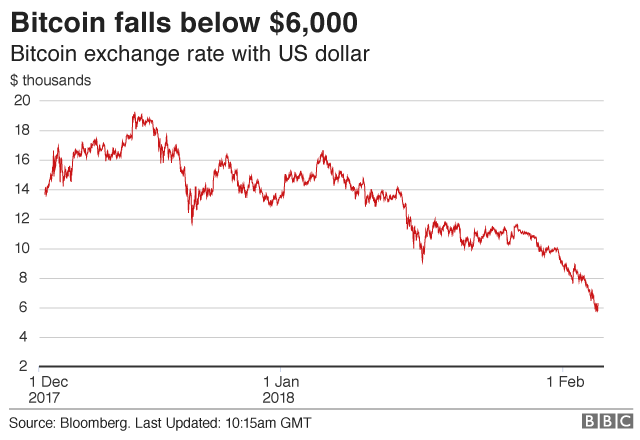
The value of Bitcoin has fallen to below $6,000 – its lowest price since November 2017.
The price fell to $5,947.40 (£4,256.44) on Tuesday, according to a price index run by news website Coindesk.
Bitcoin reached its peak in November, when it hit $19,000, and then began to fall steadily from mid-December.
The latest fall comes a day after several major US and UK banks banned customers from using credit cards to purchase the digital currency.
Tightening legislation in several countries appears to have shaken confidence in crypto-currencies.
As of Tuesday:
  • The price of Ethereum, which at its height on 9 January was $1,255.89, is now $574.42
  • Bitcoin Cash, which hit a peak $4,091.70 on 20 December 2017, has slipped to $766.03
  • Litecoin, which reached $366.01 on 19 December 2017, has dropped to $106.94

Tightening legislation

Chinese state media is reporting that China will soon take steps to prevent investors from accessing foreign virtual currency exchanges, although it is not clear how the government intends to achieve this.
China and South Korea have already banned digital currencies, while Japan and Australia have taken steps to tighten Bitcoin regulations.
Bitcoin price decline graph
Image captionThe steady decline of Bitcoin
The US is likely to follow suit – on Tuesday, the US Securities and Exchange Commission (SEC) and the Commodity Futures Trading Commission (CFTC) are due to testify before the Senate regarding digital currencies.
The chiefs of both regulators are expected to recommend that the US government tightens the rules governing the crypto-currency market to reduce the risks of fraud and market manipulation, according to pre-released testimonies.
While not banning crypto-currencies, the financial regulators in both the UK and France have warned investors that they could lose all their money if they buy digital currencies issued by companies, known as “initial coin offerings”.
Besides legislation, virtual currencies have been dogged by criminals seeking to hack wallet services to steal users’ funds.
A US man is currently suing T-Mobile for a security breach that enabled hackers to access his mobile number and compromise his crypto-currency accounts to steal 2.875 Bitcoin, according to legal news service Law360.

Maldives ex-President Nasheed seeks help from India and US

Media captionTrouble in paradise: Maldives crisis explained
The ex-president of the Maldives has called from exile for other countries to intervene in a political crisis engulfing the island nation.
Mohamed Nasheed asked India to help release prisoners and the US to curb leaders’ financial transactions.
Turmoil began when current President Abdulla Yameen refused to release political dissidents, defying a court order and sparking protests.
“We must remove him from power,” Mr Nasheed said in a statement.
The government has declared a state of emergency and the chief justice of the Supreme Court has been detained with no further details given about his detention or charges.
The opposition has called his arrest and that of another judge a “purge”.
There has also been international condemnation of the government’s moves, with the US State Department expressing concern.
Meanwhile President Yameen gave a televised address to the country, saying judges had been plotting a coup.
Maldives is a nation in the Indian Ocean, made up of 26 coral atolls and 1,192 individual islands, and tourism is a vital part of its economy.
Countries including India, the US, the UK and China have warned tourists to be cautious, especially near political rallies, although the UK government has advised that areas away from the capital, including the international airport, remained safe.

What did the ex-President ask for?

Mr Nasheed called on the Indian government to send an envoy, backed by its army, to release political detainees whose detention is at the heart of a worsening political crisis.
“We request a physical presence,” he said, after stating that he was speaking “on behalf of Maldivian people”.
He also asked the US to restrict Maldivian leaders’ transactions through US banks.
Mr Nasheed was an opposition leader under a former government and became the country’s first democratically elected leader in 2008, but was ousted and jailed in 2012. He is currently thought to be in neighbouring Sri Lanka.
A Maldives minister to the UN, Jeffrey Salim Waheed, called his intervention “treason” and “the single biggest attempt to undermine the Maldives sovereignty”.

What has been happening?

Last week, the Supreme Court ordered the release of a group of opposition politicians. It also ruled that Mr Nasheed’s trial, held in 2015, had been unconstitutional.
The country’s police commissioner said he would enforce the court’s ruling – in response, the government of President Yameen sacked him.
The army has now been ordered to resist any attempt to impeach or remove President Yameen.
Police arrested Chief Justice Abdulla Saeed and another judge, Ali Hameed, hours after the government declared a state of emergency.
Former President Maumoon Abdul Gayoom, who has allied himself with the opposition, was detained at his home.
In a video posted online, the ex-president addressed his supporters (in Divehi), saying that he had not “done anything to warrant arrest” while urging them to “remain strong”.
The state of emergency allows security forces to make arrests, and means public gatherings are banned.
The opposition Jumhooree Party posted footage of soldiers at an opposition building.
On Tuesday morning, President Yameen said that judges had been plotting to overthrow him.
“I had to declare a national emergency because there was no other way to investigate these judges,” he said in a televised address. “We had to find out how thick the plot or coup was.”
Presentational grey line

Maldives media face closure and cyber-attacks

By OP’S NEWS 
Media outlets in the Maldives have been affected as the country remains in a state of emergency.
Concerns over media freedom arose last week when the Maldives Broadcasting Commission warned that private TV stations would be shut down if their coverage was deemed to pose a “threat” to “national security”.
On the day the emergency was declared, the Maldives Independent news website tweeted: “Our website is under attack and currently inaccessible. Timing of attack coincided with State of Emergency declaration in #Maldives. We are currently unable to report on our website.”
As of 6 February the website appears to be unavailable. The outlet said on Twitter that its website was “still under attack” but added that they would “continue live tweeting”.
RaajjeTV, an opposition-aligned station also indicated that a shutdown was “imminent”, adding that they would “continue to work for the people of the Maldives till the last minute. We have no security.”
The Committee to Protect Journalists has said that “authorities in the Maldives must immediately stop trying to exert control over the media and access to information” and “abide by its constitutional commitment to the freedom of speech”.

What does this mean for tourists?

The political crisis comes during the country’s peak tourism season when tens of thousands of foreigners visit the Maldives’ tropical beaches.
China, the United States, India and the UK are among those issuing warnings to travellers in the Maldives.
The UK’s Foreign and Commonwealth Office said British nationals in the capital, Malé, should “exercise caution and avoid any protests or rallies”, but that outlying islands and resorts – and the international airport – were not affected.
Tourism was worth $2.7bn (£1.9bn) to the Maldivian economy in 2016. It is the biggest industry in the country – home to just 400,000 people – and could be hit hard if the crisis worsens and puts people off travelling.

Winter Olympics: Soldiers replace security staff after norovirus outbreak

man being frisked by soldierImage copyrightAFP
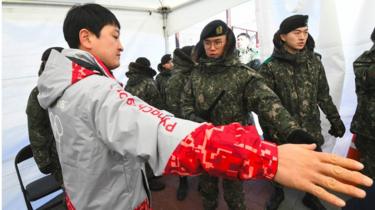
Image captionSoldiers took on the work of guarding Pyeongchang’s ice arena ahead of the Winter Olympics
Dozens of private security guards at the Pyeonchang Winter Olympics in South Korea have been taken to hospital with norovirus, prompting organisers to call in soldiers as guards instead.
Vomiting and diarrhoea hit the security staff on Sunday.
Some 1,200 of the guards have been withdrawn from Olympics sites, with 41 having reported experiencing symptoms.
Hand sanitiser has now been distributed and the head of the organising committee has apologised.
The Pyeonchang Games are due to start on Friday.
Games spokesman Christophe Dubi said that operational measures had been put in place to avoid further outbreak of the highly contagious virus in respect of international standards.
“Very stringent measures are in place when it comes to food and beverages,” he said. “As soon as a case is reported then all the area gets disinfected,” he added.

Media captionThe norovirus is “very easy to spread rapidly through shared facilities,” virologist tells Radio 4’s World at One
The withdrawn security staff have been replaced by 900 soldiers.
The president of the organising committee of the Games, Lee Hee-beom, said all venues were being used for training, and athletes were settling in to their accommodation.
“I would like to apologise for this,” he said.
“Our disease control centre [and] other related government agencies here are now discussing countermeasures,” Mr Lee said, adding that the measures “will be announced soon”.
At last year’s World Athletics Championships in London, several athletes were forced to pull out of the competition when authorities discovered an outbreak of norovirus at a hotel.

SA postpones Zuma state of nation speech

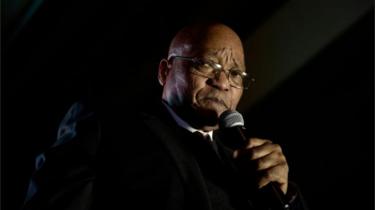
South African President Jacob Zuma. File photoImage copyrightAFP/GETTY IMAGES
Image captionPresident Jacob Zuma has been resisting calls to leave office
South African President Jacob Zuma’s state of the nation speech in parliament has been postponed, as pressure grows on him to resign.
Parliament speaker Baleka Mbete made the announcement, without giving a new date for the address that had been scheduled for Thursday.
The ruling ANC earlier called a meeting of the party’s top body for Wednesday to decide the president’s future.
Mr Zuma, 75, has resisted calls to quit over corruption allegations.
He was replaced as party leader by his deputy, Cyril Ramaphosa, 65, in December. He is now the front runner to succeed him as president.
Earlier on Tuesday, the Nelson Mandela Foundation urged Mr Zuma to step down.
South Africa had seen “systematic looting” under Mr Zuma’s rule, and he “must go sooner rather than later”, the foundation said in a statement.

How did the parliament speaker explain her decision?

In a statement, Ms Mbete said recent “calls for disruption” of a parliament meeting on Thursday “caused us great concern”.
Therefore the decision had been taken, she said, to “create room for establishing a much more conducive political atmosphere in parliament”.
She said that “with this in mind”, Mr Zuma was approached about postponing the address, but “when we met the president, we then learnt that he was already writing to parliament to ask for the postponement”.
South Africa’s main opposition parties, the Democratic Alliance (DA) and the Economic Freedom Fighters (EFF), had been pushing for the postponement of Mr Zuma’s speech.
They both welcomed the Tuesday’s announcement.

What is the ANC position on the issue?

On Monday, senior ANC officials held an emergency meeting in the main city, Johannesburg, to discuss his future.

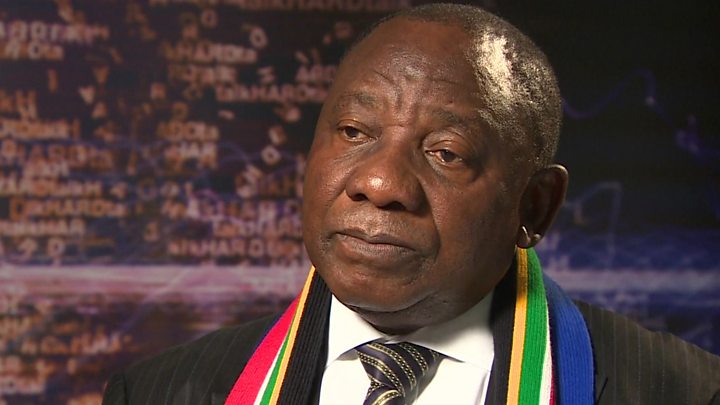
Media captionCyril Ramaphosa recently told the BBC’s Zeinab Badawi that Jacob Zuma was “feeling anxious”
A “dominant view” emerged from the meeting, but it “wasn’t the only view”, ANC deputy secretary-general Jessie Duarte said at a media briefing.
She refused to go into details, saying the party’s National Executive Committee (NEC) will make a final decision on Mr Zuma’s future on Wednesday.
If the committee agrees to recall Mr Zuma, the BBC’s Andrew Harding says, it would be very hard for him to resist.
Mr Zuma, who spent time in prison for his part in the fight against apartheid, met the ANC’s top six on Sunday. They are said to have failed to convince him to stand aside.
Other unconfirmed reports from Sunday’s meeting say that Mr Zuma asked for protection from prosecution for himself and his family.

Why is there a push to remove him?

Mr Zuma’s presidency has been overshadowed by allegations of corruption.
In recent years his links to the wealthy India-born Gupta family, who are alleged to have influenced the government through their relationship with Mr Zuma, have caused his popularity to plummet. In South Africa, it has become known as “state capture”.
Both Mr Zuma and the Guptas deny the allegations.
Then there is also the country’s struggling economy, with the unemployment rate rising to about 28%.
As a result, many in the ANC fear his presidency has become toxic – and is hurting the party’s standing.
That appeared to be borne out at the 2016 local elections, when the ANC lost ground to the opposition Democratic Alliance (DA) and Economic Freedom Fighters (EFF).
With a general election set for 2019, the ANC will be keen to distance itself from any more negative press – and therefore it is perhaps not surprising that Mr Ramaphosa was elected the party leader on an anti-corruption platform.
However, Mr Zuma still has his supporters within the ANC – including at least two of the top six – so nothing is definite.
On Monday, there were scuffles out the ANC headquarters between small groups of pro- and anti-Zuma supporters.

What are the allegations against him?

  • 2005: Charged with corruption over multi-billion dollar 1999 arms deal – charges dropped shortly before he becomes president in 2009
  • 2016: Court orders he should be charged with 18 counts of corruption over the deal
  • 2005: Charged with raping family friend – acquitted in 2006
  • 2016: Court rules he breached his oath of office by using government money to upgrade private home in Nkandla – he has repaid the money
  • 2017: South Africa’s public protector said he should appoint judge-led inquiry into allegations he profiteered from relationship with wealthy Gupta family – he denies allegations, as have the Guptas
  • 2018: Zuma approves inquiry

Larry Nassar jailed for another 40 to 125 years

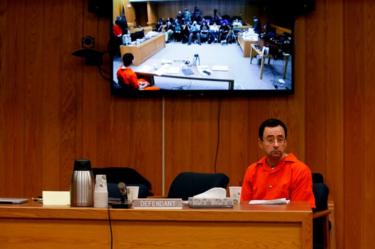
NassarImage copyrightGETTY IMAGES
Image captionNassar has already been given more than 200 years in prison
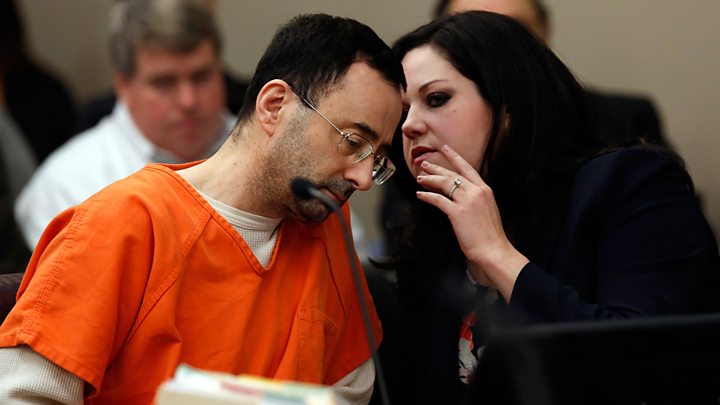
Disgraced ex-sports doctor Larry Nassar has been jailed for another 40 to 125 years for molesting young gymnasts.
Nassar already faced a lifetime in jail for two prior sentences for sexually abusing girls at USA Gymnastics and Michigan State University.
The judge said while it ends Nassar’s criminal legal proceedings, “it does not end the emotional and physical suffering he has caused”.
The number of women who accuse Nassar of abuse has grown to more than 265.
With Monday’s sentence, Nassar has now been given at least 300 years in jail for his crimes.
He was sentenced to 60 years in prison on child pornography charges in December and received up to 175 years in jail on sexual abuse charges in January.
This case, which regarded abuse at the Twistars gymnastics training centre, follows weeks of emotional testimony from scores of young athletes.
More than 200 women in total have delivered impact statements on his abuse in both hearings.
“It’s impossible to convey the depth and breadth of how sorry I am to each and every one involved,” Nassar said in an apology on Monday.
“The visions of your testimony will forever be present in my thoughts.”
But Judge Janice Cunningham dismissed his remarks, saying: “I am not convinced that you truly understand that what you did was wrong, and the devastating impact that you have had on the victims, their families and friends.”
“Clearly you are in denial. You don’t get it.”

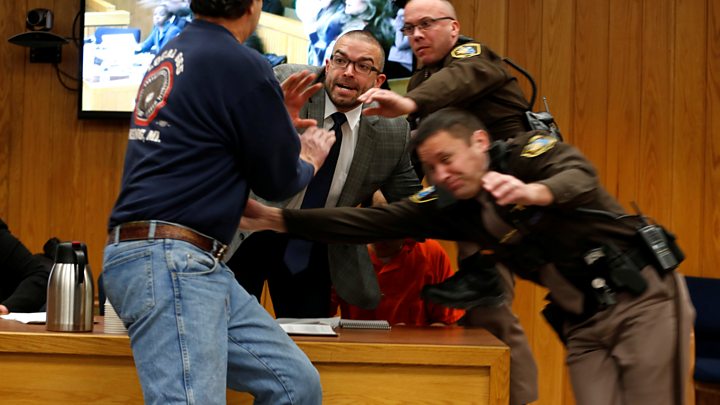
Media captionVictims’ father attacks Larry Nassar in courtroom
The Nassar case has rocked the US Olympic Committee, the sport’s governing body USA Gymnastics and Michigan State University, where he also worked as a sports doctor.
Top officials at USA Gymnastics and Michigan State University have resigned in recent weeks amid the fallout, and the case has prompted several investigations into whether complaints against the doctor were ignored.

More change to come

OP’S NEWS 
That Larry Nassar will spend the rest of his life behind bars is no surprise. But these hearings have opened up deeper conversations around the issue of sexual abuse, which will have a profound and lasting impact.
Firstly, the huge outpouring of testimony cast an honest spotlight on the raw pain and suffering of so many survivors which few people get to see.
By waiving their anonymity in court, the brave young women who faced Nassar have inspired countless other survivors of abuse – women and men – to speak out.
But these sentencing hearings also revealed another truth about sex abuse – the failure of many institutions to take complaints seriously. Many of the women pointed the finger at USA Gymnastics, a body they say failed to listen to their concerns, instead allowing Nassar to continue his abuse.
Already heads have rolled at the organisation, and questions are being raised in other sports. What these young women achieved in the court room will never erase the pain or abuse they have endured, but the power and courage they demonstrated, has definitely made a difference.
Several upcoming USA Gymnastics events have reportedly been cancelled and gymnasts will now be required to be chaperoned by someone other than their coaches, according to emails obtained by USA Today.

Media captionDefence lawyer Shannon Smith explains what it was like to represent Larry Nassar
“If a parent or designated guardian is not able to attend, USA Gymnastics will provide a safe sport certified female chaperone,” women’s programme director Rhonda Faehn reportedly wrote in a letter addresses to coaches, staff members and parents.
A local Michigan police department last week publicly apologised to a victim for ignoring her 2004 complaint against Nassar.
The New York Times reported on Saturday that at least 40 girls were molested by Nassar during a 14-month period the FBI was investigating allegations against him.
The US Congress passed the Protecting Young Victims from Sexual Abuse and Safe Sport Authorization Act last month enshrining athlete protection into law.

Otto Warmbier’s father to attend Olympics in South Korea

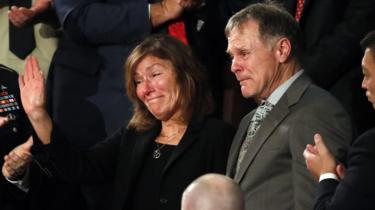
Otto Warmbier's parents wave to crowd at the State of the Union on 30 January 2018Image copyrightREUTERS
Image captionOtto Warmbier’s parents attend the State of the Union on 30 January 2018
The father of a US student who died after he was released from a North Korean jail will attend the Olympic games as the US vice-president’s guest.
Mike Pence announced on Twitter that Fred Warmbier, Otto Warmbier’s father, will attend the opening ceremony in Pyeongchang, South Korea on Friday.
Both Koreas are set to march under one flag, signalling a thaw in relations.
But Mr Pence said he wants Mr Warmbier to remind the world of North Korea’s human rights abuses.
According to the Washington Post, which first reported on Mr Warmbier’s trip, the delegation is the latest US attempt to put pressure on the isolated country to halt their ambitions to become a nuclear power.
Last week Mr Warmbier’s parents attended US President Donald Trump’s first State of the Union address to Congress as guests of Melania Trump.
“You are powerful witnesses to a menace that threatens our world, and your strength inspires truly us all,” Mr Trump said to Fred and Cindy Warmbier and their younger children, Austin and Greta.
“Tonight, we pledge to honour Otto’s memory with total American resolve,” he added, before also praising a North Korean defector who fled his native country on crutches.
Mr Pence leaves on Monday for a five-day trip to South Korea and Japan, culminating with a stop in Pyeongchang for the start of the Olympics.
Otto Warmbier, an Ohio native and student at the University of Virginia, was sentenced to 15 years of hard labour in North Korea after he was accused of stealing a hotel sign.
Mr Warmbier, then 21, was studying abroad in Hong Kong in 2016 when he joined a travel company on a trip to North Korea.
He was released and returned home in June 2016 on medical grounds. He was in a coma when he arrived back in the US and died shortly after.
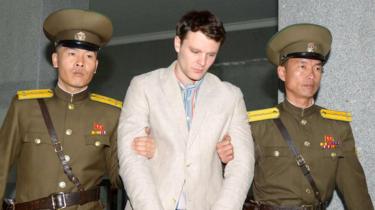
Otto Warmbier escorted by North Korean guardsImage copyrightREUTERS
Image captionOtto Warmbier’s parents say they went 15 months without hearing from or about their son
North Korea said he suffered from botulism, which many US doctors dispute.
His parents said he was “systematically tortured” by North Korean officials, but the regime denies the claims.
The coroner who examined his body said there were no clear signs of torture but that he died from a lack of oxygen to the brain.
In September, Mr Trump said that the student was tortured “beyond belief” by North Korea.
North Korea responded to the torture accusations in a statement saying, “Trump and his clique, for their anti-DPRK propaganda, are again exploiting the death of Otto Warmbier, an American college student who had been under reform through labour for the criminal act he committed against the DPRK and died after returning to the US”, referring to its acronym for Democratic People’s Republic of Korea.

President Trump: NHS ‘going broke and not working’

Media captionA quick guide to Trump’s NHS intervention
US President Donald Trump has sparked a backlash from UK politicians by attacking the National Health Service.
In a tweet criticising US Democrats pushing for a universal health system, he said “thousands of people are marching” in the UK because the NHS is “going broke and not working”.
This was believed to be a reference to a Save the NHS march on Downing Street on Saturday, demanding more funding.
Downing Street said Theresa May was “proud” of the UK’s system.
Her spokesman said the NHS had recently been ranked as the world’s best healthcare system and that Health Secretary Jeremy Hunt, who has hit back at the US president on Twitter, “speaks for the government”.
Organisers of the demonstration said it had been aimed at showing people’s “love” for the NHS.
The chief executive of NHS England said the US president had “got the wrong end of the stick”.
In the UK, the NHS is funded out of general taxation, so people do not have to pay when they get treatment.
In the US, when people get treatment they have to pay, most often through health insurance providers.
President Trump’s tweet came after ex-UKIP leader Nigel Farage appeared on Fox And Friends, one of the president’s favourite shows, talking about the weekend march.
“Dems want to greatly raise taxes for really bad and non-personal medical care,” Mr Trump tweeted.
In response, Mr Hunt said that while he “disagreed with claims made on that march”, no-one wanted “to live in a system where 28 million people have no cover”.
He added: “NHS may have challenges but I’m proud to be from the country that invented universal coverage – where all get care, no matter the size of their bank balance.”
Labour leader Jeremy Corbyn – the leader of the UK opposition – also hit back, saying: “People were marching because we love our NHS and hate what the Tories are doing to it.”
He added: “Healthcare is a human right.”

Analysis by OP’S NEWS 

Donald Trump has said that he doesn’t watch much television, claiming once he was too busy “reading documents”.
Time and again, however, the president has praised and promoted specific Fox News programmes – particularly the cable network’s morning offering, Fox and Friends.
Such was the case on Monday, as the president tweeted about the National Health Service shortly after former UKIP leader Nigel Farage appeared on Fox to criticise the NHS during a segment on a recent London protest march.
Healthcare reform, while a major topic of partisan debate in the US last year, has fallen off the radar recently.
Republicans tried, and failed, to roll back government regulation of the insurance industry instituted by Barack Obama.
In last week’s State of the Union address, Mr Trump barely mentioned the topic.
When Fox News catches the president’s attention, however, that can change with the flick of a Twitter finger.

NHS funding has been hotly debated in the UK as hospitals struggle to cope with the pressure on resources.
A panel set up by the Liberal Democrats – the fourth largest party in the Commons – has called for a ring-fenced tax to fund the service, saying an extra £4bn is needed for next year and an additional £2.5bn for both 2019 and 2020.

Media captionThe rally included health workers, unions and NHS campaigners
Lib Dem leader Sir Vince Cable urged the US president to read the study, “to find out how to fund a universal healthcare system”.
Saturday’s demonstration, called NHS In Crisis: Fix It Now, was organised by the People’s Assembly Against Austerity and Health Campaigns Together.
In a joint response to the US president, they said people had marched “to show their love for the principles of universal and comprehensive care free at the point of use, paid for through general taxation”.
They added: “We don’t agree with your divisive and incorrect rhetoric.”
Actor and NHS campaigner Ralf Little, who was at the march, told President Trump he was wrong about the reasons for the march.
The UK government says NHS funding “is at a record high” with an extra £2.8bn pledged for the service in the Budget.
Mr Farage said the NHS was “at breaking point due to a population crisis”, adding: “We haven’t got enough hospitals, doctors or facilities to cope.”
The British television presenter Piers Morgan, who calls President Trump a friend and who interviewed him last week, did not agree with the tweet:
Simon Stevens, the chief executive of NHS England, responded during an appearance before a committee of MPs.
“President Trump has been tweeting about the National Health Service today, and unfortunately, respectfully, we suggest that tweet got the wrong end of the stick,” he said.
“And, in fact, people in this country don’t want to ditch our NHS, not withstanding what we’ve said today, they want to keep it and strengthen it,” he said.
Mr Stevens invited the president to visit UK hospitals when he comes to the UK, “and go away understanding that healthcare for everybody delivered at half the cost of the US healthcare system is something that people in this country are deeply and rightly committed to”.
Design a site like this with WordPress.com
Get started