Image captionThe Royal Liverpool Hospital building will cost £335m
The collapse of Carillion has delayed the opening of the new £335m Royal Liverpool Hospital, with bosses saying it is unlikely to be finished in 2018.
Chief executive Aidan Kehoe said it will be “challenging” to open the 646-bed facility this year.
First due to open in March 2017, the project has been repeatedly delayed after asbestos was found on site, while remedial building work was also needed.
Construction giant Carillion collapsed last month with debts of about £1.5bn.
The Insolvency Service and accountancy firm PwC, which is overseeing Carillion’s liquidation, declined to comment on the hospital delay.
Mr Kehoe said Royal Liverpool and Broadgreen University Hospitals NHS Trust was trying to retain sub-contractors and former Carillion staff “because they have the best understanding of the work that is required to finish the job”.
However, he said “highly complex” negotiations were taking time because many were facing financial difficulties as a result of Carillion’s collapse.
Mr Kehoe said: “Given this situation, we expect a significant delay and it will prove challenging to get the new Royal finished before the end of the year.”
The new hospital is being built next to the existing Royal Liverpool, which will be demolished once the new site opens.
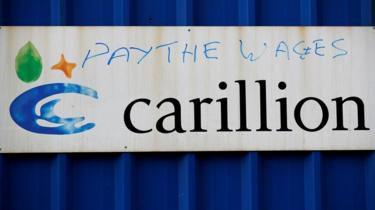
Image copyrightREUTERSImage captionGraffiti at Carillion’s Royal Liverpool Hospital site
Mr Kehoe said the trust “was doing all it can” to minimise the completion delay including liaising with the Department of Health.
He said: “We all want the best for our patients and the people of Liverpool and that is to move into our world-class new hospital.
“When it is built, the new Royal will be at the heart of one of Europe’s leading health and life sciences hubs and will provide the best possible environment for cutting-edge healthcare and research.”
A Department of Health and Social Care spokesman said health minister Steve Barclay had held a “constructive discussion” with Mr Kehoe on Monday.
He said: “Along with the hospital regulator NHS Improvement, we will continue to support all NHS organisations involved to ensure there are plans in place to keep any construction delays to a minimum.”
Carillion employs 43,000 staff globally, about half of them in the UK where it did most of its business. It also operated in Canada, the Middle East and the Caribbean.
The British Medical Association, which previously said the company’s collapse raised “serious questions about PFI deals and the tendering of NHS services”, tweeted that “both patients and staff need urgent answers on when construction will resume”.
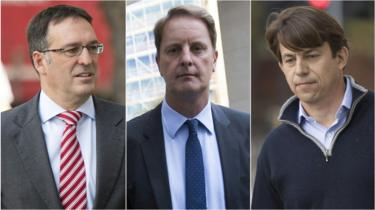
Image copyrightAFPImage captionFormer Tesco executives Chris Bush (left), John Scouler (centre) and Carl Rogberg (right)
The trial of three former Tesco executives charged with fraud and false accounting has been abandoned.
Chris Bush, Tesco’s former UK boss, John Scouler, Tesco’s former commercial food director and Carl Rogberg, its former UK finance boss have been on trial for more than four months.
It emerged on Tuesday that Mr Rogberg had a heart attack last Thursday.
The Serious Fraud Office will decide in early March whether to pursue a re-trial. The men deny the charges.
Mr Rogberg, aged 51, remains in hospital awaiting surgery. His solicitor read out a statement on the steps of Southwark Crown Court: “Mr Rogberg is devastated at the news that the trial has been aborted.
“He waived his right to attend these last stages after he had given evidence himself for many days, and had participated in the last four and half months of the trial.
“He was always very anxious that this jury should be allowed to reach its verdict and is desperately sorry that they were prevented from doing so.”
Frustration
Discharging the jury, Judge Deborah Taylor said: “It wouldn’t be right or proper to continue with this trial.”
She acknowledged the impact on the jury: “It has been a long period and I know it must be quite frustrating for you not to come to a conclusion at the end of all your hard work during the course of this trial.”
He told the court: “I think he would be utterly devastated to discover that as a consequence of what he has been through, there’s a possibility that the trial has to start again.”
Inflated profits
The three defendants had been accused of fraud and false accounting in connection with the retailer’s £250m accounting scandal.
The criminal charges stemmed from a statement the supermarket group made three-and-a-half years ago.
Further investigations discovered that irregularities, which centred around its UK food business, were also found in Tesco’s accounts for 2013-14.
Delays and holidays
The figures had been flattered by early recognition of payments from suppliers who sell their goods in the supermarket’s stores as well as delays in charging costs.
Eventually, it was determined that Tesco had overstated its profits by £284m.
The three men always denied the charges and argued in court that the SFO’s investigation was flawed from the outset.
Initially, the hope was that the case would finish before Christmas, but the trial has been beset by delays.
The judge became ill during her summing up and there was a further pause of two weeks when a juror went on holiday.
One member of the jury had already been discharged by then because of an operation.
It found they were used correctly against rough sleepers on five occasions last year.
But the Green Party said independent legal advice contradicted the finding.
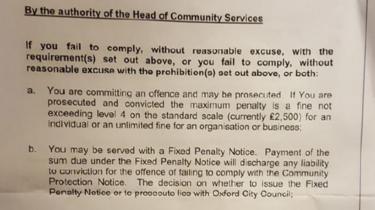
Oxford City Council was accused of trying to “intimidate” homeless people when community protection notices (CPNs) were issued on belongings in July.
At the time, the authority said they were blocking fire exits and lockers were available people who sought help.
Nonetheless, a review by a senior council officer was subsequently ordered in October.
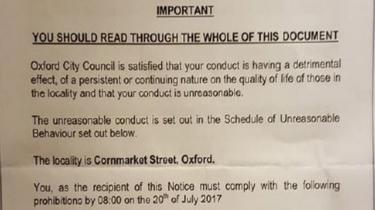
Image captionNotices issued by the council in July warned fines or prosecution could follow
It found “informal approaches” were made before action was taken, council policy was followed, and their use was appropriate.
It added, in each instance they were tackling an “element of risk”, which included blocking pavements, fire escapes, or public services like bus shelters.
But Oxford’s Green Party said George Molyneaux of Blackstone Chambers had examined a CPN from 19 July 2017 and believed an appeal would have succeeded.
His advice said it instructed the person not to leave belongings unattended on any land which was not theirs without written permission.
In his view, this was a requirement of “extraordinary breadth” and it was “very likely” a court would have found it “unreasonable”.
Responding, Oxford City Council said Mr Molyneaux had not seen all the case papers and it believed its actions were “reasonable” and “lawful”.
No appeal was made and the CPN was complied with, it added.
Separately, board member for community safety, councillor Tom Hayes, said the council “has not, will not, and never will” issue CPNs to somebody because they are homeless or sleeping rough.
Image captionThe notices said the individual could face a maximum fine of £2,500, if prosecuted
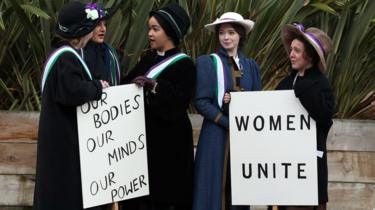
Image copyrightPAImage captionStudents marking the anniversary by recreating a suffragette protest march
Giving pardons to women who were jailed while fighting for the right to vote would be “complicated”, Home Secretary Amber Rudd has said.
But she said she would “take a look”, 100 years on from some women getting the vote in the UK.
Jeremy Corbyn said a Labour government would apologise to suffragettes and have criminal records overturned.
Helen Pankhurst, great-granddaughter of suffragette Emmeline Pankhurst, said the women had been pardoned by society.
Equality campaign group the Fawcett Society and some relatives of the suffragettes are among those who called on the home secretary to overturn the convictions of women who were imprisoned while fighting for the vote.
But Helen Pankhurst said the suffragettes would be urging women to “continue the fight” rather than “dwell” on their personal sacrifice.
“It was not them breaking the laws that were the problem, it was the laws that were constraining our democracy,” she told BBC Radio 5live.
Theresa May is making a speech in Manchester to mark the centenary of women’s votes, hailing the “heroism” of the suffragettes.
Legislation review
The prime minister also used her speech in Manchester to criticise online abuse and intimidation of political candidates and representatives – often women, gay people and members of ethnic minorities.
“In the face of what is a threat to our democracy, I believe that all of us – individuals, governments, and media old and new – must accept our responsibility to help sustain a genuinely pluralist public debate for the future,” she said.
Mrs May announced plans for a Law Commission review of legislation to ensure that illegal actions are also illegal online.
Other ways in which the anniversary is being marked include:
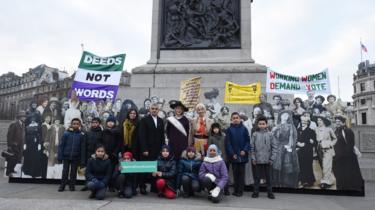
A public exhibition of life-sized images of the central figures of the suffrage movement in London’s Trafalgar Square
Portraits of these people will also be in an exhibition at London’s City Hall
A reception for female MPs past and present in Parliament, hosted by Mrs May
The Parliamentary Archives will display the 1918 Representation of the People Act itself for the first time
BBC Radio 4’s Today Programme used only women contributors and an all-female presenter line-up on its show
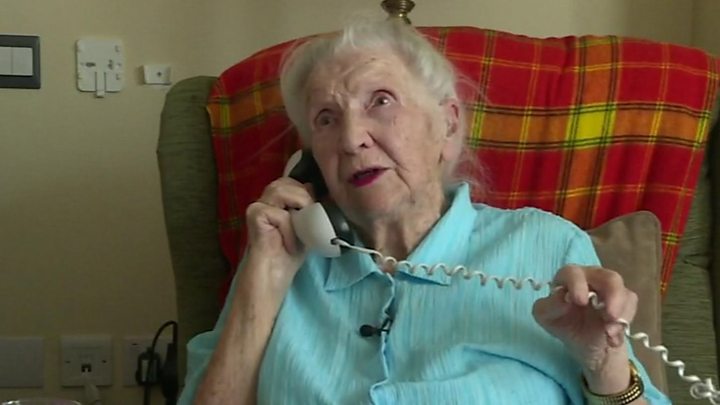
Media captionGreta Brander, who is 102, says most men are “control freaks”
Records compiled by the England, Suffragettes Arrested, 1906-1914 collection indicate there were more than 1,300 suffragette arrests and many women were jailed.
Emmeline Pankhurst, a founder member of the Woman’s Social and Political Union, and leading suffragettes Emily Davison and Flora Drummond were among them.
Ms Davison was found guilty of placing a “dangerous substance likely to injure” in a post office letter box outside Parliament and sentenced to six months in Holloway Prison.
Mr Corbyn said the convictions were “politically motivated and bore no relation to the acts committed”.
At the scene
Image copyrightPAImage captionSadiq Khan, the mayor of London, attended the opening of an exhibition celebrating the centenary in Trafalgar Square
By OP’S News
Women and men of all ages gathered outside the pop-up exhibition in Trafalgar Square on Tuesday morning.
In freezing temperatures, the passers-by stopped to look at the cardboard cut-outs of 59 campaigners involved in the women’s suffrage movement, many of whom are unknown faces.
“We forget these women,” said charity worker Lucy Rae, who came to see the exhibition with a colleague.
“I do think it’s quite poignant. You almost want to stand in with them to be part of it and to be one of these women.”
University professor Hazel Barrett, whose grandmother supported the suffragette movement, said people of all classes got involved, adding: “Just look at them, ordinary women”.
Sheree Davey, who came with her young son to see the display, said: “It’s incredible. It inspires you to learn a bit more.
“You know the basics but there’s so much more to it.”
Victoria Taylor, a tourist visiting from Australia, said: “It’s a great way to engage people. It’s not confronting but it’s very prominent.”
The Scottish Tory leader said she supported calls for posthumous pardons for the convicted women as they were simply “righting the wrong” of of an unjust law.
Writing in the Daily Telegraph, Ruth Davidson said: “Voting was a value judgement, not an intrinsic right. That inequality is one reason why I support calls by family members to offer a posthumous pardon to those suffragettes charged with righting that wrong.”
Ms Rudd, who is also minister for women and equalities, said she would consider the issue.
However, she told Radio 4’s Today Programme:“I must be frank, it is complicated because if you’re going to give a legal pardon for things like arson and violence it’s not as straightforward as people think it might be.”
Krista Cowman, professor of history at the University of Lincoln, said many suffragettes would “be spinning in their graves” about the idea of being pardoned.
She told Radio 5 Live: “It was a badge of honour and they were proud of it.”
During the programme Jenni Murray interviewed Mrs May – Britain’s second female prime minister – whose late godmother was a suffragette.
The PM said getting the vote was “the first step” for women to be involved “properly in public life”.
“It was the point at which women were able to start to feel that they could bring their experience, their views, their opinions, into the world of public life,” she added.
Media captionLove Island’s Olivia Atwood: “Parliament to me is a room of old men”
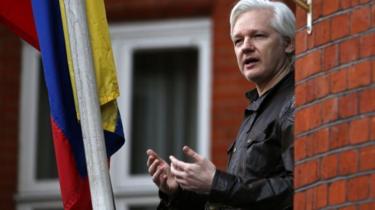
Image copyrightAFPImage captionThe WikiLeaks founder has been living at the Ecuadorean embassy for more than five years
A UK arrest warrant against Julian Assange is still valid, Westminster Magistrates’ Court has ruled.
Lawyers for the WikiLeaks founder asked the court to withdraw the warrant, saying it had “lost its purpose”.
It was issued in 2012 after he allegedly breached bail conditions by seeking asylum in Ecuador’s London embassy, where he has remained.
He had been facing extradition to Sweden to answer sex assault claims but these have since been dropped.
In her ruling, senior district judge and chief magistrate Emma Arbuthnot said having considered the arguments, she was “not persuaded that the warrant should be withdrawn”.
She told the court that not surrendering to bail was a standalone offence under the Bail Act and Mr Assange must explain why he failed to do so.
The offence carries a maximum penalty of one year in prison.
He has long feared that if he leaves the embassy he could be sent to the US to face trial over the leaking of hundreds of thousands of secret US military and diplomatic documents.
In April 2017, US attorney general Jeff Sessions said arresting him was a “priority”, and the UK has refused to guarantee that he will not be extradited.
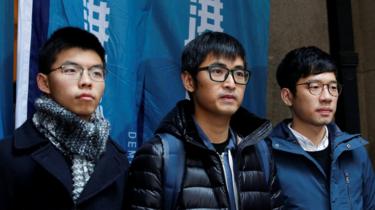
The trio were convicted of unlawful assembly over an incident that helped trigger the mass protests.
Wong and Law were initially handed community service terms, while Chow was given a suspended jail term, in 2016.
However, in an unusual move, the Hong Kong government appealed against the sentences, arguing that they were too lenient.
The trio were then convicted of between six and eight months in jail by Hong Kong’s Court of Appeal.
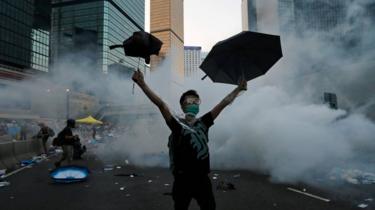
Image copyrightREUTERSImage captionThe 2014 umbrella protests paralysed central Hong Kong for almost three months
Rights groups criticised the government, saying the appeals were political decisions intended to deter future protests. However, the government denied this, saying there was “absolutely no basis” to claims of political motives.
On Tuesday, Hong Kong’s Court of Final Appeal said it had unanimously “quashed the sentences of imprisonment”, adding that the jail terms given to the three had been “significantly more severe” than those given for previous cases of unlawful assembly.
However, it also endorsed recent guidelines from the Court of Appeal that outlined stricter sentences for illegal protests, and said “future offenders involved in large-scale unlawful assemblies involving violence” could attract prison sentences.
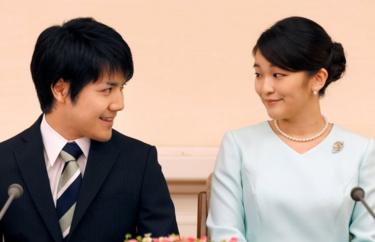
Image copyrightREUTERSImage captionThe couple, both 26, met at a restaurant while studying at university in 2012
Japan’s Princess Mako is postponing her wedding to her college sweetheart until 2020 due to a lack of time to plan the nuptials, media reports say.
The 26-year-old granddaughter of Emperor Akihito was scheduled to marry law firm worker Kei Komuro in November.
The couple announced the delay was due to a lack of time to make “sufficient preparations”, Jiji Press reported.
Their decision accounted for the imperial family’s busy plans next year, including the emperor’s abdication.
“I am very sorry for causing a big trouble and extra burden to those who have sincerely helped our wedding,” AFP news agency quoted the princess as saying.
She will lose her title when she marries Mr Komuro, a commoner.
An imperial household spokesperson confirmed that the couple, who met in 2012, still intend to tie the knot after important ceremonies related to the emperor’s abdication and the crown prince’s accession.
The household also denied the postponement was related to a recent magazine article about alleged financial problems involving Mr Komuro’s mother, according to Jiji.
In April 2019, Emperor Akihito, 84, will become the first Japanese emperor to step down from the Chrysanthemum Throne in more than 200 years.
His eldest son and uncle to Princess Mako, 57-year-old Crown Prince Naruhito, will succeed him.
The president, in power since 2009, is due to make a state of the nation address on Thursday, and some in the party want Mr Zuma to leave office ahead of that speech.
“He must go because he has demonstrated that he is not fit to govern. We call on the state to hold him accountable for his actions. Some things cannot be pardoned,” it added in a statement.
Mr Zuma has repeatedly denied corruption allegations.
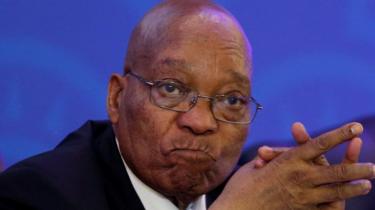
Image copyrightREUTERSImage captionPresident Jacob Zuma is said to be resisting calls to leave office
On Monday, senior ANC officials held an emergency meeting in the main city, Johannesburg, to discuss his future.
A “dominant view” emerged from the meeting, but it “wasn’t the only view”, ANC deputy secretary-general Jessie Duarte said at a media briefing.
She refused to go into details, saying the party’s National Executive Committee (NEC) will make a final decision on Mr Zuma’s future on Wednesday.
If the committee agrees to recall Mr Zuma, the OP’S NEWS Andrew Harding says, it would be very hard for him to resist.
Mr Zuma, who spent time in prison for his part in the fight against apartheid, met the ANC’s top six on Sunday. They are said to have failed to convince him to stand aside.
Other unconfirmed reports from Sunday’s meeting say that Mr Zuma asked for protection from prosecution for himself and his family.
Why does the ANC want to remove him?
Mr Zuma’s presidency has been overshadowed by allegations of corruption.
In recent years his links to the wealthy India-born Gupta family, who are alleged to have influenced the government through their relationship with Mr Zuma, have caused his popularity to plummet. In South Africa, it has become known as “state capture”.
Then there is also the country’s struggling economy, with the unemployment rate rising to about 28%.
As a result, many in the ANC fear his presidency has become toxic – and is hurting the party’s standing.
That appeared to be borne out at the 2016 local elections, when the ANC lost ground to the opposition Democratic Alliance (DA) and Economic Freedom Fighters (EFF).
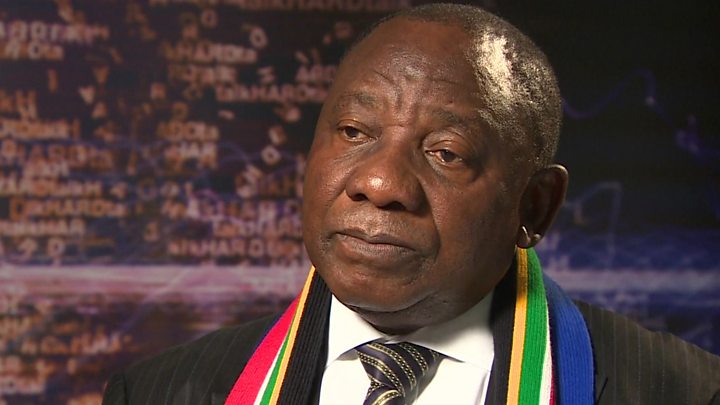
Media captionCyril Ramaphosa recently told the BBC’s Zeinab Badawi that Jacob Zuma was “feeling anxious”
With a general election set for 2019, the ANC will be keen to distance itself from any more negative press – and therefore it is perhaps not surprising that Mr Ramaphosa was elected the party leader on an anti-corruption platform.
However, Mr Zuma still has his supporters within the ANC – including at least two of the top six – so nothing is definite.
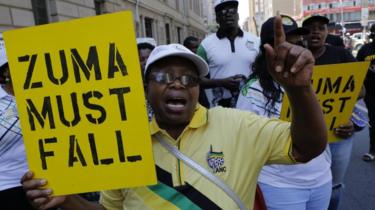
On Monday, there were scuffles out the ANC headquarters between small groups of pro- and anti-Zuma supporters.
What are the allegations against him?
2005: Charged with corruption over multi-billion dollar 1999 arms deal – charges dropped shortly before he becomes president in 2009
2016: Court orders he should be charged with 18 counts of corruption over the deal
2005: Charged with raping family friend – acquitted in 2006
2016: Court rules he breached his oath of office by using government money to upgrade private home in Nkandla – he has repaid the money
2017: South Africa’s public protector said he should appoint judge-led inquiry into allegations he profiteered from relationship with wealthy Gupta family – he denies allegations, as have the Guptas
The winner of a $560 million (£400m) Powerball jackpot last month is suing state lottery officials in a bid to protect her anonymity.
The New Hampshire woman filed a civil complaint as Jane Doe, after making the “huge mistake” of signing the winning ticket without legal consultation.
State law says a winner’s name, town and winning amount are public record.
But the woman later learned from a lawyer that she could avoid the law by claiming the lottery money via a trust.
The winner has not turned in her ticket yet, but showed lottery officials a photocopy of the front to support her claim for the country’s eighth-largest lottery jackpot.
They told her that they would be compelled to disclose her identity in the event someone files a Right-to-Know request for the 6 January drawing.
However, she also wants “the freedom to walk into a grocery store or attend public events without being known or targeted as the winner of a half-billion dollars”.
They argued her privacy interest outweighed the insignificant public interest in disclosing her name.
Charlie McIntyre, the state lottery’s executive director, said in a statement that his agency understood winning such a large sum was a “life-changing occurrence”.
But added: “While we respect this player’s desire to remain anonymous, state statutes and lottery rules clearly dictate protocols.”
Media captionNobody has claimed the $590m prize so far
Fortune without the fame?
Currently only six states allow lottery winners to maintain their anonymity – Delaware, Kansas, Maryland, North Dakota, Ohio and South Carolina.
New Hampshire is among the few other states that allow people to form a trust to claim prize money anonymously.
In 2016, the state’s winner of a $487 million US Powerball jackpot chose to remain anonymous, claiming their prize through a trust facilitated by a local law firm.
Because the latest winner has already signed her name on the winning ticket, any alteration to the signature would nullify the ticket for $559.7 million.
Mr McIntyre said his office had consulted the state attorney general’s office and that the Powerball winner’s ticket would have to be processed “like any other”.
Media captionBulldozers clear the site of the Mogadishu truck bomb
Somalia’s military court has sentenced a man to death for his role in the country’s deadliest bombing last year, in which at least 500 were killed.
Hassan Adan Isaq was accused of leading an al-Shabab unit said to have carried out the truck attack in the capital Mogadishu on 14 October 2017.
During the trial, the 23-year-old had denied any involvement.
Another suspect was sentenced in absentia to life in jail, while a third man received a three-year prison term.
It is a rare case of a high-profile investigation leading to a suspect being convicted for an attack in Somalia, the OP’S NEWS Africa security correspondent Tomi Oladipo reports.
He says the bombing in Mogadishu prompted public outrage at al-Shabab for its perceived role as the perpetrator, and at the government for failing to prevent the attack.
The truck exploded at a busy junction, destroying hotels, government offices and restaurants.
But it remains unclear whether the junction was the intended target or whether the driver detonated the explosives because suspicions about the vehicle had been raised.
It blew up next to an oil tanker, which intensified the blast.
More than 150 of the victims were burned beyond recognition after the huge explosion.
Hundreds of people were injured, and many of them were later flown to Turkey, Sudan and Kenya for treatment.
Officials blamed the Islamist al-Shabab group, allied to al-Qaeda. But the group denied any involvement in the attack.
Mogadishu residents held mass protest rallies, blaming the authorities for failing to prevent the attack.
Many wore red cloth around their foreheads to show solidarity with the victims.
“The bandana represents the blood of my people killed in the blast,” one protester said.
While another demonstrator said: “We will never forget [this]”.
Media captionMedical student Maryam Abdullah died a day before her graduation
The crowds were also calling for unity in a country torn by decades of conflict.
A 22,000-strong African Union force (Amisom) is deployed in Somalia trying to help the government recapture territory from al-Shabab, whose fighters are active in much of rural southern regions.


 REUTERS







 OP's News