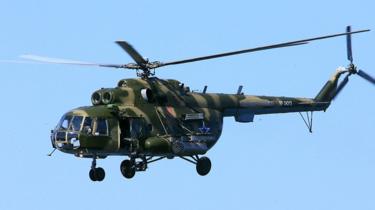
Image copyrightHUW EVANS PICTURE AGENCYImage captionA military version of the Mi-8 helicopter – reportedly the type of aircraft that crashed in Chechnya
Several people have been killed in a helicopter crash in the southern Russian republic of Chechnya.
Interfax news agency reports that Chechen leader Ramzan Kaydrov has confirmed the crash and that he said weather conditions in the area had been “difficult”.
It is not yet clear how many people have died, though local reports put the figure at between five and eight.
Mr Kaydrov said the helicopter belonged to the Russian border guard service.
According to the Meduza news website, the vehicle was an Mi-8 helicopter.
“The accident happened in a narrow gorge where mountain ridges are within a short distance one from another,” Mr Kadyrov said.
The Chechen leader also said measures would be taken to rescue survivors, if there are any.
Chechnya has been the scene of an Islamist insurgency against the Russian state, although the violence has died down in recent years.
Image copyrightAIRBUSImage captionWings for the A400M military transport aircraft being delivered
Airbus has said up to 3,700 jobs could go across its four “home” countries because of falling production rates of its A380 and A400M planes.
The European planemaker said jobs would be affected in the UK, France, Germany and Spain.
However, Airbus UK said the firm did not expect to see any redundancies at its Broughton plant in Wales.
About 250 employees currently working on the A380 in the UK are likely to be deployed to other projects.
There have been recent media reports of plans for thousands of job cuts at the company.
Airbus said that from 2020, it would be producing six a year of the A380 superjumbo, the world’s biggest passenger plane.
Also from 2020, it would be manufacturing eight A400Ms a year, down from a projected 15 in 2018 and 11 in 2019.
‘Responsible manner’
“Airbus is committed to managing any implications for its workforce in a responsible manner – as already successfully demonstrated on various occasions in the past,” it said in a statement.
“The company is confident that it will be able to propose opportunities to most of the affected employees through programmes which are ramping up.”
The A380 and A400M are Europe’s largest civil and military aerospace projects respectively.
Last month, Airbus announced the latest in a series of write-offs on the troubled A400M, bringing total losses on the project to more than €8bn (£7.1bn).
At the same time, the A380 has suffered from lack of demand. However, the plane was given a boost in January, when the Emirates airline placed an order for up to 36 of the jets.
Airbus said the Emirates order provided “visibility to the programme for the years to come”.
“At a baseline of six deliveries per year, Airbus can produce the A380 in an industrial-efficient way over the coming years,” it added.
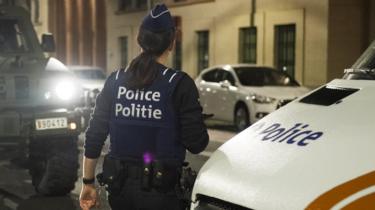
Image copyrightGETTY IMAGESImage captionThe female officer had stopped the man for suspected traffic violations (file photo)
A man who insulted a female police officer because of her gender has become the first person to be convicted of sexism in a public space in Belgium.
The man, who has not been named, was stopped in June 2016 for violating the highway code and told the officer that her job did not suit women.
A court in Brussels fined him €3,000 (£2,690; $3,725). He can still appeal.
The law was introduced in 2014 after an outcry over a documentary showing the abuse women faced on the streets.
It condemns any act or statement meant to “express contempt”, that considers a person inferior due to their gender or reduces someone to a sexual dimension.
“This is the first time we have used this law to prosecute someone,” said Gilles Blondeau, a spokesman for the public prosecutor’s office.
“It happens frequently that people arrested by the police insult or threaten them. But to personally blame a policewoman because of her sex is something particular.”
“The educational role of this law is essential to achieve change attitudes and behaviours,” it said in a statement.
Meanwhile, France’s government spokesman Benjamin Griveaux has confirmed plans to introduce a new on-the-spot €90 fine for catcalling and lecherous behaviour in public.
The measure is part of a package of laws against sexual violence and harassment to be presented by the government in the coming weeks.
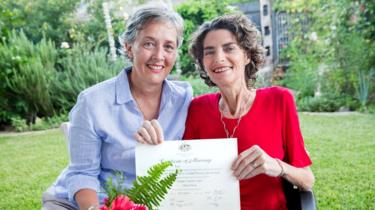
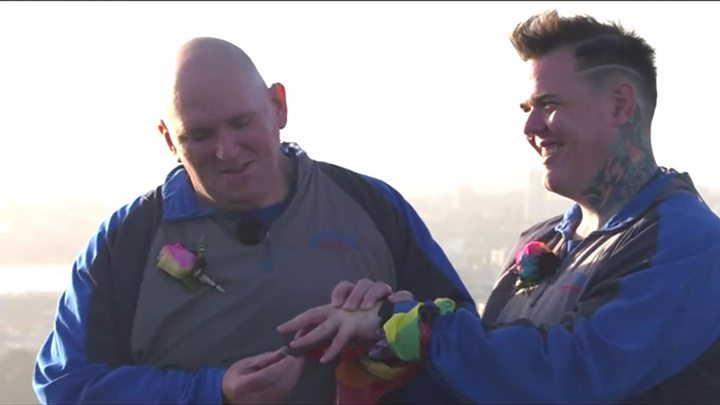
Ms Grant died from cancer on 30 January, less than seven weeks after marrying Ms Kindt. They had been together for eight years.
“Jo and I got to be legally married for 48 days – I’ll take that,” Ms Kindt.
Image copyrightMARION JONKERS
Their historic marriage was made public in Queensland’s parliament by state Attorney-General Yvette D’Ath.
“I am honoured to reveal today that on December the 15th last year, despite what you may have seen reported in the media, Australia’s first same-sex marriage was in fact actually held in Queensland,” she said.
But the Queensland couple were married privately in their garden on the Sunshine Coast, surrounded by friends and family. Ms D’Ath said the marriage had been revealed now to parliament with family permission.
She said officials went to “extraordinary lengths” to make Ms Grant and Ms Kindt’s wedding happen quickly.
Media captionFirst same-sex wedding on Sydney’s Harbour Bridge
The ceremony took place within 24 hours of the marriage being approved.
Ms D’Ath said staff from Queensland Births, Deaths and Marriages drove about 100km (60 miles) to deliver paperwork to the marriage celebrant.
Ms Grant had a “rare cancer” and had been receiving palliative care. She and Ms Kindt had held a commitment ceremony in 2013.
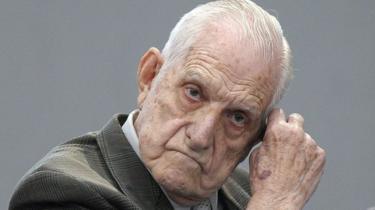
Image copyrightAFPImage captionReynaldo Bignone was sentenced for crimes against humanity
Argentina’s last military ruler, Gen Reynaldo Bignone, has died aged 90.
Gen Bignone died in a military hospital, where he was serving a life sentence for crimes against humanity.
Bignone, who ruled from July 1982 to December 1983, was also serving a sentence for overseeing the systematic theft of babies from political prisoners.
About 30,000 people were killed or disappeared under Argentina’s military rule from 1976 to 1983.
Bignone’s crimes were part of the Dirty War, a brutal plan to silence the left-wing opposition in the country during the 1970s and 80s which included kidnapping, torturing and killing opponents, and handing their children to supporters of military rule.
Among the crimes he was sentenced for were the kidnap and torture of more than 30 factory workers, most of them trade union activists.
He was also found guilty of playing a role in the theft of 34 babies of detained left-wing activists and of abducting, torturing and murdering 56 people held at the Campo de Mayo military base outside Buenos Aires.
He defended his actions until the end, describing them as “a battle against terrorism”.
Gen Bignone served as de facto president of Argentina in 1982-83, at the end of military rule, and oversaw the return to democracy.
But before agreeing to hand over power to the democratically elected Raúl Alfonsín, Bignone granted an amnesty to human rights violators and ordered the destruction of papers which documented the torture and disappearances of opponents of the military regime.
The amnesty was eventually overturned and Bignone as well as other military rulers who had preceded him, such as Jorge Videla, were sentenced.
Argentina’s military regime
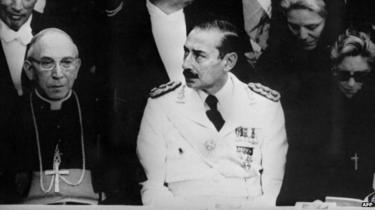
Image copyrightAFPImage captionGeneral Videla (right) seized power in 1976
1976: General Jorge Rafael Videla seizes power – thousands of political opponents rounded up and killed
1982: Videla’s successor, General Leopoldo Galtieri, orders invasion of British-held Falkland Islands
1983: Civilian rule returns to Argentina, investigations into rights abuses begin
2010: Videla sentenced to life imprisonment for murders during his term in office
2012: Videla sentenced to 50 years for overseeing systematic theft of the babies of political prisoners
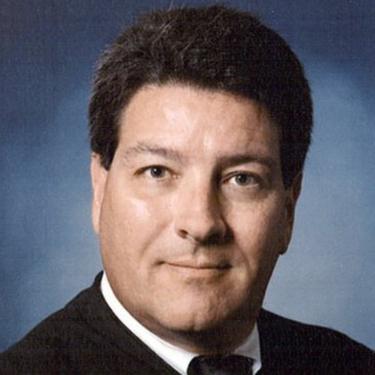
Image copyrightTEXAS LAWYERImage captionJudge George Gallagher
A Texas appeals court has overturned a man’s conviction after finding a judge had inappropriately electrocuted him in court, US media report.
Terry Lee Morris was convicted of soliciting sexual performance from a child and was sentenced to 60 years.
Judge George Gallagher ordered the bailiff to activate a stun belt sending 50,000 volts through Morris when he allegedly refused to answer questions.
The higher court found that stun belts cannot be used as punishment in court.
Mr Morris appealed his 2014 conviction alleging that his constitutional rights were violated when the judge used the belt as punishment for not answering questions properly.
The belts – used by courtrooms such as the one Tarrant County in Texas – are affixed around the legs or midsection of a suspect in court and are used to deliver a shock to the person should they become violent.
Mr Morris said he was too scared to return to court out of more electrical shocks, the Texas Eighth Court of Appeals in El Paso heard.
The appeals court ruled on 28 February that Mr Morris’ shocks and removal from the court was a violation of his constitutional right to be present and confront witnesses during his trial. The decision was first reported by the Texas Lawyer news website on Tuesday.
He has now been ordered to stand for a new trial.
During the case in which Mr Morris was convicted of soliciting sexual acts from a 15-year-old girl, Judge Gallagher asked him to enter his plea of “guilty or not guilty”.
Mr Morris asked the judge to recuse himself because of the lawsuit when the judge directed the bailiff to shock him.
The judge ordered the defendant to be shocked two more times as Mr Morris told the court he had a history of mental illness and complained that he was being “tortured”.
Mr Morris’s attorney, Bill Ray, told the Texas Lawyer that he did not object to the use of the stun belt because his client was acting “like a loaded cannon ready to go off”, and that he did not really believe that he was being shocked.
The appeals court said the order clarifies that all Texas judges are not allowed to shock defendants for refusing to follow the court’s rules of decorum.
“Never before have we seen any behaviour like this, nor do we hope to ever see such behaviour again,” wrote appeals court Justice Yvonne Rodriguez.
“We must speak out against it, lest we allow practices like these to affront the very dignity of the proceedings we seek to protect and lead our courts to drift from justice into barbarism.”
Image copyrightEPAImage captionScores of Muslim businesses are reported to have been targeted by Buddhist mobs – many set ablaze
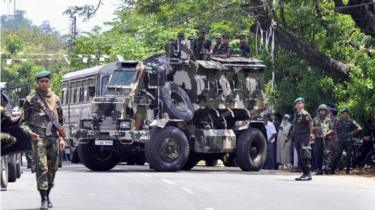
The Sri Lankan government says more troops have been deployed to the central district of Kandy, to try to end days of violence against Muslims.
Police used tear gas to disperse Buddhist rioters who have attacked mosques and Muslim-owned businesses.
They are defying a curfew imposed after a Buddhist youth died during an altercation with a group of Muslims.
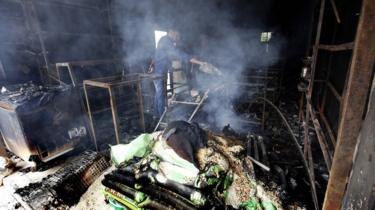
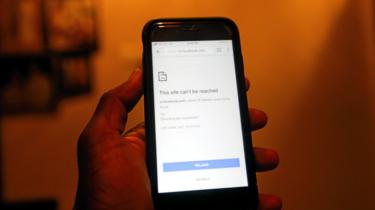
A state of emergency has been imposed and the curfew extended, and authorities are blocking social media.
The authorities had feared retaliation after a young Muslim man’s body was found in a burnt-out building in Kandy on Tuesday.
Fresh clashes between mobs from the majority Sinhalese and minority Muslim communities erupted in several areas overnight, and a number of properties were set on fire.
On Wednesday, there were reports that a Sinhalese man had died when a hand grenade he was carrying went off in a Kandy district.
Police leave has been cancelled and “the army has been deployed in tens and thousands” in the scenic hilly area, said government spokesman Rajitha Senarathane.
President Maithripala Sirisena toured Kandy on Wednesday, saying he had “ordered that the full force of the law be used against troublemakers”, reported AFP news agency.
Meanwhile, the influential former captain of the Sri Lankan cricket team, Kumar Sangakkara, called for the violence to stop and said there was “no place for racism or violence”:
Last week, the eastern town of Ampara also saw anti-Muslim violence over a dispute in a shop.
Tensions have been building in Buddhist-majority Sri Lanka since 2012, said to have been fuelled by hard-line Buddhists.
Under the state of emergency, the authorities are able to arrest and detain suspects for long periods, and deploy forces where needed.
It is the first time in seven years Sri Lanka has imposed the measure. The country was under a state of emergency for nearly three decades when the government fought Tamil rebels in the civil war that ended in 2009.
Image copyrightAFPImage captionPolice commandos are out in force in KandyImage copyrightREUTERSImage captionSocial media sites have been blocked – and in some of the affected area, the entire internet shut down
“Access to certain social media sites and messaging platforms will be restricted with immediate effect until further notice,” said a statement from Sri Lanka’s largest mobile phone provider Dialog.
A senior government minister told the BBC that Facebook, WhatsApp and other social platforms were being used to carry hate speech and misinformation aimed at inciting more violence.
Schools have been closed and a curfew extended until Thursday evening.
Foreign governments have urged their citizens to stay away from large crowds and protests, and warn that there could be more unrest.
The UN has urged that immediate action be taken against perpetrators of the violence.
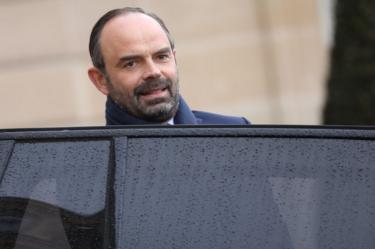
Image copyrightAFPImage captionPrime Minister Edouard Philippe hopes to push through a package of social reforms
French companies caught discriminating against women over pay will be given three years to close the gap or face fines under new labour proposals.
The government revealed the planned crackdown to unions and employers on Wednesday, giving them a month to iron out details.
If passed by parliament, the measure will be rolled out by 2020.
Men are still paid on average 9% more than women in France despite equal pay laws going back 45 years.
The measure is part of a social reform bill due to be presented to Prime Minister Edouard Philippe’s cabinet at the end of next month.
“The crazy thing is that it all exists in law but equality is missing in practice,” said Mr Philippe.
“Our aim is to pass from fine words to true, genuine equality.”
How would the new measure work?
Special software would be installed on company payroll systems to monitor unjustified pay gaps.
Larger firms – those employing at least 250 staff – would get the new software next year while firms employing between 50 and 249 staff would be affected from 2020.
The new system would be launched in 2022 and there would be four times the current number of spot checks.
Those firms which failed to address unfair pay gaps within three years of a warning could be fined up to 1% of their wage bill.
Despite opposition at home and abroad, Ms Sanders said the US president would sign the measures in by the end of the week, with US media reporting it could happen as early as Thursday.
But she added: “There are potential carve-outs for Mexico and Canada based on national security, and possibly other countries as well based on that process. That would be [on] a case-by-case and country by country basis.”
Why is Mr Trump doing this?
Mr Trump has railed against the US trade deficit, arguing that other countries have been “taking advantage of” the US for decades.
One of his campaign promises was to rebuild the US steel and aluminium industries which he said has suffered “disgraceful” treatment from other countries, in particular cheap Chinese imports.
Last week he dismissed concerns he could trigger a trade war, instead saying “trade wars are good” and were something the US would easily win.
Mr Trump has already hinted he could drop plans to impose tariffs on Mexican and Canadian metals but linked it to the US getting a better deal in the North American Free Trade Agreement.
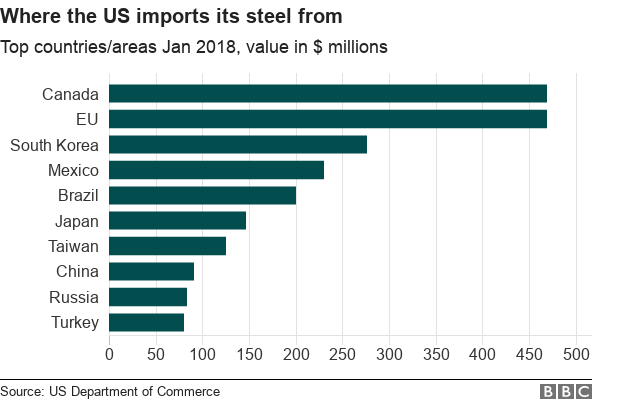
Mexico and Canada are among the main suppliers of steel to the US.
What’s the reaction been?
The US plans have sparked worldwide alarm and jolted stock markets.
Critics argue that the tariffs would fail to protect American jobs and would ultimately raise prices for consumers.
International Monetary Fund chief Christine Lagarde warned “nobody wins” in a trade war, saying it would harm global economic growth.
The EU has set out tit-for-tat plans to impose import duties on bourbon, peanut butter, cranberries, orange juice, steel, and industrial products. Other countries, including China, are also considering retaliatory steps.
Members of Mr Trump’s Republican party are concerned too, with House Speaker Paul Ryan saying he wanted to see tariffs that were “more surgical and more targeted”.
Tuesday saw the departure of top White House economic advisor Gary Cohn, who is a strong supporter of free trade.
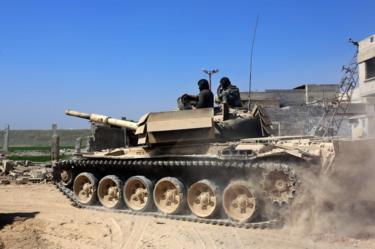
Image copyrightAFPImage captionSyrian government armed vehicles has been on the move towards the enclave
Forces loyal to the Syrian government have reportedly taken half of the Eastern Ghouta – the last rebel-held enclave close to the capital Damascus.
“Regime forces control more than 50% of Ghouta,” Rami Abdel Rahman, head of the UK-based Syrian Observatory for Human Rights, told AFP news agency.
Aerial bombing killed at least 20 people as troops and tanks advanced.
In New York, the UN Security Council gathered to discuss the failure of a ceasefire it had demanded last week.
It passed a resolution on 24 February demanding a 30-day truce across Syria but the government and its key ally Russia say it does not apply to some of the rebel groups holding the enclave.
Media captionFootage shows an aid convoy reaching “hell on earth”, the Eastern Ghouta
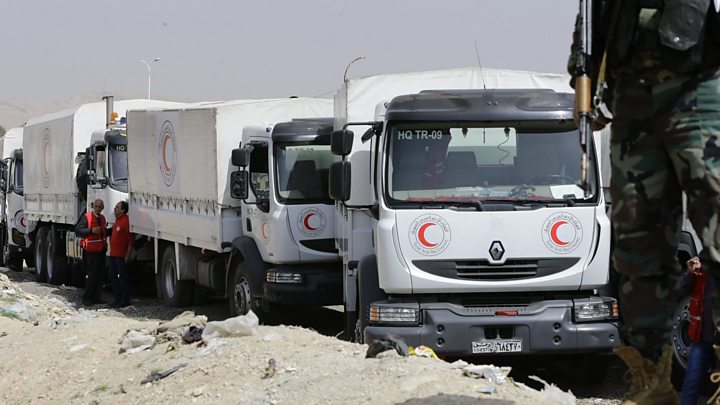
A UN convoy was allowed to deliver aid to the enclave on Monday but left without unloading all of its trucks as shells fell.
At least 850 people are believed to have been killed since an offensive against the Eastern Ghouta, which is home to about 393,000 people, began on 18 February. Many victims are children.
What is the latest on the fighting?
According to the Observatory, 62 people were killed in Wednesday’s bombardments. The Ghouta Media Centre reported at least 20 deaths.
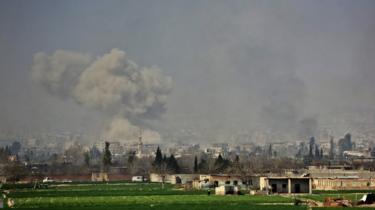
Syrian soldiers and their allies could be seen on the move on the edge of the enclave on Wednesday while, in the distance, smoke trails from air strikes rose over the rebel-held town of Misraba.
Image copyrightAFPImage captionSmoke over Misraba
Another village in the enclave, Beit Sawa, is reportedly now under full government control, with dozens of residents fleeing to Douma, the enclave’s largest town.
“We escaped Beit Sawa to come here, under the bombs,” one of them, Abu Qassem, told AFP. “The situation is completely dead. Finished. We’ve got no clothes. Nothing to change into. No food.”
Adnan, 30, a Douma resident who has been sheltering below ground with his wife and two-year-old daughter, told Reuters news agency by telephone: “It’s bad in the basement but it’s better than the bombing.”
Rebel factions in Ghouta denied Beit Sawa had been seized, according to the Kumait news agency, which is affiliated with Jaysh al-Islam Islamist fighters.
What is being done to stop the violence?
Ali al-Za’tari, the UN humanitarian co-ordinator in Syria, appealed to the government in a letter to observe the ceasefire and allow medical supplies to be delivered, Reuters reports.
The UN High Commissioner for Human Rights, Zeid Ra’ad Al Hussein, said government claims it was “taking every measure to protect its civilian population” were “frankly ridiculous”.
Media captionRelief convoy arrives in the Eastern Ghouta
People in the Eastern Ghouta, he said, faced an “apocalypse intended, planned and executed by individuals within the Government, apparently with the full backing of some of their foreign supporters. It is urgent to reverse this catastrophic course, and to refer Syria to the International Criminal Court”.

 HUW EVANS PICTURE AGENCY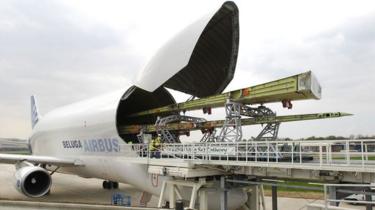

 OP's News