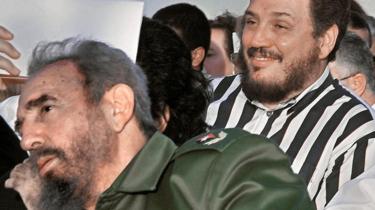
Image copyrightAFPImage captionHe was popularly known as “Fidelito” because of his resemblance to his father (L) – with whom he is pictured in February 2002
The 68-year-old son of Cuba’s former leader Fidel Castro has killed himself in Havana, according to Cuban state media.
Fidel Ángel Castro Díaz-Balart was found on Thursday morning and is said to have suffered from depression.
The first-born son of the late president was nicknamed “Fidelito”, or Little Fidel, because of the family resemblance.
He was a nuclear physicist, trained by the former Soviet Union.
State television said he had been receiving medical treatment as an outpatient in recent months, following a hospital stay.
Depression in the spotlight – Will Grant, BBC News, Havana
Image copyrightAFPImage captionFidelito’s work for the Cuban regime came to an end with the collapse of the Soviet Union
Fidel Ángel Castro Díaz-Balart had taken his own life after suffering with deep depression which doctors had been treating him for over several months, state TV said.
As much as the death itself may shock ordinary Cubans, it was those unexpected circumstances which caught them by surprise.
As the personal lives of members of the Castro family are generally kept away from the public eye, almost no-one will have known he suffered mental health issues prior to the announcement of his death.
At the time of his death, he was a scientific adviser for the Cuban Council of State and he served as vice president of Cuba’s Academy of Sciences.
He headed the island’s nuclear programme from 1980 to 1992, before it was suspended after the Soviet Union’s collapse.
He was married to María Victoria Barreiro and had three children from his previous marriage – Fidel Antonio Castro Smirnov, Mirta María Castro Smirnova and José Raúl Castro Smirnov.
Image copyrightAFPImage captionFidel Ángel Castro Díaz-Balart (centre) attends a ceremony with his father’s ashes in an urn in December 2016, days after the elder Fidel’s funeralImage copyrightREUTERSImage captionFidel Ángel Castro Díaz-Balart poses with socialite Paris Hilton during the Habanos Festival in Havana in 2015
Fidel Castro Díaz-Balart was born in 1949, during his father’s brief first marriage to Mirta Díaz-Balart, the daughter of a prominent pre-revolution politician.
His father went on to overthrow the US-backed dictator, Fulgencio Batista, in 1959 – when his mother’s family fled the island and went to Florida.
His parents divorced and “Fidelito” spent some of his early years in the US before his father managed to bring him back to Cuba.
This history explains why some of his close maternal relatives are among the most committed critics of the Cuban government – such as his cousin, Mario Díaz-Balart, a US congressman.
Fidelito himself was loyal to the ideals of the Cuban revolution, but was said in recent years to have grown weary – both of living in his father’s shadow and having been sidelined from Cuban decision-making on energy resources, said reports.
His ideas for developing renewable energy on the island were not incorporated into state policy, an academic colleague, Jonathan Benjamin-Alvarado, told Reuters.
“I imagine that was disappointing for him,” Mr Benjamin-Alvarado said.
The TV announcement said his funeral would be planned by his family, but no further details were given.
Image copyrightAFPImage captionThe number trying to reach Italy from Libya declined after a highly criticised EU deal with the Libyan coastguard
Ninety migrants are feared drowned after a boat capsized off the Libyan coast, says the UN’s migration agency.
Three survivors said most of those who drowned were Pakistani nationals.
Libya has for years been a major transit route for migrants trying to reach southern Europe by sea.
But last year the EU reached a controversial deal to provide help to the Libyan coastguard to stop the flow of boats carrying migrants and refugees to Italy.
Full government funding for IVF treatment would reduce the risk of harm to mothers and babies and save the NHS money, health experts have said.
It would help lower cases of women who have more than one embryo transferred into the uterus, which can cause risky multiple pregnancies, their study says.
Multiple pregnancies are the “greatest avoidable risk of IVF”, it says.
The Department of Health said the NHS should be offering IVF for all patients who meet existing criteria.
‘Greatest avoidable risk’
Multiple pregnancies are the most common adverse outcome of IVF treatment. They can happen when more than one embryo is transferred into the uterus.
This procedure is often carried out to reduce costs for patients who pay for their own treatment, the Royal College of Obstetricians and Gynaecologists’ (RCOG) report said.
Multiple pregnancies are associated with a six-fold increase in the risk of pre-term birth – a leading cause of infant mortality and long-term mental and physical disabilities – as well as increased risks to mothers, such as pregnancy-induced high blood pressure and haemorrhage following birth.
But despite the risks of them occurring, double embryo transfer during IVF treatment continues.
The RCOG paper found that almost one in five IVF deliveries in the UK in 2011 involved a multiple birth.
Sweden has similar live birth rates but a high proportion of single embryo transfer, but during the same period the multiple birth rate was 4.9%.
In Vitro Fertilisation (IVF)
An egg is removed from the woman’s ovaries and fertilised with sperm in a laboratory
The fertilised egg is then returned to the woman’s womb to develop
IVF worked for the first time on 10 November 1977. On 25 July 1978, the world’s first IVF baby, Louise Brown, was born
On average, IVF fails 70% of the time
The highest success rates are for women under 35
On average, it takes almost four-and-a-half years to conceive with IVF
Source: Human Fertilisation and Embryology Authority/Fertility Network UK
Current National Institute for Health and Care Excellence (NICE) guidelines recommend government funding for three full IVF cycles.
However, the recommendations are not binding and it is up to local NHS providers to decide what to offer.
The RCOG said there was a “postcode lottery” for funding across the country and six out of 10 IVF cycles in the UK were funded by patients themselves.
It said it was still widely believed by patients and health professionals that the success rate of IVF treatment was higher following the transfer of two embryos than with one embryo.
But the college said studies had shown that in women with a good prognosis, single embryo transfer is comparable to that of two embryos and with a significantly lower risk of multiple pregnancy.
It called for the a national commissioning policy to remove the current variation in IVF funding.
‘Step up efforts’
Mr Tarek El-Toukhy, consultant gynaecologist and specialist in reproductive medicine and surgery, and lead author of RCOG’s report, said: “The health and financial burden it places on women, families and the NHS cannot be overstated.
“To ensure rates of multiple births remain low, there is little doubt that the single most important factor that could enhance the acceptance of single embryo transfer among patients and practitioners is appropriate funding for IVF treatment.”
Keith Reed, chief executive of the Twins and Multiple Births Association, said healthcare organisations needed to “step up their efforts to address the risks associated with multiple birth pregnancy”.
“There is a growing body of evidence that good care and following multiple birth guidance during maternity reduces the poor outcomes and need for neonatal care which put pressure on NHS services.”
A Department of Health and Social Care spokesman said: “As this report itself highlights, we have made great progress in improving patient safety by lowering the national multiple birth rate in IVF from 24% in 2009 to 11% today.
“We know fertility problems can have a serious and lasting impact on families—and the government has been clear that the NHS should provide access to IVF for all patients that meet the criteria set out in NICE guidance.”
By OP
Image copyrightGETTY IMAGESImage captionThe UK is promising funding to keep 880,000 children in school in poorer countries
The UK will increase aid for education in developing countries by 50% to £75m per year, International Development Secretary Penny Mordaunt will promise.
The government has faced criticism over its commitment to overseas aid – and this announcement marks a new emphasis on supporting education projects.
Ms Mordaunt said supporting schools was a “hard-headed” investment in a more prosperous future.
But aid agencies warned the amounts promised were insufficient.
Ms Mordaunt will make the announcement of £225m funding over three years at a global education conference in Senegal, hosted by France’s President Emmanuel Macron and Senegal’s President Macky Sall.
Building schools
This event will see international leaders promising funding for the Global Partnership for Education, which works with developing countries on raising standards in education.
Ms Mordaunt will say that the UK wants to help prevent the “terrible waste of potential” when “half the world’s children leave primary school unable to read or write”.
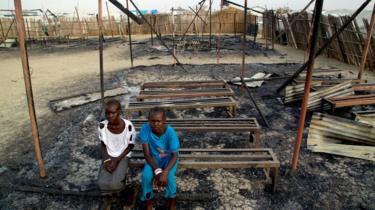
Image copyrightUNICEFImage captionWar in South Sudan: Conflict has destroyed access to schools for millions of children
The UK’s support will aim to keep 880,000 children in school for three years, including in countries caught up in political violence and war.
The funding will build 2,400 classrooms and train 170,000 teachers.
There will be an emphasis on teacher quality – after warnings from the United Nations that millions of children were attending schools in sub-Saharan Africa, but were leaving without even learning the basics.
“We need an education revolution, but to succeed in tackling this global learning crisis, we will not just need to be open-hearted – we need to be hard-headed too,” says Ms Mordaunt.
“The UK will lead the way by supporting countries’ governments to fundamentally overhaul their education systems to make sure they can ultimately step up and provide a good education for their own people.
“All children deserve a decent education to make the most of their talents and to help lift themselves and their countries out of poverty – building a more prosperous and more stable future for us all.”
A report from the committee said that at present about 7% of UK aid was spent on education.
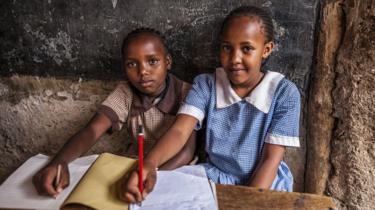
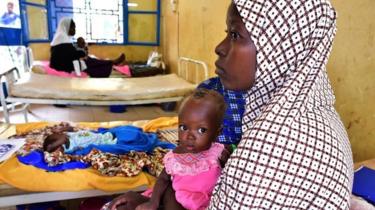
Image copyrightGETTY IMAGESImage captionFour out of five adult women in Niger are illiterate
It called for this to increase, arguing that improving schools and teaching would provide a more long-term and sustainable approach to development.
But aid campaigners have called for a bigger increase in financial support from the UK to match the scale of the challenge.
The One campaign, which works to reduce poverty in Africa, says that this pledge is less generous than the previous funding round in 2014, when £300m was promised over four years.
But this was conditional on levels of funding from other donor countries – and when this was not forthcoming the amount given by the UK was about £50m per year.
Romilly Greenhil of the One campaign said: “A higher pledge would have given the UK a golden opportunity to demonstrate global leadership on education and use our expertise to promote quality education for all – an opportunity that now risks being lost.”
This week figures from Unicef showed that almost a third of young people living in countries affected by conflict, mostly in Africa, were illiterate.
Image copyrightGETTY IMAGESImage captionProstate cancer is killing more men because the population is living longer
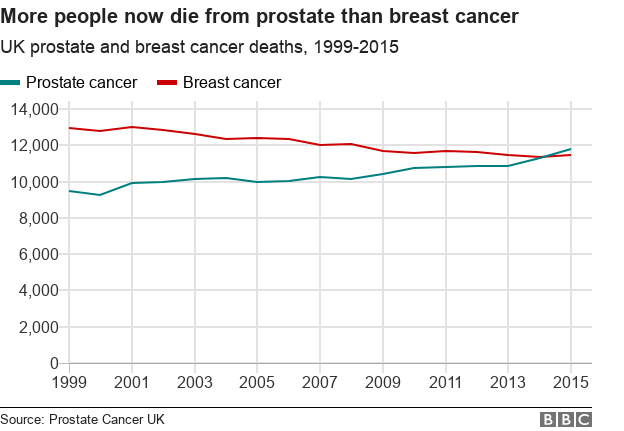
The number of men dying from prostate cancer has overtaken female deaths from breast cancer for the first time in the UK, figures show.
An ageing population means more men are developing and dying from the disease.
Prostate Cancer UK says advances in the diagnosis and treatment of breast cancer are paying off, and increased funding could benefit prostate cancer.
The biggest cancer killers in the UK remain lung and bowel cancer, with prostate now in third place.
The latest figures from 2015 show there were 11,819 deaths from prostate cancer compared with 11,442 from breast cancer.
Although deaths from prostate cancer have been rising over the past 10 years or so, the mortality rate or the proportion of men dying from the disease has fallen – by 6% – between 2010 and 2015.
For breast cancer the mortality rate has come down by 10%, meaning deaths in women are declining more quickly.
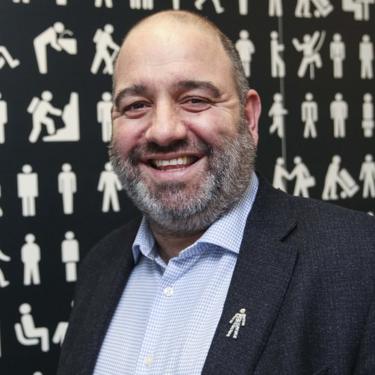
Image copyrightPROSTATE CANCER UKImage captionGary Pettit works in the City of London
Gary Pettit was 43 when he was diagnosed with prostate cancer, five years ago, after a routine medical through work.
He had no symptoms – only an abnormally high PSA (prostate-specific antigen) blood test, which which led to further tests and biopsies.
Within weeks, he had a seven-hour operation at the Royal Marsden in London to remove the cancer.
“I’m a lucky boy. I stored my sperm before the op and now we’ve got a little seven-month-old miracle baby, called Teddy. I can’t say how lucky I’ve been.”
Gary says recovering from the surgery took quite a while and there were some side-effects which he is still getting used to – but he is clear of cancer and keen to raise awareness among other men.
“It is still a taboo subject with men. They get shy and embarrassed, but it’s so important to get checked out.”
‘Tremendous progress’
Angela Culhane, chief executive of the charity Prostate Cancer UK, said the disease currently received half the funding and half the research that is devoted to breast cancer.
She said developing better diagnostic tests that could be used as part of a nationwide screening programme would be a priority.
At present, there is no single, reliable test for prostate cancer – the PSA test, biopsies and physical examinations are all used.
Men with prostate cancer can also live for decades without symptoms or needing treatment because the disease often progresses very slowly.
Image copyrightGETTY IMAGESImage captionProstate cancer is the most common cancer in men in the UK
Ms Culhane said: “It’s incredibly encouraging to see the tremendous progress that has been made in breast cancer over recent years.
“The introduction of precision medicine, a screening programme and a weighty research boost has no doubt played an important role in reducing the number of women who die from the disease.
“The good news is that many of these developments could be applied to prostate cancer and we’re confident that with the right funding, we can dramatically reduce deaths within the next decade.”
Living longer
Michael Chapman, director of information and involvement at Cancer Research UK, said: “The number of men getting and dying from prostate cancer is increasing mostly because of population growth and because we are living longer.
“We’re dedicated to improving diagnosis and treatments for all cancers which is why we’re investing in research to help develop more treatments to give more people more time this World Cancer Day on Sunday.”
By OP
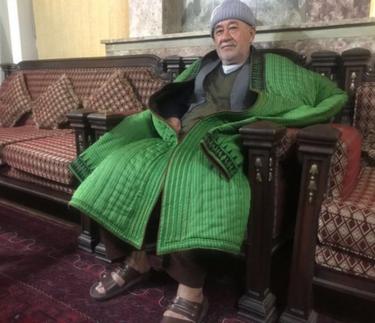
Image captionClaims of human rights abuses have dogged Gen Dostum, the current vice-president, for decades
Judges at the International Criminal Court (ICC) are deciding whether to authorise an official war crimes inquiry into events in Afghanistan.
They are due to begin examining written submissions from victims in Afghanistan about whom and what any potential investigation should focus on.
In 2017, ICC prosecutor Fatou Bensouda said there was a “reasonable basis to believe” war crimes had been committed.
Possible perpetrators included the Taliban, CIA and Afghan forces.
Warning: some readers may find some of the details below distressing.
The BBC has learnt that one of the most high-ranking officials to be named in the submissions to the court is Gen Abdul Rashid Dostum. Claims of human rights abuses have dogged the current vice-president of Afghanistan for decades.
He is currently in Turkey in de facto exile after one particularly grim allegation.
“He told his guards, ‘Rape him until he bleeds and film it’,” Mr Eshchi told the BBC. “They put a Kalashnikov [rifle] into my anus. I was screaming in pain.”
Gen Dostum refused to appear in court in Afghanistan. In May 2017 he travelled to Turkey for medical treatment. Some analysts believe the Afghan government pressured him to leave.
Image captionAhmad Eshchi is losing hope of seeing justice
Gen Dostum attempted to return to Afghanistan in July of last year but his plane was refused permission to land.
Because he is still in Turkey, Mr Eshchi believes the ICC needs to step in.
“It’s been 14 months and Dostum still hasn’t answered any questions about this,” he said. “As time goes on I am losing hope that the government here will ever bring him to justice.”
Gen Dostum’s spokesman has previously denied that Mr Eshchi was detained or sexually assaulted by anyone connected to Dostum.
Others in Afghanistan are hoping the ICC can help hold the insurgent groups in the country to account.
Samara, 32, was a cook at an orphanage in Kabul. She died after being caught in a Taliban suicide bombing in July 2017.
Her daughter, 17-year-old Fatima, told the BBC about the moment she found out: “I heard on the news that there had been a suicide attack. I called my mum’s phone but a policeman answered. He said he had found it at the scene of the blast.”
Fatima is one of those who have written to the ICC. She does not believe the Afghan authorities will give her family justice.
“Whenever they announce on the TV they’ve arrested someone and brought him to court, they release him a few days later, and the bombings continue,” she says.
Image captionFatima says she is not afraid to speak out
Despite the risks, Fatima says she is not afraid of speaking out.
“My mother fought against my other relatives and social pressure to let me join a football team, and to learn the guitar,” she says. “She did so much for me. Now it’s my turn to fight for her.”
Fatima also wants the ICC to investigate the Afghan government for its failure to stop the attacks. It seems unlikely that that would fall under the remit of the ICC though. And bringing the Taliban to justice would not necessarily be an easy task.
Guantanamo submissions
Philippe Sands QC is the director of the Centre on International Courts and Tribunals at University College London.
“You have got to catch the Taliban and you need evidence,” he says. “Evidence comes in the form of documents, in the form of witness statements and that gathering exercise for an institution without its own police force is incredibly problematic.
“The court has a policy of only going after upper-echelon individuals – they don’t want the foot soldiers. So you’ve got to apprehend those people.”
Image copyrightAFPImage captionThe proposed investigation by the ICC would cover the alleged torture of prisoners who were later transferred to Guantanamo Bay (pictured)
The proposed investigation by the ICC would cover events from May 2003 onwards, when Afghanistan signed up to the court. Any alleged crimes committed in the country after that date are eligible to be investigated, even if by foreign nationals.
That means the alleged torture of some prisoners in Bagram detention centre before they were transferred to Guantanamo Bay would also be covered.
The detention centre was originally built and run by the Americans but later handed over to Afghan control.
The charity Reprieve is making submissions to the ICC on behalf of a number of current and former Guantanamo Bay detainees.
Maya Foa, director of Reprieve, told the BBC the alleged abuses detainees suffered at Bagram included “Russian roulette with guns, men held in stress positions for days… Abuses which destroyed the men both physically and mentally”.
“These abuses were perpetrated at the behest of top commanders,” she said. “The kinds of people the ICC are trying to target.”
American officials have said that whilst they support attempts to bring the Taliban to justice, they believe an ICC investigation would be “unwarranted and unjustified”. The United States is not a signatory to the ICC.
In 2002 Congress passed the American Service-Members Protection Act, which allowed the US authorities to “free” US personnel detained for trial in the ICC by “all means necessary”.
That makes successful prosecutions of American officials extremely difficult. But the ICC is under pressure to show that it can take on politically sensitive cases. Up until now it has focused on incidents in Africa.
Why only Africans?
UCL’s Philippe Sands told the BBC: “On the website of the ICC everyone indicted is African and black or both.
“That’s a problem because Africans don’t have a monopoly on international crime.
“That has caused a backlash. African countries are saying, ‘Why focus on us? Look at what is going on around the world.'”
The ICC judges still need to decide whether to authorise a formal investigation, let alone level charges, but many in Afghanistan are looking to the court to provide some kind of justice after years of violence.
Online retailer Amazon saw sales jump by nearly a third last year, helped by growth in its Prime delivery service.
Full-year revenue came in at $177.9bn (£124.6bn), a rise of 31%, while profit hit $3bn, against $2.4bn in 2016.
The company reported record sales in the final three months of the year, driven by a surge in online shopping over the holiday season and demand for its cloud services.
Shares in Amazon rose by 6% in after-hours trading.
The company said more than five billion items were sent using its Prime shipping service worldwide in 2017.
It added that more “new paid” members joined the scheme than in any previous year, both worldwide and in the US.
More than four million people signed up in one week alone last quarter Amazon said.
Prime members have access to fast shipping, exclusive TV shows on Amazon Prime Video and extra benefits when using the company’s voice-controlled Alexa digital assistant.
Amazon has focused on boosting Prime subscribers, which its chief financial officer has previously called its “most important customer base”.
Prime subscribers tend to do more shopping with the company, although Amazon has not said how many people it has signed up so far.
The company’s boss Jeff Bezos said projections for its Alexa assistant had been very optimistic and the company had “far exceeded them”.
“We don’t see positive surprises of this magnitude very often – expect us to double down.”
‘Eye-popping’
The company said fourth-quarter sales rose by 38% to hit a quarterly record of $60.5bn (£42.4bn).
Fourth-quarter profits more than doubled to $1.9bn against $749m in the last three months of 2016.
The figures were boosted by a tax benefit of about $789m related to the new US tax law.
The results also include the contribution from the Whole Foods grocery store chain, which Amazon bought last year.
“This was another blow-out quarter for Amazon,” said analyst Daniel Ives of GBH Insights.
“The retail strength was eye-popping as the company had a banner holiday season and looked to capture roughly 50% of all e-commerce holiday season sales.”
Image copyrightREUTERSImage captionJohn Battaglia killed his two daughters in his Texas apartment
A man who shot and killed his two daughters in 2001 will be executed in Texas on Thursday evening.
John Battaglia, 62, called the girls’ mother before murdering his six and nine-year-old daughters in his Dallas apartment.
The mother recounts hearing gunshots and screams.
A last-minute appeal to save Battaglia’s life has been launched by his lawyers, who argue he suffers from severe mental illness.
They have asked the US Supreme Court to spare Battaglia from execution and review his case because his “perception of reality may be so distorted that he is incompetent to be executed”.
Battaglia will be the third prisoner put to death in the US this year. All executions have taken place in the state of Texas.
The former accountant and his wife Mary Jean Pearl divorced a year before the killings. Ms Pearl was seeking his arrest for violating a protective order against her the night he murdered their daughters.
On that evening in May 2001, Battaglia was scheduled to have dinner with the two girls when police informed him that he was violating probation and needed to surrender, court documents show.
According to court documents, Battaglia went to a bar with his girlfriend after killing his daughters, and was later arrested at a tattoo parlour where he was getting tattoos of roses to remember them.
In 2002, Battaglia was convicted by a jury in 20 minutes.
Experts determined that he had “delusional disorder of the persecutory type” after examining him. However, prosecutors said that Battaglia was aware of his crimes and therefore fit to be executed.
He is scheduled to be put to death by lethal injection at 18:00 local time. (00:00 GMT)
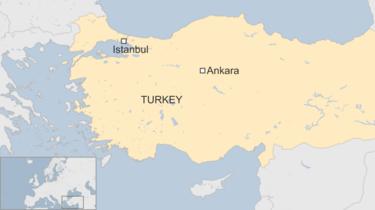
A loud explosion has been reported in Turkey at the Ankara Tax Chamber.
Turkish media reports say the blast happened in the tax office’s boiler room, and may have been due to gas.
Ankara’s governor Ercan Topaca said the building was believed to have been empty and police were at the scene, local channel NTV reported.
Pictures posted on social media showed serious damage to windows and one side of the building after the blast, which happened at the end of the working day.
Turkish newspaper Hurriyet said the sound of the blast could be heard across the city.
A Reuters witness said they heard ambulances heading for the scene, but there are no immediate reports of injuries.
The tax office is situated in the Cukurambar area of the capital.
Both girls admitted their part in the crime as part of a plea deal, which took into account their mental health.
Geyser’s lawyers said she suffers from schizophrenia and psychotic spectrum disorder, which make her prone to delusions.
She had previously told psychiatrists she could communicate telepathically with other fictional characters, including Harry Potter and Teenage Mutant Ninja Turtles.
Investigators said Geyser stabbed the victim, while Weier urged her on.
The girls said they committed their crime in dedication to Slender Man, a fictional horror character, who told them to do it.
The judge gave Geyser the full sentence prosecutors sought, arguing she remains a risk to herself and others.
Geyser, now 15, broke down in court on Thursday while apologising to the victim and her family.
“I never meant this to happen. And I hope that she’s doing well,” she said.
Doctors at the sentencing hearing gave conflicting opinions on the severity of Geyster’s current mental health and the treatment she needs.
Members of her defence team sought to have her moved to an adolescent health facility, but Judge Michael Bohren discounted her youth in the sentencing.
“What we can’t forget is this was an attempted murder,” Mr Bohren said.
Who is Slender Man?
Image copyrightMDL70/FLICKR
The long-limbed shadowy figure has been featured in altered photographs, drawings and videos on the internet since first appearing in 2009.
He is often depicted in a dark suit with a pale blank face and sometimes has tentacles reaching from his back.
The schoolgirls involved in the attack in Wisconsin say there were inspired after reading about the character in a creepypasta – a short online story designed to shock or scare the reader.
Eric Knudsen from Florida created the character in response to a call for submissions from the online forum SomethingAwful and posted the picture of the figure behind a crowd of people.

 AFP
AFP
 AFP
AFP
 AFP
AFP REUTERS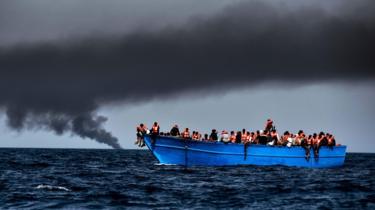











 OP's News