
Missing children search after bus blunder

school busImage copyrightGETTY IMAGES
A mother is demanding answers after her two young school children were left by the side of a busy road after being dropped at the wrong bus stop.
Annie Buist said her six-year-old daughter and five-year-old son had been left traumatised after they were dropped two miles from their stop.
The children were later found by police after being helped by a fellow pupil.
Fife Council described the incident as “worrying” and said it had amended its practices as a result.
Mrs Buist, from Cardenden, said she received an “awful phone call” at work from the children’s school to say they were missing and that the police had been called.

‘Frantically trying’

She was told they were not on the school bus and had not been collected from their usual bus stop by their waiting grandparents.
It later emerged that her son and daughter had been mistakenly dropped by the Stagecoach driver in the Dundonald area, two miles away.
Mrs Buist said: “My son was screaming by the side of a main road whilst my daughter was frantically trying to wave down drivers in passing cars to help her.
“Thankfully a seven-year-old boy persuaded them not to walk and took them to his grandparents’ house where, after a series of conversations, they were then passed to the police at the bus stop, where they should have got off.”
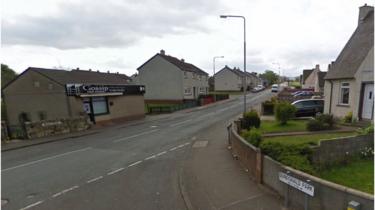
Dundonald Park areaImage copyrightGOOGLE
Image captionMrs Buist said the children were dropped in the Dundonald area, two miles from their stop
Mrs Buist told the BBC Scotland news website that since the incident on 17 January, her children had been unwilling to take the bus home from school and had been unable to talk about it.
She said: “Since the incident my children have not settled in school, are having nightmares and are constantly worried.
“I need answers as to why this happened. I have been told that the same thing happened again with another pupil on Monday.
“Something is not right and the education department needs to raise awareness so that the children know what protocol is in place if it does.”

‘Interim measure’

Education officer with Fife Council Rona Maclean-Ross said: “This was a worrying incident and we want to ensure that both the council and the bus company learn from this.
“As a result, an amended bus driver checklist for all pupils boarding the school bus is now being filled out by the school to confirm children’s drop off points for the driver, in an additional attempt to ensure they do not miss any stops on their route.
“Stagecoach has also confirmed that, as an interim measure, their drivers will stop at every bus stop on this particular route until we are satisfied that the check list is shown to work effectively.
“We appreciate the feedback we have had from parents following the incident.”
David Frenz, operations director for Stagecoach East Scotland, said the company was hoping to contact Mrs Buist to reassure her that changes had been put in place.
He added: “We were very concerned when this was brought to our attention and want to make sure that it cannot happen again.
“We have therefore worked with the council to introduce a new process, which will help outline to our driver the pupils who are due to alight at each stop, and we are pleased that the council is contacting pupils to give them advice around travelling on the school bus.”

RHI inquiry: Finance official ‘unsure’

Money burning
Image captionTrevor Cooper’s evidence was read out at the inquiry into the scheme on Friday
A senior finance official who had an important role in the approval process for a botched green energy scheme said he was not sure his department had the expertise required.
The subsidy subsidised the cost of fuel to encourage the use of renewable heating systems.
But the fuel cost far less than the subsidy users were receiving, meaning they could earn by burning more fuel.
Trevor Cooper’s evidence was read out at the inquiry into the scheme.
He said he questioned whether the Department for Trade and Infrastructure (DETI) should have been running the scheme at all.
He said Invest NI might have been a more appropriate vehicle for such an economic policy.
Inquiry counsel Joseph Aiken said Mr Cooper told auditors he believed that the team responsible for the Renewable Heating Incentive (RHI) “believed they had safeguards they did not have”.
These included an ability to stop the scheme if necessary.
“I don’t believe anyone was trying to mislead, I think they actually believed what they were saying,” Mr Cooper told the inquiry.
He said the RHI scheme was a complicated one that needed expertise and resource.
Mr Cooper chaired a committee in March 2012 that was part of a departmental scrutiny process before the scheme went live.
He said he had asked why Northern Ireland needed a distinct scheme, rather than having a distinct regional tariff administered through the existing GB scheme.
He said he was given a “lot of legal jargon” by the then head of DETI’s energy division Fiona Hepper, about why that wasn’t possible.
He accepted that his concerns were not reflected in the minutes of the meeting and he should have insisted that they were included.
Mr Aiken said it was a recurrent theme in Mr Cooper’s evidence that he wished his actions had been recorded.
“You truly wish that what you remember happening was there to be read by the panel as opposed to just taking your word for it,” he said.

Convicted killers at large from Maghaberry Prison

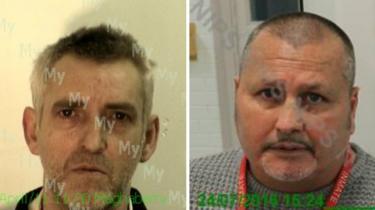
Thomas Lawrence McCabe and Samuel McKinleyImage copyrightDEPARTMENT OF JUSTICE
Image captionThomas Lawrence McCabe (left) and Samuel McKinley were both declared “unlawfully at large” on 19 January
Two convicted murderers are on the run after going missing from prison.
The PSNI has confirmed that an “active wanted person investigation is under way” but did not specify the names of those they were searching for.
McKinley, formerly from Southampton, is serving a life sentence for murder and previously absconded in 2014 when he did not return from a pre-release work scheme.

No public appeals

Both McCabe, 53, and McKinley, 56, are listed individually in the “wanted persons” section of the DoJ website.
Each listing says the men have had their licences revoked.
The police have issued an appeal for information on “these wanted persons” and said they “take seriously the public’s concern about prisoners being unlawfully at large”.
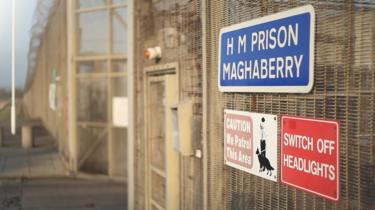
Maghaberry Prison
Image captionSamuel McKinley previously absconded from Maghaberry Prison in 2014
No public appeals had been issued about their whereabouts, but the PSNI said that “in some cases issuing a media appeal would be counter-productive to the investigation”.
It said the option to make a media appeal “will be kept under review” and that “there are a range of options which can be deployed in a missing person investigation”.

Life sentence

The Department of Justice said that when a prisoner is unlawfully at large then it informs the PSNI and posts the information the DoJ website.
“The PSNI will lead the response in respect of informing and protecting the public, and returning the individual to custody.
“Each prisoner granted temporary release is robustly risk assessed.
“The level of abuse of the temporary release schemes is very small, the vast majority of prisoners abide by their release conditions.
“This was evident at Christmas when over 80 prisoners were granted home leave and all returned to custody.”
Two other prisoners who did not return to Maghaberry prison since the beginning of January are also being sought by authorities.

Public inquiry over Lough Neagh sand dredging plan

Lough Neagh
Image captionLough Neagh is an internationally important bird sanctuary with EU protection
A public inquiry is to be held over a planning application to extract sand from Lough Neagh.
Sand has been dredged from the bottom of the lough for many years without permission.
Environmentalists have challenged the unauthorised extraction saying it is impacting on an internationally important and protected wildlife site.
The sand companies had put in a planning application to cover their work over the next 15 years.
The Planning Appeals Commission has now been asked to run a public inquiry where all the details can be aired.
The decision to move to the inquiry was taken at a meeting last week when a planning report was presented to officials in the Department for Infrastructure.
When the public inquiry reports, the department must consider its findings before issuing a final decision.
It has responsibility for all “regionally significant” planning applications.
The application seeks permission by five companies for the extraction of sand from a defined area in the north-west corner of the lough for 15 years.
They propose to remove 1.5m tonnes of sand a year from the lough which is an important bird sanctuary with international protections.
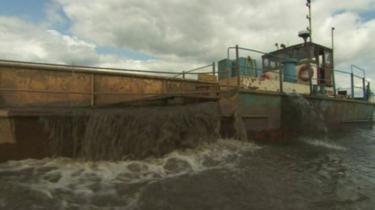
Sand being dredged
Image captionAccording to the planning report, the Northern Ireland Environment Agency says it has no concerns about the impact of dredging subject to certain conditions
The two areas proposed for extraction amount to 3.1km sq.
The lough has a surface area of 383km sq.

‘Ecological importance’

Lough Neagh and Lough Beg form what is called a Special Protection Area due to its population of resident and migratory birds.
According to the planning report, the Northern Ireland Environment Agency says it has no concerns about the impact of dredging subject to certain conditions.
The sand is used to supply the construction industry
Image captionThe sand is used to supply the construction industry
One of their conditions is that the activity is limited to the extraction area proposed.
But the RSPB has raised some issues about some of the survey work done as part of the environmental statement.
The department said it had decided to move to a public inquiry because of a presumption against minerals extraction in areas like the lough.
The “ecological importance” of Lough Neagh and its European, national and local protections was another factor, it said.
It said the long history of unauthorised extraction was another reason it had decided to go down the inquiry route.
It said it was also taking into consideration the economic impacts of the sand industry and commercial fishing industry on the lough, and the wider impacts on the Northern Ireland construction industry which uses much of the sand.
Separate enforcement proceedings against the sand traders involving previous sand extraction from Lough Neagh are due to be heard at the planning appeals commission in the near future.

Woman denies ‘watering down’ rugby interest at rape trial

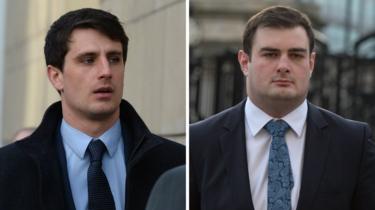
Stuart Olding (left) and Paddy Jackson
Image captionStuart Olding (left) and Paddy Jackson deny the charges
The woman who has accused two Ulster rugby players of raping her has denied “watering down” her interest in rugby and rugby players.
Earlier in the trial, she said she did not follow rugby and had never been to an Ulster rugby match.
Paddy Jackson and Stuart Olding deny raping the woman in a house in south Belfast in June 2016.
On Friday a defence barrister quizzed her on her interest in rugby.
Brendan Kelly QC asked her: “Have you watered down either your following of rugby or your knowledge of the people who play it?”

‘I’ve not watered down anything’

She replied: “Not at all, Mr Kelly.”
She added: “I’ve not watered down anything.”
Today, on day five of the trial, the jury was shown a second police interview which the woman gave after the alleged attack.
She talked about the moment another woman briefly came into the bedroom during the alleged attack.
Blaine McIlroy and Rory Harrison arriving at courtImage copyrightPACEMAKER
Image captionBlane McIlroy (left) and Rory Harrison both deny the charges against them
She said: “The door opened and I turned round, saw it was a girl and turned back round again.”
The woman added: “She walked in and said: ‘Oh.'”
She added: “Paddy actually asked her if she wanted to join in.”
She said that there were a number of other women back at Paddy Jackson’s house on the night of the alleged attack, but they were not her friends – she had only just met them.
She said she was worried that one of them had taken a photograph of her in the bedroom.
The woman at the centre of the case was 19 at the time of the alleged attack. She is now 21.
Paddy Jackson and Stuart OldingImage copyrightPA/PRESS EYE
Image captionPaddy Jackson and Stuart Olding have both been capped for Ireland
Mr Jackson, 26, from Belfast’s Oakleigh Park, is charged with one count of rape and one count of sexual assault. He denies the charges.
Mr Olding, 24, from Ardenlee Street, Belfast, is also charged with rape. He too denies the charge.
Two other men have also been charged in connection with the case.
Blane McIlroy, 26, of Royal Lodge Road, Belfast, is charged with one count of exposure. He denies the charge.
Rory Harrison, 25, of Manse Road, Belfast is charged with perverting the course of justice and withholding information. He denies the charge.
The 12-person jury has been told by Judge Patricia Smyth to wait until they hear all of the evidence in the case before coming to any final conclusions.

Eton College anti-terror bollards approved for memorial buildings

Memorial Buildings, EtonImage copyrightANTONY ***
Image captionThe Memorial Buildings are near Eton College and will be surrounded by 38 bollards
Eton College is to install anti-terror bollards to prevent “hostile vehicle attacks” on tourists in the town.
The exclusive public school in Berkshire will place 38 bollards around its Memorial Buildings on Slough Road.
The area is earmarked by the South East Counter Terrorism Unit as a “vulnerable” area where people “congregate”.
The existing bollards will be replaced by those designed to withstand a terrorist attack.
The application for the bollards by the provost of Eton College was approved on Wednesday night by the Windsor Urban Development Management Panel.
Eton College has been contacted for comment.

Three arrests after man stabbed in London Bridge station fight

London Bridge stationImage copyrightGETTY IMAGES
Image captionPolice were called to reports of a fight on a platform of the Northern Line at London Bridge
A man has been stabbed in a fight on a London Bridge station platform during the morning rush hour.
Police were called at 06:48 GMT to a disturbance on the southbound platform of the Northern Line at the central London station.
One man received stab injures which are not believed to be serious at this time, British Transport Police said.
Three men have been arrested on suspicion of affray and remain in custody.
Southbound and Northern line platforms were closed during the incident, causing some travel delays.
All platforms have since been reopened.
British Transport Police said it was “pretty sure” the victim was not one of the three men arrested, and that the victim was not a member of staff.
The Met Police said the stabbing was “not terror related”.

Reported sex offences against males in England and Wales tripled in 10 years

Anonymous manImage copyrightGETTY IMAGES
Image caption12,130 sexual offences against males were reported in 2016-17
Reports of sexual offences against men and boys have more than tripled in the past decade, figures show.
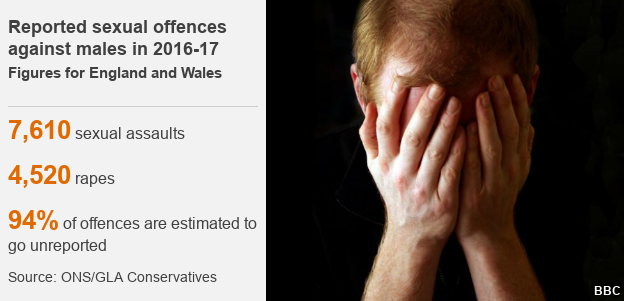
There were 12,130 offences reported in England and Wales in 2016-17, compared with 3,819 in 2006-07, said the Office for National Statistics.
Andy Connolly, from Survivors UK, said victims were beginning to feel they would be believed but there was still a “massive wall of silence”.
2015 survey estimated about 96% of offences against males go unreported.
Mr Connolly, chief executive of male rape and sexual abuse charity Survivors UK, said: “We do know of men who come forward and they just meet comments like ‘men can’t get raped, they can’t be sexually abused’ and are treated with disbelief that it is even a thing that happens to men.”
The figures, given to the OP’S NEWS  after a request, show that reports of sexual assaults against males went from 2,687 to 7,610 (+183%) and rape reports rose from 1,132 to 4,520 (+299%) between 2006-07 and 2016-17.
Over the same period, reports of sexual assaults against females rose from 21,128 to 38,186 (+80.7%) and rape reports went from 12,599 to 36,639 (+190%).
Allegations did not necessarily take place in the year they were reported and therefore the increase has been attributed to a rise in the number of historic allegations being made to police.
Sexual offences graphic
In West Yorkshire, The Blast Project said more than 80 boys and young men had been referred to their service in the past 12 months because they were either being sexually exploited or at risk of being abused.
Jack – not his real name – said he had been abused by older males after he came out as gay when he was 13.
He said that over a period of 18 months he was groomed and abused by more than 15 men but when he tried to speak to police he was told he was “a waste of time and resources”.
“The police were initially very aggressive in their approach to everything,” he said
“It wasn’t caring about how I felt at the time and that I was going through a lot.”
Phil Mitchell
Image captionPhil Mitchell, from The Blast Project in Leeds, said it had received 80 referrals in the last year
Phil Mitchell, from The Blast Project, said when Jack had come forward he had been made to feel responsible for what had happened.
“He was trafficked, kidnapped, raped,” he said.
“Sadly there were professionals telling Jack ‘this is your fault. You are looking for the abuse. You are making this happen’.
“Jack was not looking for abuse, Jack was looking for love and acceptance.”

‘We’ve come a long way’

Det Supt Darren Minton, of the West Yorkshire Police Safeguarding Central Governance Unit, said the force had invested “heavily” in training around the issue.
“Historically, perhaps, we did not recognise the signs, certainly of male victims,” he said.
“[But] we have come a long way…and anyone wanting to come forward will be listened to and dealt with in a non-judgemental way and, most importantly, will be believed.”
Mr Connolly said that research by Survivors UK had found the average time it takes for a victim to come forward is 26 years.
He said he believed factors including the Jimmy Savile and football abuse scandals and the recent allegations made against Hollywood producer Harvey Weinstein had led to an increase in confidence in the authorities.
“[Reponses] range from the perfect, brilliant responses, where men are treated as respectfully and as well as you would hope anyone would be, male or female, to the other extreme where people are treated with complete disbelief,” he said.
“It can be very patchy though and we do hear of lots of very excellent people who do deal with it as they should.”
He said Survivors UK, which deals with over 18s, provided online support to about 1,500 men and face-to-face help to about 200 men each year, and that the waiting time for counselling was now nine to 12 months.

Eileen Blane: Fresh appeal over Stretford grandmother’s murder

Woman murder suspectsImage copyrightGMP
Image captionGreater Manchester Police has released CCTV images and an e-fit of two suspects
Police investigating the unsolved murder of an 87-year-old woman who was repeatedly beaten during a burglary have released images of two suspects.
Eileen Blane was thrown to the floor and had her wedding ring taken from her finger during the raid in Stretford, Greater Manchester, in February 2017.
She spent eight weeks in hospital and died the day after she was discharged.
Greater Manchester Police has made a fresh appeal for information on the first anniversary of her death.
The force has released CCTV images and an e-fit of two men officers are searching for, while a £50,000 reward remains on offer for information leading to a conviction.
A third man, not pictured, is also thought to have been involved.
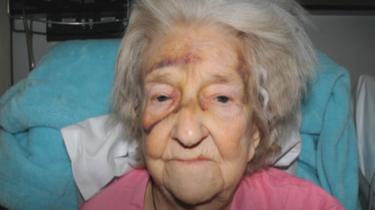
Eileen BlaneImage copyrightGMP
Image captionEileen Blane suffered three cracked ribs, a damaged vertebrae and severe bruising
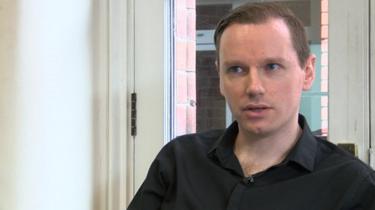
Det Insp John Mulvihill said: “I implore anyone who recognises these men to get in touch, or if you believe this is you please contact us immediately. It is vital these three men are eliminated from our inquiries.
“Even the smallest piece of information could be crucial.”
Det Insp Mulvihill said there had been three “key sightings” of three men throughout the day Mrs Blane was attacked.
They were seen in Chatsworth Road, a short walk from the victim’s home, in the Co-Op store on Barton Road and on Castleton Avenue.
The suspects are described as white and aged in their 20s, and wearing dark-hooded clothing at the time.
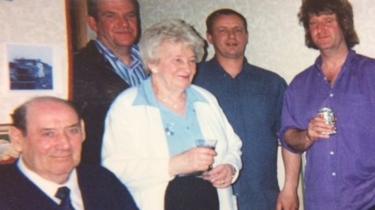
Blane familyImage copyrightBLANE FAMILY
Image captionEileen Blane, seen here with her late husband, had worn her gold wedding ring for 63 years
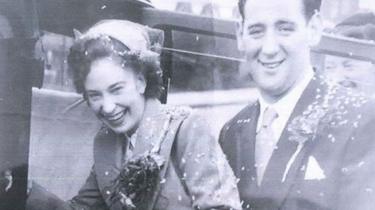
Eileen Blane wedding dayImage copyrightFAMILY PHOTOGRAPH
Image captionMrs Blane pictured on her wedding day
Mrs Blane’s son, John Blane, previously told the BBC’s Crimewatch Roadshow how his mother had answered a knock at the back door, thinking it was the window cleaner.
The suspect pushed into the house and punched Mrs Blane in the face.
During an interview, she told police: “He just wouldn’t stop hitting me. I just asked him to stop but he wouldn’t. He said he wanted gold. It was just a nightmare.”
While the attacker searched upstairs, Mrs Blane managed to escape and alerted her neighbours, who called the police.
She suffered three cracked ribs, a damaged vertebrae and severe bruising.

Nottingham’s QMC ‘would not see’ miscarrying woman

Adam and Emily DaftImage copyrightEMILY DAFT
Image captionAdam and Emily Daft’s baby had stopped growing a few weeks earlier
A woman who says she was left to miscarry at home after a hospital refused to see her says she has been left “heartbroken” by the experience.
Emily Daft, who said her pregnancy was classed as high risk, started bleeding but was told by Nottingham’s Queen’s Medical Centre (QMC) to stay at home.
A private scan confirmed a miscarriage and the clinic called the QMC but was told she could not be seen that day.
The QMC has apologised for the distress caused.
Mrs Daft, 24, who had previously miscarried, said: “The only way I found out we had lost the baby was by paying.
“It was here (at the IVF clinic), at our own cost, by the same nurse that showed us our baby’s heartbeat, that we were sadly told and shown our baby had died.
“Our baby had stopped growing a few weeks prior and we were left absolutely heartbroken.”

Timeline

  • 16 January: Mrs Daft, at nine weeks pregnant, started to bleed and called the QMC’s Early Pregnancy Unit (EPU). Despite explaining she was high risk due to illness, she was told to stay home and wait 48 hours to see if her symptoms worsened
  • Mrs Daft wanted a midwife’s opinion and eventually spoke to a community midwife who called the unit to say she needed to be seen. The midwife was told the unit would not see her that day
  • An appointment was made at the IVF clinic where Mrs Daft was treated and a scan confirmed the miscarriage. The clinic phoned the EPU to hand over her care but was told she still could not be seen that day. Mrs Daft called the EPU directly and was told they would call her the following day
  • 17 January: Mrs Daft did not hear from the EPU, but called them and was asked to come in. At the EPU, she was seen by a student nurse and registrar, but asked to come back for a consultation the following day. Mrs Daft said she was bleeding heavily and experiencing severe cramps
  • 18 January: Mrs Daft said she was “in agony” with cramps and unable to get out of bed. She passed the baby at home alone. She then phoned the EPU and was asked to come straight in and was given a scan and blood test. Mrs Daft said she was sent home without a follow-up appointment and told someone would call her. She never received the call she was expecting. The QMC told the BBC she would only be called if the test results highlighted a problem
  • Mrs Daft, from Sandiacre, Derbyshire, said due to her various illnesses, she had a meeting with the pre-pregnancy planning team at QMC a few years ago when she wanted to start trying for a baby. She said it was agreed that once she fell pregnant she would be regularly monitored.
    However, after a scan at the IVF clinic confirming she was six weeks pregnant, the first appointment she was offered at the QMC antenatal clinic was at 14 weeks. She “fought” to get this brought forward to 11 weeks, but did not feel this was enough.
    “We have lost faith that much that my husband’s parents are going to pay for [future] private scans every week at the [private] clinic. It is the only way we feel comfortable going down that route again,” Mrs Daft said.
    Adam and Emily DaftImage copyrightEMILY DAFT
    Image captionEmily Daft said she did not feel they could trust the NHS if she managed to fall pregnant again
    Lucy Kean, clinical chair for Obstetrics and Gynaecology at QMC, said: “We send our condolences to the family and are sorry to hear of the concerns raised by Mrs Daft and for the distressed caused.
  • “We will be contacting Mrs Daft further so that we can better understand her experience and how we can support her and her family at this difficult time.”
    Emma Kirk, from the Association of Early Pregnancy Units, which represents more than 200 EPUs in the UK, said there was a huge variation in how quickly women could be seen.
    “We are trying to standardise it. Some have big units open seven days a weeks and some are open three mornings, with a single nurse.
    “Women with a history of miscarriages or ectopic pregnancy should be able to self-refer and most will try to see patients within 48 hours, ideally within 24 (of their referral). Most can see women the same day, but it really depends.”
    She added some women did naturally pass their baby before an operation or treatment after the miscarriage.
    “If that has not been explained, that will be scary and horrible. It is our duty to explain all these things.”
Design a site like this with WordPress.com
Get started