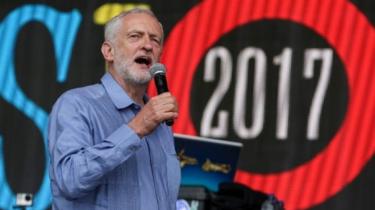
The Labour Party is planning a summer music festival to celebrate leader Jeremy Corbyn, it has emerged.
Mr Corbyn addressed tens of thousands of muddy festivalgoers from the pyramid stage of at Glastonbury last summer, to chants of ‘Oh! Jeremy Corbyn!’.
Glastonbury is having a year off to protect the site, so Labour bosses have decided to set up a festival of their own.
The event – called Labour Live – will be held in North London and is expected to attract stars who have publicly supported the Labour leader, though it is expected that some new names will be added to the setlist.
In the 2017 election campaign acts such as Clean Bandit, Steve Coogan, Maxine Peak and Wolf Alice appeared at Corbyn rallies.
This isn’t the first time political parties have tried to engage youth support through festivals.
Last year the Conservative MP, George Freeman, set up a Conservative ‘Ideas Festival’.
Image captionThe Conservative Ideas Festival is coming back bigger
An invite-only event, it was billed as a cross between book festival Hay-on-Wye and rock festival Latitude and saw 200 people trekking to the farm in Berkshire to develop their centre-right political thoughts.
The ‘Big Tent Ideas Festival’ is coming back this summer, and we’re told it is going to be “much bigger and much more public”.
Organisers say we can expect to hear from centre-right political thinkers alongside more arts, music and poetry – the date and full rundown will be announced in March.
And let’s not forget that back in the mid-1980s, a group of musicians including Billy Bragg, Paul Weller and Kirsty MacColl set up Red Wedge to support the Labour Party and organised a number of major tours.
Artists like Bananarama, Elvis Costello, Sade and The Smiths were involved and a comedy circuit was later set up with comedians such as Lenny Henry, Harry Enfield and Robbie Coltrane. But when the Tories won a third consecutive victory in 1987 the grouping fell away.
A Labour spokesperson said: “We are exploring options for ways to continue to open up politics to a wider audience and spread Labour’s message about how we can build a society that works for the many, not the few.”
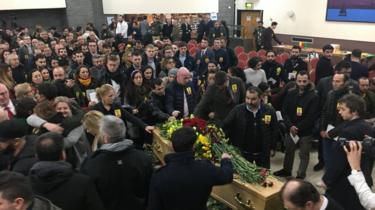
Image captionJac Holmes’s coffin was carried by members of the Kurdish community, and decorated with flowers in the colours of the YPG
Fighters from around the world who battled the Islamic State (IS) group gathered in Dorset for the funeral of a 24-year-old Briton killed in Syria.
Former IT consultant Jac Holmes first left his home to join Kurdish forces in 2015. He died in Raqqa in October.
The ceremony in Wimborne was also attended by hundreds of Kurdish people who had travelled in minibuses from across the UK to pay their respects.
His mother, Angie Blannin, had previously described her son as a hero.
Media captionAngie Blannin remembers her son Jac Holmes who died fighting with the YPG in Syria
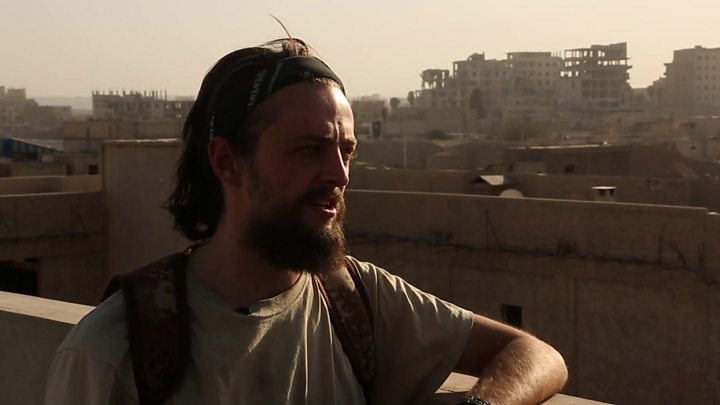
Mr Holmes, who was from Bournemouth and had no prior military training, became a sniper with Kurdish militia the YPG and was one of the longest-serving foreign volunteers in the fight against IS.
His coffin was carried into the service by members of the Kurdish community, and dressed with flowers in the colours of the YPG.
There was standing room only as speeches and tributes were made, including an address by the YPG’s general commander Nuri Mahmud.
Speaking over Skype from Syria, he said: “If Jac Holmes and his comrades did not fight against IS to defeat them, eventually IS would have the power to attack elsewhere in the world.”
At the scene: OP, OP’S NEWS
Former YPG fighters were reunited in a remarkable gathering at a Dorset community centre.
Those from the US, Europe and even Australia made the journey. Many had not seen each other since being in combat in Syria.
They shared war stories and fond memories of Jac Holmes.
Many have faced arrest and police investigation but, in their eyes, their commitment to the Kurdish cause outweighs the risks.
Following the service, his coffin was taken to Poole Crematorium where friends and family paid their final respects.
Spanish fighter Arges Artiaga, who fought alongside Mr Holmes and was with him when he died, told the BBC: “I had to say goodbye to my friend, my brother.”
Hanna Bohman, a fighter from Canada, added: “I flew over because Jac was one of the original volunteers to join the YPG. I had to come.”
A memorial ceremony for Mr Holmes and fellow Briton Oliver Hall, of Gosport in Hampshire, had previously been held in Syria.
Both of their bodies were repatriated in January.
Media captionJac Holmes told the OP’S NEWS why he went to fight IS, in an interview recorded weeks before he was killed
MPs from all parties have spent several years attempting to bring about a change in the law to allow both parents to have their names and occupations recorded.
Their campaign received the backing of former Prime Minister David Cameron, who pledged to address this “inequality in marriage” – but he was gone from Downing Street before any action could be taken.
The move would bring England and Wales into line with the rest of the UK. In Scotland and Northern Ireland, couples are asked to give the names of both parents on marriage documentation. The same applies for those entering a civil partnership.
On Friday, the Home Office said it would back Tory MP Tim Loughton’s Civil Partnerships, Marriages and Deaths (Registration Etc.) Bill, which also modernises the process of marriage registration away from a solely paper-based system.
Electronic registration
Ms Rudd said: “A marriage is not just a major event for the couple but also in the life of any parent – and it is only right that all parents have the opportunity to have their names included on marriage certificates.
“The current legislation which only allows for fathers’ names is completely outdated and does not reflect modern Britain.
“There are around 250,000 marriages every year. It is about time that there are equal rights and recognition when it comes to registering a child’s marriage.”
The changes would mean that marriage entries – currently stored in 84,000 hard copy marriage registers – would be held in a single electronic register, which the Home Office says could result in savings of £33.8m over 10 years.
The MP said it was “not fair” that opposite sex couples have “the single option of marriage”.
Mr Loughton also urged the registration of stillbirths delivered before the required 24-week legal age to be considered viable. His bill received an unopposed second reading.
In a statement, the force said: “After full consultation with the Crown Prosecution Service a decision has been made that there is insufficient evidence that criminal offences had been committed.
“We take any allegations of electoral fraud very seriously and will continue to work closely with the Electoral Commission, and local authorities, to ensure we play our part to protect the integrity of the electoral process in Staffordshire.”
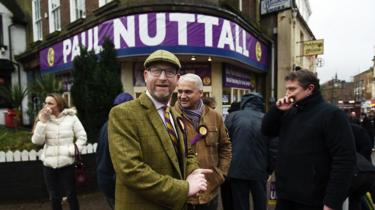
Mr Nuttall lost the seat at the by-election on 23 February 2017 to Labour’s Gareth Snell – picking up 5,233 to Mr Snell’s 7,853 votes.
Mr Snell held his seat in the following general election.
‘Media interest’
Labour had claimed Mr Nuttall’s use of an empty house as his address raised questions about his fitness for public office.
However, UKIP said Mr Nuttall had stayed overnight and was using it as a base while campaigning.
Image captionThe government ordered a review into the county council’s finances last month
A cash-strapped local authority has imposed emergency spending controls as it faces “severe financial challenges”.
The section 114 notice bans all new expenditure at Northamptonshire County Council, with the exception of statutory services for protecting vulnerable people.
Last month the government said an inspector would look into allegations of financial failings at the authority.
It is believed to be the first such notice issued in more than 20 years.
The implications are due to be discussed at the full council meeting on 22 February.
A spokeswoman said: “The notice has been served in light of the severe financial challenge facing the authority and the significant risk that it will not be in a position to deliver a balanced budget by the end of the year.”
The authority said staff pay would not be affected.
Bob Scott, leader of the Labour Group on the council, said: “I’m not surprised. I’ve been saying for the past five years there are problems there, and two years ago I said I expected a section 114 order to be issued.
“My only surprise is that it’s been issued just after an inspector has been appointed and started his work.”
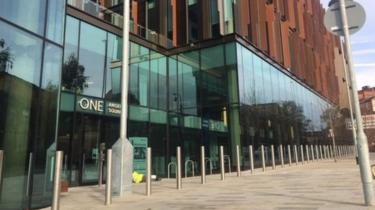
Image captionNorthamptonshire County Council’s new headquarters officially opened in October
One Angel Square was designed to save money by closing 12 offices and making best use of a new office block.
‘Highly unusual’
Rob Whiteman, Chief Executive of Chartered Institute of Public Finance and Accountancy, called the move “highly unusual” and said it was the first section 114 notice for more than 20 years.
“Whilst Northamptonshire has had a difficult context within which to balance its budget in relation to government cuts, other councils in a similar situation have successfully managed their budgets,” he said.
Media captionProtesters disrupt a speech by MP Jacob Rees-Mogg
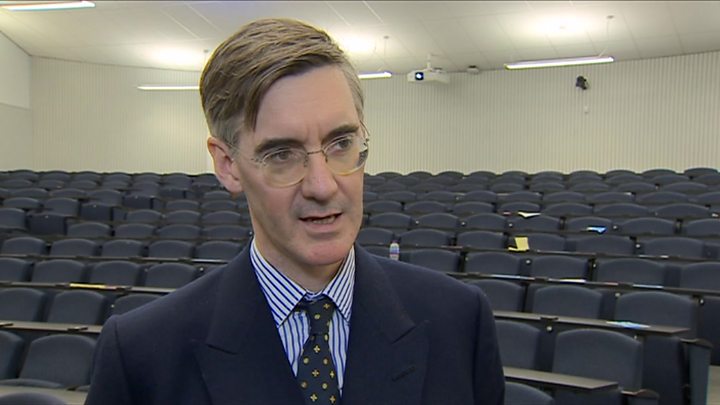
Conservative MP Jacob Rees-Mogg was caught up in a scuffle after protesters disrupted a speech he was giving at a student event.
Videos online show the backbencher surrounded by a group of people, with shouting audible in the background.
BBC reporter James Craig, who was at the University of the West of England, said security cleared the protesters from the hall within five minutes.
Mr Rees-Mogg, who resumed his speech, said they were “entitled to protest”.
However, it was “sad” they would not engage and discuss views to which they objected, he said.
Police said they had launched an investigation after they were called to the Frenchay Campus in Bristol, but no arrests had yet been made.
Mr Rees-Mogg had been speaking at an event organised by the university’s Politics and International Relations Society.
At the scene: James Craig, BBC Somerset
It was due to be a fairly routine event – Jacob Rees-Mogg was booked to speak to a few hundred students at a ticketed event.
He would’ve spoken for about half an hour before taking questions.
Just a few minutes after he started speaking, a group of protestors came into the back of the lecture theatre and started shouting anti-Conservative rhetoric, very loudly, trying to shout him down.
Rather than halting the event, or ignoring them, Mr Rees-Mogg walked up to the back of the theatre to try and talk them down.
At that point, various other members of the audience got involved, leading to the scuffle which happened.
It looked to me that Mr Rees-Mogg was actually pushed and shoved, although he insists he wasn’t.
But it was a very aggressive and unexpected scene.
After the scuffle, Mr Rees-Mogg said: “Some people who don’t agree with me wanted to make their point, and I don’t object to this.
“I think we live in a free society and freedom of speech is very important.
“And people like me, who advocate freedom of speech, support it when it’s not exactly what we want, as well as when it is what we want.”
Media caption“They weren’t going to hit me,” said Jacob Rees-Mogg MP
A post on the society’s Facebook page, advertising the event, said it would be a “chance to talk to an experienced parliamentarian about the issues of the day, what it’s like to be an MP and how you can get there”.
Avon and Somerset Police said officers were called at about 18:30 GMT following a report of a public order incident.
“An investigation is under way to see if any criminal offences were committed,” the force said, while appealing for mobile phone footage to be passed on to them.
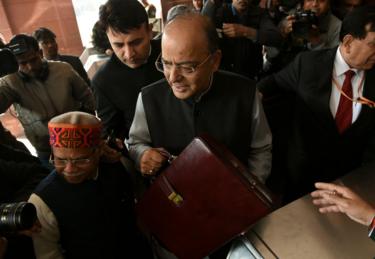
Image copyrightAFP/GETTY IMAGESImage captionMr Jaitley presented the annual budget on Thursday at the Indian parliament
India’s annual budget – which was unveiled on Thursday – is full of vague promises, suggesting that it is aimed at the general election due by mid-2019, writes Vivek Kaul.
Before India’s finance minister, Arun Jaitley, presented his fifth and final budget, political watchers suspected the general election could happen earlier. Now, they believe it could happen by the end of this year.
India’s ruling Bharatiya Janata Party is also gearing up for 10 different state assembly elections during the course of this year.
It was widely expected that Mr Jaitley would do something for the agriculture sector – the bulk of India’s workforce still depends on it. Growth in the sector is expected to come in at just 0.91% (gross value added) this financial year.
The government buys rice and wheat directly from farmers at a minimum support price. But many farmers do not benefit from this scheme, given its limited coverage across the country. Mr Jaitley has now promised to buy other crops at a minimum price or compensate farmers who are unable to sell their produce at a minimum price.
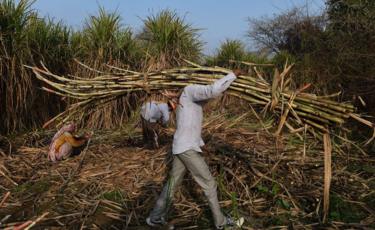
Image copyrightAFP/ GETTY IMAGESImage captionThe bulk of India’s workforce still depends on agriculture
The latter is a particularly expensive proposition but Mr Jaitley did not explain how the expenditure would be met.
The government also plans to develop and upgrade 22,000 rural markets, which will allow farmers to sell directly to consumers, including those who buy in bulk.
The release of the budget has long been an occasion where major policy directions are announced – this is something that Indian agriculture badly needs.
The sector has high “disguised unemployment”, which means that there are too many people trying to earn a living from agriculture. Although they seem employed, their employment is not productive, since production would not suffer if they stopped working.
A recent paper by a government think-tank said that nearly 84 million people – about 25% of India’s rural workforce – need to move out of agriculture for it to be economically viable.
But no government up to now has addressed this problem.
In other countries, when the workforce has moved away from farming, it has found jobs in construction and real estate. But India’s agricultural workforce is largely unskilled or semi-skilled.
And India’s investment-to-GDP ratio has been falling for the past 11 years – it peaked at 35.6% in 2007 and then slid back to 26.4% by 2017, according to the latest Economic Survey.
Jobs and employment opportunities cannot be created unless investment picks up again. Mr Jaitley has tried to provide some fillip through a scheme that aims to build 5.1 million homes during 2018-2019. Earlier, the government had also announced a massive programme to build roads, which would also help.
But there’s only so much the government can do given that it accounts for 12% of all expenditure.
An increase in private investment requires a slew of reforms – reforms that would simplify the laws around labour, taxation and land acquisition, improving the overall ease of doing business.
The Economic Survey remained sceptical of a revival in investment: “India’s investment decline seems particularly difficult to reverse.”
Mr Jaitley only referred to identifying “372 specific business reform actions”.
All this is even more important given that India is in the middle of a demographic dividend, with one million people entering the workforce every month.
The lack of jobs for them is a huge problem. In recent years, Prime Minister Narendra Modi and his government have made several statements which seem to show they are yet to acknowledge this problem. In his budget speech, Mr Jaitley did not acknowledge it either.
Education, or rather the lack of it, is another major factor holding back India’s workforce. The amount of money spent on education by the government (at the state and federal level) has fallen from 3.2% of the GDP in 2011-2012 to around 2.7% of the GDP in 2017-2018.
This is not surprising given that successive federal governments have continued to bail out banks, which the government has no plans of selling. “The recapitalised banks will now have a greater ability to support growth,” Mr Jaitley said.
Between 2009 and now, more than 1,500bn rupees has been spent on recapitalising the 21 government-owned banks. The government also runs several organisations that are in losses.
The money needed to revive these banks or keep these failing companies running often comes at the cost of sectors such as education and health.
Image copyrightAFP/GETTY IMAGESImage captionStruggling public schools have produced a young, poorly skilled workforce
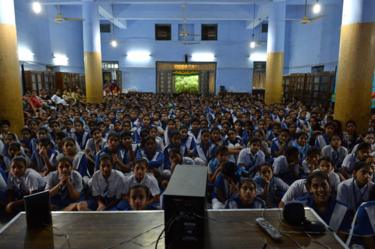
The learning outcomes of children from India’s public education system have dropped sharply over the years – nearly half the children in rural India in grades three to eight cannot meet a fairly basic learning standard.
Mr Jaitley acknowledged this in his speech and also talked about improving the quality of teachers.
But this has been said before. Apart from allocating more money to primary education, what is required is a change in the way children are taught in Indian schools. It would have been interesting to hear more from the government about this.
Instead of trying to set up a government school in every neighbourhood, the government can give poor parents education vouchers. The parents can then decide which school their children should attend. This would give parents some sort of bargaining power.
But no Indian government likes market-oriented solutions.
Image copyrightAFP/GETTY IMAGESImage captionA flagship scheme aims to cover 100 million poor and vulnerable families
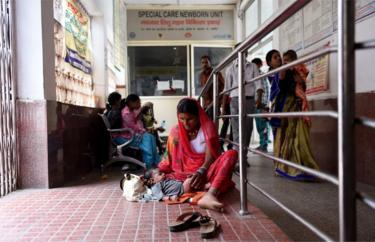
On the health front, the government plans to launch a flagship scheme to cover more than 100 million poor and vulnerable families (approximately 500 million individual beneficiaries). The coverage extends up to 500,000 rupees (about $7,800; £5,500) per family per year for secondary and tertiary care hospitalisation.
Mr Jaitley did not elaborate on how the government will pay for or implement such an ambitious scheme.
In short, Mr Jaitley has tried to sell dreams without detailing how the government will achieve them. And, like budgets before it, this one too did not take aim at the structural problems that affect India’s economy.
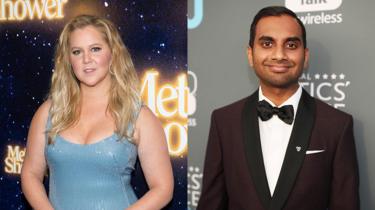
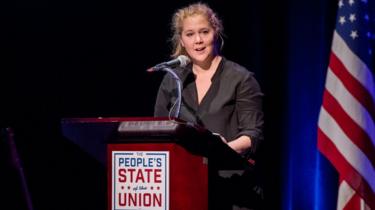
Amy Schumer has spoken out about sexual misconduct allegations against her friend and fellow comedian Aziz Ansari.
The Trainwreck star says she sympathises with the anonymous 22-year-old who recounted allegations of a date gone wrong with Aziz.
Amy, speaking on a US podcast, said many young women will have experience of being pressured into sex.
“In college I feel like that was a quarter of my hook-ups – they see what they can get out of you.”
“It’s not a crime, but it’s not cool”, the comedian, who was responding to allegations made in a babe.net interview, told the Katie Couric podcast.
‘It’s not like it’s rape or it’s fine’
The photographer alleged that Master of None star Aziz, 34, had pestered her for sex when the pair went back to his apartment after a date, claiming he failed to heed her verbal and non-verbal cues.
Aziz later issued a statement saying he had taken her allegations to heart, but thought the encounter was consensual.
The report polarised observers of the #metoo movement, provoking discussion about sexual etiquette and consent.
Schumer, whose comedy riffs on dating culture, told Couric: “Everything doesn’t have to be rape. It’s not like ‘it’s rape, or it’s fine.’
“I think some of us have gotten so used to the behaviour of a guy being kind of like ‘come on’ – at a younger age, especially.
“In college I feel like that was a quarter of my hook-ups – they see what they can get out of you.”
Image copyrightGETTY IMAGES
Amy said many wouldn’t want to see Aziz lose his career, “but that’s where people’s minds go”.
“They go ‘does he deserve this’? And it’s really not about that. I think it’s about expressing and showing women that that behaviour’s not okay and that not only can you leave, you need to leave.”
Schumer said Aziz’s alleged behaviour was “not a crime, but it’s not cool and it can still really mess with a woman”.
“I identify with all the women in these situations,” she says.
“Even if it’s my friend I don’t go ‘oh but he’s a good guy’. I think ‘what would it feel like to have been her?'”
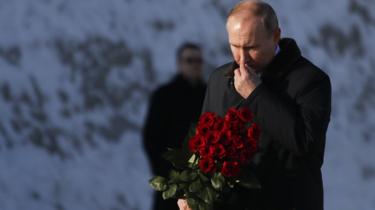
Image copyrightREUTERSImage captionPresident Putin visited the Mamayev Kurgan memorial on a hill overlooking the city
Russian President Vladimir Putin has laid flowers in honour of the Soviet soldiers killed at Stalingrad – the bloodiest battle of World War Two.
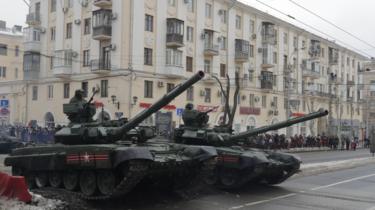
A military parade took place in the city – now called Volgograd – where about 1.1m Soviet troops and 800,000 Nazi German and Romanian troops died.
The 1942-43 battle was a turning-point, halting the Nazi advance in Russia.
Mr Putin, campaigning for re-election, told battle veterans that they symbolised “love for the motherland”.
He is seeking a fourth presidential term in elections next month, and opinion polls suggest that he has overwhelming support.
It is 75 years since the Soviet victory at Stalingrad and Mr Putin has appealed to the patriotic feelings of Russians ahead of the elections, reminding them of wartime sacrifices.
Soviet losses in World War Two were the heaviest of all the belligerents.
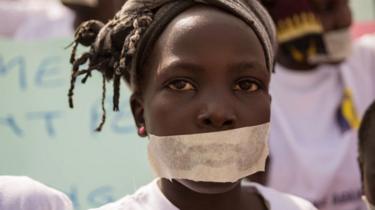
Image copyrightAFPImage captionSouth Sudanese are fed up with war – including 10-year-old Sandy, who marched for an end to the conflict last December
The United States has banned the export of weapons to South Sudan and has urged other nations and the UN to adopt a global arms embargo.
It is a largely symbolic move, as the US does not export arms to South Sudan.
But the move prevents any US company or citizen from offering defence services to the country.
The US has expressed frustration with the failure of South Sudanese leaders to put an end to the country’s four-year civil war.
Late last month, the US ambassador to the UN, Nikki Haley, announced that Washington had given up on President Salva Kiir, calling him an “unfit partner” in the pursuit of peace.
South Sudan’s leaders aren’t just failing their people, “they are betraying them,” Ms Haley said.
South Sudan is the world’s youngest country, having gained independence in 2011.
About a third of South Sudan’s population has been displaced by the conflict, which broke out in December 2013 between supporters of President Kiir, an ethnic Dinka, and his deputy Riek Machar, an ethnic Nuer. Mr Machar is now in exile.
Numerous ceasefires have been broken and tens of thousands of people killed, but there is no UN arms embargo on South Sudan, as attempts to do so have been stymied by Russia and China.
Restricting arms flows to South Sudan will be hard, says the BBC’s Africa editor Mary Harper. The country is already awash with weapons and more come in via neighbouring states.

 GETTY IMAGES



 OP's News