A Private Members Bill on the issue of livestock exports was due to be heard at Westminster on Friday, but was been withdrawn by its sponsor, former Conservative minister Theresa Villiers.
She said UK Environment Secretary Michael Gove was looking very seriously at banning the trade.
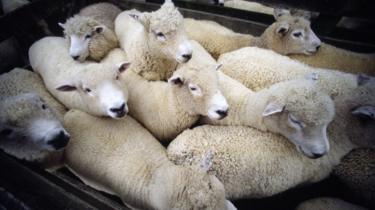
Image copyrightGETTY IMAGES
Responding to the UK government’s plans, Mr Ewing said: “Let me be absolutely clear, this is one UK-wide framework the Scottish government will not be participating in. I will not support anything that creates further challenges or difficulty for our farming sector or puts Scottish agriculture at a disadvantage.”
Mr Ewing said a ban on exporting live animals would also damage farming in areas such as the Western Isles, Shetland and Orkney, as well as trade with Northern Ireland.
He added: “The Scottish government will therefore not support the banning of live exports of livestock, but will remain committed to the welfare of all animals during transport adhering to the current rigorous standards which apply – standards and regulations provided by the EU, that are already world class and protect us all through animal, plant and chemical health measures and enabling our produce to be traded around the world.”
A spokeswoman for the UK Department for the Environment, Food and Rural Affairs said: “We have some of the highest animal welfare standards in the world and are going further, by raising maximum sentences for animal cruelty to five years and introducing mandatory CCTV in abattoirs.
“We have a clear manifesto commitment to take early steps to control the export of live farm animals for slaughter as we leave the EU and are considering all options.”
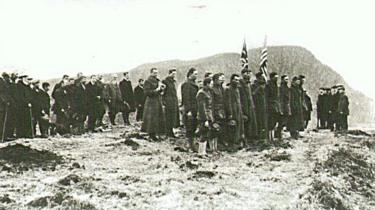
Image captionSS Tuscania was carrying more than 2,000 US soldiers when it was torpedoed by a German U-boat
A service of commemoration is set to be held on the Scottish island of Islay to mark the 100th anniversary of the sinking of the troopship SS Tuscania.
The ship was carrying more than 2,000 US soldiers at the end of World War One when it was torpedoed by a German U-boat close to the island.
Many of the soldiers on board were saved and cared for by the islanders.
But more than 200 were drowned, with the bodies washed up on the beaches of the small island.
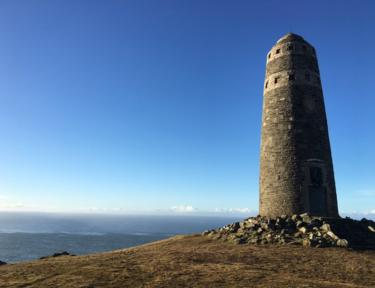
A wreath-laying will take place at the American Monument on Monday.
This will followed by a memorial service at Kilnaughton Commonwealth War Graves Commission Cemetery, held at the grave of Pte Roy Muncaster, the only US soldier still buried on the island.
Image captionA wreath-laying will take place at the American Monument to mark the anniversary
Former Nato secretary general Lord Robertson, whose grandfather Malcolm MacNeill was a policeman on Islay at the time, told BBC Scotland that many local residents helped to recover the dead and aid the survivors after the sinking.
He said: “It is difficult to imagine just how remarkable it would have been – how horrible it would have been – for all these lifeboats coming ashore and all the bodies being washed into the gullies there onto an island that had no experience of anything like that in the past.”
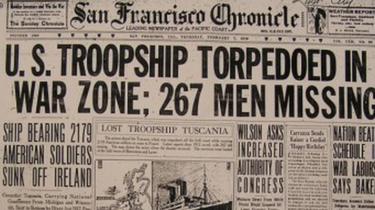
Image captionThe story featured on the front page of the American newspapersImage copyrightUS NATIONAL ARCHIVESImage captionA funeral service for those who died was held on Islay after the tragedy a century ago
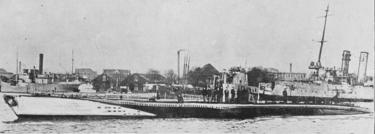
A monument was erected on the southernmost tip of the island by the American Government in 1919 as a memorial to those who died when Tuscania was sunk by UB-77 in the Irish Sea, seven miles south-west of Islay.
On board were 2,235 soldiers consisting of companies from the 6th Battalion, 20th VS Engineers, members of the 32nd Division, the 100th and 103rd Aero Squadrons and a British crew.
Image copyrightNAVAL HISTORY AND HERITAGE COMMANDImage captionSS Tuscania was sunk by the German submarine UB-77, seen here probably at Wilhelmshaven in Germany
Lord Robertson is due to attend a larger event on Islay in May, which will commemorate the sinking of both the SS Tuscania and the HMS Otranto.
The Otranto sank during a severe storm off the coast of Islay on 6 October 1918, killing 470 American soldiers and crewmen.
The event on 4 May will retell Islay’s contribution in WW1, including the assistance provided in the aftermath of the Tuscania and Otranto tragedies.
It will be followed by a service at Port Ellen War Memorial.
The Royal College of Psychiatrists said the drugs were an important option.
They said medicines for mental health – just like for physical health – carried risk but guidelines were evidence-based.
Antidepressants were only prescribed to children with great caution and under close supervision, they said.
‘Commonly used’
However, Prof Healy told a global health conference in Aberdeen that – in 29 paediatric clinical trials of antidepressants – every single one failed to produce an obvious benefit.
He said: “At the same time, in every single one of these trials it has produced more harms than benefits in the sense that it has made children become suicidal who wouldn’t have become suicidal if they hadn’t been put on these drugs.”
Prof Healy said: “We have a situation where if you are following the evidence no-one should be using these drugs.
“At the same time, in teenagers, these drugs have become the most commonly used drugs.”
Image captionProf Healy raised his concerns at a global health conference in Aberdeen
Figures obtained by the OP showed the number of children under 18 being prescribed antidepressants doubled from 2,748 in 2009/10 to 5,572 in 2016.
The number of children under 13 given antidepressants went up from 57 to 252 in the same period.
The Scottish government said the rise reflected the substantial increase in demand for child and adolescent mental health services in the past decade.
The statistics showed 45% of the under-18s were prescribed fluoxetine, which is usually sold under the trade name Prozac.
It is the only drug recommended for under 18s “as this is the only antidepressant for which clinical trial evidence shows the benefits outweigh the risks”.
Even then it should not be prescribed until psychological therapy has been tried for three months and not worked.
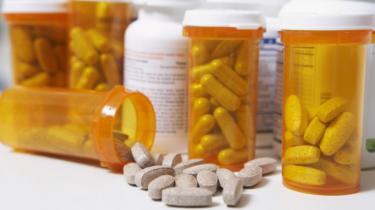
Image copyrightGETTY IMAGESImage captionThe antidepressants are only to be used along with talking therapies
Prof Healy also questions the evidence base for fluoxetine, saying the two apparently favourable paediatric trials on the drug actually failed to show benefit on the main measurements, known in science as “primary outcomes”.
He said there have been a further seven paediatric trials since its licence was issued and fluoxetine has failed to show benefit in any of these.
‘Absolutely astonished’
Dr Jane Morris, a consultant psychiatrist at Aberdeen’s Royal Cornhill Hospital, said adolescents should definitely have the option of antidepressants alongside therapy and counselling.
She said: “I think they should be particularly carefully selected medications and I think they should be prescribed not only for cases of depression but perhaps even more when a person has extreme anxiety and obsessionality, because there is a very good evidence base for that.”
Dr Morris said she was “absolutely astonished” by the way Prof Healy had interpreted the literature on antidepressants.
She said there were many studies that demonstrated antidepressant drugs can be the most effective treatment for young people with depressive disorders.
But she said it was important to see whether the benefits of the medication outweighed the risks.
Dr Morris said people should not alarmed by the rise in the number of people accessing treatment.
“We should regard that in fact as part of the catch-up period that some people with these incredibly distressing, and ultimately life-threatening disorders, are now getting the help that they need,” she said.
‘It was a traumatic experience’
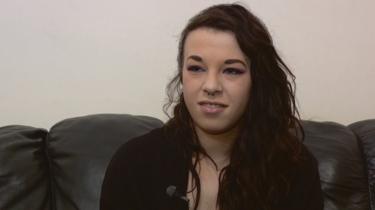
Image captionAmiee Folan said antidepressants were too easily accessible
Amiee Folan from Glasgow had a troubled childhood and was diagnosed as bipolar when she was 12.
At the age of 16, when she was staying at a children’s unit in Scotstounhill, she went to see her GP and was prescribed antidepressants that had a devastating effect – within a week she had attempted suicide.
She told BBC Scotland: “I went there to ask for help, counselling or something with a therapist, but they prescribed antidepressants and sent me on my way after a 10-minute appointment.”
Amiee says the doctor warned that the drugs could make her feel “low” for a few days.
“They didn’t say I would get to the point where I was hearing voices and seeing people who were not there,” she says.
Amiee says she had night terrors and voices in her head telling her to hurt herself and her partner, symptoms she had never experienced before.
“It was quite a traumatic experience,” she says.
She got so desperate she attempted suicide.
Aimee, who is now 20, says antidepressants should only be given after a therapist has assessed a person’s symptoms and decided the drug and dosage that would be suitable.
“Other than that I don’t think they are really needed under the age of 18,” she adds.
“I thought it was quite scary that I could just walk in and say ‘I’m depressed’ and basically they just handed them to me.”
Most-studied medicines
The umbrella body for drug companies, the Association of the British Pharmaceutical Industry (ABPI), said there were limited treatment options for children and young people with depression.
Sunayana Shah, head of regulatory and safety policy at the ABPI, said: “Any decision to prescribe antidepressant medicines is one made between a clinician and a patient or their guardian before a drug is prescribed and while treatment is ongoing.”
Ms Shah said SSRI antidepressants were “one of the most studied classes of medicines” and they are reviewed on an ongoing basis.
“However, if substantial new information on side effects or effectiveness becomes available, it will be rigorously reviewed by the medicines regulators to assess whether the treatment is still suitable,” she said.
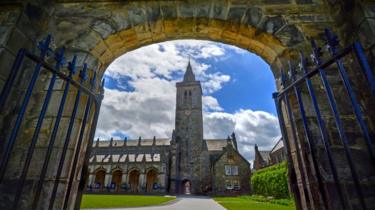
University application rates from 18-year-olds from the poorest parts of Scotland have fallen for the first time in a decade, according to a new report.
Data from universities admissions body Ucas also showed the application rate for those in the most affluent communities had increased.
Higher Education Minister Shirley-Anne Somerville conceded there was “more work to do”.
But Scottish Conservative spokeswoman Liz Smith said the drop was “worrying”.
Widening access to universities has been a priority for the Scottish government.
The new figures from Ucas – based on students who had applied to go to university by the 15 January deadline – showed application rates from 18-year-olds living in disadvantaged areas in Scotland decreased in 2018, to 16.7%.
This was the first fall seen since 2008.
The report stated: “The application rate for applicants living in the most advantaged areas in Scotland increased by 1.9%, widening the gap between the most and least.”
The figures also showed a 1% rise in the total number of applications to Scottish universities, with a 1% decrease in the overall number applying to UK institutions.
Meanwhile, the number of applications to Scotland from international students from outside of the EU increased by 13%.
Image copyrightJBYARD
Ms Somerville said: “While it is good to see Scotland’s universities outperforming those across the UK, it is also vitally important that we continue to drive forward our ambition to widen access to university for people from our most deprived communities.
“In 2017, we saw a 13% increase in the number of people from the most deprived communities getting places to study at university.
“Today’s application rate shows that there is more work to do if we are to see a similar increase in 2018.”
She added: “Universities must do all they can to promote the opportunities available for learners from our most deprived backgrounds and to make them aware where there is still a chance to apply before the 30 June deadline.
“It is equally important that universities push ahead with the implementation of minimum entry thresholds so that the potential of those who do apply is recognised fairly within the application process.”
‘Particularly worrying’
But Tory education spokeswoman Ms Smith, said Scotland’s future prosperity and the success of its young people depended on a thriving university sector.
She said: “Given the financial constraints under which universities are operating and the resulting pressure to increase the number of fee-paying students, it is perhaps not surprising to see the growth in the number of international applicants.
“At the same time, it appears that the number of Scots domiciled students applying to university has started to flatline.
“It is particularly worrying to see a drop in the number of students applying for Stem (science, technology, engineering and mathematics) courses and a drop in the number of Scottish students applying to university from disadvantaged backgrounds.”
Image captionA former undercover policeman bought heroin within minutes of arriving on Hartington Road
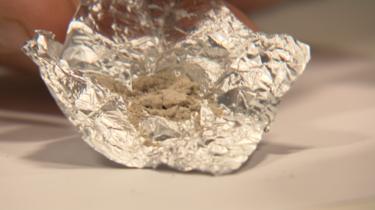
Vulnerable people at a hostel which claims to have a “zero tolerance” policy to drugs are being exposed to heroin, a OP investigation has found.
New Walk in Stockton houses drug addicts, the homeless and people recently released from jail.
Ex-residents said “drugs are everywhere” and prostitutes paid for drugs with sex onsite.
New Walk said it was fulfilling its contract with the council and staff seized drugs when they were found.
One former resident told the OP’s Inside Out programme: “From day one, it was unreal. After two weeks I was injecting heroin.
“I overdosed three times while staying there. Drugs are everywhere at the hostel.”
‘Busy drugs market’
A sex worker with a heroin addiction claimed prostitutes take men back to the hostel in Hartington Road and pay for drugs with sex.
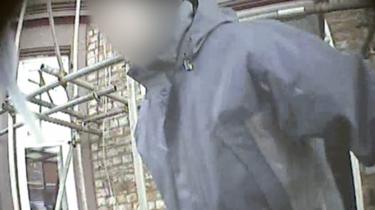
Within minutes of arriving on the street for the first time, a former undercover police officer helping the BBC was able to buy a £10 wrap of heroin from a nearby property.
At least two of the people involved in the deal were New Walk residents.
Image captionThis man, who came out of the New Walk hostel, facilitated the drug deal
The former policeman said: “It is clearly quite a busy drugs market. Various people are buying and selling drugs.”
Accommodation at the hostel, which has about 100 rooms, costs approximately £260 per week.
‘Chaotic’
Over the last two years, New Walk has received £2.3m in enhanced housing benefit payments from the government.
Stockton Council has paid New Walk £54,000 since last summer through its housing-related support service to provide accommodation for 25 vulnerable people.
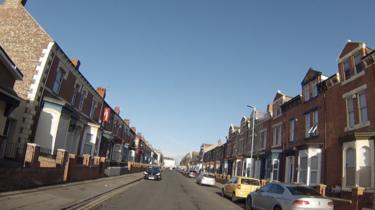
Image captionOnce private housing, Hartington Road is now mainly bedsits and hostels
A New Walk spokesman said: “We are not paid to provide what may be called clinical or care services but work closely with agencies that do provide these public health-commissioned services.
“The challenge of providing and maintaining supported accommodation for complex/chaotic service users is highly demanding.
“In the last year we have carried out 60 drug-related life-saving interventions around Hartington Road and moved 52 service users from the scheme into long-term settled accommodation.”
The council said it “recognises there are problems in central Stockton” with “hotspots for crime and anti-social behaviour” but added it “cannot compel new or existing providers to set up in different locations”.
Image copyrightGETTY IMAGESImage captionJust Eat takes orders on behalf of more than 28,000 food outlets
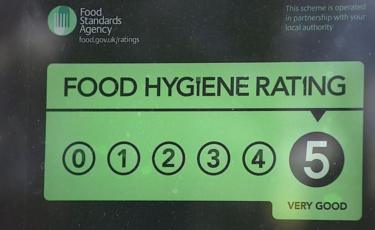
Five businesses have been removed from takeaway food app Just Eat after an investigation found they were not registered for food hygiene ratings.
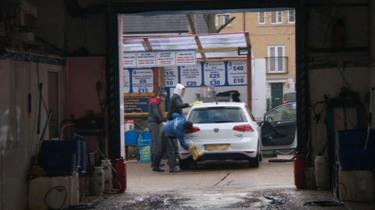
One of the firms was supposedly based at the site of a car wash in Basildon, Essex, BBC Inside Out East found.
The website and app takes orders on behalf of more than 28,000 food outlets in the UK and has 10 million customers.
Just Eat said it required firms to have food hygiene ratings and was making them easier to access on its products.
When the BBC visited the address in Basildon, there was no evidence it had been used for anything other than a car wash for at least two years.
Another takeaway not registered for hygiene checks, which has since ceased trading, was found in Braintree, Essex.
Three other unnamed firms operating from Norwich, Stevenage and Welwyn Garden City were also removed from Just Eat.
Restaurants and takeaways must register with local councils to receive a food hygiene rating.
Image captionThe registered address of one restaurant on Just Eat was on a site used as a car wash in Basildon
The details emerged after OP Inside Out East contacted councils throughout the East of England using the Freedom of Information Act.
The Chartered Institute of Environmental Health (CIEH) said some restaurants did not register with councils in order to avoid a visit from food hygiene inspectors.
Tony Lewis, from CIEH, said: “[Customers] should be seeing the food hygiene rating, it should be recorded on that app and it should be kept up to date.”
Image captionThe Chartered Institute of Environmental Health believes all takeaways and restaurants should have a food hygiene rating available for customers to see
Just Eat said it checked that food businesses it promoted were registered with local councils.
“We take food safety extremely seriously and actively work to raise standards across the takeaway sector,” said a Just Eat spokeswoman.
“Any restaurant wishing to partner with us must be Food Standards Agency-registered with the relevant local authority, and provide evidence of this, before we put them on our platform. Local authorities are then responsible for carrying out inspections to check businesses meet the requirements of food hygiene law.
“We positively incentivise food safety and make numerous resources available to our restaurant partners to support and improve standards in this area.”
Image copyrightGETTY IMAGESImage captionHighways England says a tunnel will cut congestion on the A303
However, Professor David Jacques, from the University of Buckingham, said a map of the route has put Blick Mead in the wrong place, where construction of the flyover and tunnel would be less damaging.
The archaeologist claims construction work on a tunnel and flyover would lower the water table, drying out the peat and silt conditions which preserve archaeological remains.
“Essentially the place is like a national archive for organic material which are like documents. It would be like destroying a unique library,” he said.
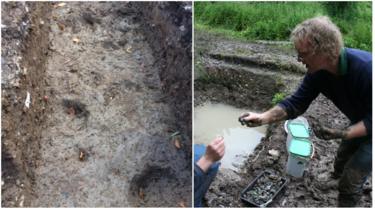
Image copyrightUNIVERSITY OF BUCKINGHAMImage captionWild cattle footprints dating back 6,000 years have recently been found at Blick Mead by Professor David Jacques
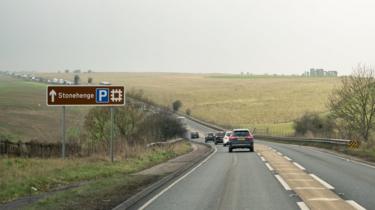
The government has backed plans to put the A303 into a tunnel as it passes the stone circle to ease congestion and improve the setting of the World Heritage site.
The plans include eastern and western entrances to the tunnel and a possible flyover at the Countess Roundabout near Amesbury.
David Bullock, from Highways England, said: “The document in question is a land ownership boundary plan.
“The plan shows indicative general features and was never intended as a geographical map.”
Image copyrightGETTY IMAGESImage captionIf used incorrectly whitening treatments can cause tooth loss, burns and blisters
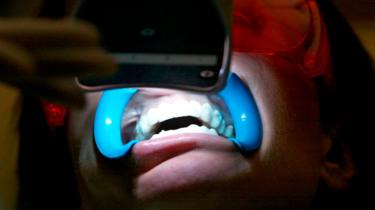
A number of beauticians in London are performing illegal teeth-whitening procedures, which can leave patients in crippling pain if they go wrong.
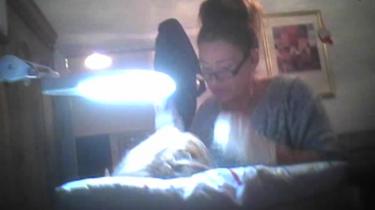
One place was secretly filmed by BBC London using illegal levels of the hydrogen peroxide at a strength of 25%.
The maximum legal strength useable by a registered dentist in the UK is 6%. If used incorrectly it can cause tooth loss, burns and blisters.
The General Dental Council (GDC) has seen illegal treatments rise, it said.
Only dentists and registered professionals can do the procedures on customers with dentist prescriptions.
Image captionFran Lowe said she had been using hydrogen peroxide far stronger than is legally permitted
Whitening products available on the high street may contain up to 0.01% of the chemical.
Richard Grieveson said 35% hydrogen peroxide was used on him by a beautician not filmed by the BBC.
“It can only be described as a really, really, sharp excruciating pain. And it went on for a good 45 minutes,” he said.
“A few days later my mouth became very raw and very sensitive. Basically it was like open sores.”
‘Lives at risk’
BBC London identified a number of places in the capital providing illegal teeth whitening treatments.
One was Plaistow beautician Fran Lowe, who was filmed using 25% hydrogen peroxide and admitted knowing at the time it was illegal to do so.
She charged £75 for the treatment and carried it out at home. She also offered teeth scraping – a procedure that should only be carried out by a dental professional.
In addition, Ms Lowe sold the reporter a tube of carbamide peroxide, a product which when used in the whitening procedure breaks down to 7% hydrogen peroxide.
She later denied using peroxide gels and claims she did so to obtain a sale. She told the BBC she had not known she was breaking the law and had stopped providing the treatment.
Image captionRichard Greiveson suffered “excruciating pain” after a procedure that went wrong
In another case, Paddington beautician Ashleigh Smith charged £100 for teeth whitening despite admitting she had only a day’s training in the procedure.
She said the product she used did not contain peroxide and would not comment further.
Staff at the Aanu Beauty salon in Ilford said they thought it was legal for them to supervise the use of whitening gel, as long as they did not apply it themselves. The GDC says this is not the case.
Employees asked a reporter to self-administer by placing a gum shield with the product in their mouth. The salon later said it was not peroxide and told the OP it no longer offered teeth whitening.
Dentist Ben Atkins said the footage of Ms Lowe was the worst example of illegal practice he had seen.
“It’s putting patient lives at risk, doing dental procedures not in a dental surgery,” he said.
The GDC declined to comment on specific cases.
Its head of illegal practice, Francesca Keen, said: “If you’re seeing someone on the high street that’s attended a one day course and putting that into perspective – dentists attend a five year training programme in order to qualify – you’re putting yourself in harm’s way.”
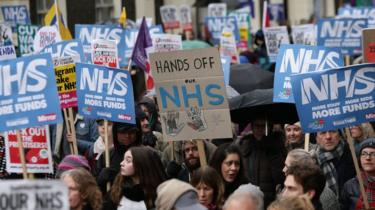
Image copyrightPAImage captionA rally was held in London at the weekend calling for more funding for the NHS
A new ring-fenced tax to fund the NHS and social care has been proposed by a panel of health experts.
The panel, set up by the Liberal Democrats, says the NHS in England should be given an extra £4bn on top of inflation in the next financial year.
It has suggested replacing National Insurance with the new tax to close the funding gap.
A Department of Health and Social Care spokesperson NHS funding “is at a record high”.
“[It] was prioritised in the Budget with an extra £2.8bn, on top of the additional £2bn already provided for social care over the next three years, and an additional £437m of funding for winter,” the spokesperson said.
The future of NHS money has been hotly debated as hospitals struggle to cope with the pressure on resources.
The 10-member panel included former NHS England chief executive Sir David Nicholson, Peter Carter, former chief executive of the Royal College of Nursing and Clare Gerada, former chairwoman of the Royal College of GPs.
It said on top of the £4bn extra needed for next year, an additional £2.5bn would be required for both 2019 and 2020.
As part of the recommendations, the panel also suggested reinstating a cap on the costs paid by individuals on social care.
It supported creating an office for budget responsibility for health and called for a series of incentives to get people to save more towards their adult social care.
Bitcoin ended last week down 30% at $8,291.87 – its worst week since April 2013 and far below the $19,000 it reached last November.
However, the cryptocurrency is still ahead of the $1,000 it was trading at this time last year.
Police have warned that digital currencies remain popular among criminals as they can use them to evade traditional money laundering checks and other regulations.
Prime Minister Theresa May recently said that action against digital currencies may be required “precisely because of the way they are used, particularly by criminals”.
She told Bloomberg: “In areas like cryptocurrencies, like Bitcoin, we should be looking at these very seriously.”
The Treasury said that it intends to update regulation to bring virtual currency platforms into anti-money laundering and counter-terrorist financing regulation.
Facebook recently announced it would block any advertising that promotes cryptocurrency products and services.

 GETTY IMAGES
 GETTY IMAGES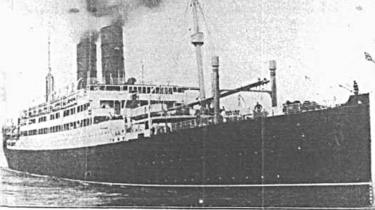




 OP's News