General election 2019: Labour seeks to calm Hindu voters’ anger

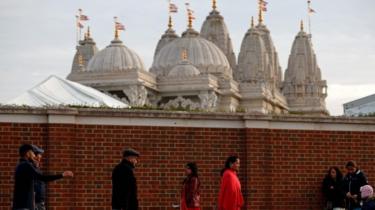
Hindu temple in Neasden, LondonImage copyrightGETTY IMAGES
The Labour Party is attempting to defuse a row that has seen British Hindus urged not to vote for them at the general election.
There has been much anger from Hindu communities over Labour passing a motion criticising India’s actions in Kashmir at its annual conference.
It has led to claims the party is “anti-Indian” and “anti-Hindu”.
Labour has now distanced itself from the conference motion after criticism from a major Hindu charity.
  • Why India and Pakistan fight over Kashmir
  • Kashmir profile – Timeline
For decades, Kashmir has been a point of contention between India and Pakistan – both believe it should be part of their country.
Over the summer, India withdrew the special status of Jammu and Kashmir that had enabled this region to make its own laws and have its own flag.
Following this, Labour members passed a motion at the party’s conference in September saying there was a humanitarian crisis in the disputed territory and that the people of Kashmir should be given the right of self-determination.
This provoked much anger from Indians – most of whom are of Hindu faith – in the UK and abroad.
Umesh Chander Sharma, chairman of Hindu Council UK, told BBC Radio 4’s Today programme most Hindus were “very upset and very angry” about Labour’s position and the charity, which is meant to be politically impartial, was “against” it.
He said his organisation had to “defend the Hindu cause”.
And he added that some people who usually vote Labour will be voting for the Conservatives because of the issue.
“They are, they are (voting Tory), they are very clear, they are very evident, there is no ifs or buts, they are very openly saying that,” he told the Today programme.
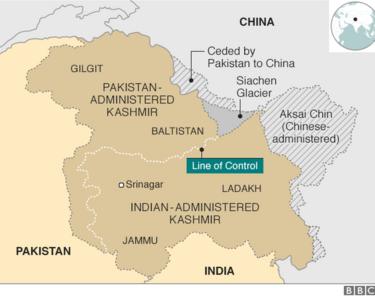
kashmir map
The Times of India recently reported that the overseas friends of India’s ruling party – the BJP – will be encouraging Hindus not to vote for Labour in marginal seats, which could make all the difference at 12 December’s UK general election.
The Today programme has seen WhatsApp messages sent to Hindus across the country urging them to vote Conservatives.
One message reads, “The Labour Party has blindly supported Pakistan’s propaganda against the issue of Article 370 in Kashmir. Labour Party is against India – the Conservative party isn’t”. These messages have come from members of Hindu organisations as well as individuals of Hindu and Indian heritage.
  • Why a special law on Kashmir is controversial
  • Pakistan PM calls for Kashmir resolution
Tanmanjeet Singh Dhesi, Labour’s candidate in Slough, recently urged people of Hindu and Sikh faith not to “fall for the divisive tactics of religious hardliners, trying to wedge apart our cohesive community, circulating lies on WhatsApp”.
Now Labour Party chairman Ian Lavery has stepped in to reassure Hindus that the party is “fully aware of the sensitivities that exist over the situation in Kashmir”.
“We recognise that the language used in the emergency motion has caused offence in some sections of the Indian diaspora, and in India itself,” he said in a statement.
“We are adamant that the deeply felt and genuinely held differences on the issue of Kashmir must not be allowed to divide communities against each other here in the UK.
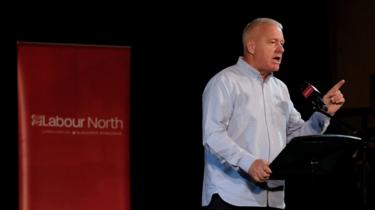
Ian Lavery delivering a speechImage copyrightGETTY IMAGES
Image captionLabour Party chairman Ian Lavery has stepped in to reassure Hindus
He said the party’s official position was that “Kashmir is a bilateral matter for India and Pakistan to resolve together by means of a peaceful solution which protects the human rights of the Kashmiri people and respects their right to have a say in their own future”.
He added that Labour was “opposed to external interference in the political affairs of any other country” – and would “not adopt any anti-India or anti-Pakistan position over Kashmir”.
According to official figures, there are more than a million Hindus in Great Britain, while there are more than three million Muslims.
Research by the Runnymede Trust shows that in 2015 and 2017, Labour remained the most popular party among ethnic minority voters (77% of them voted Labour in 2017).
The report says ethnic minority voters made up one in 5 of Labour voters but only one in 20 of Conservative voters.
Source of the news: BBC NEWS
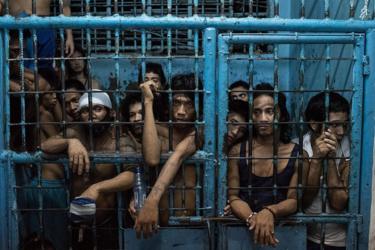
Philippine drug war: Do we know how many have died?

The new head of the anti-drugs campaign in the Philippines, Leni Robredo, has said the “killing of the innocent” must come to an end, referring to a government policy human rights groups have blamed for thousands of state-sponsored killings.
She is a leading opposition figure and vocal critic of President Rodrigo Duterte but she is also the country’s vice-president – a directly elected position in the Philippines.
  • President Duterte’s fierce rival becomes new drug czar.
Vice President Leni Robredo

GETTY
If this is a chance for the killing of the innocent to stop and to hold the perpetrators responsible, I will take this on.
Leni Robredo
Philippine Vice-President
Mr Duterte has been facing growing criticism of his controversial crackdown on illegal drug sales and use and has appointed Ms Robredo after she angered him by saying his drug policy “obviously wasn’t working”.

What has President Duterte said?

After his election in 2016, the president launched a hard-line campaign against “illegal drug personalities”, claiming the Philippines had become a “narco-state”.
The president’s spokesman, Salvador Panelo, told BBC News: “The government does not want to kill – it is not the intention.”
However, the president himself has said he would personally take the lives of millions of drug users and there have been reports local police forces have been given targets to meet in terms of the number of deaths.
Human rights groups such as Amnesty International have called the policy a “large-scale murdering enterprise” and say the police and vigilantes are proactively targeting suspected drug users.
Filipino President Rodrigo Duterte speaking at a podiumImage copyrightGETTY IMAGES
Image captionPhilippine President Rodrigo Duterte has called for drug users to be killed

How many have died?

There has been a great deal of debate about the death toll, with competing claims made by police officials, the government and human rights groups.
Separate investigations are currently being carried out by the United Nations and the International Criminal Court (ICC).
The UN is looking into the issue of extrajudicial killings and the ICC is conducting preliminary investigations into the president for alleged crimes against humanity.
Officially, the police say they kill only in self-defence – for example, during drug-bust operations.
In 2017, the government launched a campaign to reveal what it said were the true numbers of deaths, under the banner #RealNumbersPH.
Its latest figure, published in June 2019, was 5,526 deaths of “drug personalities”.
However, the former police chief, in the same month, publicly put the number of deaths at 6,700.
When pressed on the discrepancy between the two numbers, the president’s spokesman said it could have been an “unintentional mistake”.
These numbers, however, don’t include the drug-related killings allegedly being carried out by vigilantes inspired by the president’s anti-drug rhetoric.
In December 2018, the country’s Commission on Human Rights (CHR) estimated the number of drug-war killings could be as high as 27,000.
Police making an arrest in Manila streetImage copyrightGETTY IMAGES
Image captionA suspected drug dealer is apprehended by police in Manila
There is further confusion around another death toll, known as “deaths under investigation” (DUI).
In March 2019, the police told local media this figure was over 29,000 – and this has been included in the government’s official reports on the “war on drugs”.
So can these be classified as drug-related killings?
Rappler, a local media outlet, says the DUI figure is the police’s “way of categorising deaths in the war on drugs that police officials could not explain because they were outside ‘legitimate police operations'”.
And Karen Gomez, of the Commission on Human Rights, told BBC News, in August 2019, the growing number had become a “cause of serious concern” and regional police stations were blocking or delaying the release of information.
Mr Duterte has encouraged Filipinos to go and kill drug addicts and reports of vigilante groups killing suspected drug users have been well documented.
In 2018, the president told an audience the “only sin” he had committed in his time in office was the “extrajudicial killings”.
Human-rights groups say the police have targeted mostly poor communities, putting suspects on “drug lists” compiled by local community leaders.
Michelle Bachelet, the UN chief tasked with delivering the official report into allegations of human-rights abuses in the Philippines, has said even the government’s official death toll would be “a matter of most serious concern for any country”.
Promising to take a health-based approach, Ms Robredo says: “We will change the metrics, not on the number of deaths but by those number of lives being changed for the better.”
Souce of the news: BBC NEWS
Jimmy Carter in hospital for brain procedure


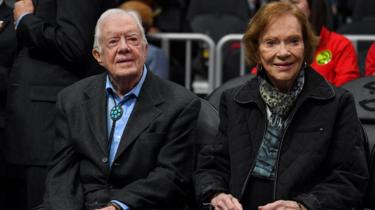
Mr Carter is said to be “resting comfortably” with his wife, Rosalynn, by his side

Former US President Jimmy Carter, 95, has been admitted to hospital in Atlanta for a procedure to relieve brain pressure.
The pressure comes from bleeding caused by recent falls, the Carter Center said in a statement.
The procedure is scheduled to take place at the Emory University Hospital on Tuesday morning local time.
“President Carter is resting comfortably, and his wife, Rosalynn, is with him,” the statement said.
Mr Carter is the country’s oldest living leader.
The Democrat was the 39th president, serving one term from 1977 to 1981. He was defeated in his re-election bid by Ronald Reagan.
Since leaving the White House, he has remained active, carrying out humanitarian work with his Carter Center in recent years.

Media captionJimmy Carter makes public appearance with black eye and stitches
In 2002, he received the Nobel Peace Prize for his humanitarian work.
In May, Mr Carter underwent surgery for a broken hip after falling at his home in Georgia.
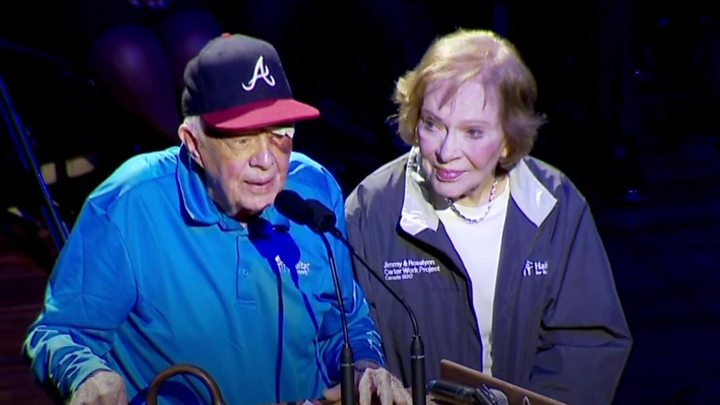
After a separate fall at his home, he made a public appearance at a charity event in October with a black eye.

Poland reacts angrily to Netflix Nazi death camp documentary


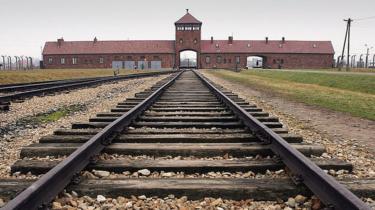
Auschwitz was one of the death camps built in Poland

Poland’s prime minister has written a letter to the streaming company Netflix insisting on changes to a documentary about the Nazi death camps.
Mateusz Morawiecki said a map shown in the series locates the death camps within modern-day Poland’s borders.
This misrepresents Poland as being responsible for the death camps, when it was actually occupied by Germany in World War Two, Mr Morawiecki said.
Netflix told Reuters it was aware of concerns regarding the documentary.
Nazi Germany invaded Poland in 1939, which marked the beginning of the war.
The Germans built concentration camps including Auschwitz, killing millions of people, most of them Jews.
Mr Morawiecki said in his letter to Reed Hastings, the CEO of Netflix, that it was important to “honour the memory and preserve the truth about World War II and the Holocaust”.
He accused “certain works” on Netflix of being “hugely inaccurate” and “rewriting history”.
Presentational white space
The prime minister attached a map of Europe in late 1942 to the letter, as well as an account by Witold Pilecki, who was voluntarily imprisoned in Auschwitz and wrote about his experiences after successfully escaping.
“I believe that this terrible mistake has been committed unintentionally,” Mr Morawiecki added.
Last year, Poland introduced laws criminalising language implying Polish responsibility for the atrocities committed by Nazi Germany.
However, an international outcry prompted the government to remove the threat of three-year jail terms.
Most of Poland’s Jewish population was wiped out during the occupation.
There were, however, some Polish atrocities against Jews and other civilians during and after the war.
In 1941, Polish villagers in Jedwabne, perhaps at the instigation of the Nazis, rounded up more than 300 of their Jewish neighbours and burned them alive in a barn.
Source of the news 

Australia bushfires: ‘We owe you milk’ say firefighters who saved man’s house

The Urunga Rural Fire Service left this note behind on Mr Sefky’s kitchen counter
An Australian man has shared a heart-warming note from firefighters who saved his home from bushfires – then apologised for drinking his milk.
Paul Sefky returned to his New South Wales home to find a note signed by the Urunga Rural Fire Service (RFS).
“It was a pleasure to save your house…P.S. – we owe you some milk,” it said.
Australia is enduring a bushfire crisis that has left three people dead and razed more than 150 homes.
More than 60 blazes are burning across New South Wales as the state braces itself for “catastrophic” conditions that are set to hit later on Tuesday.
Fire and Rescue NSW responds to a bushfire burning out of control near properties in South Taree on the Mid North Coast of NSWImage copyrightGETTY IMAGES
Image captionNSW has been warned of “catastrophic” conditions as a bushfire crisis continues
Mr Sefky returned to his house over the weekend to find the note by the Urunga RFS left behind on his kitchen bench.
The note also apologised for being unable to save Mr Sefky’s sheds.
Despite this, Mr Sefky said the note was the best he had received “since the morning after my wedding”.
The post, which was shared thousands of times, eventually reached the fireman who claims to have been behind it.
“I’m happy to know my note got to you in one piece!” said Kale Hardie-Porter in a comment on Facebook, who said he was one of a group of four firefighters. “We took refuge in your house and that’s when we discovered the fridge.”
Mr Hardie-Porter also apologised for his “shocking handwriting”, saying it was “late and [he] could not see a thing!”
“It was our pleasure to do a little good in such horrendous conditions,” he said.
Though Mr Sefky’s house was saved, he said in a comment on Facebook that the house still remained in an uninhabitable state.
“We have no power, no poles, no water, all dirty and just too smoky for the next week,” he said.
Some six million people live in New South Wales.
Authorities have warned of “extreme, severe and catastrophic” conditions in the region with temperatures set to hit 37C.
They say fires will spread quickly and people in vulnerable communities have been urged to stay away from bushland, and to flee their homes before the fires escalate. More than 600 schools are closed across the state.
Source of the news

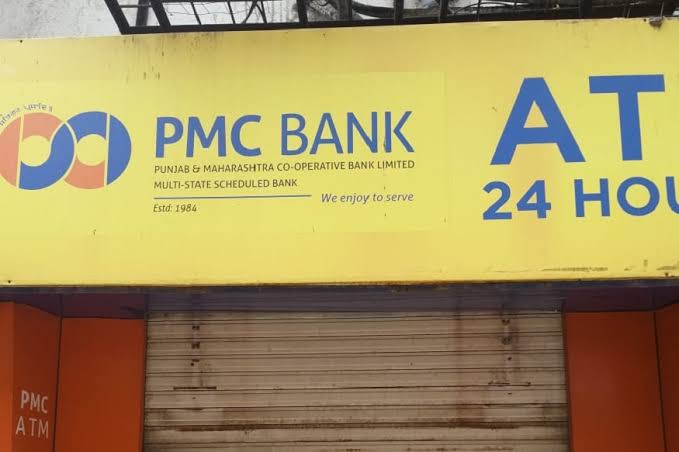
PMC Bank: Indian customers protest after fraud investigation launched

Nearly a million angry customers of India’s Punjab and Maharashtra Co-operative bank are panicking as they struggle to access their money.
The bank is under investigation for alleged fraud totalling $500m (£390m), with police in India’s financial capital Mumbai arresting its managing director last month.
Its customers, who have been protesting for weeks, have been left in the lurch as they have only been allowed to withdraw $700 (£550) from their accounts.
Many say that they fear losing their life savings.

Hong Kong protests: Schools and universities shut amid safety fears

Protesters at the Chinese University of Hong KongImage copyrightREUTERS
Image captionThere were clashes between police and students on Tuesday morning
Some schools and universities in Hong Kong remain closed on Tuesday over safety fears as protesters called for a day of traffic disruptions.
Many of the territory’s train lines are suspended or delayed as police search passengers and long queues form at stations.
Riot police entered several universities early on Tuesday, firing tear gas in one to disperse students.
On Monday, Hong Kong saw a marked escalation of violence.
One activist was shot with a live bullet by police while another man was set on fire by anti-government protesters. Both are in critical condition in hospital.
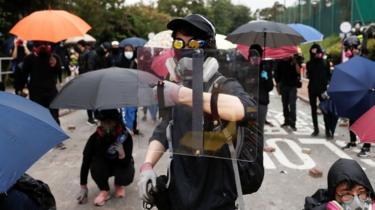
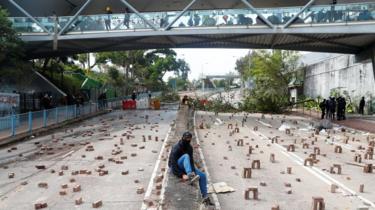
Protesters setting up a road block at the Chinese University of Hong KongImage copyrightREUTERS
Image captionProtesters set up road blocks near the Chinese University of Hong Kong
Dozens of local and international schools across Hong Kong said they would be closed on Tuesday with some telling parents on text message it was due to safety concerns given the ongoing protests.
The city’s English Schools Foundation said that “due to our concern for the safety of our students and staff, all ESF classes are suspended today. Students should not travel to school”.
A local primary school said it would close because of “the serious conflict in the school’s district” and warned the school might be affected by tear gas.
Speaking on Tuesday morning, the city Chief Executive Carrie Lam said despite the unrest, there would be no blanket suspension of all schools.
Police fired tear gas at City University early on Tuesday and a standoff between students and riot police continued throughout the morning.
Students at Hong Kong Polytechnic also tried to disrupt traffic near their campus.
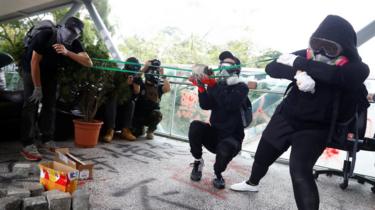
Demonstrators use a band to propel a rock during an anti-government protestImage copyrightREUTERS
Image captionProtesters creating a giant sling shot near City University
In the morning, suspended railway services and road closures had already led to long traffic jams in the early rush hour.
Most of the city’s workforce depends on public transport for their daily commute.

What happened on Monday?

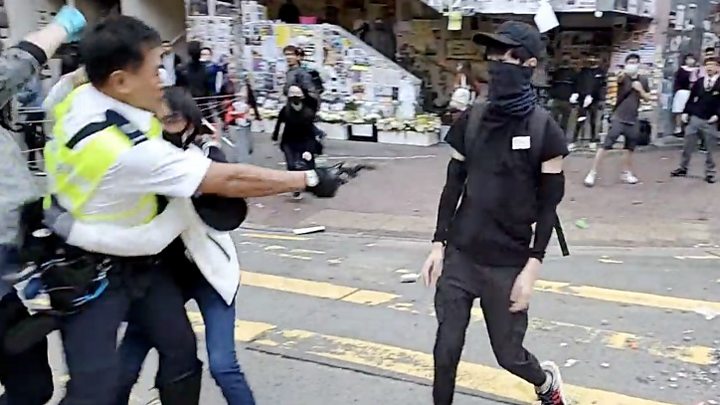
Protesters had called for a day of city-wide disruption. Early in the day a protester was shot at close range by a police office near a roadblock set up by activists.
Elsewhere a man was doused with flammable liquid and set on fire by anti-government protesters after arguing with them.

Media captionThis Hong Kong protester’s shooting was livestreamed on Facebook
There were clashes across Hong Kong and police fired tear gas and rubber bullets at protesters.
At the Chinese University, police fired rubber bullets in response to protesters throwing bricks while at Hong Kong Polytechnic, police fired tear gas at a demonstration.
Several universities had already suspended classes on Monday due to the unrest.
More than 260 people were arrested on Monday, according to police, bringing the number of arrests to more than 3,000 since the protests began in June.
Ms Lam, speaking at a news conference in the evening, called the demonstrators enemies of the people.
The US meanwhile have expressed “grave concern” over the situation in Hong Kong, condemning “violence on all sides” and calling for restraint.

Why are there protests in Hong Kong?

Hong Kong is part of China but as a former British colony it has some autonomy and people have more rights.
The protests started in June against plans to allow extradition to the mainland – which many feared would undermine the city’s freedoms.
The bill was withdrawn in September but demonstrations continued and now call for full democracy and an inquiry into police behaviour.
Clashes between police and activists have become increasingly violent and in October the city banned all face mask.
Source of the news 

Bolivia crisis: Evo Morales accepts political asylum in Mexico

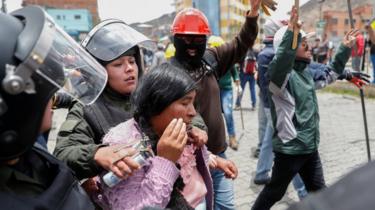
Members of the security forces detain a woman during clashes between supporters of Evo Morales and opposition supporters in La Paz, Bolivia, 11 November, 2019.Image copyrightREUTERS
Image captionMorales supporters clashed with police in La Paz
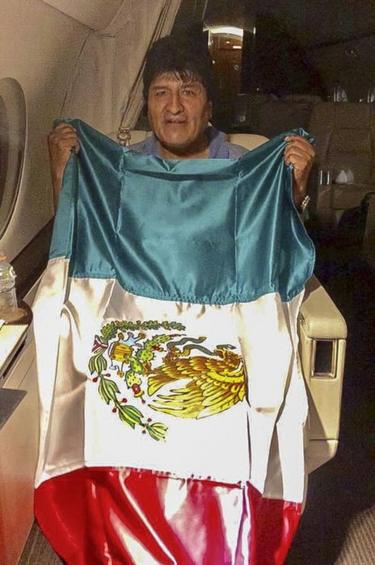
Evo Morales has accepted an offer of political asylum in Mexico a day after resigning as president of Bolivia amid election fraud protests.
In a tweet, he said it hurt to be leaving Bolivia but he would return with more “strength and energy”.
Mexico’s Foreign Minister, Marcelo Ebrard, confirmed Mr Morales had boarded a Mexican government plane.
Meanwhile, Bolivia’s military commander ordered troops to back up police who have clashed with Morales supporters.
Some 20 people were reported injured in the clashes.
A handout picture released by the Mexican Foreign Ministry press office shows former Bolivian President Evo Morales leaving Bolivia in an aircraft of the Mexican Air Force on 11 November, 2019.Image copyrightAFP/MEXICO FOREIGN MINISTRY
Image captionMr Morales left Bolivia in a Mexican Air Force plane on Monday
Presentational white space
Mr Morales earlier urged his supporters to resist the “dark powers” that had forced him to step down.
  • High and lows of Evo Morales’ presidency
  • Why protesters are on the streets worldwide
The deputy head of the Senate has said she will take over as interim president until new elections are held.
  • Country profile
Mr Morales, a former coca farmer, was first elected in 2006. He has won plaudits for fighting poverty and improving Bolivia’s economy but drew controversy by defying constitutional term limits to run for a fourth term in October’s election, which is alleged to have been rife with irregularities.
Presentational grey line

Life stops in El Alto

Analysis box by Katy Watson, South America correspondent
Up in El Alto, a city that sits high above La Paz in the Andes, life felt like it had stopped.
The cable car that connects the two cities was paralysed, its cabins bobbing in the air in silence. And a normally bustling market place was deserted, stalls shut for fear of looting.
Dania was one of the only shopkeepers willing to take a risk. She needs the money, she says. A supporter of Evo Morales, she says his resignation was nothing short of a coup.
Crossing the market, Lucy Choque makes her way to work through the burning rubber tyres that were set alight overnight. She just wants the whole thing to be over.

What did Mexico say?

Mr Ebrard announced the decision to grant Mr Morales asylum at a press conference.
Mexico has a left-leaning government and has supported Mr Morales.
Evo Morales supporters clash with police in La Paz. Photo: 11 November 2019Image copyrightGETTY IMAGES
Image captionEvo Morales supporters fought running battles with police in La Paz on Monday
Mr Ebrard earlier described events in Bolivia as a “coup”, citing the military’s involvement in Mr Morales’ resignation.

Why did Morales quit?

Pressure had been growing on Mr Morales since his narrow victory in last month’s presidential election.
On Sunday, events moved swiftly. First, the Organization of American States, a regional body, announced its audit of the election had found “clear manipulation” and called for the result to be annulled.
In response, Mr Morales agreed to hold fresh elections. But his main rival, Carlos Mesa – who came second in the vote – said Mr Morales should not stand in any new vote.
What really seemed to tip the balance was the intervention of the chief of the armed forces, General Williams Kaliman, who urged Mr Morales to step down in the interests of peace and stability.

Media captionWatch Evo Morales announce his resignation
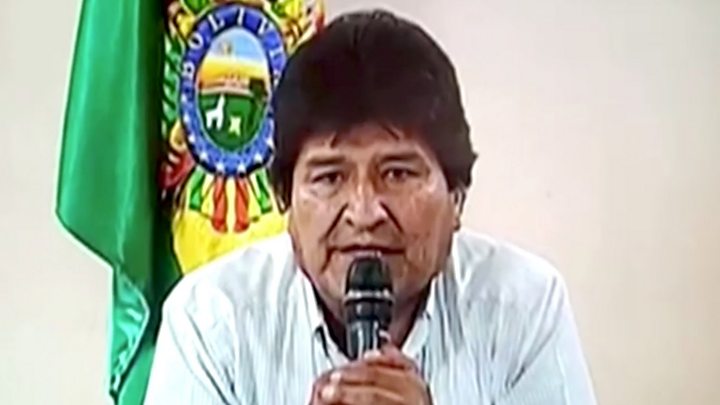
Announcing his resignation, Mr Morales said he had taken the decision in order to stop fellow socialist leaders from being “harassed, persecuted and threatened”. He also called his removal a “coup”.
Reports say Mr Morales made the announcement of his resignation from El Chapare, a coca-growing rural area of Cochabamba and a bastion of support for him and his Mas party.

What has the reaction been?

Opponents of Mr Morales have been celebrating across Bolivia, setting off fireworks and waving national flags, while his supporters clashed with police in the cities of La Paz and El Alto, according to local media reports.
Argentines and Bolivians also took to the streets of Buenos Aires on Monday to protest against his resignation.
His resignation met with mixed reactions from world leaders.
US President Donald Trump on Monday described it as “a significant moment for democracy in the Western Hemisphere”.
The Russian foreign ministry said a “wave of violence unleashed by the opposition” had not allowed the “presidential mandate of Evo Morales to be completed”.
The Cuban president, Miguel Díaz Canel, tweeted that what happened was “a violent and cowardly coup d’etat against democracy in Bolivia by the right”.
Socialist-led countries Nicaragua and Venezuela also expressed solidarity with Mr Morales.
Spain expressed its concern over the role of Bolivia’s army, saying that “this intervention takes us back to moments in the past history of Latin America”.

What happens now?

The deputy leader of the Senate, Jeanine Áñez, said she would assume power as interim leader until elections were held.
Ms Áñez made the announcement after Vice-President Álvaro García, Senate leader Adriana Salvatierra and House of Deputies’ leader Victor Borda had all resigned, leaving her next in line to take over power temporarily.
“I assume this challenge with the only objective to call new elections,” she said. “This is simply a transitional phase.”
Evo Morales at the  United Nations in New York on 24 September, 2019.

EPA
Evo Morales

  • 13 years, 9 monthsin power
  • 38 yearsleading the coca growers’ union
  • 54%of the votes won in 2005 election
  • 64%of the votes won in 2009 election
  • 61%of votes won in 2014 election

Source: BBC Monitoring

Presentational white space
The opposition politician said she would convene the legislative assembly later on Monday to be confirmed as interim president.
But with Mr Morales’ party in control of both the Senate and the House of Deputies it is not clear if she will get the necessary backing from legislators.
Under Bolivia’s constitution, whoever takes over as interim president has 90 days to call fresh elections.
Souce of the news

Australia bushfires: New South Wales braces for ‘catastrophic’ day

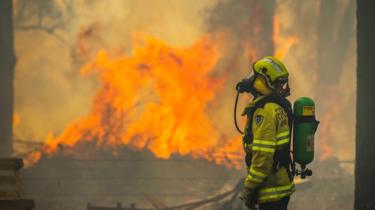
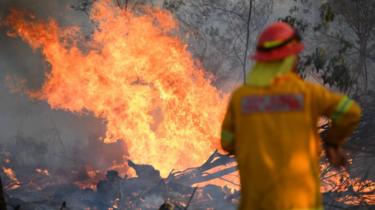
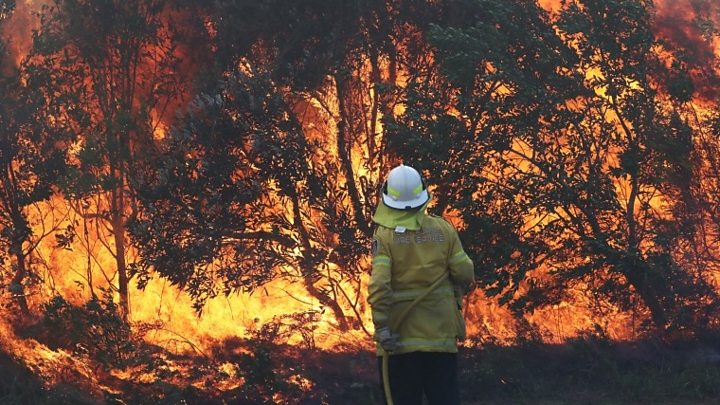
A firefighter works to contain a bushfire near Glen Innes, New South Wales, Australia, 10 November 2019Image copyrightEPA
Image captionA firefighter works to contain a bushfire near Glen Innes in New South Wales
A vast area of Australia’s east coast – including Sydney – is bracing itself for one the nation’s worst ever bushfire threats.
More than 60 blazes are burning across the state of New South Wales (NSW) ahead of predicted “catastrophic” conditions on Tuesday.
Authorities warn that fires will spread quickly amid forecasts of hot temperatures and strong winds.
About six million people live in the region.
People in vulnerable communities have been urged to stay away from bushland, and to flee their homes before the fires escalate. More than 600 schools are closed across the state.
State Premier Gladys Berejiklian, who has declared a seven-day state of emergency, said Tuesday would be “about protecting life, protecting property and ensuring everybody is safe as possible”.

How bad are the fires?

Three people have died and almost 200 properties have been destroyed since the fire emergency intensified in NSW and Queensland on Friday.
Authorities said they were facing what could be “the most dangerous bushfire week this nation has ever seen”.
Experts have compared the conditions to the 2009 Black Saturday bushfires in Victoria, when 173 people died.
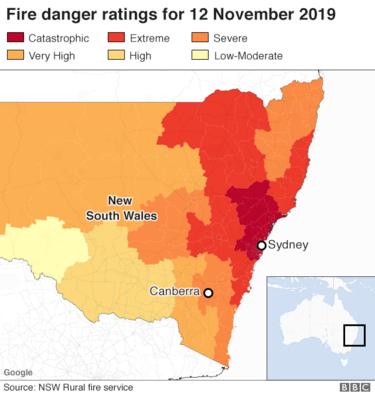
It’s the first time that a “catastrophic” level fire warning is in place across the greater Sydney area and in the regions to the city’s north and south. The highest level rating was brought in after the 2009 disaster.

Media captionSarah Keith-Lucas takes a look at the forecast for Australia

What is happening on Tuesday?

Authorities have warned of “extreme, severe and catastrophic” conditions in NSW, with temperatures set to soar to 37C.
Fire chiefs say they are already battling a front spanning 1,000km (620 miles) along the north coast of NSW, with several blazes “exceeding 100,000 hectares alone”.
A predicted pick-up in wind speeds could cast embers up to 30km from the main front and cause spot fires, they add.
“Under catastrophic conditions, fires that start and take hold will grow and develop extremely quickly and become large fires very, very easily,” NSW Rural Fire Services Commissioner Shane Fitzsimmons said.
A map showing the danger levels on Tuesday
Presentational white space
He said 3,000 firefighters were on the front lines, boosted by crews from other states and New Zealand. The Australian Defence Force is also on alert to assist.
The fire danger is currently less severe in Queensland, but conditions are forecast to deteriorate later in the week. South Australia is also facing a dozen bushfires on Tuesday.
Prime Minister Scott Morrison said authorities were as prepared as they could be.

Sense of foreboding

We woke up to a morning haze here in Sydney as smoke moved in from affected areas – you could smell it in the air. One local, Natasha Davo, tweeted there was a “foreboding feeling” in her neighbourhood.
It’s already a hot morning on a day promising to be even hotter with dry conditions and strong winds.
People are watching updates closely and bracing themselves for what this catastrophic danger will mean for them.
Presentational grey line

Is this linked to climate change?

Scientists and experts warn that Australia’s fire season has grown longer and more intense due to climate change.

Media captionWhy Australia bushfires are now “hotter and more intense”
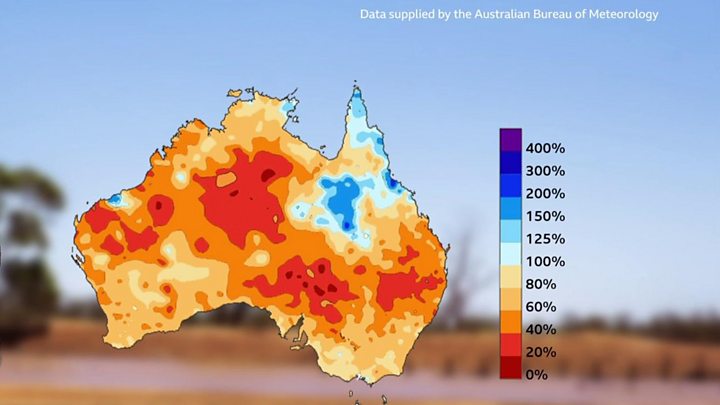
Officials have confirmed that 2018 and 2017 were Australia’s third and fourth-hottest years on record respectively, and last year the nation experienced its warmest summer on record.
The Bureau of Meteorology’s State of the Climate 2018 report said climate change had led to an increase in extreme heat qevents and raised the severity of other natural disasters, such as drought.
Even if global temperatures are contained to a 2C rise above pre-industrial levels – a limit set out in the landmark Paris accord, agreed by 188 nations in 2015 – scientists believe the country is facing a dangerous new normal.

In pictures: Lunar New Year welcomes the year of the pig


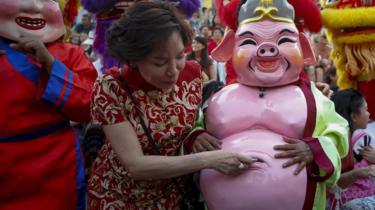
In Bangkok, performers dressed up as pigs to celebrate the Lunar New Year

More than a billion people around the world have begun celebrating the Lunar New Year and the start of the Year of the Pig.
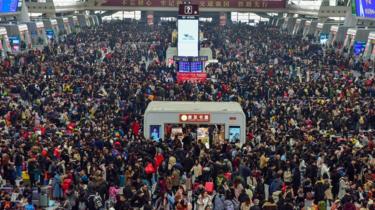
In China that means millions of people have travelled to their hometowns, in the largest annual human migration.
Also known as the Spring Festival, the Lunar New Year is celebrated by countries across Asia.
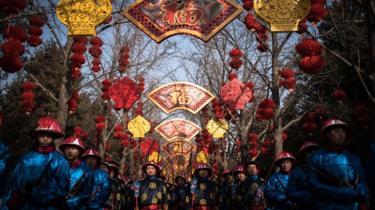
Fireworks, special clothes, red lanterns and lots of food will mark the occasion.
The pig, one of the 12 signs of the Chinese zodiac, is believed to be a symbol of optimism, enthusiasm and hard work.

Design a site like this with WordPress.com
Get started