Russia Saratov crash: Investigators comb crash site near Moscow

Media captionWreckage was strewn across a wide area
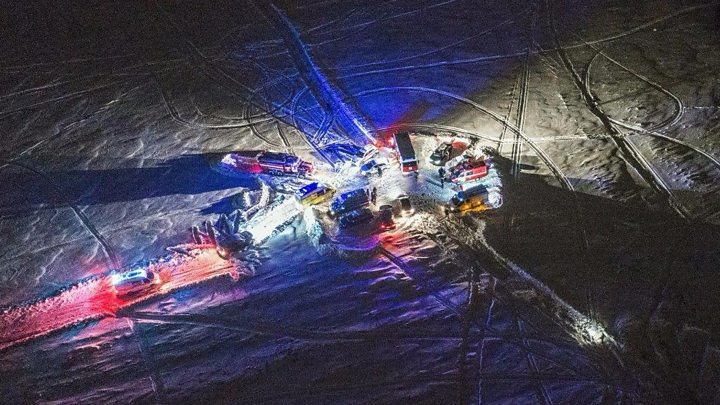
Russian investigators are searching snow-covered fields near Moscow for clues why a passenger plane crashed.
All 65 passengers and six crew were killed when the Saratov Airlines jet went down minutes after taking off from Domodedovo airport on Sunday afternoon.
Officials say they are considering weather conditions, human error and technical failure as possible causes.
They did not mention the possibility of terrorism. The Antonov An-148 was en route to Orsk in the Ural mountains.
It crashed near the village of Argunovo, about 80km (50 miles) south-east of Moscow. Wreckage and body parts are strewn over a large area – about 30 hectares (74 acres).
Media captionBBC Russian’s Sergei Goryashko: “It’s really very difficult… The road is blocked.”
More than 700 people are involved in the search operation, struggling through deep snow, but aided by snowmobiles and nine drones.

Who are the victims?

The country’s health minister said recovery of all of the victims’ remains could take up to a week. So far more than 200 body fragments have been recovered.
The emergencies ministry is collecting DNA samples from victims’ relatives – specialists have flown to Orsk to do that.
A child and two teenagers were among the passengers, most of whom were from the Orenburg region where Orsk is located.
The list is still being updated. Among those killed was a man from Switzerland and another from Azerbaijan.
At least 11 passengers were living in or near Moscow. Three were from the St Petersburg area.
At least eight passengers were from other parts of Russia, and four of the crew were from Saratov.
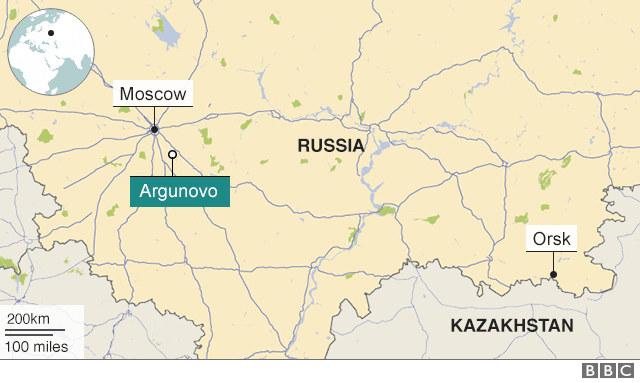
Map
President Vladimir Putin has expressed his condolences to the victims’ families. Both the US and the UK governments said they were “deeply saddened” by the tragedy.
This is the first commercial passenger jet crash for more than a year – 2017 was the safest year on record for air travel.

What do we know so far about what happened?

The plane took off at 14:27 (11:27 GMT) on Sunday. Contact was lost minutes later.

File picture of the Saratov plane that went down near Moscow on 11 FebruaryImage copyrightAIR TEAM IMAGES
Image captionThe plane had been in service for about seven years
Flight-tracking site Flightradar24 said it then descended at the rate of 1,000m (3,300ft) per minute.
No emergency call came from the plane, which was reportedly seven years old.
It was being flown by an experienced pilot who had 5,000 hours of flight time, the airline told Ria-Novosti news agency.
Eyewitnesses told Russian media that the jet was on fire as it plummeted.
A criminal inquiry has been launched for “violation of the rules for the operation of air transport, which resulted in the death of two or more people”.
On Monday, emergency workers confirmed they had recovered the second flight recorder from the aircraft.

What do we know about Saratov Airlines?

Saratov Airlines is based in Saratov, 840km south-east of Moscow.
In 2015 it was banned from operating international flights when surprise inspectors found someone other than the flight crew in a cockpit.
The airline appealed against the ban and changed its policy before resuming international charter flights in 2016.
Antonov aircraft were first developed in Ukraine, but are also made in Russia for regional airlines. The twin-engine model involved in Sunday’s crash had its first flight in 2004, and was developed for short-haul routes.
In 2011, one broke up mid-flight during a training flight in the Belgorod region in southern Russia, killing all six crew members on board.

Recent Russian air disasters

The country has suffered two major plane crashes since 2015:

Brexit: Ministers to unveil what EU relationship they want for UK

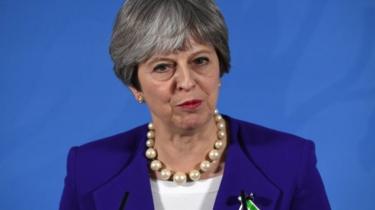
Theresa MayImage copyrightPA
Image captionThe PM has been under pressure from Brussels and her party to set out her vision for Britain after Brexit
Theresa May will deliver a major speech within the next three weeks outlining the future relationship Britain wants to have with the EU.
Before that, senior ministers are also due to give speeches in a campaign dubbed “the road to Brexit” by No 10.
Security, the devolution of powers, workers’ rights and trade are to be covered.
The PM has been under pressure from Brussels and her party to set out her vision for Britain after Brexit.
International Development Secretary Penny Mordaunt, who was a leading Leave supporter, said: “What the public want is, they want the vision and they want some meat on the bones.”

Will Brexit happen?

Her comments came as Tory rebel Anna Soubry warned Mrs May pro-European Conservatives could join forces with Labour to prevent the UK from leaving the single market and customs union.
Asked if there was a Commons majority to defeat “the kind of Brexit the prime minister wants”, Ms Soubry told the BBC’s Andrew Marr show: “If she’s not careful, yes.”
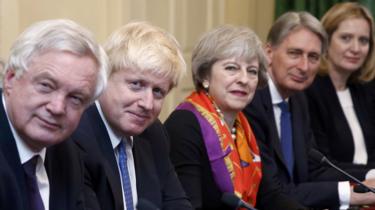
Theresa May and her Cabinet ministersImage copyrightGETTY IMAGES
Image captionDavid Davis and Boris Johnson will be heard from, but Philip Hammond and Amber Rudd will not
Asked if she thought Brexit will definitely happen, Ms Soubry, who was appearing alongside pro-Europe Labour MP Chuka Umunna, said: “I genuinely don’t know what is going to happen.”
Theresa May is set to make two key note addresses in the coming weeks, and arch Brexiteers Boris Johnson, David Davis and Liam Fox will also set out their agendas.
Senior ministers are due to hold talks at the prime minister’s country residence Chequers, and soon after that Mrs May is expected to set out her vision.
The foreign secretary will begin the series of speeches on Wednesday and insiders say Boris Johnson will be seeking to unite Remainers and Leavers, the OP’S NEWS political correspondent Iain Watson said.
Brexit Secretary David Davis and International Trade Secretary Liam Fox will also be heard from, along with Cabinet Office minister David Lidington, who backed Remain in the referendum.
But two prominent ministers who voted to remain – the chancellor and the home secretary – are not delivering speeches.

‘No gag plot’

No 10 said Philip Hammond spoke recently in Davos, while the prime minister herself will in effect cover Amber Rudd’s brief when she gives a speech on security on Saturday.
Mrs May will detail the “security partnership” the UK wants to maintain with the EU.
Justice Secretary David Gauke rejected suggestions ministers who favoured a softer Brexit were being silenced.
“He (Philip Hammond) is not part of the set of speeches that have been outlined today, but that doesn’t mean that the Chancellor is not expressing his views both internally in the cabinet conversations, but also externally.
“So I don’t think there is anything in this, that this is somehow a kind of plot to gag a particular faction of ministers, I don’t think that’s a fair characterisation at all,” he told ITV’s Peston On Sunday.
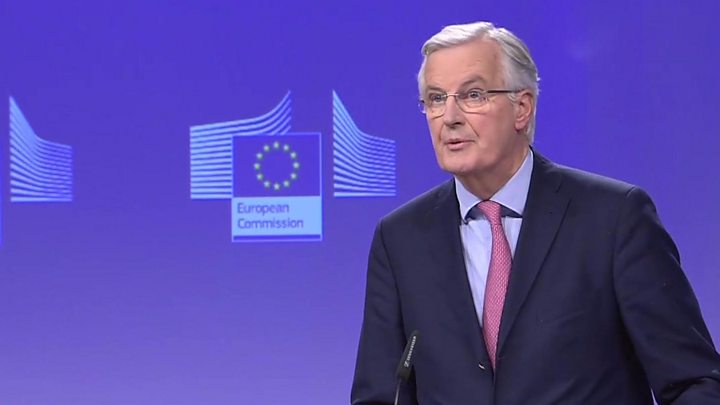
It comes after EU Brexit negotiator Michel Barnier warned that a transition period immediately after Brexit in 2019 was “not a given”.

Media captionKey points of Michel Barnier’s news briefing
He said “substantial” disagreements remained and he had “some problems understanding the UK’s position”.
Penny Mordaunt hit back at Mr Barnier’s comments, telling Andrew Marr: “the other nations involved in this are very pragmatic and have not been impressed with some of the language that the (European) Commission has used”.
Asked if it was a UK government “red line” to not have to grant full rights to EU migrants who come to Britain during a transition period, Ms Mordaunt said that was the government’s position going into the next round of talks.

Attacked Aberystwyth student wakes from coma, family say

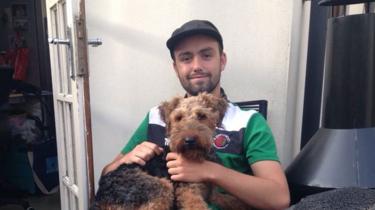
Ifan Richards OwensImage copyrightOWENS FAMILY
Image captionMr Owens from Cardiff is a second-year student at Aberystwyth University
A university student who suffered life-threatening injuries in a street attack has woken from his coma, his family has said.
Ifan Owens, 19, was found unconscious on Aberystwyth’s High Street in Ceredigion during the early hours of 14 January.
His father, Gareth Owens posted on social media that he was now breathing unassisted.
Five people were arrested at the time of the incident.
Gareth, Ifan and Tomi OwensImage copyrightOWENS FAMILY
Image captionGareth Owens with his sons Ifan and Tomi
“Ifan’s been taken off the ventilator and had the breathing tube removed.”
He added he had “poked his tongue out on command” and had been listening to the radio.
Mr Owens said his son’s progress was “a tremendous tribute” to the NHS, and especially Bronglais Hospital and the University Hospital of Wales in Cardiff.

Abuse of politicians is ‘definitely getting worse’

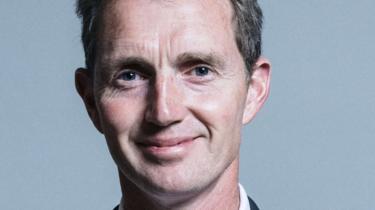
David DaviesImage copyrightHOUSE OF COMMONS
Image captionDavid Davies described the abuse as “threatening”
Two Welsh MPs have said abuse against politicians has “definitely got worse”, both online and in person.
David Davies, Conservative MP for Monmouth and Carolyn Harris, Labour MP for Swansea East, said they had received “threatening” personal abuse.
It comes after a cross party committee called for a new code of conduct for MPs, Peers and workers in parliament.
They said members of the public were launching personal attacks rather than debating them on politics.
Speaking on BBC Radio Wales’ Sunday Supplement, Mr Davies said abuse against politicians was on the rise.
“It’s definitely getting worse,” he said. “I noticed at the last election there was a level of unpleasantness I haven’t seen before.
“I was involved in a row this week which is on YouTube and people said I was aggressive but I’m not going to sit and take a load of rubbish.
“The first thing you see on the video is a protestor saying to me ‘you are the worst piece of scum I’ve ever met’. If I went up to somebody in the street and said ‘you are the worst piece of scum’ I would expect a fairly robust response.
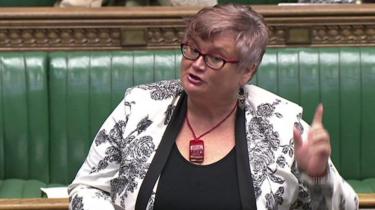
Carolyn Harris
Image captionCarolyn Harris said much of the abuse was personal and not politically motivated
“People think because he’s an MP they can do that and get away with it…we shouldn’t have to put up with stuff that nobody else would put up with.”
Ms Harris, also on the programme, said much of the abuse came from social media.
She said was particularly targeted after the death of her eight-year-old son in 1989, but also after shadow home secretary Dianne Abbott wished her husband a happy birthday earlier this year.
“I’ve had it online and I’ve had in in person. I find people who have got nothing valuable to say or haven’t got a good argument will just turn it into aggression to try and make a point.
“I think social media’s played a big part in it. Keyboard warriors are now a lot braver because they have avenue to channel their hate.”

Dystonia patients’ ‘distress’ over cancelled Botox clinics

Media captionMr Findlay said there is “huge pressure” on services for dystonia patients
A support group for an incurable neurological condition said a “perfect storm is brewing” over “mass cancellations” of appointments.
Dystonia causes uncontrollable muscle spasms and is commonly treated with Botox injections which paralyse nerve connections.
They are described as a “lifeline” to people who would otherwise be left in chronic pain.
But patients are having treatments delayed at Wales’ largest hospital.
Cardiff and Vale university health board apologised saying it has been “challenging to deliver the service” at the University of Wales (UHW), Cardiff.
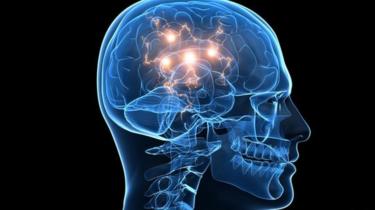
BrainImage copyrightTHINKSTOCK
Image captionThere are about 5,000 confirmed cases of dystonia in Wales
What is dystonia?
  • Dystonia is a movement disorder that can cause muscle spasms and contractions
  • Movements are often repetitive and can cause unusual, awkward and painful postures
  • It is thought to be caused by a problem with the part of the brain that controls muscle movement
  • There is no cure but can usually be managed through medication, physiotherapy or surgery
  • It is estimated at least 70,000 people are affected by dystonia in the UK, including 8,000 children and young people
Source: NHS

Graham Findlay, 60, from Cardiff, founded the support group Dystonia Cymru 10 years ago, having had the condition all of his life.
He described it as his brain sending the “wrong signals” to the muscles in his neck and shoulders which causes spasms and affects his speech.
Botox has to be injected every two or three months as the nerve cells re-grow, and “if there’s a gap, the symptoms rapidly return”.
“They can be very distressing and painful to patients,” he said.
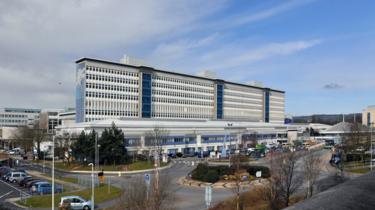
University Hospital of WalesImage copyrightMICK LOBB/GEOGRAPH
Image captionPatients from across south Wales are referred to the specialist Botox clinic at UHW, which runs one afternoon a week
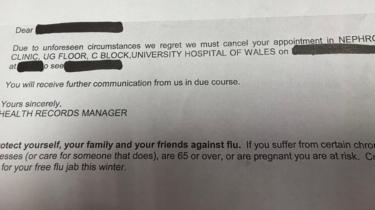
Mr Findlay estimates about 300 people due to attend the Botox clinic at UHW have received cancellation letters “due to unforeseen circumstances”.
“This has understandably created anxiety amongst our members,” he said.
He said there had been a history of cancelled appointments over the last four years, but matters “have now reached a situation that can only be described as a perfect storm”.
He said it was down to the amount of referrals, the fact that patients “don’t drop off the list once referred”, the lack of qualified injectors and staff absence.

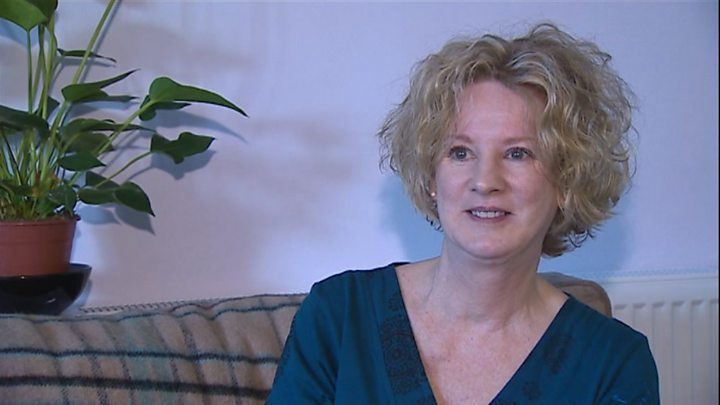
Media captionMs Pierce-Jones used to be full of confidence but now lives “day-to-day” in chronic pain
Cardiff and Vale university health board said the UHW clinic is the only dedicated clinic for dystonia patients in south east Wales.
A spokeswoman said: “Unfortunately, over the last six months, due to the increased demand and staff shortages it has been challenging to deliver this service.”
“With the new clinic space available to us and the opportunity for training more nurses and doctors to assess and treat patients with dystonia, we hope to resume a normal service in the near future.”
Cancellation letter
Image captionA cancellation letter sent from the health board
Mr Findlay has met with the health board’s chairwoman, Maria Battle, and has also written to Health Secretary Vaughan Gething.
“We feel we have been offered a Cinderella service for years and the time is due for root and branch reform,” he said.
“We want our specific condition to be taken seriously.”
A Welsh Government spokesman said: “There are ongoing discussions with Cardiff and Vale university health board, the main centre for Botox clinics, and the other health boards in south Wales, in regards to opening up more clinics,” he added.

Woman assaulted in overnight Edinburgh house raid

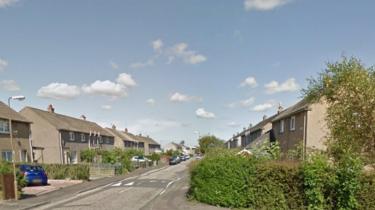
Dolphin RoadImage copyrightGOOGLE
Image captionThe robbers struck during the night in the Dolphin Road area
Two men have forced their way into a house overnight and robbed the couple inside of jewellery and cash.
The raid took place at about 01:30 in the Dolphin Road area of Currie in Edinburgh.
The woman was assaulted during the robbery and was taken to Edinburgh Royal Infirmary to be treated for minor injuries.
Police investigating the crime said it was a “traumatic” experience for the victims.
Det Insp Bruce Coutts said: “This incident has understandably been very traumatic for the couple and we are supporting them at this difficult time
“We are carrying out extensive inquiries and would urge anyone who has information to come forward.
“Two men we would like to speak to were wearing dark clothing and were believed to be travelling in a small silver car.
“We would also ask that anyone with private CCTV reviews their footage and contacts us if they believe they have footage that could be of assistance to our inquiries.”
He added: “Officers will remain in the area over the next few days to carry out inquiries and anyone with concerns can speak to them.”

Scottish business confidence hits three-year high

Men in hard hatsImage copyrightGETTY IMAGES
Image captionStaffing levels were reported to be increasing
Research by the Bank of Scotland suggests business confidence in Scotland is at its highest level in more than three year.
Its PMI survey found higher staffing levels and a return to growth in the private sector in January, compared with the previous month.
In the service sector, employers reported that successful tendering had contributed to higher order intakes.
Regional director Fraser Sime said optimism was at a 43-month high.
The overall PMI measure of manufacturing and services output was 50.3 in January. December’s figure was 49.9.
A figure over 50 indicates a positive outlook.
Mr Sime said: “The upturn was led by manufacturers, while service providers signalled a fractional decline in output.
“Both new business inflows and employment increased in the Scottish private sector, fuelling stronger business confidence. The degree of optimism in the future rose to a 43-month high in January.
“With improved demand conditions, firms raised prices for an 18th straight month.
“That said, input cost inflation remained far greater than that of selling prices, indicating tighter profit margins.”

New plan to tackle Scottish homelessness proposed

Homeless person on the streets of EdinburghImage copyrightGETTY IMAGES
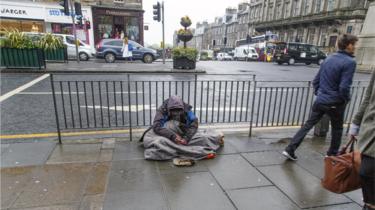
More should be done to find permanent accommodation for the homeless, a Holyrood committee has said.
The MSPs said Scotland should adopt a “housing first” scheme, similar to a strategy used successfully in Finland.
The Local Government and Communities Committee said the plan, which has been piloted in parts of Scotland, should go nationwide.
The housing minister has welcomed the committee’s report and said he will consider it carefully.
The model being proposed prioritises a homeless person’s unconditional right to a permanent home, without them having to go through several levels of temporary accommodation first.

Alcohol misuse

In Finland, the committee said, it has helped it become the only country in Europe where homelessness has declined.
“In many cases, it was found that for those who had problems with substance and alcohol misuse, their using reduced dramatically or stopped when they were given a secure tenancy and the right support,” the committee’s report states.
Convener Bob Dorris said: “After hearing directly from people who are homeless and those who have experienced sleeping on the streets or sofa-surfing, as well as service providers on the front-line, it was clear that further action is needed.
“That’s why our committee has recommended that the Scottish government learns from Finland and rolls out a Scottish version of Housing First, as a part of a potential solution to addressing homelessness.”
The latest figures show councils received more than 34,800 applications for homelessness assistance in the year to September 2017.
Housing Minister Kevin Stewart said: “Scotland has some of the strongest housing rights for homeless people, but as this report highlights, for some people – who may have more complex needs or be rough sleeping – simply providing accommodation is not always enough.”
  • Mr Stewart added: “The committee has highlighted a number of important areas for further work which I will consider fully and carefully.”

Homeless man saves life of pastor who took him in

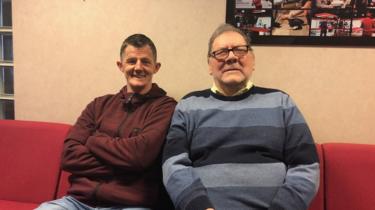
Melvin Boyd and Pastor John Greenaway
Image captionMelvin Boyd was homeless and Pastor John Greenaway took him in
There is a saying ‘one good turn deserves another’ – and in Pastor John Greenaway’s case, it has proved to be true.
He and his family gave shelter to a homeless man in 2016, after a chance meeting in a faith mission book shop.
Belfast man Melvin Boyd had fallen on hard times, but said once he met Pastor Greenaway’s family and began living with them, his life changed.
In turn, Mr Boyd changed a life when he offered the pastor, who needed an organ transplant, one of his kidneys.
The story was first reported by the Ulster Gazette.
In their first broadcast interview, Mr Boyd said living on the streets was difficult and that he could not trust anyone.
After meeting the pastor’s son, who brought him to the family home in 2016, the Greenaway family helped Mr Boyd to beat his alcohol addiction and start over.
Pastor Greenaway told BBC Radio Ulster’s Sunday News programme: “I believed Melvin needed a new start in life, we wanted to help him.
“He was different than other people. There are a lot of people who want help but don’t want to do anything about it themselves – but Melvin wanted to help himself.”
Since then, Mr Boyd has stayed at the family home every day and night, and has become another son to the pastor, and his wife, who already have four children.
Last March, he repaid the pastor for his generosity by donating one of his kidneys to him.
Pastor Greenaway had kidney failure and had been on dialysis for almost a year before the operation.

‘Meant to be’

He had three offers from other people to donate an organ, but none of them had worked out.
That’s when Mr Boyd stepped in. He said: “There was no agonising about it.”
“The biggest thing about it was God bringing us together. I believe it was meant to be.
“I tell other people it’s great that John got a new lease of life, but people don’t see that I got a new lease of life.
“John got a piece of me, but I got a family, a place to live, I got friends, people that care about me, I got way more than John got.”
Pastor Greenaway said: “How could I ever thank Melvin for what he’s done? Words couldn’t describe that.
“He said it wasn’t even a problem to him – and I believe God had already prepared Melvin’s heart to give me a kidney.
“He will always be a part of me now, and part of my family.”

May and Varadkar head to Belfast amid Stormont deal speculation

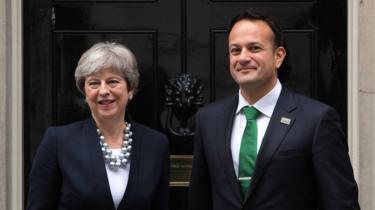
Theresa May and Leo VaradkarImage copyrightGETTY IMAGES
Theresa May and Irish Prime Minister Leo Varadkar are to visit Belfast later for talks with the Stormont parties.
It comes amid speculation the DUP and Sinn Féin are close to agreeing a deal to restore devolved government.
Several previous rounds of talks between the two parties have failed to break the deadlock.
Northern Ireland has been run by civil servants since the power-sharing executive made up of the DUP and Sinn Féin collapsed in January last year.
The late Martin McGuinness pulled Sinn Féin out of the coalition, objecting to the DUP’s handling of a scandal over green energy scheme.
Mrs May last visited Northern Ireland in May when she toured the Balmoral Show ahead of a snap general election.
Since then she has struck a parliamentary deal with the DUP and has faced criticism for adopting a hands-off approach to the deadlock at Stormont.
A Downing Street spokesman said the prime minister would remind the parties of the many pressing issues facing Northern Ireland and make clear her belief that a fully functioning executive is the best way to serve the interests of the whole community.
Mrs May is also expected to visit a major employer to underline the government’s commitment to the local economy.
A spokesman for Leo Varadkar said the taoiseach would use his visit to “assess the state of play” and “encourage the parties to reach an agreement”.
“The (Irish) government has consistently said that the restoration of the institutions is essential in the context of full implementation of the Good Friday Agreement, and that it will continue to work very closely with the British government to support the northern parties to achieve this outcome,” he said.
At the weekend, Sinn Féin’s vice president Michelle O’Neill predicted that the Stormont talks would conclude this week.
Her comment strengthened speculation that a compromise between her party and the DUP could soon be unveiled.
Design a site like this with WordPress.com
Get started