Media captionWreckage was strewn across a wide area
Speed sensors that were iced over may have caused a passenger jet to crash near Moscow, killing all 71 people on board, investigators say.
The faulty instruments could have given the pilots wrong speed data, Russia’s Interstate Aviation Committee said.
The Saratov Airlines jet went down minutes after take-off from Moscow’s Domodedovo airport on Sunday.
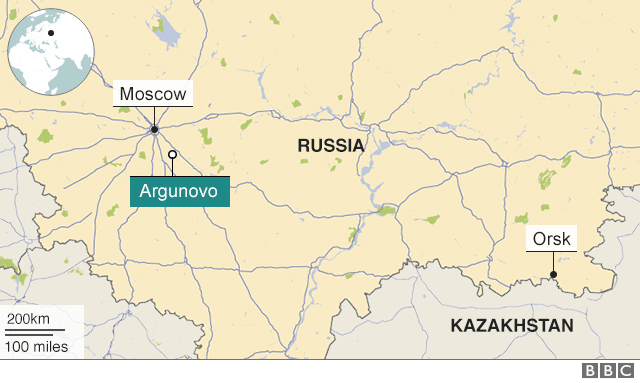
No emergency call came from the plane. The Antonov An-148 was en route to Orsk in the Ural mountains.
What are the investigators saying?
A preliminary analysis of the flight recorder indicated problems two and a half minutes after the plane took off, at an altitude of around 1,300m (4,265ft), the committee said.
At that moment, the instruments began displaying different speed readings. The pilots turned off the autopilot and the plane began to lose speed until it crashed.
Contact was lost at 14:27 (11:27 GMT), minutes after the plane took off.
The plane crashed near the village of Argunovo, about 80km (50 miles) south-east of Moscow.
Russia’s Investigative Committee said the plane was intact when it crashed and that the explosion happened on impact. Flight-tracking site Flightradar24 said it then descended at the rate of 1,000m (3,300ft) per minute.
Wreckage and body parts are strewn over a large area – about 30 hectares (74 acres) – and more than 700 people are involved in the search operation, struggling through deep snow.
The emergencies ministry is collecting DNA samples from victims’ relatives as part of the identification process of the 65 passengers, including a child and two teenagers, and six crew.
The jet, which was reportedly seven years old, was being flown by an experienced pilot who had 5,000 hours of flying time.
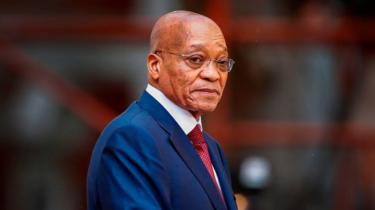
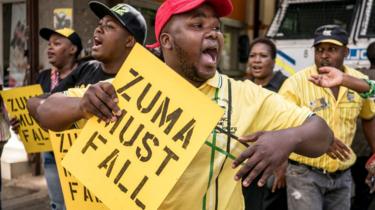
Image copyrightAFPImage captionJacob Zuma has been president of South Africa since 2009
South Africa’s governing African National Congress (ANC) has formally asked President Jacob Zuma to resign for the sake of the country.
But despite the ANC’s top leadership deciding to “recall” him “urgently”, the scandal-hit Mr Zuma was still in power on Tuesday.
He is expected to respond to the request on Wednesday, an official said.
He had already told them he was willing to stand down in the next three to six months, the official added.
Mr Zuma, who has been in power since 2009, has been dogged by corruption allegations.
But he has so far resisted increasing pressure to quit since December, when Cyril Ramaphosa replaced him as leader of the ANC.
‘No guillotine’
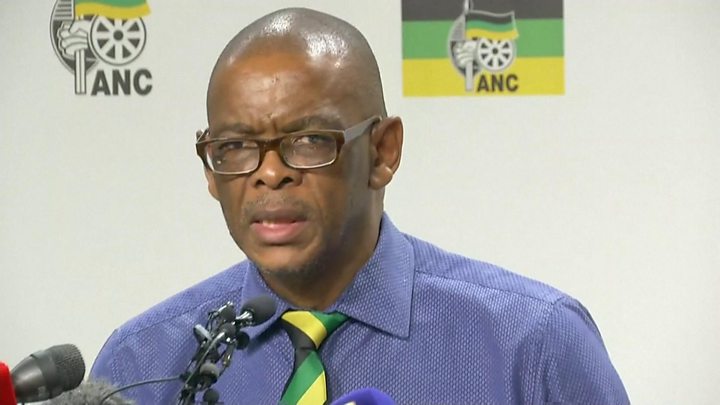
Ace Magashule, the ANC’s secretary-general, told reporters the party’s National Executive Committee (NEC) decided the removal should be “treated with urgency”.
“The NEC has noted South Africa is going through a period of uncertainty and anxiety as a result of unresolved matter of transition,” he said.
Mr Magashule said the country needed to build on the “renewed hope” felt after the election of Mr Ramaphosa as ANC leader.
“It is obvious we want Comrade Ramaphosa to come in as the president of South Africa,” he added.
Media captionANC seeks ‘amicable’ Zuma resolution
He said the president was expected to respond to the NEC’s decision on Wednesday, although they had given him no deadline.
“When we recall our deployee, we expect our deployee to do as asked,” Mr Magashule said.
ANC NEC member Lindiwe Zulu told the OP’S NEWS the party will give Mr Zuma an opportunity to respond to its request.
“There is no guillotine here. He is a comrade,” she said.
South Africa’s opposition parties have already expressed reservations about the ANC’s confidence that Mr Zuma will step down.
“The only way to remove Jacob Zuma as president of our country is for parliament to do so through a motion of no confidence,” the Democratic Alliance (DA) tweeted.
It called the motion brought by another opposition party, the Economic Freedom Fighters (EFF), to be brought forward from 22 February so parliament can “remove Jacob Zuma”.
Analysis: Going, going…. gone?
By OP’S NEWS
Although it was hardly an unexpected announcement, there was still a sense of disbelief among the waiting journalists as Mr Magashule announced the NEC has asked Mr Zuma to step down.
After such a long wait, we had half expected the ANC to say they had given him more time, or reached some sort of compromise.
But surprise gave way to bemusement as Mr Magashule side-stepped repeated requests for clarification on what the ANC will do if President Zuma refuses to resign by Wednesday.
No deadline has been given, and as for whether the ANC would support an opposition motion of no confidence, Mr Magashule said he did not know.
But when asked what Mr Zuma said when he was told of the NEC’s decision, Mr Magashule choice of words were pointed: the president had said he was “a disciplined member of the ANC”.
It was a term repeated several times during the briefing.
In other words, as far as the ANC is concerned – it is done.
What has Mr Zuma done wrong?
Mr Zuma’s presidency has been overshadowed by allegations of corruption which he has always vehemently denied.
In 2016, South Africa’s highest court ruled that Mr Zuma had violated the constitution when he failed to repay government money spent on his private home.
Last year the Supreme Court of Appeal ruled that he must face 18 counts of corruption, fraud, racketeering and money-laundering relating to a 1999 arms deal.
Media captionThe Zuma presidency: Scandals and successes
More recently, Mr Zuma’s links to the wealthy India-born Gupta family, who are alleged to have influenced the government, have caused his popularity to plummet.
Both Mr Zuma and the Guptas deny the allegations.
Is Mr Zuma legally obliged to quit?
The formal request to resign is difficult to resist, but he is not legally obliged to do so and could technically carry on as president despite losing the support of his party.
However, should he continue to defy his party, he would be expected to face a confidence vote in parliament. Mr Zuma has survived other such votes but he is not expected to pull it off again. A confidence vote would be considered a humiliating process for him and the party.
In terms of the constitution, it will require the entire cabinet to resign and for the parliamentary speaker to serve as acting president until MPs elect a new president.
Image copyrightGETTY IMAGESImage captionMany in the ANC hope that removing Mr Zuma will boost the party’s chances in the 2019 elections
It wants to project a fresh image for next year’s general election. Having served two terms in office (South African presidents are elected by parliament), Mr Zuma cannot legally return to power in any case.
On Monday, opposition parties called for an early election.
“Anyone from the ANC that wants to lead this country, must get their mandate from the people of South Africa,” DA leader Mmusi Maimane told reporters.
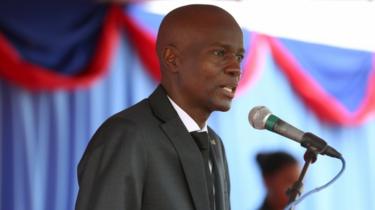
Image copyrightREUTERSImage captionPresident Jovenel Moise condemned “sexual predator” staff exploiting “needy people in their moment of greatest vulnerability”
The president of Haiti has strongly condemned UK charity Oxfam, after it emerged its staff hired prostitutes while delivering aid in 2011.
The charity was accused by a UK newspaper of concealing the actions.
In a Twitter post, Jovenel Moise condemned the actions as an “extremely serious violation of human dignity”.
A senior government source in Haiti confirmed to the OP’S NEWS that an investigation will now be launched into foreign aid agencies operating there.
What is the charity accused of?
One of the UK’s biggest charities, Oxfam, was the subject of a report in the Times newspaper last week.
The article accused the charity of concealing the findings of a 2011 inquiry into claims senior aid workers, including Haiti’s national director, paid local prostitutes for sex.
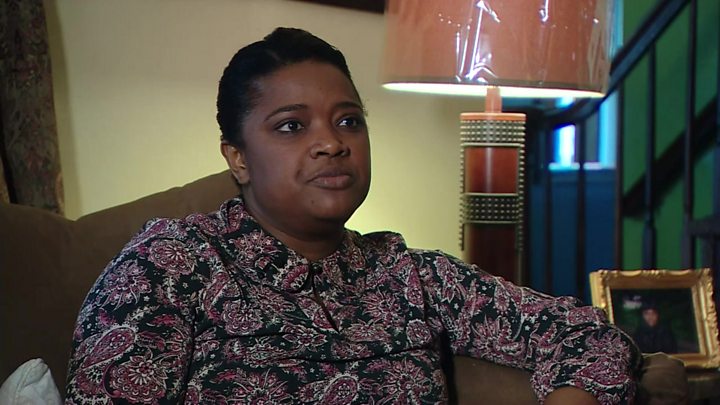
Media captionFormer Oxfam employee Widza Bryant: “I was told by many locals there were… sexual relations”
Oxfam were in the country offering relief following a devastating 7.0 magnitude earthquake that killed more than 200,000 people in 2010.
“There is nothing more outrageous and dishonest than a sexual predator who uses his position as part of the humanitarian response to a natural disaster to exploit needy people in their moment of greatest vulnerability,” he said.
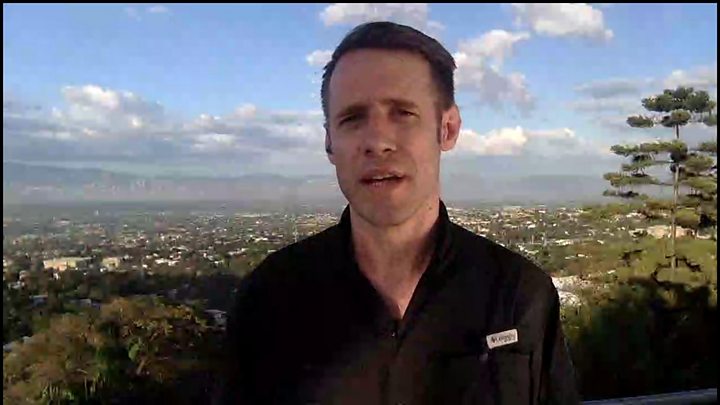
Media captionBBC world affairs correspondent Will Grant says locals believe aid agencies have enjoyed “impunity”
“What happened with Oxfam in Haiti is an extremely serious violation of human dignity,” he said in another tweet.
Several former members of Oxfam’s local staff have said they tried to raise concerns but felt their complaints were ignored.
Several Haitian NGOs have said that the problems with Oxfam in Haiti were institutional.
Pierre Esperance, the head of Haiti’s National Human Rights Defence Network, told the BBC: “Oxfam, after the earthquake, became like a factory.”
“A big organisation with a lot of people with bad management. People who don’t have any skill regarding development, with a lot of money, and this is the result.”
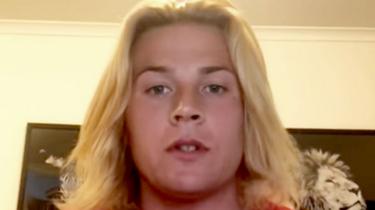
Image copyrightHANNAH MOUNCEY YOUTUBEImage captionPrior to her transition, Hannah Mouncey was a member of the Australian men’s handball team
The Australian Football League (AFL) has agreed for the first time to allow a transgender footballer to play women’s football at state level.
Hannah Mouncey, 28, who previously played at local level in Canberra, hopes to take to the field in the state of Victoria this season.
The AFL said it wanted everyone to be able to play Australian rules football.
Before she began her gender transition in 2015, Mouncey played for the Australian men’s handball team.
The AFL’s decision means she can now partake in any of its affiliated state leagues during the 2018 season.
In a statement uploaded to Twitter, she thanked her supporters – but not the AFL itself.
“I think it would be highly inappropriate for me to thank the AFL for allowing me to do something open to every other Australian, which the science and research has supported all along,” she said.
Australian rules football consists of two teams of 18 players and takes place on an oval-shaped field.
Players can position themselves anywhere on the field and may use any part of their bodies to move the ball, making it a more physical-contact sport, more similar to rugby.
Australian rules football has the highest spectator attendance and highest number of television viewers of all sports in Australia.
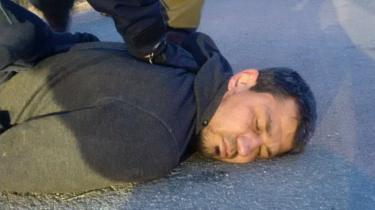
Image copyrightREUTERSImage captionPolice took this photo of Rakhmat Akilov when he was arrested
An Uzbek man on trial in Sweden has pleaded guilty to carrying out a lorry attack which killed five people in Stockholm last April.
Rakhmat Akilov, 39, admitted driving at high speed down a pedestrian street, the country’s worst terrorist attack.
His asylum claim had been rejected in 2016. He had expressed sympathy for the Islamic State (IS) group.
He appeared in an underground Stockholm court, in handcuffs and clad in a green prison uniform.
Survivors and relatives of victims can watch a live stream screened next door.
Rakhmat Akilov fled the scene after crashing the stolen beer lorry and was arrested several hours later on the edge of Stockholm. He confessed during police interrogation.
Under Swedish laws on terrorism, prosecutors must prove that he intended to harm the state. IS did not say it was behind the attack.
Jihadists had used vehicles in previous attacks – in the French city of Nice and in Berlin in 2016 and on Westminster Bridge in London in 2017.
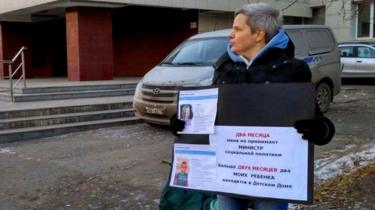
Image copyrightYULIA SAVINOVSKIKHImage captionLast year Yulia Savinovskikh went on a temporary hunger strike in her legal battle
A Russian court has ruled that a woman who chose to have her breasts removed cannot look after two adopted boys since she identifies herself as a man.
The long-running case of Yulia Savinovskikh affects two mentally disabled boys who were removed from her care last August.
She appealed against the decision, but now the court in Yekaterinburg, in Russia’s Urals region, has said they must remain with the social services.
She insists that she is still a woman.
She says she underwent surgery because her large breasts were ruining her health.
Before her breasts were removed, she wrote a transgender blog but insists it was just fiction and a way for her to prepare psychologically for the surgery.
A higher court had asked the district court in Yekaterinburg to reconsider its ruling against Mrs Savinovskikh, but now the district court has stuck by its original decision.
The ruling, quoted by human rights lawyer Pavel Chikov, said “Yu. V. Savinovskikh’s self-identification as a male and her marriage to a man, her striving to fulfil a male role in society, essentially contradict our country’s family law principles, and the traditions and mentality of our society”.
Her lawyer Alexei Bushmakov says another appeal will be submitted, and he is prepared to take the case to the European Court of Human Rights if necessary.
Image copyrightYULIA SAVINOVSKIKHImage captionMrs Savinovskikh’s little boys were taken back to an orphanage last year
In a Facebook post, Mrs Savinovskikh acknowledges that she had her breasts removed and wrote a blog imagining herself to be a man.
Then she says: “I had no plans to have penis construction surgery, nor hormone therapy, nor change the gender in my passport.”
“My children call me mum,” she said.
There is widespread prejudice in Russia towards transgender and gay people. There is a ban on gay information campaigns aimed at children – including sexual health campaigns.
Mrs Savinovskikh is the birth mother of three older children. Her husband is backing her drive to get back the boys, who had been living with the family for several years.
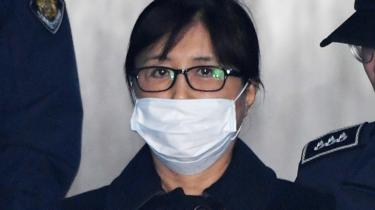
Image copyrightAFPImage captionChoi previously said she had committed an “unpardonable crime”
A South Korean court has sentenced Choi Soon-sil, an old friend of former president Park Geun-hye, to 20 years in jail for corruption, influence-peddling and abuse of power.
Choi was at the heart of a massive corruption scandal that brought down Ms Park, the country’s first female president.
She had acted for years as an adviser to Ms Park, who has been impeached and is also on trial.
Ms Park has denied any wrongdoing.
The Seoul Central District Court also fined Choi 18bn Korean won ($16.6m; £12m).
Choi was accused of using her presidential connections to pressure conglomerates – including electronics giant Samsung and retail group Lotte – for millions of dollars in donations to two non-profit foundations she controlled.
“The guilt of the accused is heavy,” the judge said, adding that she had capitalised on her “long private ties” with Ms Park to solicit bribes and had “meddled in state affairs widely”.
Choi is already serving a three year jail term for a separate charge of corruption, after she was found guilty of using her position to solicit favours for her daughter.
Ms Park meanwhile has been accused of colluding with Choi. She is currently in custody, with a verdict expected later this year.
The court has also found Shin Dong-bin, chairman of the Lotte Group, guilty of offering bribes to Choi, and jailed him for two years and six months.
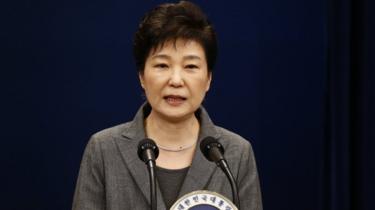
Image copyrightAFPImage captionPark Geun-hye has been charged with bribery and abusing state power
Ms Park was officially ousted in March 2017, following parliament’s decision to impeach her. She was the country’s first democratically-elected president to be forced from office.
After losing her presidential immunity, she was charged with bribery, abusing state power and leaking state secrets, and her trial began in May.
When the allegations first emerged they prompted numerous mass protests in South Korea, many of which called for Ms Park to step down.
The controversy has fuelled discontent against the government, the political elite and family-run conglomerates which dominate South Korea’s economy.
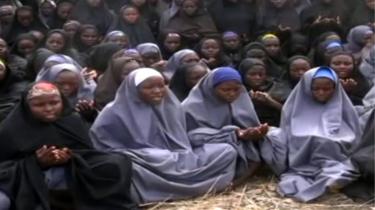
Image copyrightAFPImage captionThe girls were taken from a school in Chibok, Borno state, in April 2014
A Nigerian court has jailed a Boko Haram militant involved in the 2014 kidnapping of the Chibok girls.
Haruna Yahaya, 35, is the first member of the group to be sentenced for playing a part in the mass abduction.
The former trader, who confessed to his role in taking the 276 schoolgirls, argued he was made to act under duress.
But judges sitting at a military court in Kanji, who are hearing the cases of more than 1,000 suspected Boko Haram militants, dismissed his excuse.
They were also unmoved by his pleas for leniency on the grounds of his disability, which has left him with a paralysed arm and deformed leg, OP’S NEWS Ishaq Khalid reports.
Justice ministry spokesman Salihu Isah confirmed to news agency AFP that Yahaya was given a 15-year jail sentence.
Yahaya, who came from Potiskum, in Yobe state, north-east Nigeria, was captured by a vigilante group called Civilian JTF in 2015 – a year after the girls were snatched from Government Girls Secondary School in Borno state.
Of the 276 girls taken in April 2014, 112 are still in captivity.
This week, some 700 of the suspected militants are due to appear before the judges in Kanji, according to sources at the court.
On Monday, 20 were found guilty of crimes associated with Boko Haram, while two were discharged for lack of evidence.
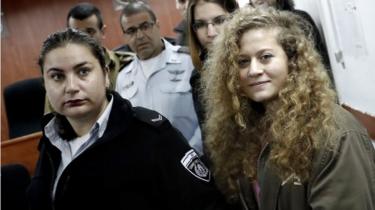
A Palestinian teenage girl filmed slapping an Israeli soldier has gone on trial in an Israeli military court in a case which has split public opinion.
Ahed Tamimi, 17, is charged with 12 offences, including assaulting security forces and incitement to violence.
If convicted, she could face a lengthy jail term.
For Palestinians, Ms Tamimi is a symbol of resistance to Israeli occupation, but many Israelis regard her as a violent troublemaker seeking publicity.
Amnesty International has called for Ahed Tamimi’s release, accusing Israel of discriminatory treatment of Palestinian children.
Viral video
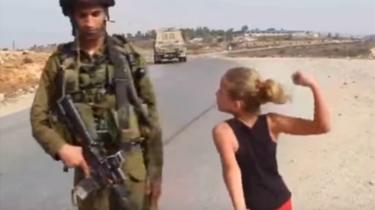
Ahed Tamimi, then 16, was filmed by her mother, Nariman, shouting at and shoving two soldiers in the driveway of her family home in Nabi Saleh in the occupied West Bank on 15 December 2017.
In the footage she kicks one soldier and slaps his face, and threatens to punch the other.
Image copyrightAFPImage captionThe trial is being held behind closed doors at Ofer military court
Ahed Tamimi was arrested in a night-time raid days later. Her mother has also been charged with incitement on social media and assault, and her cousin, Nour, who participated in the incident, has been charged with assault.
The case sparked an outpouring of deeply opposing views between Israelis and Palestinians.
Following the incident, Israel’s Education Minister Naftali Bennett said Ahed and Nour Tamimi deserved to “finish their lives in prison”.
Many Israelis say Ahed Tamimi has long been exploited by her family, who they accuse of using her to try to provoke Israeli soldiers on film.
Image copyrightYOUTUBEImage captionAhed Tamimi was seen threatening to punch a soldier when she was aged 11
For Palestinians, Ahed Tamimi has become a national icon for what they see as acts of bravery in standing up to armed soldiers on occupied land.
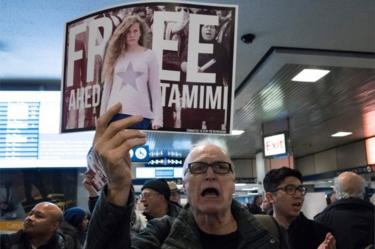
Her face has appeared on street murals and posters, while an online petition organised by her father calling for her release has gathered 1.7m signatures.
Image copyrightAFPImage captionPalestinian supporters around the world have called for Tamimi’s release
The Israeli military said it had dispatched the soldiers to the Tamimis’ home where Palestinian youths had been throwing stones at troops sent to quell violent protests in the village.
Human rights groups say Ahed Tamimi’s case highlights what they say is Israel’s harsh treatment of Palestinian minors.
About 1,400 Palestinian minors have been prosecuted in special juvenile military courts over the past three years, the IDF says.



 OP's News