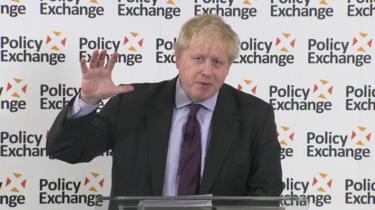
Boris Johnson: Brexit is a reason for hope not fear

Boris Johnson
Boris Johnson is attempting to reassure voters who are angry and alienated by Brexit that the UK’s split from the EU is a cause for “hope not fear”.
The foreign secretary is using a speech to try to build bridges with those who voted to remain in the EU, saying their belief in European solidarity is based on “noble sentiments”.
“It is not good enough to say ‘you lost, get over it’,” he will say.
But he will also insist those who want to stop Brexit cannot prevail.
In the speech in London, he will say that that holding another referendum on the UK’s membership of the EU would be a “disastrous mistake that would lead to permanent and ineradicable feelings of betrayal”.
He will also say the UK must regain control of its regulations and tariffs – and that continuing to be bound by EU directives would be “intolerable” and “undemocratic”.
Labour MP Chuka Umunna, who supports the Open Britain campaign “against a hard, destructive Brexit”, said Mr Johnson was “totally unqualified to preach about the perils of fear and betrayal”, having “engaged in disgraceful scaremongering” during the EU referendum.
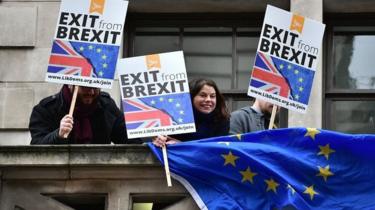
Lib Dem protestersImage copyrightPA
Image captionEx-Lib Dem MP Sarah Olney joined a protest outside Mr Johnson’s speech
Mr Johnson’s speech is the first in a series of speeches by Theresa May and her ministers on the “road to Brexit”.
The prime minister is expected to address the UK’s future relations with the EU in a speech in Munich on Saturday, the day after she holds talks with German Chancellor Angela Merkel in Berlin.
In what has been billed as his most substantial speech on Brexit for more than a year, Mr Johnson – a leading figure in the Leave campaign during the 2016 referendum – is expected to make the “liberal case” for the UK’s withdrawal and argue it will allow the country to play a greater role on the world stage.
Excerpts released in advance of the speech suggest Mr Johnson will appeal to both sides to move on from the divisions of the past and unite around a shared goal of seeing an outward-facing and global nation succeed.
“We must accept that many [Remainers] are actuated by entirely noble sentiments, a real sense of solidarity with our European neighbours and a desire for the UK to succeed,” he will say.
“If we are to carry this project through to national success – as we must – then we must also reach out to those who still have anxieties.
“I want to try to anatomise at least some of those fears and to show to the best of my ability that they are unfounded and that the very opposite is usually true: that Brexit is not grounds for fear but hope.”
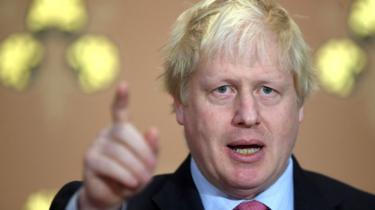
Boris JohnsonImage copyrightPA

Analysis

by  OP’S NEWS 

It’s a conciliatory tone we haven’t heard much from Cabinet ministers.
And it’s a recognition of the deep divisions Brexit has opened. Boris Johnson will use his Valentine’s Day speech to try to woo despairing Remain supporters who think Brexit is a disaster.
There’s no crumb of comfort for people who would like to see Brexit stopped. Mr Johnson insists it must happen.
Furthermore, he will say the UK must take back full control of regulations and tariff schedules.
It’s no secret the Cabinet is divided on how closely the UK and EU should align after Brexit.
Last month the Chancellor Philip Hammond said he wanted the two economies to move apart only “very modestly”, a statement that enraged Brexiteers.
Boris Johnson’s speech shows again that he is not in the close alignment camp.
His speech was approved by Number 10 and will be scoured for clues about how Theresa May’s divided Cabinet plans to find common ground around the deal it hopes to strike with the EU.

Continuing the conciliatory tone in an article for the Sun, Mr Johnson writes: “To those who worry that we are somehow going to become more insular, the exact reverse is true.
“We do not want to haul up the drawbridge and we certainly don’t want to deter the international students who make a huge contribution to our economy.”
Mr Johnson is expected to focus on the potential for extending British influence in the rest of the world, exploiting Britain’s traditional strengths in trade, diplomacy, soft power, development and human rights.
The foreign secretary, who returned on Tuesday from a visit to Myanmar and Thailand, told the Guardian last month he would like to see the UK “taking advantage” of the people’s decision to leave to get the “best economic result from that decision, and do the best we can do”.
Ministers are under pressure to spell out how they can square their desire for frictionless trade after Brexit with the UK’s exit from the single market and customs union, which EU officials say will create trade barriers.
By leaving the customs union, the UK has said it will have freedom to negotiate trade deals of its own during the transition period, while reducing tariffs on imports from developing countries.
Mr Johnson is one of the most enthusiastic Brexiteers in the cabinet but his decision to deliver a Brexit speech shortly before Mrs May’s Florence speech in October, plus his recent plea for more money to be spent on the NHS after Brexit, has seen him face criticism from some in his party.
Tory MEP Daniel Hannan, who was a founding member of Vote Leave, said Mr Johnson was aiming his speech at those who felt “alienated and angry” about the referendum result.
“We want to try and carry as many people with us,” he told BBC Radio 4’s Today programme.
“It was a narrow outcome, it was a 48/52 vote that means we should try and find a consensus that both sides can at least live with.”
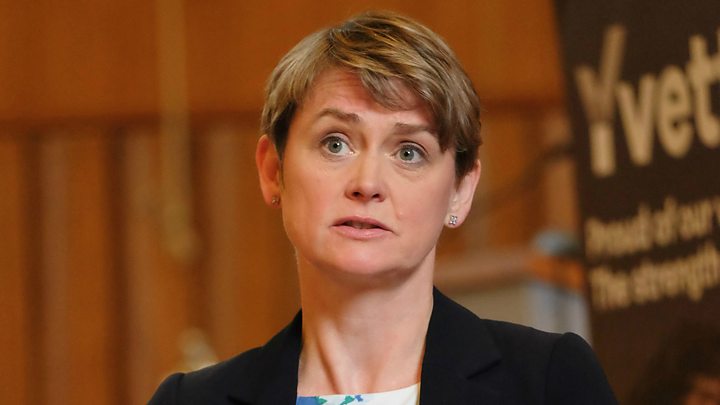
Media captionLabour’s Yvette Cooper referred to a cross party committee when asked about her party’s plan on Brexit on Today
Meanwhile, a report by the Commons Home Affairs Committee has said the UK is ill-equipped to cope with changes to the immigration system after Brexit due to a lack of resources.
The government has yet to set out in detail what type of immigration model it wants to set up outside the EU, when it will no longer be bound by freedom of movement rules from Brussels.
The MPs warned this posed an “immense bureaucratic challenge” and that “rushed and under-resourced changes will put border security at risk”.
Labour MP Yvette Cooper, who chairs the committee, said the government was “kicking the can down the road” with a promised white paper setting out plans yet to be published.
She said this was putting border staff in an “impossible position”.
The Home Office said preparations for Brexit were well advanced and more staff were being recruited.
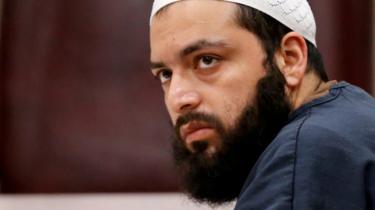
Ahmad Khan Rahimi sentenced to life in prison for NY bombing

Ahmad Khan RahimiImage copyrightREUTERS
Image captionRahimi at a hearing in May 2017
The man who set off pressure cooker bombs in New York and New Jersey in 2016 has been sentenced to life.
Ahmad Khan Rahimi injured 30 people when he set off a bomb in Manhattan.
The Afghan-born US citizen, who was captured after a shootout with police, told the court that he does not “harbour hate for anyone”.
According to federal prosecutors, the 30-year-old has not shown remorse and has attempted to radicalise others in prison to support Islamic State.
Rahimi, known to many as the “Chelsea bomber”, was convicted in 2017 October on all eight counts brought against him in court, including the use of a weapon of mass destruction and bombing a public place.
New York Governor Andrew Cuomo said in a statement “justice has been served”.
“The sentencing will not heal the pain and suffering that this despicable act caused New Yorkers, but it sends a strong message that we will not tolerate those who seek to sow fear, hate and violence.”
On the morning of 17 September 2016, Rahimi left his home in Elizabeth, New Jersey with several homemade bombs.
The first bombing location he chose was along the route of a Marine Corps charity race in Seaside Heights, New Jersey.
Due to a last-minute change to the race schedule, no people were injured when that pipe bomb detonated.
Investigators said Rahimi then planted two bombs in the Chelsea neighbourhood of New York but one failed to detonate.
Other remaining devices were left in a discarded rucksack in a rubbish bin at a train station in New Jersey on the day after the weekend attack.
The trial in October heard that Rahimi’s fingerprints and DNA were discovered on both bombs laid in New York City.
Jurors also saw CCTV footage of the suspect walking the Manhattan streets to where the bombs were placed.
Rahimi was arrested two days after the attacks following a shootout with police in New Jersey, which left him in hospital for weeks.
Media captionFootage from WABC shows the suspect being loaded into an ambulance after his arrest
Prosecutors said that Rahimi had started following terrorist propaganda in 2012 and had tried to influence his fellow inmates since arriving in prison, including sharing speeches from deceased al-Qaeda leaders Anwar al-Awlaki and Osama bin Laden.
Rahimi had pledged silence at his trial in a letter to an “associate” in Germany, prosecutors said, but he did not follow through with this.
“Their hands are already drenched with Muslim Blood and how will they understand our struggle,” Rahimi wrote, according to prosecutors.
His father, who reported him to the FBI two years ago, called him a terrorist in an interview with NBC.
The sentence of multiple life terms means Rahimi is likely to never leave jail.

Syria conflict: ‘Russians killed’ in US air strikes

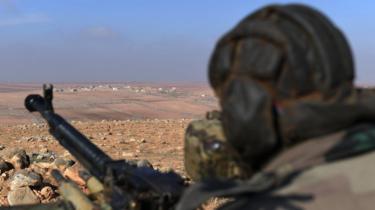
A soldier. File photoImage copyrightAFP
At least two Russian fighters were killed in US air strikes in north-eastern Syria last week, their associates have told the OP’S NEWS.
The fighters are said to have been hired by private military firms backing Syrian pro-government troops.
Russia has not confirmed the deaths that were first reported by US media, saying such reports should not be treated as “primary sources”.
The US says it killed more than 100 fighters in the strikes last week.

What happened in the US strikes?

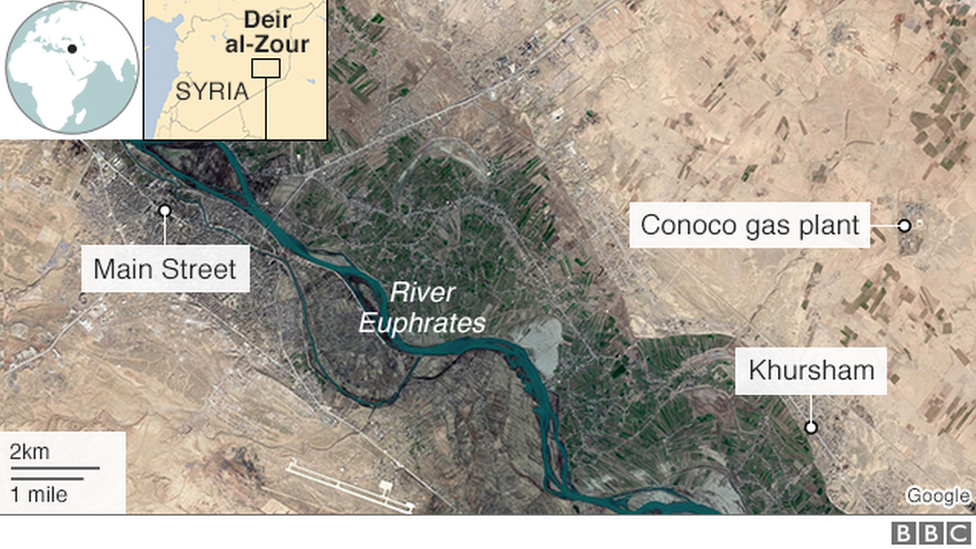
The US officials say hundreds of fighters aligned with Syrian President Bashar al-Assad attacked positions of the US-backed Syrian Democratic Forces (SDF) near the town of Khursham in the Deir al-Zour province.
They crossed the Euphrates River, shelling an SDF base, where American advisers were present.
The US responded with air and artillery strikes on 7 February, thwarting the attack and forcing the pro-Assad fighters to retreat, the US officials say.
Map of Syria
Meanwhile, the Russian defence ministry says that Syrian government-backed troops were hit as they launched an operation against fighters from the Islamic State (IS) group.
Russia also denies having personnel in the area.
The strikes happened in the Middle Euphrates Valley, which serves as an informal demarcation line in eastern Syria. The government controls the western side and the SDF the east.
The two sides have clashed over the past year while trying to drive Islamic State (IS) militants from their last major stronghold in the country.

What about the Russian mercenaries?

“If Russians are among those who were killed, this would mark the first time a US air strike has killed Russians in Syria,” CBS News’ David Martin reported.
More details about those killed in the strikes began to emerge in the following days.
On Tuesday, associates of two Russian fighters confirmed to the BBC that they were killed on 7 February.
The associates named the dead as Vladimir Loginov, a Cossack from Russia’s western Kaliningrad region, and Kirill Ananyev, a radical nationalist from Moscow.
Some media reports suggest that dozens of Russian fighters could have been killed.
They are believed to have been employed by a private Russian company called Wagner. The firm has not commented on the reports.

How did the Kremlin react?

On Tuesday, Russian President Vladimir Putin’s spokesman declined to provide any details.
“We have details of servicemen of the Russian armed forces, who are taking part in the Russian military operation in support of the Syrian army,” Dmitry Peskov said.
“We don’t have information about other Russians who might be in Syria. I advise you to contact the defence ministry.”
And responding to a further OP’S  question, the spokesman said: ” And, of course, you have to realise that many countries of the world have quite large numbers of our compatriots – of Russians – and, of course, it’s difficult to have detailed data.
“We recommend not treating media reports as primary sources,” he added.

What are Russia’s casualties in the Syrian conflict?

Moscow launched a military operation in Syria in support of President Assad on 30 September 2015.
More than 45 Russian military personnel have been officially confirmed killed since then.
An unknown number of private military contractors have also died.
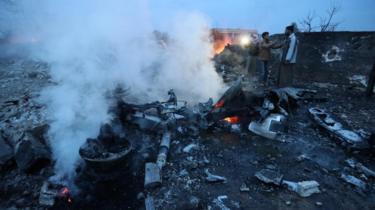
smoking wreckage of a downed Sukhoi-25 jet in SaraqebImage copyrightEPA
Image captionImages said to show the wreckage of Russia’s Sukhoi-25 aircraft in Syria
Earlier this month, a Russian Sukhoi-25 ground-attack aircraft was shot down in a rebel-held area in Syria’s north-western province of Idlib.
The pilot survived the initial attack and ejected, but died in a ground fight, detonating his grenade to avoid being captured.

Israel PM Netanyahu faces corruption charges

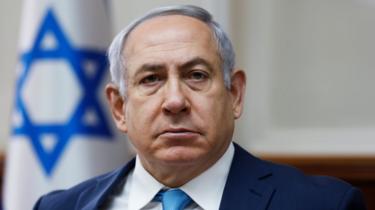
Israeli Prime Minister Benjamin Netanyahu attends a cabinet meeting at the Prime Minister's office in Jerusalem on February 11, 2018.Image copyrightAFP/GETTY IMAGES
Image captionMr Netanyahu is reported to have met investigators several times
Israeli police say that Prime Minister Benjamin Netanyahu should be charged over alleged bribery cases.
A police statement said there was enough evidence to indict Mr Netanyahu for bribery, fraud and breach of trust in two separate cases.
Speaking on Israeli television, Mr Netanyahu said the allegations were baseless and that he would continue as prime minister.
The allegations, he said, “will end with nothing”.

What are the allegations?

One case centres on an allegation that Mr Netanyahu asked the publisher of an Israeli newspaper, Yediot Aharonot, for positive coverage in exchange for help in reining in a rival publication.
Police said the editor of Yediot Aharonot, Arnon Mozes, should also face charges.
The second allegation centres on a claim that Mr Netanyahu, Israeli prime minister since 2009, received gifts worth at least a million shekels ($283,000; £204,000) from Hollywood mogul Arnon Milchan and other supporters.
The Jerusalem Post says the gifts included champagne and cigars, and were given in exchange for help getting Mr Milchan a US visa.
Mr Milchan, the producer of films including Fight Club, Gone Girl and The Revenant, should face bribery charges, police said.
Actor Leonardo DiCaprio, winner of Best Actor for 'The Revenant', Producer Arnon Milchan and Director Steven SpielbergImage copyrightGETTY IMAGES
Image captionArnon Milchan (centre) with Leonardo DiCaprio and Steven Spielberg
The police statement said that Mr Netanyahu, after receiving gifts, pushed for the Milchan Law, which would have ensured that Israelis who return to live in Israel from abroad were exempt from paying taxes for 10 years.
The proposal was eventually blocked by the finance ministry.
Police say Mr Netanyahu is also suspected of fraud and breach of trust in a case involving Australian billionaire James Packer.
Israel’s Channel 10 reported in December that Mr Packer told investigators he gave the prime minister and his wife Sara gifts.
Israeli media say Mr Netanyahu has been questioned by investigators at least seven times.

What happens now?

A final decision on whether Mr Netanyahu should face charges will come down to the attorney general’s office. A decision could take months to reach.
Justice Minister Ayelet Shaked said any prime minister who has been charged should not be obliged to resign.
Speaking on Israeli television, Mr Netanyahu said he would continue in his role.
The next legislative elections are scheduled for November 2019. Mr Netanyahu heads a fragile coalition, but on television, he appeared confident the allegations would not spur new elections.

How has Mr Netanyahu responded?

“Over the years, I have been the subject of at least 15 enquiries and investigations,” he said in his TV address.
“Some have ended with thunderous police recommendations like those of tonight. All of those attempts resulted in nothing, and this time again they will come to nothing.”
The 68-year-old is in his second stint as prime minister, and has served in the role for a total of 12 years.
He has faced a number of allegations in his time in office.
After his first term as prime minister two decades ago, police recommended that he and Sara face criminal charges for keeping official gifts that should have been handed over to the state. The charges were later dropped.
In July 2015, the couple were accused of charging the government for the services of a contractor who did private work for them. The charges were later dropped.

Firms on Caribbean island chain own 23,000 UK properties

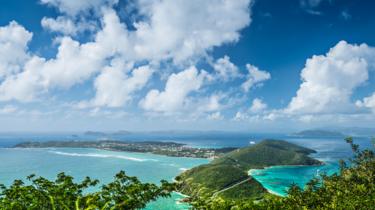
Virgin Gorda in the British Virgin Islands of the Carribean.Image copyrightALAMY
Image captionThe British Virgin Islands are home to 11,700 firms owning UK property
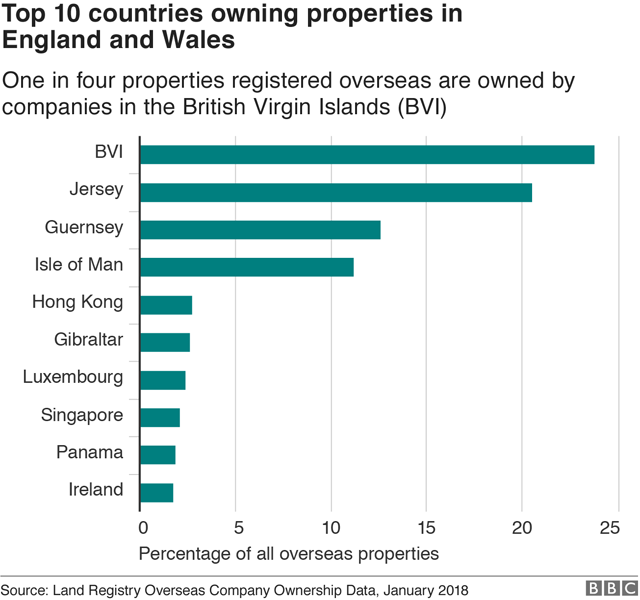
A quarter of property in England and Wales owned by overseas firms is held by entities registered in the British Virgin Islands, OP’S NEWS analysis has found.
The Caribbean archipelago is the official home of companies that own 23,000 properties – more than any other country.
They are owned by 11,700 firms registered in the overseas territory.
The finding emerged from OP’S NEWS  analysis conducted of Land Registry data on overseas property ownership.
The research found there are around 97,000 properties in England and Wales held by overseas firms, as of January 2018.
It adds to concerns that companies registered in British-controlled tax havens have been used to avoid tax.

Where are the properties owned by overseas companies located?

Close behind the British Virgin Islands (BVI), which has a population of just 30,600, are Jersey, Guernsey and the Isle of Man.
Of the properties owned by overseas companies in England and Wales, two thirds are registered to firms in the British Virgin Islands, Jersey, Guernsey and the Isle of Man.
Many foreign UK property owners are also officially headquartered in Hong Kong, Panama and Ireland.
The analysis provides a new picture of ownership of property by overseas companies in England and Wales following a decision last November to make the database public and free to access.
It found:
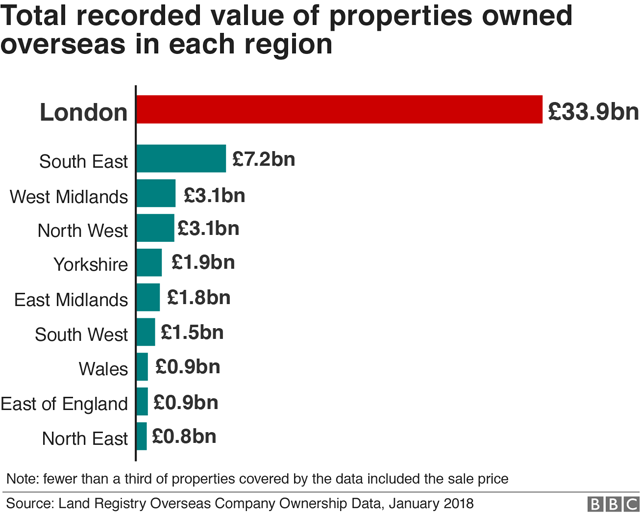
  • Close to half (44%) of all properties owned by overseas companies in England and Wales are located in London
  • More than one in ten (11,500) properties owned by overseas companies in England and Wales are located in the City of Westminster
  • More than 6,000 properties owned by foreign companies are in the London borough of Kensington and Chelsea.
Chart showing overseas ownership by country
The government of the British Virgin Islands said it was incorrect to label the country as a tax haven.
It said that there were many practical reasons why UK properties might be owned by companies incorporated in the BVI.
It argued that BVI companies can bring together multiple investors and owners, which is useful for big commercial property deals that have investors in more than one country.
The BVI also said that it shared “necessary information” including ownership details with relevant authorities.
Regional breakdown of properties owned overseas
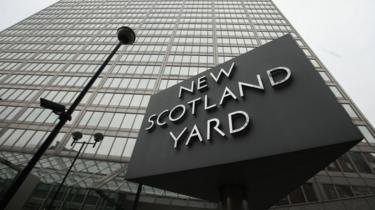
Among those entries in the database that disclosed a price, the most expensive was the former headquarters of the Metropolitan Police, New Scotland Yard, at 8-10 Broadway.
The site was purchased by the Abu Dhabi Financial Group in 2014 for £370m from the Mayor of London’s office. But it is officially owned by a Jersey-based company called BL Development.
The 1967 multi-storey block has now been demolished to make way for “a luxury collection of one to five bedroom apartments across six architecturally striking towers”. These range in price from £1.5m to more than £10m.
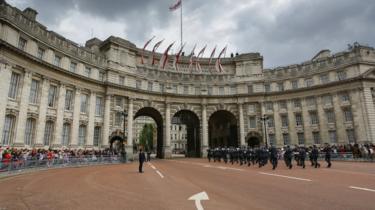
The leasehold of Admiralty Arch, the former government building off Trafalgar Square that straddles one end of The Mall, was sold to hotel developer Prime Investments for £141m. It is registered to a Guernsey-based entity, Admiralty Arch Hotels Ltd.
New Scotland YardImage copyrightGETTY IMAGES
Image captionNew Scotland Yard
While the most expensive buildings are commercial properties such as hotels and office blocks in prime central London locations, many are residential properties rather than business premises.
Take Green Street, London W1 – a residential street of highly-desirable four-storey redbrick Victorian terraces, fronted by smart wrought-iron railings.
Walking east to west you’ll pass one terraced residence owned, according to the latest records, from the Turks and Caicos Islands by a company called Alliance Property Ltd. Next door is another residence owned by Lily Holding & Finance Inc, registered in BVI.
In all, 15 properties on the street are owned by companies registered in the British Virgin Islands, four in Jersey and one in the Isle of Man. Others have owners in Italy, Hong Kong and Singapore.
The Admiralty Arch in LondonImage copyrightGETTY IMAGES
Image captionThe leasehold of Admiralty Arch is registered to a Guernsey-based entity
Accountants used to recommend using an offshore company to overseas buyers of property in the UK as a means of avoiding inheritance tax when the owner passed away.
“Until April 2017, if you weren’t resident in the UK and held a residential property via a company it was not counted as being an asset for UK-based inheritance tax purposes. So having a property through an offshore company meant you escaped inheritance tax,” says Mark Giddens, of accountants and consultants UHY Hacker Young.
However, since last year the government announced plans to close the loophole, dramatically reducing the attractions of offshore ownership of residential property.
Offshore jurisdictions such as BVI still offer buyers who wish to keep their names out of the public realm greater privacy than they would enjoy if they purchased their property as an individual.
While most tax havens have agreed to take part in automatic information exchange, allowing law enforcement agencies to discover the individuals who enjoy beneficial ownership of an offshore company, their names will not appear in the published data.
In contrast to residential properties owned by individuals, the Land Registry does not always release “price paid” figures for properties owned by companies.
Adding up the 27,835 properties whose most recent sale prices we know, the price paid was just over £55 billion.
Notes: The OP’S NEWS  analysed the January 2018 Overseas Companies Ownership data made public by the HM Land Registry. The data is accurate up to January 2018 and contains around 97,000 title records of freehold and leasehold property in England and Wales, registered to companies incorporated outside the UK. The map shows 71,000 of the 97,000 addresses. Those missing had incomplete data.

Slovakia launches ‘love bank’ for Valentine’s Day romance

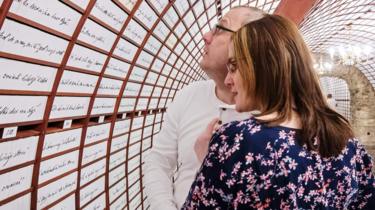
A couple in Banska Stiavnica 'love bank'Image copyrightAFP
Image captionThe love bank’s tiny drawers store romantic keepsakes
A picturesque old town in Slovakia is running a “love bank” where couples can go on Valentine’s Day to deposit small, cherished tokens of their love.
The lovers’ vault, containing 100,000 tiny drawers, is in Banska Stiavnica’s House of Marina, a museum celebrating the world’s longest love poem.
Marina, published in 1846, is a 2,910-line poem by Andrej Sladkovic. He loved Maria Pischlova, but her parents made her marry a gingerbread maker.
The poem is studied in Slovak schools.
Andrej and Maria fell in love in Banska Stiavnica when they were just 14.
He was a poor student who tutored her at her parents’ comfortable home. She became his muse but, sadly for him, her parents preferred the wealthy gingerbread maker.
Andrej later became a priest and married the daughter of a clerk, two years after Marina’s wedding.
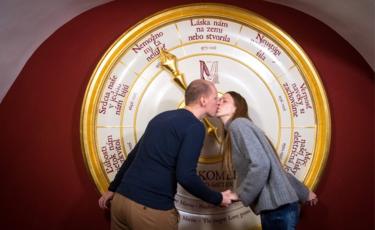
Love-o-meter at House of MarinaImage copyrightAFP
Image captionThe “love-o-meter”: verses from Marina indicate the strength of love
The medieval town is a protected Unesco heritage site and the poem Marina is regarded as a Slovak national treasure. Some lovers might even consider Banska Stiavnica a romantic rival to Paris or Verona.
Its website promises visitors: “you will get goose bumps when you witness Sladkovic professing his love for Marina”.
Among the interactive exhibits is a “love-o-meter”, purporting to measure the strength of a couple’s love.
Among the many lines in Sladkovic’s poem are these:
“I can abandon your lips,
I can abandon the chance to marry you
I can kill myself:
But I can’t stop loving you!”

Thomas Cook resumes flights to Tunisia

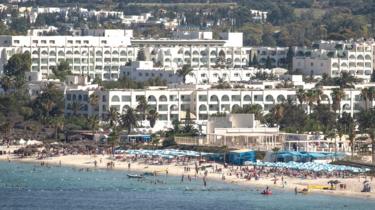
Beach scene, Sousse, TunisiaImage copyrightGETTY IMAGES
Tour operator Thomas Cook is resuming flights to Tunisia for UK customers for the first time since the 2015 beach attack in which 30 Britons were killed.
Three full planes, each carrying 220 passengers, are flying to Enfidha this week after the Foreign and Commonwealth Office eased its travel advice.
The FCO had advised against all but essential visits following the attack.
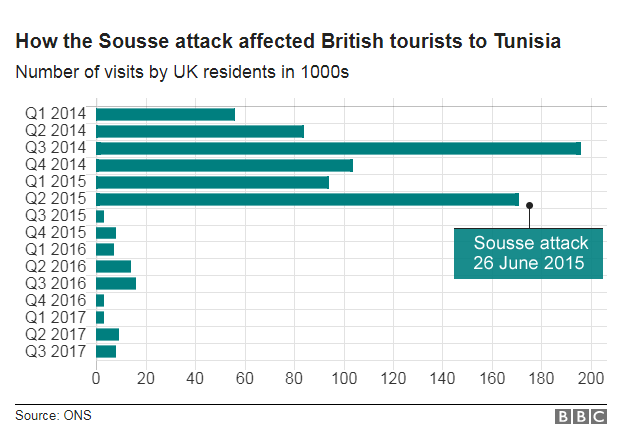
Security has been increased at hotels and resorts in the country, which attracted 440,000 UK visitors in 2014.
Thomas Cook has continued to fly German, French and Belgian holidaymakers to Tunisia, because their governments did not issue similar advice.

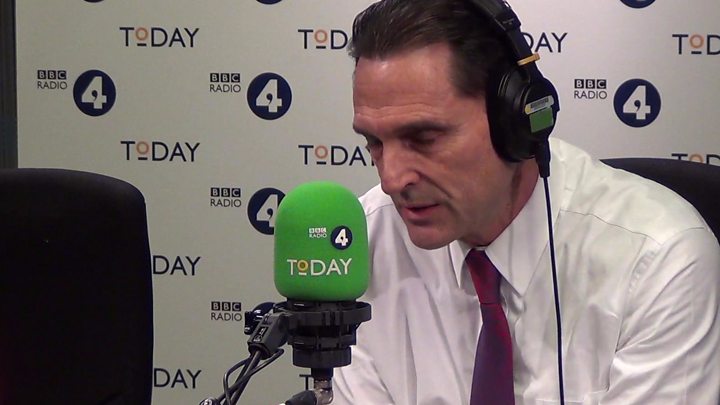
Media captionThomas Cook chief Peter Fankhauser says it is doing all it can to help UK customers feel safe in Tunisia.
The company has been receiving feedback from these tourists and chief executive Peter Fankhauser told BBC Radio 4’s Today programme they said the security guards were “very friendly and nice to them”.
He added: “They don’t feel they are in a military zone and feel they can enjoy their holidays.”
Mr Fankhauser said his company was doing its best to make UK tourists feel at ease in Tunisia.
“It would be foolish of me to say that any destination is 100% safe, but what I can say is that we have taken time to make the decision to prepare our programme.
“It’s a modest programme and we offer 10 hotels which are really up to our standards.
“We are confident we have done everything we can do as a tour operator to make the holiday experience as nice as possible for our customers.
“People who were boarding our first flight said they were excited to go back.”
A Thomas Cook spokesman told the OP’S NEWS  they had not needed to discount prices to attract people to visit Tunisia.
“We’ve always had good demand for these holidays and Tunisia has always been a good value destination,” he said.
He added that the company had so far taken 15,000 UK bookings up to the end of the summer.
An Easter holiday for a family of four to a Thomas Cook own brand hotel in Tunisia would cost about £2,000, roughly £250 per person cheaper than a similar holiday in Gran Canaria in Spain.
Bar chart of UK visitors to Tunisia
Flights from Birmingham and Manchester were leaving on Tuesday, with another going out from Gatwick on Wednesday.
The company will continue to fly out three planes each week until April, when a flight from Glasgow will be added.
By May, there will be six flights each week, with Stansted and Newcastle added to the list of departure points.

Media captionTunisian police raid suspected terrorist hideout
Britain’s ambassador to Tunis, Louise de Sousa, said when asked if Tunisia is safe enough now for British tourists to return: “No country can be 100% safe [from terrorism].
“But we are satisfied that Tunisia has made substantial progress and I would encourage Britons to come and visit. This country has so much to offer.”
However, Alan Bowen, an adviser for the African Travel and Tourism Association, told the BBC he wouldn’t visit the country.
“It’s a very brave move starting these flights,” he said. “Tunisia has improved security, but the country borders Libya, which is in a state of chaos.
“I wouldn’t go because I don’t think it’s safe.”

Virgin Atlantic in Palestinian couscous row

Tail of Virgin aeroplane displaying the Virgin logoImage copyrightGETTY IMAGES
Virgin Atlantic has found itself at the centre of a social media row after removing the word Palestinian from an in-flight meal following complaints.
A couscous-style salad had been described on a menu as “inspired by the flavours of Palestine”.
Pro-Israel social media users called for a boycott of the airline, saying it pandered to Palestinian supporters.
However, the airline’s decision to remove the terms sparked a fresh backlash from Palestinian sympathisers.
Twitter user @Thedaniwilliams highlighted the controversial dish after taking a flight in December 2017.
Sharing a photo of the menu, they suggested the airline had been influenced by the pro-Palestinian campaign group Boycott, Divestment and Sanction (BDS).
David Garnelas shared a similar photograph of the menu to the Israel Advocacy Movement Facebook group suggesting “Israelis must boycott Virgin”.
Presentational white space
After a number of social media users expressed their dissatisfaction with the naming of the dish, the airline apologised for causing offence and changed it to ‘couscous salad’.
However, the dish’s name change has caused fresh controversy after some on social media questioned the airline’s decision to remove the word Palestinian.
A number of Twitter user expressed their anger at the change of wording, and asked why Virgin Atlantic thought the word Palestinian was offensive.
Twitter user Anna Habibti said anti-Palestinian groups were trying to “wipe Palestine off the menu” as well as “off the map”.
Presentational white space
Geographically, the term Palestine is used by many pro-Palestinians to refer to the Israeli-occupied West Bank, East Jerusalem and Gaza and, at most, Israel itself – something supporters of Israel regard as delegitimising the state.
Virgin Atlantic told the OP’S NEWS  the airline chose to name the dish Palestinian couscous salad as the main ingredient, maftoul, is not widely-known.
Maftoul is often referred to as Palestinian couscous and is made from sun-dried bugler wheat.
A spokesperson for the airline said: “We’d like to reassure all customers that our sole intention was to bring new flavours onboard, and never to cause offence through the naming or renaming of the dish.”
It is not the first time the classification of food has been a source on tension between Israeli and Palestinian groups.
In 2015, UK supermarket Waitrose came under fire from Palestinian supporters for publishing a Taste of Israel magazine which included a number traditionally Arabic dishes.

Pakistan gang ‘stole spinal fluid from women’

File photo: Doctor holding medical injection syringeImage copyrightGETTY IMAGES
Image captionSpinal fluid is obtained by inserting a needle into the spinal canal
Pakistani police have arrested four people accused of stealing spinal fluid from women.
The suspects told women they had to provide blood samples to qualify for financial assistance from the Punjab government, police told OP’S NEWS  Urdu.
However, they extracted spinal fluid instead, and attempted to sell it on the black market, police added.
The gang is thought to have stolen spinal fluid from over 12 women, including a teenager.
The authorities became aware of the scheme after a man noticed that his 17-year-old daughter felt weak after the procedure.
“It appears the gang has been active in the Hafizabad area for some time,” regional police officer Ashfaq Ahmed Khan told BBC Urdu’s Shahzad Malik.
One member “went around posing as an employee of the District Headquarters Hospital, telling his victims they would need to provide blood samples in order to qualify for the Punjab government’s dowry fund”.
“But instead of taking them to the hospital to obtain their ‘blood samples’, he would take them to the house of a female member of the gang to perform the procedure,” Mr Khan added.
Spinal fluid is a transparent liquid found around the brain and spinal cord that protects them from shock and injury. It can be extracted by inserting a needle into the spinal canal, and is normally only taken to help diagnose disease in an individual.
It is not clear how the spinal fluid would have been used on the black market. The health ministry has set up a committee to investigate the case, while the four gang members are currently in police custody.
It is not the first time a health-related scam has made headlines in Pakistan.
Pakistan made the sale of human organs illegal in 2010, but experts say the country is still a hot spot for organ trafficking.

Jeff Sessions ‘Anglo-American heritage’ remark sparks race row

SessionsImage copyrightGETTY IMAGES
Image captionMr Session’s career has nearly been derailed in past by accusations of racism
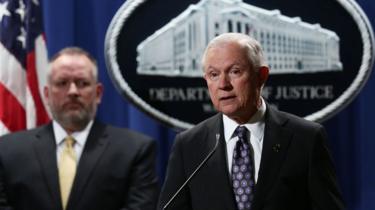
US Attorney General Jeff Sessions has been accused of racism after praising “the Anglo-American heritage” of US policing.
A prominent civil rights group and a US senator accused America’s top prosecutor of “dog whistle” politics.
But a Justice Department spokesman said a Google search reveals it to be a common legal term.
Mr Sessions, a former Alabama senator, has previously rejected suggestions he harbours racist sentiments.
His remarks on Monday to the National Sheriffs’ Association in Washington prompted a swift backlash.
Bernice King – the daughter of civil rights icon Martin Luther King Jr – quoted a letter her mother had written in 1986 opposing Mr Sessions’ failed appointment to become a federal judge.
The NAACP, one of the nation’s largest civil rights groups, said in a statement: “His decision to link the term Sheriff to some part ‘of the Anglo-American heritage of law enforcement,’ is an unfortunate yet consistent aspect of the language coming out of the Department of Justice under his tenure and in the opinion of the NAACP, qualifies as the latest example of dog whistle politics.”
Mr Sessions’ speech transcript, which was released to the media ahead of his remarks, did not contain the phrase “Anglo-American heritage”.

Media captionAt his confirmation hearing last year, Jeff Sessions said the caricature of him as a Southern racist was “painful”
He had instead been expected to say: “The sheriff is a critical part of our legal heritage.”
Instead he said: “The sheriff is a critical part of the Anglo-American heritage of law enforcement.”
Actress Alyssa Milano called for Mr Sessions to be “fired immediately”.
Rapper Talib Kweli tweeted that the attorney general “took his klan hood all the way off” in a reference to the Ku Klux Klan.
But some pointed out that Mr Sessions may have been referring to the system of common law, which experts agree originated in England.
Several Supreme Court decisions have referenced the phrase, including opinions written by both conservative and liberal judges.
The word “sheriff” is derived from an Old English word dating as far back as 1034, before the Norman Conquest, according to Oxford English Dictionary.
“As most law students learn in the first week of their first year, Anglo-American law – also known as the common law – is a shared legal heritage between England and America,” Ian Prior, a spokesman for the Justice Department, said in a statement.
“The sheriff is unique to that shared legal heritage. Before reporters sloppily imply nefarious meaning behind the term, we would suggest that they read any number of the Supreme Court opinions that use the term,” he added.
“Or they could simply put ‘Anglo-American law’ into Google.”
Design a site like this with WordPress.com
Get started