France’s Macron threatens Syria strikes if chemical weapon use proven

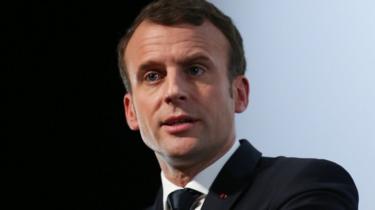
French President Emmanuel MacronImage copyrightAFP
Image captionMr Macron reiterated his stance that chemical weapons use in Syria is a “red line”
French President Emmanuel Macron has threatened to “strike” Syria if proof emerges that its government is using chemical weapons against civilians.
“We will strike the place where these launches are made or where they are organised,” he told reporters.
But Mr Macron said French intelligence had so far found no evidence that banned chemical weapons had been used.
His comments follow numerous reports of suspected chlorine attacks in Syria since early January.
Nine people were treated for breathing difficulties after a bomb believed to be filled with the chemical was dropped on a rebel-held town earlier this month.
The Syrian opposition said a government helicopter dropped the bomb on Saraqeb, in the north-western province of Idlib.
The Syrian government strongly denies using chemical weapons and says it does not target civilians.
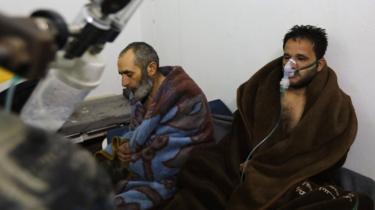
Syrians reportedly suffering from breathing difficulties following a Syrian government air strikes on the town of Saraqeb rest at a field hospital (4 February 2018)Image copyrightAFP
Image captionPeople brought to hospitals in Saraqeb earlier this month suffered breathing problems, a doctor said
Speaking in Paris on Tuesday, Mr Macron reaffirmed his stance that the use of chemical weapons represented a “red line” for his government.
“Today, our agencies, our armed forces, have not established that chemical weapons, as set out in treaties, have been used against the civilian population,” he said.
“As soon as such proof is established, I will do what I said. The priority is the fight against the terrorists.”
Last year, Mr Macron told Russian President Vladimir Putin that the use of chemical weapons in Syria would be a “red line” that would draw an “immediate response” from France.
In a telephone call with Mr Putin on Friday, Mr Macron expressed concern over “indications suggesting the possible use of chlorine” against civilians in recent weeks, his office said.
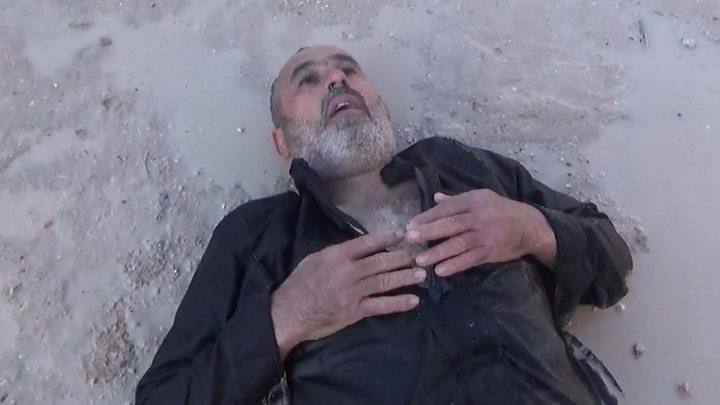
Media captionAbo Rabeea says he is still suffering from the chemical weapons strike in Khan Sheikhoun (May 2017)
Following a deadly chemical weapons attack near Damascus in 2013, the United States and Russia agreed a plan with Syria to remove and destroy its chemical weapons stockpile within a year.
But the Organisation for the Prohibition of Chemical Weapons (OPCW) has continued to document the use of toxic chemicals in the country.
In April 2017, an attack on the rebel-held town of Khan Sheikhoun left hundreds of people suffering from symptoms consistent with use of a nerve agent.
Witnesses said they saw warplanes attack the town and shocking footage showed victims – many of them children – convulsing and foaming at the mouth. More than 80 people were killed.
Syrian President Bashar al-Assad and his ally Russia have repeatedly said the incident was fabricated
They say an air strike hit a rebel depot full of chemical munitions.
Venezuelan leader Nicolás Maduro ‘not welcome’ in Peru

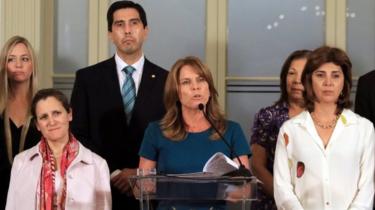
Peruvian Foreign Minister Cayetana Aljowin (C) speaks during a press conference in Lima, Peru, 13 February 2018,Image copyrightEPA
Image captionPeruvian Foreign Minister Cayetana Aljowin said President Maduro would not be welcome at the Summit of the Americas
Peruvian President Pedro Pablo Kuczynski has said that Venezuela’s leader Nicolás Maduro is “not welcome” at a regional summit to be held in the Peruvian capital, Lima, in April.
Just last week, Venezuelan officials had confirmed that President Maduro would attend the summit.
Mr Kuczynski cited “a rupture in the democratic order” in Venezuela as the reason for uninviting Mr Maduro.
Peru’s leader also called on Venezuela to release all political prisoners.

‘Not free and fair’

Mr Kuczynski made the announcement after a meeting of the Lima Group, which is made up of more than a dozen Western Hemisphere countries concerned about the political and economic crisis in Venezuela.
On Wednesday, the group, which includes regional powers Argentina, Brazil, Canada and Mexico, criticised the decision by the Venezuelan government to hold a snap presidential election on 22 April without reaching an agreement with the opposition coalition.
In a joint statement, 14 countries from the Lima Group said the elections would not be free and fair as long as Venezuela’s opposition was not allowed to fully participate.

Reduced field of candidates

A number of leading opposition politicians cannot run for office because they have either been barred, are under house arrest, or have left the country after being threatened with legal action.
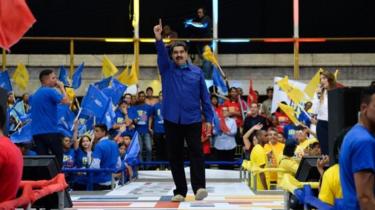
Venezuelan President Nicolas Maduro gestures during a rally in Caracas on February 7, 2018Image copyrightAFP
Image captionNicolás Maduro is standing for another six-year term in office
They include Henrique Capriles, who twice ran for president, Leopoldo López, who led anti-government protests in 2014 and was jailed for inciting violence, a charge he denies, and the former mayor of Caracas, Antonio Ledezma.
The Lima group urged Venezuela to present a new electoral calendar.
The presidential polls were originally due to be held in December but were brought forward by the constituent assembly, a body made up exclusively of government supporters.
Colombia, a member of the Lima Group, has already said it would not recognise the result of the Venezuelan elections unless there were sufficient guarantees for a transparent electoral process.
While the Lima Group stopped short of saying it would not recognise the result, Peru’s decision to uninvite President Maduro from the Summit of the Americas is likely to anger the Venezuelan government, especially as it had already confirmed his attendance.

Denmark’s Prince Henrik, who wanted to be king, dies at 83

Media captionQueen Margrethe married Prince Henrik in 1967
Prince Henrik of Denmark, the husband of Queen Margrethe who was famous for his public unhappiness at never being named king, has died at the age of 83.
The controversial French-born prince had been diagnosed with dementia last year and was admitted to hospital in January with a lung infection.
His flamboyant style was both loved and criticised by Danes.
Frustrated with his royal title, he announced in 2017 that he did not want to be buried next to his wife.
The 77-year-old queen accepted her husband’s decision, the Royal House said at the time, breaking a 459-year-old tradition of burying royal spouses together.
The prince died “peacefully in his sleep” at the Fredensborg Castle, north of Copenhagen, with Queen Margrethe and their two sons – Crown Prince Frederick and Prince Joachim – at his side.
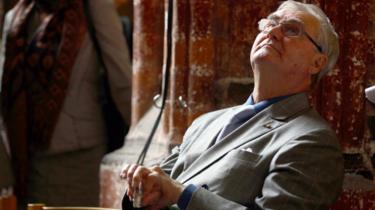
Prince Consort of Denmark looks on during his visit to the Nikolai Church in Wismar, Germany, 17 June 2012Image copyrightEPA
Image captionUnhappy with his royal status, Prince Henrik was a controversial figure in Denmark
Born Henri Marie Jean André de Laborde de Monpezat on 11 June 1934, Prince Henrik married the then-crown princess Margrethe in 1967. He met her while stationed in London as a diplomat.
When she became queen in 1972, he was named Prince Consort – as in most monarchies, a princess traditionally becomes queen when her husband takes the throne, but a man does not become king if his wife becomes queen.
But over the years, the prince – who had changed his name to Henrik as a mark of respect – made no secret about his unhappiness at being denied the title of king. And many Danes disliked him for that, seeing it as a sign of an arrogant man hungry for recognition.

‘Degraded and humiliated’

Prince Henrik did not take it lightly when, in 2002, Crown Prince Frederik was chosen to represent Queen Margrethe at a New Year’s ceremony, instead of him.
Saying he had to “reflect on life”, he dramatically fled to his chateau in southern France, where he would stay for three weeks.
To a Danish tabloid, he said the royal staff had shunted him into “third place in the royal hierarchy”. He had felt “pushed aside, degraded and humiliated”, and his self-respect was being destroyed.
“For many years I have been Denmark’s number two,” he said then. “I’ve been satisfied with that role, but I don’t want to be relegated to number three.”
Image copyrightPA
Image captionQueen Margrethe and Prince Henrik at the Anglo-Danish Society’s Jubilee dinner in London in 1974
While the episode became a source of joke for many, it was a turning point for others, especially many young Danes, who thought his manner represented a break from the norms of cultural uniformity in Danish society.
Prince Henrik was also known for his thick French accent and his love of food, wine and poetry, and several of his cookbooks and collections of poems have been published.
In 2016, he retired from official duties, renouncing the title of Prince Consort. In the time since, he was often in France at his private vineyard.
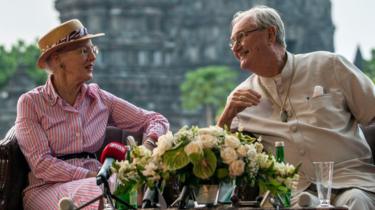
In this file photo taken on October 24, 2015 Danish Queen Margrethe II (L) and Prince Consort Henrik (R) visit the Prambanan temple during their visit to YogyakartaImage copyrightAFP
Image captionPrince Henrik and Queen Margrethe pictured in Yogyakarta, Indonesia, in 2015
Prince Henrik did not want a state funeral, the Royal House said, and the ceremony would be small and private.
Following his wish, he will be cremated, with half his ashes spread over Danish seas and the other half buried in the royal private garden at the Fredensborg Castle.
Queen Margrethe already has a specially-built sarcophagus in a cathedral west of Copenhagen where the remains of Danish royals are buried.
Reacting to the death, Danish Prime Minister Lars Lokke Rasmussen said Prince Henrik had “represented Denmark magnificently”.

World chess body accounts closed over president’s Syria sanctions

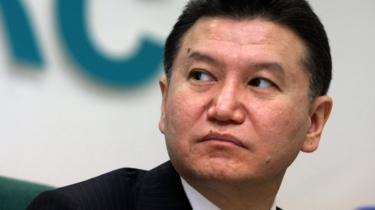
World Chess Federation President Kirsan IlyumzhinovImage copyrightAFP
Image captionWorld Chess Federation President Kirsan Ilyumzhinov has been under US sanctions since 2015
The World Chess Federation (Fide) says its Swiss bank accounts have been closed after its president was accused of facilitating transactions on behalf of the Syrian government.
Russian millionaire Kirsan Ilyumzhinov was added to a US Treasury Department sanctions list in 2015 for his alleged dealings with the Assad government.
He denies wrongdoing, and stepped back from Fide to try to resolve the issue.
But Fide says Swiss bank UBS closed its accounts as he is still sanctioned.
Lausanne-based Fide’s treasurer, Adrian Siegel, acknowledged the issue was “a serious problem” that had “severely damaged” the organisation’s business dealings.
“After more than two years of Kirsan Ilyumzhinow’s [sic] presence on the sanction list… UBS has announced that they will immediately close our accounts,” he said in a statement.
“It was only a question of time until we face this serious problem,” Mr Siegel said, adding that the anticipated “some problems” while they looked for a “new bank connection”.
In a separate statement, Mr Ilymuzhinov’s defence team said he denied the “outrageous and false allegations made against him” and said he was “not aware that Fide’s bank accounts have been frozen by UBS”.
Mr Ilyumzhinov, who is still listed as Fide’s president on its website, said the allegations were part of a “smear campaign related to a power struggle” at the organisation ahead of the elections later this year.
In March 2017, Mr Ilyumzhinov was quoted by Russia’s Tass news agency as saying that FIDE, the governing body of international chess competitions, was trying to “oust” him after a statement on it’s website said he had resigned.
“I think there is an American hand in this, and I think it’s called a set-up.”

Eccentric character

Mr Ilyumzhinov, a former businessman and politician, has long been viewed as an eccentric character.
He was president of the Republic of Kalmykia, a small Buddhist region of Russia which lies on the shores of the Caspian Sea, for 17 years.
As head of the World Chess Federation since 1995, he has spent tens of millions of dollars turning the impoverished republic into a mecca for chess players – building an entire village to host international tournaments.
The list also includes a middleman accused of facilitating Syrian government oil purchases from the Islamic State group.
The World Chess Federation says Mr Ilyumzhinov “has unsuccessfully tried several times to be removed from this list and at the moment there is no hint at all that there will be a change”.
They say he told the organisation on “various occasions that he will be removed from the sanction list in the very near future”, which is why the bank allowed their accounts to remain open until now.
UBS told The Telegraph newspaper that it does not comment “on whether individuals or organizations are clients of UBS”, but that it follows “all laws and regulations that are applicable to us”.

Winter Olympics 2018: South Korea to pay for North’s delegation

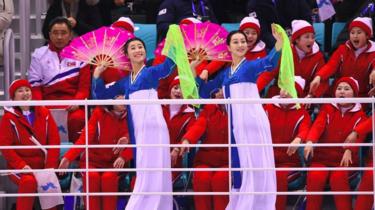
North Korean cheerleaders have been the centre of attraction at the Pyeongchang OlympicsImage copyrightGETTY IMAGES
Image captionExpensive guests: North Korean cheerleaders at the Pyeongchang Olympics
South Korea has approved a plan to pay the cost of hosting North Korea’s delegation to the Winter Olympics.
The 2.86bn Korean won ($2.64m, £1.9m) will come from the South’s unification ministry budget.
A group of more than 400 North Korean supporters and performers have travelled to Pyeongchang, South Korea for the Games.
Their visit was controversial with some South Koreans who questioned the North’s commitment to reconciliation.
North Korea’s attendance at the Winter Olympics came as a surprise development after a year of increasing tensions between Pyongyang and the international community over its nuclear ambitions and repeated missile tests.
The South Korean government invited the North to join the Games saying it was a chance at dialogue and rolling back tensions. But some South Koreans have staged protests warning it would merely give the North a platform for propaganda.
The decision to integrate North Koreans into the South’s women’s ice hockey team was particularly controversial as it meant that some of the South’s athletes would get less of a chance to play.

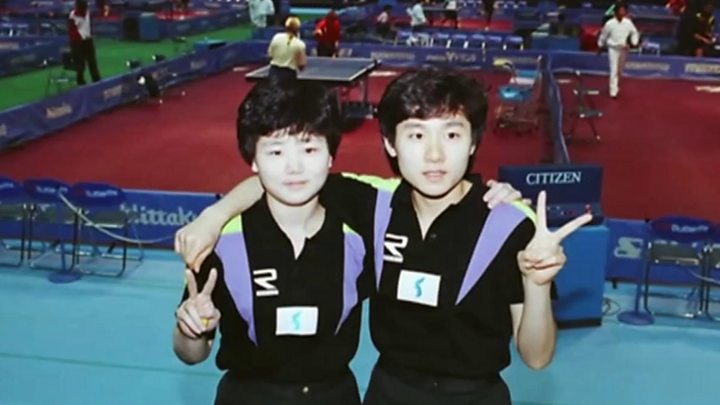
Media captionThe Korean ping pong pals separated forever
The government funds will pay mainly for accommodation and food for Pyongyang’s cheer squad, an orchestra sent to perform on the sidelines of the Games as well as a group of taekwondo performers and supporting personnel.
According to the Reuters news agency, the majority of the visiting North Koreans stayed at luxury hotels in Seoul and near the Olympic venues in Pyeongchang.
The cost of hosting 22 North Korean athletes will be paid by International Olympic Committee while the cost for the North’s high level political delegation visiting the South will be paid separately from the government budget, said unification ministry spokesperson Baik Tae-hyun Reuters reports.
On Wednesday, South Korea’s Unification Minister Cho Myoung-gyon described the North’s participation in the Games as a milestone that opened up the door to build peace on the Korean Peninsula, according to South Korea’s Yonhap news agency.
He added that Seoul was keeping in mind the UN sanctions against the North designed to prevent any foreign support of its weapons programme, according to Yonhap.
South Korea also paid the expenses when more than 600 North Koreans visited the South during the 2002 Asian Games in Busan.

Israel PM Netanyahu defiant in face of bribery allegations

Media captionThe attorney general’s office could take months to decide if Netanyahu should face charges
Israel’s PM Benjamin Netanyahu has hit back after police said he should be charged over alleged bribery cases.
He called the allegations “baseless” and said he was certain the truth would be revealed.
His government is “stable”, he has insisted, despite criticism from a key member of his coalition.
A police statement on Tuesday said there was enough evidence to indict him for bribery, fraud and breach of trust in two separate cases.
The attorney general’s office could take months to decide if Mr Netanyahu should face charges.
The 68-year-old is in his second stint as prime minister, and has served in the role for a total of 12 years.

What was Netanyahu’s response?

Benjamin Netanyahu gave a defiant rebuttal of the allegations in a statement broadcast on Israeli television on Tuesday evening.
“Over the years, I have been the subject of at least 15 inquiries and investigations,” he said.
“Some have ended with thunderous police recommendations like those of tonight. All of those attempts resulted in nothing, and this time again they will come to nothing.”
At an event in Tel Aviv on Wednesday, he repeated his insistence that he would not be resigning.
“I can reassure you that the coalition is stable,” he said. “Neither me nor anyone else has plans for elections. We’re going to continue to work together for the good of Israeli citizens until the end of the term.”

What are the allegations?

One case centres on an allegation that Mr Netanyahu asked the publisher of an Israeli newspaper, Yediot Aharonot, for positive coverage in exchange for help in reining in a rival publication.
Police said the editor of Yediot Aharonot, Arnon Mozes, should also face charges.
Mr Mozes’s lawyer said he had a good defence, and that after further examination of the evidence “it will become clear that he did not commit a criminal offence”.
The second allegation centres on a claim that Mr Netanyahu received gifts worth at least a million shekels ($283,000; £204,000) from Hollywood mogul Arnon Milchan and other supporters.
The Jerusalem Post says the gifts included champagne and cigars, and were given in exchange for help getting Mr Milchan a US visa.
Mr Milchan, the producer of films including Fight Club, Gone Girl and The Revenant, should face bribery charges, police said.
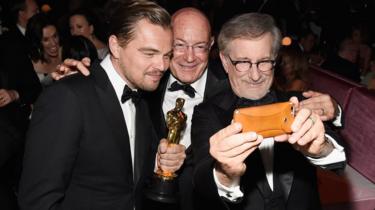
Actor Leonardo DiCaprio, winner of Best Actor for 'The Revenant', Producer Arnon Milchan and Director Steven SpielbergImage copyrightGETTY IMAGES
Image captionArnon Milchan (centre) with Leonardo DiCaprio and Steven Spielberg
The police statement said that Mr Netanyahu, after receiving gifts, pushed for the Milchan Law, which would have ensured that Israelis who return to live in Israel from abroad were exempt from paying taxes for 10 years.
The proposal was eventually blocked by the finance ministry.
Mr Milchan’s lawyer said the police recommendation “ignored basic facts”. His client and Mr Netanyahu were long-time friends, he said, and “in this context, gifts were given to the Netanyahu family from time to time, without any business interest”.
Police say Mr Netanyahu is also suspected of fraud and breach of trust in a case involving Australian billionaire James Packer.
Israel’s Channel 10 reported in December that Mr Packer told investigators he gave the prime minister and his wife Sara gifts.
A spokesman for Mr Packer told Reuters “there is no allegation of wrongdoing” on the part of his client, and both Israeli and Australian police had “confirmed he was interviewed as a witness, not a suspect”.
Israeli media say Mr Netanyahu has been questioned by investigators at least seven times.

What has the reaction been?

A key member of the coalition government, Education Minister Naftali Bennett, criticised Mr Netanyahu but said he would stay in the “good government” for now.
“A prime minister is not meant to be perfect or live an over-modest lifestyle, but he needs to be someone people look at and say: “This is how one should act”,” he said in a speech in Tel Aviv.
“Taking gifts in large sums over a long period of time is not living up to this standard,” he added, while stressing Mr Netanyahu is innocent until proven guilty.
Earlier, Israel’s centre-left opposition alliance, the Zionist Union, called on the prime minister to resign.
“The state of Israel needs a leader whose hands are clean and who is solely devoted to the affairs of the country,” the group’s Eyal Ben-Reuven told The Times of Israel.
Ilan Gilon, of the left-wing Meretz party, said the allegations cast a “heavy shadow” over the prime minister.
But members of Mr Netanyahu’s right-wing Likud party have been quick to defend him.
Tourism Minister Yariv Levin said the police statement was a “despicable move” designed to “carry out a government coup against the will of the voter”.

What happens now?

A final decision on whether Mr Netanyahu should face charges will come down to the attorney general’s office. A decision could take months to reach.
Justice Minister Ayelet Shaked said any prime minister who has been charged should not be obliged to resign.
The next legislative elections are scheduled for November 2019.
Mr Netanyahu heads a fragile coalition, but he appears confident the allegations will not spur new elections.

Stormy Daniels: Trump lawyer admits paying porn star

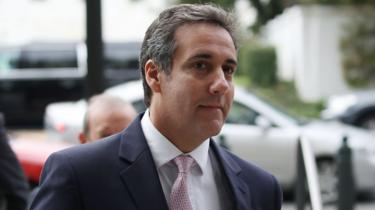
Michael Cohen, pictured arriving to an interview by the Senate Intelligence Committee in 2017Image copyrightGETTY IMAGES
Image captionThe newspaper says Mr Cohen declined to answer why the “private transaction” was made
The long-term personal lawyer of US President Donald Trump has admitted privately paying an adult film star $130,000 (£95,000) in 2016, in a statement to the New York Times.
It follows US media reports that the actress known as Stormy Daniels was paid to sign an agreement stopping her discussing an alleged affair.
She first said she had a relationship with Mr Trump in a 2011 interview.
The lawyer has previously said Mr Trump “vehemently denies” it occurred.
“Neither the Trump Organization nor the Trump campaign was a party to the transaction with Ms. Clifford [Stephanie Gregory Clifford, her real name], and neither reimbursed me for the payment, either directly or indirectly,” Michael D. Cohen said in a statement to The New York Times.
He said he told the Federal Election Commission the same after a watchdog group filed a complaint about the payment serving as an “in-kind” political contribution to Mr Trump’s campaign.
“The payment to Ms. Clifford was lawful, and was not a campaign contribution or a campaign expenditure by anyone,” Mr Cohen said.
In a 2011 interview with InTouch magazine, the actress said she began a sexual relationship with Mr Trump in 2006, shortly after Melania Trump gave birth to his son Barron.
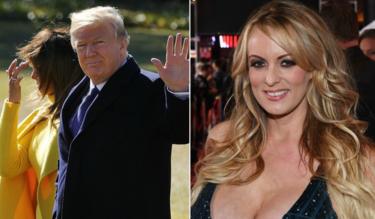
Collage photograph of Mr Trump and his wife, Melania and adult film star Stormy DanielsImage copyrightGETTY IMAGES
Image captionPorn actress Stormy Daniels alleged in 2011 that she had an affair with Mr Trump in 2006
Ms Clifford was believed to be in discussion with US media about an appearance to discuss Mr Trump at the time, the report said.
The New York Times newspaper said Mr Cohen declined to answer questions on why the payment was made, and if Mr Trump knew about it.
In January, Stormy Daniels released a statement denying having an affair with Mr Trump.
She has since made public and television appearances where she has refused to directly answer questions about it.

South Africa’s Zuma: I’ve done nothing wrong

Media captionSouth Africa’s president Jacob Zuma: ‘They never provided a reason’
South Africa’s scandal-hit President Jacob Zuma says he has done nothing wrong – and sees no reason to stand down immediately.
Mr Zuma spoke after the ruling African National Congress (ANC) announced it would back a vote of no confidence in his leadership on Thursday.
The 75-year-old has come under increasing pressure to resign amid numerous allegations of corruption.
But he said the ANC had failed to explain why he had been recalled.
“It was very unfair to me that this issue is raised,” he told the national broadcaster SABC during a lengthy unannounced interview. “They did not provide me with reasons.”
Mr Zuma said he had offered to go after June, but objected to the way the issue was currently being handled.
He said he would make a further statement later on Wednesday.
Earlier, ANC chief whip Jackson Mthembu announced that a motion of no-confidence in the president would be heard on Thursday, with Cyril Ramaphosa – who was elected ANC president in December – sworn in as the nation’s president as soon as possible after that.
A meeting of the ANC’s National Executive Committee had announced its decision to recall Mr Zuma on Tuesday and gave him until the end of Wednesday to resign.
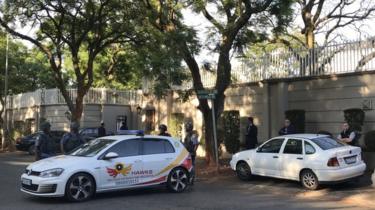
Meanwhile, South African police have ramped up their investigation into Mr Zuma’s close associates, the wealthy, Indian-born Gupta family, conducting a raid and making several arrests early on Wednesday.
The Guptas have been accused of using their close friendship with Mr Zuma to wield enormous political influence. Both parties deny all allegations of wrongdoing.
Members of the Hawks special police unit stand guard outside Gupta homeImage copyrightEPA
Image captionThe Gupta family’s walled compound in Johannesburg was subject to an early morning raid by elite police

Fake welfare workers inspected babies, Australian police say

A generic image of a baby clenching its fistImage copyrightGETTY IMAGES
Image captionThe impostors demanded to see the babies at a woman’s house near Canberra
Australian police are investigating a “disturbing” case where two people posing as child welfare officers entered a woman’s home and inspected her babies.
The impostors, a man and a woman, presented fake identification and told the mother they were conducting a welfare check, authorities said.
The woman later contacted authorities, who confirmed the visit was suspicious.
New South Wales authorities have issued a warning to the public.
The family had not had dealings with welfare authorities or police before the incident in Queanbeyan, near Canberra, last Friday, New South Wales Police said.
After arriving at the house, the impostors presented what appeared to be an identity card for the state Family and Community Services.
The mother told them her two infant children were asleep, and asked if they could return at another time. The pair said they would wait.
They later inspected the children and their bedroom, before leaving the home.
Welfare authorities confirmed that no visit had been scheduled, and reported the incident to police.
Chief Insp Neil Grey urged the public to vigilant, despite no reports of similar incidents in the area.
He said all welfare caseworkers carried photo identification showing their name, job title and an agency logo.

Julian Assange: Warrant for his arrest upheld by court

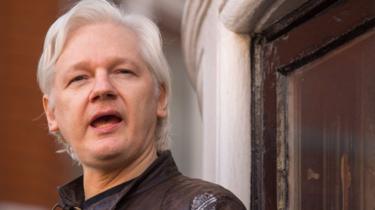
Julian AssangeImage copyrightPA
An arrest warrant for the Wikileaks founder Julian Assange has been upheld by Westminster Magistrates’ Court.
The warrant was issued in 2012 when Mr Assange, 46, breached bail conditions by seeking political refuge at the Ecuadorean embassy.
On Tuesday, the judge said he needed to face justice for breaching bail and therefore the warrant should remain.
Mr Assange, who has been staying at the embassy since 2012, tweeted his “surprise” at the decision.
His bail was set in relation to sexual assault allegations he faced in Sweden. The allegations were dropped in May 2017.
Under the warrant, Mr Assange would be arrested as soon as he left Ecuadorean soil.
As there is not an extradition treaty between the UK and Ecuador, he cannot be arrested inside the embassy.
To explain his decision to break his bail conditions, Mr Assange argued that should he face the Swedish authorities, they would extradite him to the US.
He fears he would be charged by US authorities for publishing classified documents on his Wikileaks website.
But Judge Emma Arbuthnot said she did not find this fear “reasonable” – as any decision by Sweden to extradite Mr Assange to the US would cause a diplomatic crisis.
Even if that decision was taken, she argued, Mr Assange would be able to argue against extradition by citing extraneous circumstances, fair trial concerns and poor conditions in US detention centres.
In her ruling, she described Mr Assange as “a man who wants to impose his own terms on the course of justice, whether the course of justice is in this jurisdiction or Sweden”.
“He appears to consider himself above the normal rules of law and wants justice only if it goes in his favour.”

Supporters outside court

Mr Assange’s lawyers said his arrest for failing to answer bail was no longer in the public interest but the judge rejected that argument.
“Defendants on bail up and down the country, and requested persons facing extradition, come to court to face the consequences of their own choices,” she said.
“He should have the courage to do the same.”
After the ruling, Mr Assange posted his reaction on Twitter, saying: “We are surprised.
“Judge went well outside what the parties presented in court. This seems to have led to many factual errors in the judgment.”
A small group of supporters stood quietly outside the court, holding banners reading “Free Assange” and “Assange Safe Passage”.
Mr Assange’s lawyer, Mark Summers, said his client was living in conditions “akin to imprisonment,” adding that his “psychological health” had deteriorated and he was “in serious peril”.
The court heard that Mr Assange suffers from a bad tooth, a frozen shoulder and depression.
The judge rejected these claims as reason to lift the warrant, saying: “Mr Assange’s health problems could be much worse.”
She also rejected a UN report, cited by Mr Assange in his appeal, that said he is subject to arbitrary detention.
She highlighted that he himself had negotiated the bail conditions he went on to break.
Design a site like this with WordPress.com
Get started