
Paraguay players accuse football club’s ex-boss of abuse

A screen grab of a video posted on Facebook by Antonio GonzálezImage copyrightFACEBOOK
Image captionAntonio González defended himself in a video, saying the relationship had been consensual
The ex-president of a fourth division football club in Paraguay has been accused of sexually abusing players, which he denies.
At least two players have come forward to say they were abused by Antonio González, who until recently ran Rubio Ñu club in the city of Luque.
The allegations against Mr González were made after an intimate photo of him with a player emerged.
A prosecutor is investigating the allegations.
Prosecutor Teresa Martínez also ordered a search of the club’s premises during which investigators found pornographic material.

Allegations widen

The scandal first came to light when a photo was posted anonymously on Facebook showing Mr González lying next to 26-year-old player Bernardo Gabriel Caballero.
Following the photo’s publication, Mr González said he had had a two-year relationship with Mr Caballero.
In a video he posted on Facebook, he accused Mr Caballero of wanting to leave him for another man and tore up his contract while calling him names and telling him “you can forget about playing football”.
Mr Caballero has since alleged that their relationship was not consensual.
He said that Mr González had told him he would not be allowed to play for the club unless he had sexual relations with him.
“I know there were other players who had relations with him,” the player said. “It was normal and I have proof that other lads went through the same thing.”
On Monday, a second player, Fermín Morinigo, went to the authorities and made allegations of abuse against Mr González.

Physical abuse allegations

“It wasn’t just harassment, there was physical abuse if you refused to do as he asked,” Mr Morinigo’s lawyer, Reinaldo Acosta, said.
Mr Acosta said that Mr González had threatened to harm his client and his family if he ever told anyone about it.
The lawyer alleged that the physical abuse against his client had started when the player was only 17 years old.
The local football association said its records showed that Mr González was no longer listed as the club’s president although he was still listed as manager of another club, Marte Atlético.
A spokesman for the association said Mr González had passed on the job of president of Rubio Ñu to his nephew “after a disagreement” with football authorities.
It is not clear when he ceased being the president and the videos he recorded show him speaking in front of Rubio Ñu banners.
Oxfam International chair held over Guatemala graft scandal

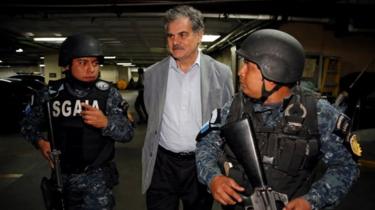
Former finance minister and current chairman of Oxfam International Juan Alberto Fuentes arrives to court escorted by policemen after being detained as part of a local corruption investigation, in Guatemala City, Guatemala February 13, 2018.Image copyrightREUTERS
Image captionJuan Alberto Fuentes was Guatemala’s finance minister before he became chairman of Oxfam International
The chairman of the charity Oxfam International, Juan Alberto Fuentes, has been arrested in Guatemala.
He was detained as part of an investigation into a corruption scandal dating back to his time as Guatemala’s finance minister.
No charges have been brought so far.

‘Entirely open’

Oxfam International’s executive director Winnie Byanyima said that Mr Fuentes had been “entirely open with his Oxfam board”.
“He has assured us that he has co-operated fully with the investigation in the confidence he did not knowingly transgress rules or procedures,” Ms Byanyima said.
It comes as Oxfam faces scrutiny over a scandal in Haiti in 2011, where senior aid workers – including the country director Roland Van Hauwermeiren – allegedly paid for sex. Some of the claims say the women may have been underage.
The scandal has forced the resignation of the organisation’s deputy chief executive, Penny Lawrence, and shaken public confidence in both Oxfam and other charities.
In Guatemala, Mr Fuentes is among 10 top former government officials arrested on Tuesday, including former President Álvaro Colom.
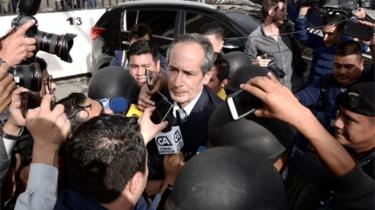
Álvaro ColomImage copyrightREUTERS
Image captionÁlvaro Colom was president from 2008 until 2012
The ex-officials are being investigated in connection with a public bus system, which was developed during Mr Colom’s government between 2008 and 2012.
No details have been given of the charges those arrested may face.
The investigation is being led by the International Commission against Impunity in Guatemala (CICIG). The commission is a United Nations body created in 2006 designed to strengthen the country’s rule of law.

Ex-leaders in the spotlight

Apart from Mr Colom, those arrested are the former ministers of finance, interior, education, defence, employment, economy, health, culture and the environment.
Attorney General Thelma Aldana said that her office was investigating the purchase by Álvaro Colom’s government of more than 3,000 buses in 2009.
Ms Aldana says that only 455 of the buses ever arrived in Guatemala.
Mr Colom is the second former president to be investigated over corruption by CICIG in the past months.
CICIG also said current President Jimmy Morales should be investigated because of alleged funding irregularities in his 2015 election campaign.
In response, President Morales said the CICIG’s head had been interfering in Guatemala’s domestic affairs and ordered his deportation, but the order was overturned by the country’s highest court.

Haiti’s historic Port-au-Prince Iron Market ravaged by fire

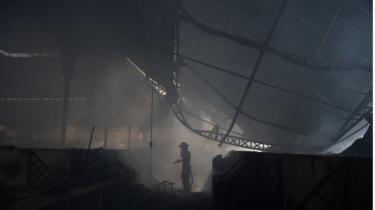
A firefighter stands amid the ruins of the Iron Market in Port au Prince.Image copyrightGETTY IMAGES
Image captionThe fire destroyed one of the historic market’s two halls
Presentational white space
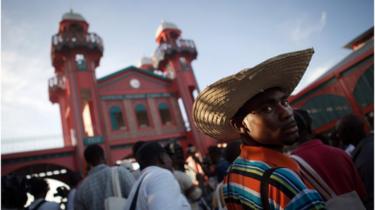
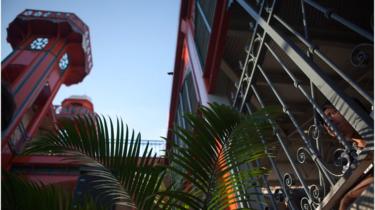
A fire ripped through the historic Iron Market in Haiti’s capital Port-au-Prince on Monday night, destroying one of the city’s major tourist attractions.
The Marche en Fer, or Iron Market, had been rebuilt following the 2010 Haiti earthquake. The building also suffered heavy damage in a fire in 2008.
Traders lost their inventories and their livelihood as the blaze ruined one of the market’s two halls.
Presentational white space
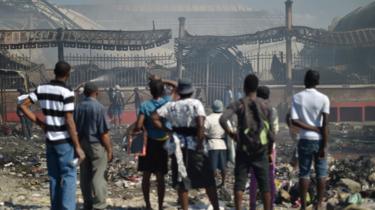
Citizens look as the burnt hull of the Iron Market.Image copyrightGETTY IMAGES
Presentational white space
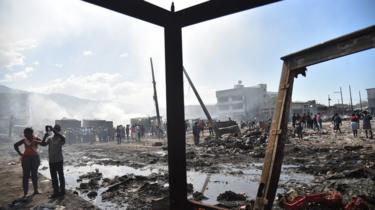
Citizens stand amid the burnt-out wreckage of the Iron Market.Image copyrightGETTY IMAGES
Presentational white space
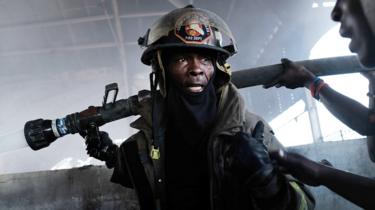
A firefighter tackles the blaze in Port au Prince's Iron MarketImage copyrightGETTY IMAGES
Presentational white space
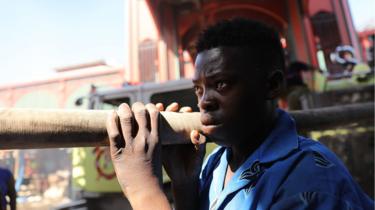
A crying man helps carry a fire hose to tackle the market blaze.Image copyrightGETTY IMAGES
Presentational white space
Citizens helped firefighters to tackle the blaze, which caused significant damage. The fire reportedly began in a rubbish bag.
I think of all those who have lost their livelihood,” President Moise said.
Few sellers in the market have insurance and rebuilding their livelihoods will likely prove difficult.
Presentational white space
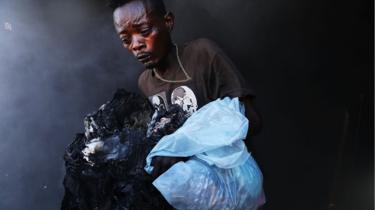
A trader carries his fire-damaged inventory.Image copyrightGETTY IMAGES
Presentational white space
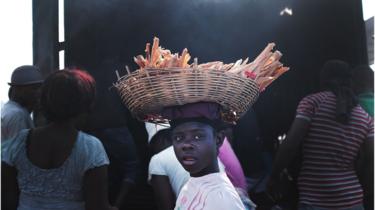
A trader carries a basket of food from the burnt out remains of the market.Image copyrightGETTY IMAGES
Presentational white space
The Iron Market dates from the 1890s. Then-President Florvil Hyppolite inaugurated the building in 1891 after it was shipped in pieces from Paris.
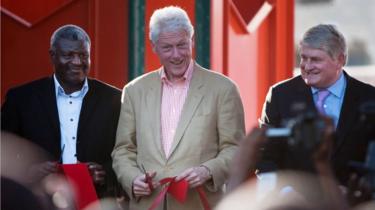
The market was damaged by fire in 2008 and then completely destroyed in the 2010 earthquake. It was rebuilt with international help and reopened by former US President Bill Clinton in 2011.
Presentational white space
Former US president Bill Clinton reopens the Iron Market.Image copyrightGETTY IMAGES
Presentational white space
A citizen attends the reopening of the Iron Market after its destruction in the 2010 earthquake.Image copyrightGETTY IMAGES
Presentational white space

A woman watches the reopening through the iron bars of the market.Image copyrightGETTY IMAGES

Peru jail twin who switched with brother is recaptured

Alexander Delgado in a police car in custodyImage copyrightPERUVIAN INTERIOR MINISTRY
Image captionAlexander Delgado said he just wanted to see his mother
Authorities in Peru have recaptured a prisoner more than a year after he escaped from jail by leaving his twin brother in his place.
Alexander Delgado had been serving a 16-year sentence for child sexual abuse and robbery in a prison north of Lima.
When his twin, Giancarlo, visited him last January, Alexander drugged him, changed into his clothes and walked out of jail.
The suspected swap was confirmed after Giancarlo’s fingerprints were taken.
After 13 months on the run Alexander Delgado was arrested on Monday in the port city of Callao after the Ministry of the Interior offered a reward for information leading to his capture.
He is now expected to be moved to a maximum security prison in the southern highlands.
While Alexander was at large, his brother Giancarlo was arrested and investigated on suspicion of having collaborated with his twin.
But he was not charged and has now been released.
Speaking to local media after his arrest, Alexander Delgado said he used the ruse to escape “because I was desperate to see my mother”.

Germany coalition: SPD leader Martin Schulz resigns

Martin Schulz, file picImage copyrightAFP
Image captionMartin Schulz said his resignation could help the SPD renew itself
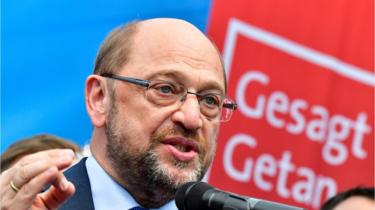
The head of Germany’s Social Democrats (SPD), Martin Schulz, has resigned to ease preparations for a coalition government with Chancellor Angela Merkel’s conservatives.
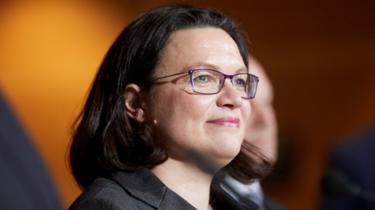
Mr Schulz said he was handing over to a left-winger, Andrea Nahles, with immediate effect. However, SPD members have to vote on the change on 22 April.
SPD sources say Hamburg mayor Olaf Scholz will be interim leader.
Martin Schulz stepped down saying he wanted to end SPD “personnel debates”.
The SPD has agreed on a blueprint for coalition government with Ms Merkel’s Christian Democrats (CDU) and her Bavarian CSU allies.
SPD members will vote on the coalition deal next month – the result is expected on 4 March.
Andrea NahlesImage copyrightEPA
Image captionAndrea Nahles is a former labour minister who once headed the SPD youth wing
The centre-left SPD is on course to run six ministries, including finance and foreign affairs.
Mr Schulz, formerly European Parliament president, has said he will not serve as foreign minister. He has faced strong criticism inside the SPD.
There has been more than four months of coalition negotiations – a German post-war record – since inconclusive elections in September.
A breakthrough was finally announced last week, with major concessions given to the SPD.
Many in the SPD fear that re-entering a coalition with the CDU/CSU could damage the party in the long term.

The SPD and CDU both had their worst results for decades in the election, which catapulted the far-right Alternative for Germany (AfD) into parliament for the first time, with 94 seats.

Metallica to get ‘Nobel Prize of music’

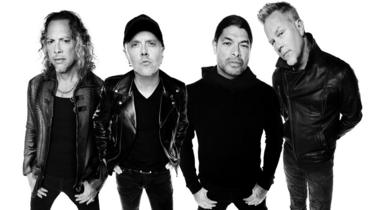
Metallica press shotImage copyrightVIRGIN / EMI
Image captionMetallica (L-R): Kirk Hammett, Lars Ulrich, Robert Trujillo and James Hetfield
Heavy metal pioneers Metallica are being honoured with Sweden’s Polar Prize, one of the most prestigious awards in music.
The band, best known for 1991’s Black Album, redefined the sound of metal with a tougher, faster and more abrasive take on rock.
Polar Prize organisers said the US band could transform “a teenage bedroom into a Valhalla”.
Metallica will receive their £90,000 prize in Stockholm this June.
They’re the first metal band to win the award, which has previously gone to the likes of Paul McCartney, Joni Mitchell, Chuck Berry and BB King – and is regularly called the “Nobel Prize of music”.
The judges’ citation for the band is worth reading in its entirety:
Short presentational grey line
The 2018 Polar Music Prize is awarded to the American band Metallica. Not since Wagner’s emotional turmoil and Tchaikovsky’s cannons has anyone created music that is so physical and furious, and yet still so accessible. Through virtuoso ensemble playing and its use of extremely accelerated tempos, Metallica has taken rock music to places it had never been before. In Metallica’s world, both a teenage bedroom and a concert hall can be transformed into a Valhalla. The strength of the band’s uncompromising albums has helped millions of listeners to transform their sense of alienation into a superpower.
Short presentational grey line
“It puts us in very distinguished company,” said drummer Lars Ulrich of the award.
“It’s a great validation of everything that Metallica has done over the last 35 years. At the same time, we feel like we’re in our prime with a lot of good years ahead of us.”
Vocalist and guitarist James Hetfield added: “As myself and as Metallica I’m grateful to have this as part of our legacy, our history.”
The band said they would donate the prize money to their charity, All Within My Hands, which supports communities in need through food banks, disaster relief and music therapy.
Metallica
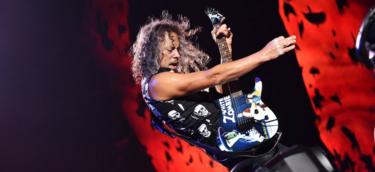
Image captionMetallica performed at Reading + Leeds festival in 2015
Formed in California, Metallica are one of the world’s biggest bands, selling more than 125 million albums over the last 30 years.
Their first four albums – Kill ‘Em All, Ride the Lightning, Master of Puppets and And Justice for All – are all considered classics, but it was the Black Album that pushed them into the mainstream, producing the hit singles and set list staples Enter Sandman and Nothing Else Matters.
While their reputation for sweaty, muscular rock music is well-earned, they’ve stretched their wings over the years, recording a live album with the San Francisco Symphony and a critically-mauled collaboration with Lou Reed.
Along the way, they’ve faced several devastating challenges, not least the death of bassist Cliff Burton in a tour bus crash in 1986.
In 2004, the band released a documentary, Some Kind of Monster, that exposed deep tensions in the band – notably between Ulrich and Hetfield – which were resolved by bringing in a performance coach to help them work on their communication skills.
Ten years later, they gave a triumphant (if uncompromising) performance as Glastonbury’s first heavy metal headliners.
They’ll receive their 1 million kronor prize in the presence of the Swedish Royal family on 14 June.
Media captionAt Afghanistan’s National Institute of Music pupils practice their singing
At the same time, the Afghanistan National Institute Of Music and its founder Dr Ahmad Sarmast will receive the Polar Prize for classical music.
ANIM focuses on supporting orphans, street-working children and young girls – training them as singers and musicians, which were vocations banned under the Taliban.
The Polar Music Prize was founded in 1989 by the late Stig Anderson, manager of Swedish pop legends Abba.
It is named after his record label and recording studio complex, Polar Music, where Abba made most of their albums.

Cape Town drought declared a ‘national disaster’

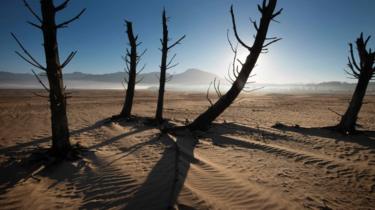
Bare sand and dried tree trunks standing out at Theewaterskloof Dam, near Villiersdorp, about 108km from Cape TownImage copyrightAFP
Image captionCape Town’s dams are now just 24.9% full
South Africa has declared the drought which has seen Cape Town hurtling towards “Day Zero” a national disaster.
The government made the announcement after reassessing the “magnitude and severity” of the three-year drought.
It has badly affected three of the country’s nine provinces.
The decision came as Cape Town announced its water saving measures, which require each citizen to use less than 50 litres a day, had successfully pushed back “Day Zero” to 4 June.
Just a matter of weeks ago, the date that Cape Town’s taps were predicted to run dry was 12 April.
Mmusi Maimane, leader of South Africa’s Democratic Alliance (DA), which runs both the city of Cape Town and Western Cape province, tweeted:
In another tweet, he revealed the average water use in Cape Town, a city of about four million people, was below 550 million litres. Two years ago, it was at more than a billion litres per day.
It has been no easy task for Cape Town’s residents. The 50 litre limit is just enough for a very short shower and one flush of the toilet a day when other needs – including just one load of the washing machine a week – are taken into account.
However, the decision to declare a national disaster means the central government – which is run by the African National Congress (ANC) – will now take responsibility for relief efforts.
According to South African news website eNCA, the co-operative governance minister Des van Rooyen said last week more than 70m rand (£4.2m; $5.8m) had been put aside to tackle the crisis in the Western Cape, as well as in the Eastern Cape and Northern Cape, two provinces which have garnered less headlines, but are also struggling with the effects of the drought.

Gabon: Baby freed after hospital bill paid

Five-month old Angel has been reunited with her mother
Image captionBaby Angel spent the first five months of her life in a private clinic
A mother has spoken of her relief after a private clinic in Gabon finally released her baby, who was held for months over an unpaid medical bill.
Baby Angel’s mother told the BBC her milk had run dry after being separated from the child for the first five months of her life.
The case shocked the country, and she gained much public support.
The bill of 2 million CFA ($3,630; £2,610) was paid after a campaign was launched on the family’s behalf.
President Ali Bongo was among those who contributed towards the bill.
The clinic’s director was arrested on Monday on baby-kidnapping charges, but the charges were dropped a day later, reports BBC Afrique’s Charles Stephan Mavoungou from the capital, Libreville.
Angel was finally allowed to leave the clinic, which is north of the capital, this week.
The baby’s mother, Sonia Okome, told the BBC of her relief, but explained it was bittersweet: “I’m happy to have my baby back. But I’m sorry that I can’t breastfeed her because after five months all my milk has gone.”
She also complained that the baby had not been given any vaccines.
The bill, Gabon Media Time reports [in French], was for the 35 days Angel spent in an incubator after she was born prematurely.

Spy chief warns on Trump aides’ clearance

Media caption‘Access to secret information should be limited’
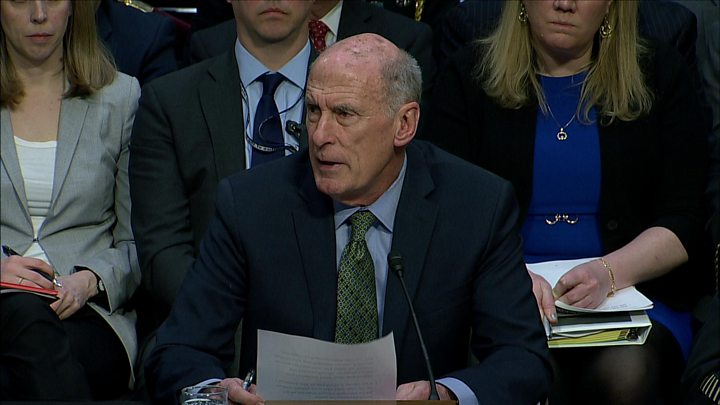
A US spy chief has warned that presidential aides with interim security clearances should have “limited” access to secret information.
US Director of National Intelligence Dan Coats said the clearance process was “broken” and needs to be reformed.
He was responding to a question about former White House aide Rob Porter, who allegedly beat his wife, and the president’s son-in-law, Jared Kushner.
Mr Kushner reportedly has only interim security clearance, like Mr Porter.
Mr Coats was one of several spymasters who gave evidence on Tuesday to the Senate Intelligence Committee about global threats facing the US.
“Sometimes it is necessary to have some type of preliminary clearance in order to fill a slot,” the US director of national intelligence said in response to a question from Democratic New Mexico Senator Martin Heinrich.
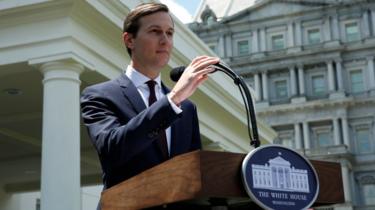
Jared KushnerImage copyrightGETTY IMAGES
Image captionThe 37-year-old is reportedly operating on an interim security clearance
“But if that is the case the access has to be limited in terms of the kind of information they can be in a position to receive.”
He told the Senate Intelligence Committee on Tuesday there is currently a government-wide backlog of 700,000 security clearance applications.
“The process is broken, it needs to be reformed. It’s not evolution, it’s revolution,” he said.
White House spokeswoman Sarah Sanders would not confirm the number of staff members who are operating with interim clearances.
“We are following a process that has been used by previous administrations and we would rely on the law enforcement and intelligence communities to determine if that process should be changed,” Mrs Sanders said during Tuesday’s news briefing.
Mr Coats’ testimony comes amid controversy over the interim security clearance granted to Mr Porter, the former White House staff secretary who was forced out last week after two ex-wives told US media he was emotionally and physically abusive to them.
In Tuesday’s hearing, FBI director Christopher Wray appeared to contradict the White House’s account of when it knew about the allegations against the president’s gatekeeper, which he denies.

Media caption‘The US is under attack,’ the US spy chief said of cyber threat
Mr Wray said the bureau notified the White House about problems in Mr Porter’s background check in March last year.
That is months earlier than the White House said it received the information.
Mrs Sanders later disputed the FBI timeline, saying that the background check had not yet been completed.
Mr Wray also said the FBI delivered the final results in January of its background investigation into Mr Porter.
But the White House said last week that Mr Porter’s background investigation was “ongoing” at the time he quit.
The White House is also facing questions about presidential adviser Mr Kushner’s access to classified material.
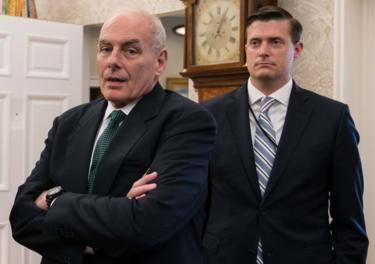
Mr Porter (R) and chief of staff John Kelly (L)Image copyrightAFP
Image captionWhite House Chief of Staff John Kelly (L) has come under fire for defending Rob Porter (R)
Despite his lack of a full security clearance, Mr Kushner is able to read the President’s Daily Brief, a top secret intelligence report that Mr Trump himself does not bother to read, according to reports.
Mr Kushner is one of dozens of White House employees still awaiting permanent clearance, according to the Washington Post.
His lawyer, Abbe Lowell, said the 37-year-old’s application is taking longer than usual “because of the extent of his holdings, travels and lengthy submissions”, according to the newspaper.
The wealthy New York real estate developer has had to refile the national security questionnaire required of all prospective White House employees after making a number of omissions.
Last October, the head of the National Background Investigations Bureau told Congress he has “never seen that level of mistakes” on any security clearance application.

European Union grows at fastest pace for 10 years

A steel worker at ThyssenKrupp in Duisburg, GermanyImage copyrightEPA
The European Union economy grew at its fastest pace in a decade last year, figures from the EU statistics office Eurostat have confirmed.
The 28-strong EU expanded by 2.5% in 2017, its strongest performance since 2007, when it grew by 2.7%.
In the final three months both the EU and the 19-nation eurozone grew by 0.6% compared with the previous quarter.
That was mirrored by growth in the EU’s biggest economy, Germany, which grew by 0.6% in the final quarter of 2017.
France also expanded by 0.6%, while Spanish growth was a notch stronger at 0.7%.
Overall in 2017, the eurozone grew by 2.5%, Eurostat said, the fastest growth rate since a 3% rise in 2007.
These latest figures confirm the flash estimates published by Eurostat at the end of January, which were based on more limited data.
Investec economist Ryan Djajasaputra said much of the growth last year had been driven by the eurozone’s core four economies: Germany, France, Italy and Spain.
However, Eastern European economies, including Latvia and Slovakia, were growing “particularly fast”, he added.
He attributed the strength of the eurozone to the European Central Bank’s (ECB) stimulus policies, which have brought down the cost of borrowing in recent years.
In addition, he said confidence had been hitting record levels since the crisis years in the eurozone and unemployment was down to pre-crisis levels.

‘Headwinds’

Sarah Hewin, chief economist Europe at Standard Chartered, said: “Activity is being supported by strong global growth, which is helping European exporters.
“In terms of domestic factors, rising wages, low inflation and record-level employment are driving consumer spending; meanwhile, investment is rising, helped by strong corporate profitability and buoyant confidence.”
However, while she expected eurozone economic growth to stay strong, “higher energy prices and a stronger euro may be headwinds to growth this year”.
Standard Chartered is forecasting eurozone growth of 2.2% in 2018 and 2% in 2019.
“On the political front, uncertainty may build around Italy’s general election next month; and if the UK leaves the EU without a transition arrangement, that could undermine euro-area exports next year,” added Ms Hewin.
KPMG chief economist Yael Selfin said the figures confirmed the “continuation of strong growth momentum in [the] eurozone, helped by generous support from the European Central Bank and a more pro-growth political drive in some of its main economies.
“While there is probably still significant room for the ECB before it starts tightening its monetary policy, a further pick-up in activity could see a more accelerated scale back of its quantitative easing programme,” she added.
Analysis by OP’S NEWS 
After many false dawns, at last some sunlight has fallen on Europe’s strongest economies.
Growth across the European Union is at levels not seen since 2007.
And the continent’s powerhouse countries – Germany and France – are seeing growth at levels not experienced since the financial crisis bounce-back of 2010.
Those were the good old days, when many believed that the worst of the financial crisis was already behind us.
The bounce, sadly, was what markets describe as a “dead cat”. That is, not going anywhere positive.
After the false dawn of 2010, there followed years of economic calamity as the financial crisis morphed into a currency crisis and the economic collapse of Europe’s smaller, indebted economies, led by Greece and infecting Portugal and Ireland, as well as Spain.
Design a site like this with WordPress.com
Get started