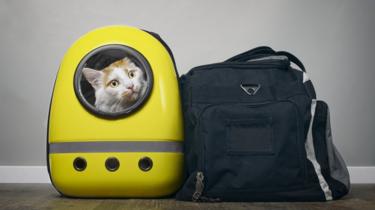
Russian carrier Aeroflot has stripped a passenger of his air miles for breaching its rules by sneaking his overweight cat aboard a flight.
Mikhail Galin, 34, took his cat Viktor on board flight SU1702, from Moscow to Vladivostok, Aeroflot said.
Under Aeroflot’s rules, pets weighing more than 8kg (17lb) must be placed in the luggage hold.
Because Viktor was too heavy for the passenger cabin, Mr Galin devised a cunning plan.
He swapped Viktor for a smaller cat during check-in to get around the weight restrictions
The airline said because Mr Galin had broken the rules it had “taken the decision to take this passenger out of its frequent flyer programme”.
“All of the miles collected during his time in the programme will be annulled,” the airline said.
How did he smuggle the cat on board?
Mr Galin revealed how he had sneaked Viktor on board the flight earlier this month in a Facebook post that vent viral.
In the post, Mr Galin said he had had Viktor with him on a flight from the Latvian capital Riga to Russia’s far eastern city of Vladivostok, which included a stopover in Moscow.
But when he tried to board the second leg of the flight in the Russian capital, Aeroflot staff would not allow him to take Viktor into the passenger cabin.
“The weigh-in showed that the animal had fattened up to 10 kilograms, a level not allowed for the cabin,” Mr Galin wrote.
Unwilling to place the cat in the luggage hold, Mr Galin delayed his flight and took the “strategic decision to find a similar cat of a lower weight” in Moscow.
A day later Mr Galin returned to the airport with the smaller “cat double”, which passed the weight limit test at the check-in desk.
Mr Galin then gave the smaller cat back to its owners at the airport before boarding the plane to Vladivostok with Viktor.
His mistake, it seems, was posting on Facebook about the “operation to replace the fat cat Viktor”. A picture on his public profile shows Viktor sat on the plane next to a glass of sparkling wine.
The post drew the attention of Aeroflot, prompting it to launch an investigation that confirmed the cat swap on CCTV.
In another post, Mr Galin aepeared to accept his punishment with good humeour. He shared a picture of Viktor as a kitten, “when his weight still met the requirements of the air carrier”.
Michigan is among the US states affected by heavy snowfall
An Arctic air mass has brought record-breaking low temperatures to several places in the US.
The Arctic blast, which began in Siberia, has brought heavy snow and ice to many areas.
Daily records have been set in states including Kansas and Illinois. Forecasters say hundreds of records could be matched or broken this week.
Four traffic deaths have been linked to the bad weather and more than 1,000 flights have been cancelled.
Schools have also been closed in some areas.
The National Weather Service (NSW) said the air mass was continuing to spread from the Plains towards the East Coast.
It warned that the cold front would make it feel like “the middle of winter” rather than November for much of the eastern two-thirds of the country.
Several cities in Kansas set record low temperatures on Tuesday, when compared to the same date in previous years. The lowest temperature was recorded in Garden City, where it dropped to -1F (-18C), breaking the record of 7F set last year.
Chicago recorded a low of 7F, breaking the previous record of 8F set in 1986, the NWS said. The city also set a daily record for snowfall on Monday.
A recording of 8F in Indianapolis marked the city’s earliest recorded autumn temperature in single digits.
#Indy has dropped another degree. The record for the date is now 8°. This is the coldest temperature this early in the season on record. Next closest was 11° on November 3rd, 1951. #Brrr#INwx
Rare snowfall was even seen in the Texas town of Brownsville, on the US-Mexico border.
NWS meteorologist Kevin Birk said the air mass was “more typical for the middle of January than mid-November.”
“It is pretty much about the coldest we can be this time of year [and] it could break records all over the region,” he added, according to AP news agency.
Numerous schools and businesses remained shuttered on Tuesday because of the unusual cold weather.
The cold weather has also affected road conditions.
An eight-year-old girl was killed in Kansas on Monday after a truck lost control on an icy highway, officials said. In Michigan, three people were killed in a crash thought to be caused by poor road conditions, according to the local sheriff’s office.
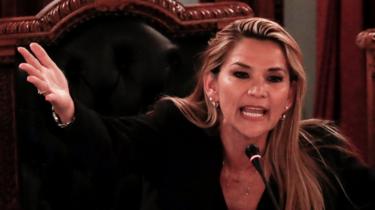
Image copyrightREUTERSImage captionJeanine Áñez proclaimed herself interim president
Bolivian opposition senator Jeanine Áñez has declared herself interim president of the South American country following Evo Morales’ resignation.
Lawmakers from Mr Morales’ party boycotted the session, meaning there was no quorum for the appointment.
But Ms Áñez said she was next in line under the constitution and vowed to hold elections soon.
Mr Morales condemned the announcement, describing Ms Áñez as “a coup-mongering right-wing senator”.
The former president has fled to Mexico, saying he asked for asylum there because his life was in danger.
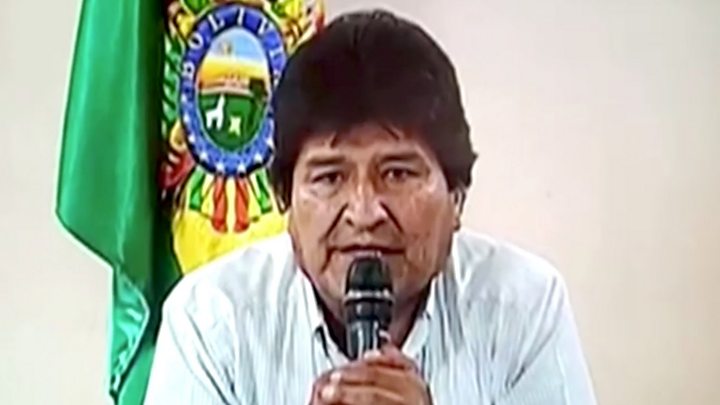
He resigned on Sunday after weeks of protests over a disputed presidential election result. He has said he had been forced to stand down but had done so willingly “so there would be no more bloodshed”.
How did the senator become interim president?
Ms Áñez took temporary control of the Senate on Tuesday, putting her next in line for the presidency.
The former deputy Senate leader assumed the position following a series of resignations.
The parliamentary session to appoint her was boycotted by lawmakers from Mr Morales’ leftist Movement for Socialism party, who said it was illegitimate.
“Before the definitive absence of the president and vice president… as the president of the Chamber of Senators, I immediately assume the presidency as foreseen in the constitutional order,” Ms Áñez said to applause from opposition lawmakers.
Bolivia’s highest constitutional court backed her assumption of power.
Taking to Twitter from Mexico, Mr Morales condemned the “sneakiest, most nefarious coup in history”.
How did we get here?
Mr Morales, a former coca farmer, was first elected in 2006, the country’s first leader from the indigenous community.
He won plaudits for fighting poverty and improving Bolivia’s economy but drew controversy by defying constitutional limits to run for a fourth term in October’s election.
Pressure had been growing on him since his narrow victory in last month’s vote.
The result was called into question by the Organization of American States, a regional body, which had found “clear manipulation” and called for the result to be annulled.
In response, Mr Morales agreed to hold fresh elections. But his main rival, Carlos Mesa – who came second in the vote – said Mr Morales should not stand in any new vote.
The chief of the armed forces, Gen Williams Kaliman, then urged Mr Morales to step down in the interests of peace and stability.
Announcing his resignation, Mr Morales said he had taken the decision in order to stop fellow socialist leaders from being “harassed, persecuted and threatened”.
Media captionWatch Evo Morales announce his resignation
He fled to Mexico as unrest erupted on the streets of the Bolivian administrative capital, La Paz, with angry supporters of the socialist leader clashing with security forces.
After arriving in Mexico City on Tuesday, he thanked Mexican President Andres Manuel Lopez Obrador, whom he credited with saving his life.
“While I have life I’ll stay in politics, the fight continues. All the people of the world have the right to free themselves from discrimination and humiliation,” he said.
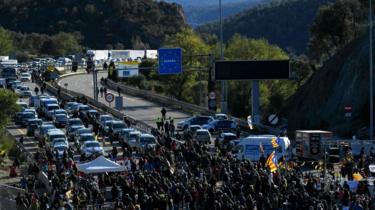
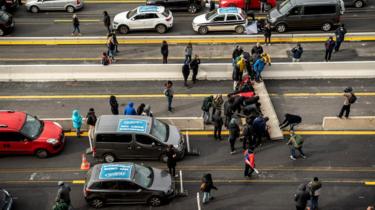
French riot police are forcibly removing Catalan pro-independence protesters who are blocking both sides of a motorway linking Spain and France.
Demonstrators camped overnight on the AP-7 highway at a north-eastern border point near the Spanish city of Girona.
Officers used tear gas before physically clearing protesters almost 24 hours after they had arrived.
It comes as the Catalan parliament backed a non-binding motion on the right to exercise self-determination.
And, in a blow to the Spanish government, a jailed Catalan leader has won an initial court victory in his fight to take up a seat in the European Parliament.
What happened at the border?
Up to 2,000 protesters first gathered at the border on Monday, using vehicles and barriers to block the road before sitting on the tarmac.
Image copyrightGETTY IMAGESImage captionCatalan pro-independence protesters set up roadblocks on the AP-7 motorway on Monday
The roadblocks were spread across the border and into French territory, Spanish newspaper El País reported.
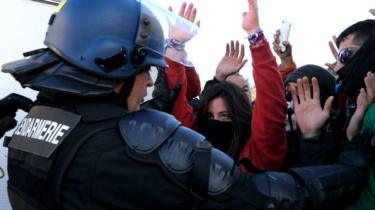
After warning demonstrators that they faced being forcibly evicted if they did not disperse, police moved in – some armed with tear gas canisters.
Image copyrightGETTY IMAGESImage captionSpanish protesters confront a French gendarme at the border
Footage posted on social media showed French police officers using pushing people – in some cases dragging them one by one – to the Spanish side of the border at La Jonquera.
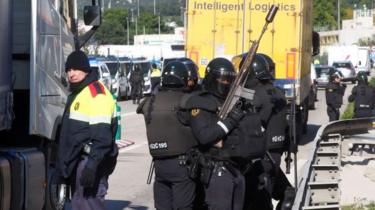
The Catalan police force – the Mossos – also began removing people, many of whom had their faces covered.
Image copyrightGETTY IMAGESImage captionSpanish police patrol the Spanish-French border in La Jonquera
According to reports, the demonstrators were told to move any obstructing vehicles within hours, before cranes would be used to clear them and fines issued of up to €600 ($660; £515).
Image copyrightGETTY IMAGESImage captionProtesters used concrete barriers to block traffic
Police have arrested at least 19 people, local media report.
How did so many protesters mobilise?
The protest was organised through an app by a group known as Tsunami Democràtic, which directs pro-independence demonstrators in Catalonia to protest sites.
Thousands of people arrived on Monday and dozens of vehicles were used to block the route, which is an important transport link between the two countries.
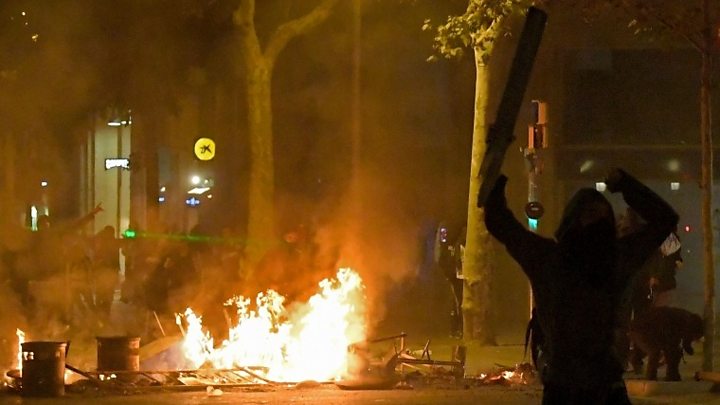
A group called the Republican Defence Committees also appealed on social media for “co-ordinated action” to help set up burning barricades.
Following the police action on Tuesday, Tsunami Democràtic called for demonstrators to mobilise at a separate Spanish border point further to the west, at Behobia, near the Basque city of San Sebastián.
Last month, the jailing of nine Catalan separatist leaders for up to 13 years led to violent protests on the streets of Barcelona.
The leaders were convicted by Spain’s Supreme Court of sedition over their role in an independence referendum in 2017, which Spain said was illegal.
Media captionCatalonia protesters: ‘We are living demonstrations’
What’s the latest on the Catalan crisis?
On Tuesday, in defiance of a waning by Spain’s Constitutional Court, Catalonia approved a non-binding motion expressing the will to exercise self-determination “to respect the will of the Catalan people”.
Spain had warned the region’s lawmakers that legal action would be taken if the motion was approved.
Meanwhile, the European Court of Justice (ECJ) has been advised that jailed Catalan separatist leader Oriol Junqueras’s election as member of the European Parliament (MEP) should be respected.
The legal advice is a setback to Madrid and means that it is now likely that the ECJ will order in favour of Mr Junqueras who is challenging for the right to sit in the parliament.
Mr Junqueras was barred from attending a ceremony to swear an oath to the Spanish constitution and the ECJ’s advocate general advised that not swearing the oath should not stop him taking up his seat as an MEP.
Spaniards voted in a general election on Sunday that saw right-wing parties make major gains.
While Spain’s governing Socialists (PSOE) won the most seats, the conservative Popular Party (PP) came second and far-right Vox more than doubled its seats to become the country’s third most-powerful party.
Vox takes a hard-line stance on the issue of Catalan nationalism. Pro-independence Catalan parties also did well in the vote.
What is behind the unrest?
Catalan nationalists have long complained that their region, which has a distinct history dating back almost 1,000 years, sends too much money to poorer parts of Spain, as taxes are controlled by Madrid.
The wealthy region in Spain’s north-east is home to about 7.5 million people, with their own language, parliament, flag and anthem.
In September, a march in Barcelona in support of Catalonia’s independence from Spain drew crowds of about 600,000 people – one of the lowest turnouts in the eight-year history of the annual rally.
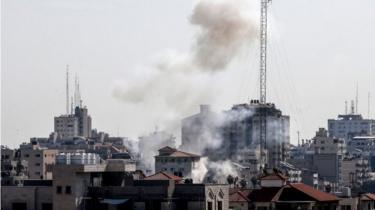
Israel has carried out fresh strikes on targets in Gaza as militants there stepped up rocket attacks following the killing of one of its leaders.
Israel says air and ground forces hit sites used by the Palestinian Islamic Jihad (PIJ) group. More than 150 rockets have been fired at Israel.
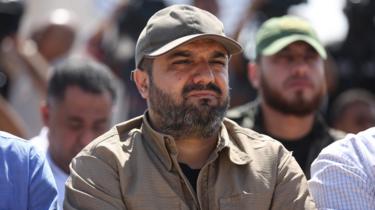
Violence escalated after Israel killed PIJ commander Baha Abu al-Ata. Four more Palestinians were also killed.
One Israeli man was injured by a rocket, Israeli medical services say.
What is the latest?
The Israel Defense Forces (IDF) carried out waves of attacks throughout the day on what it said were PIJ targets. Among the sites the IDF said it hit was what it called a “terror tunnel”, which it said the PIJ planned to use to attack Israeli civilians.
It said it also hit training compounds and weapons factories and storage facilities.
Three Palestinians were killed in air strikes in northern Gaza, one of which targeted a group preparing to launch a rocket, Israel said.
Image copyrightAFPImage captionIsrael carried out waves of air strikes on what it says were PIJ sites in Gaza
In Israel, air raid sirens sounded across the country as volleys of rockets were fired from Gaza since the early morning. Hundreds of thousands of Israelis have taken shelter in bomb-proof rooms, and schools and businesses were ordered closed.
Dozens of Israelis have been treated for injuries as an indirect result of rocket-fire, Israeli medics say.
Gaza’s health ministry says about 30 Palestinians were wounded by the Israeli attacks.
Baha Abu al-Ata came to prominence in Gaza this year, commanding fighters of Islamic Jihad’s al-Quds Brigade in the north and east of the strip.
But he acted increasingly outside of the control of the dominant militant faction Hamas, ordering rocket attacks seemingly without approval after Israeli soldiers shot and injured dozens of Palestinians during regular protests at the perimeter fence earlier this month.
A Palestinian TV presenter even warned on-air recently that his actions might see the Israelis trying to kill him.
A serious escalation in hostilities is now likely, despite Israel’s efforts to signal to Hamas that it has not returned to a wider strategy of so-called targeted killings.
What have Israel and the Palestinians said?
Israeli Prime Minister Benjamin Netanyahu said that while Israel was not seeking escalation, it was prepared for a protracted period of fighting.
“Whoever thinks that they can hit our citizens and evade our long arm is wrong,” he told a news conference in Tel Aviv.
“We’ve proven that we can hit, surgically, wherever the terrorists hide. Whoever harms us, we will harm them.”
Palestinian groups in Gaza meanwhile issued a joint statement, saying Israel had crossed “all red lines” and would face consequences.
At Abu al-Ata’s funeral, senior PIJ official Khaled al-Batsh said Israel had issued “a declaration of war”.
The group vowed to avenge Baha Abu al-Ata’s death in a way which would “rock the Zionist entity” – a reference to Israel.
What caused the flare-up?
The immediate trigger was the killing by Israel of Baha Abu al-Ata in what it called a “surgical strike” on a building in the eastern Shejaiya area of Gaza in the early hours of Tuesday.
Mr Netanyahu said Abu al-Ata was a “ticking bomb” whose death thwarted an imminent attack on Israelis. The prime minister said the militant was responsible for many rocket attacks on Israel.
Image copyrightAFPImage captionPalestinian Islamic Jihad has vowed to avenge Baha Abu al-Ata’s death
IDF chief of staff, Lt Gen Aviv Kochavi, said Abu al-Ata had undermined recent efforts to broker a ceasefire between Israel and Hamas, which runs Gaza and is considered a rival to PIJ.
Abu al-Ata’s wife was killed alongside her husband, while four of their children and a neighbour were reportedly injured.
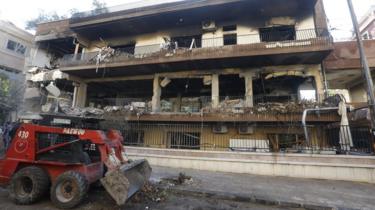
Around the same time as the attack on Abu al-Ata, two people were killed and 10 injured in an Israeli air strike on the home of another Palestinian Islamic Jihad leader in the Syrian capital, Damascus, Syria’s state news agency Sana said.
Image copyrightAFPImage captionSyrian media said another Israeli air strike targeted the home of a PIJ leader in Damascus
Sana cited a military source as saying the PIJ leader, Akram al-Ajouri, was not harmed, but that his son was among the dead. Israel’s military did not comment.
PIJ, which is backed by Iran, has its headquarters in Damascus and is one of the strongest militant groups in Gaza.
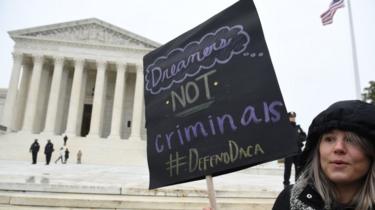
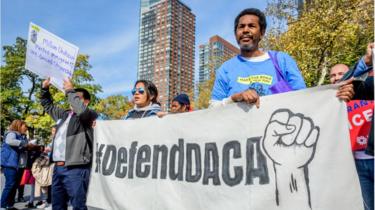
Image copyrightAFPImage captionImmigration rights activists held a protest as the Supreme Court held oral arguments
The US Supreme Court is hearing arguments in the case of an Obama-era immigration programme the White House has sought to end since 2017.
The Deferred Action for Childhood Arrivals (Daca) policy protects 700,000 undocumented youths from deportation.
The top court took up the case after lower courts ruled the administration did not adequately explain why it was ending the programme.
A decision is expected in 2020, months before the presidential election.
The lower court rulings do not contest the administration’s right to end Daca, but they have criticised its “capricious” explanations for why it was doing so.
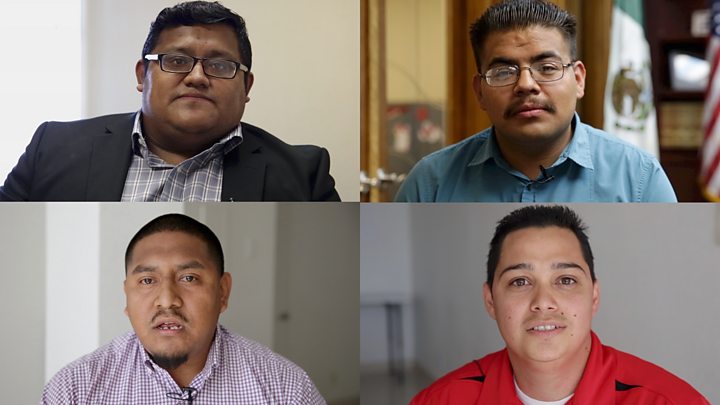
Media captionDaca recipients: ‘Life in the US is like a rollercoaster’
However, the case could lead the Supreme Court to issue a key ruling on a president’s power regarding immigration policy.
Immigration has been one of President Donald Trump’s signature campaign issues.
What is Daca?
The Daca programme affects an estimated 700,000 young people who entered the US without documents as children. Another million people were eligible but did not apply for the scheme.
Most of them are from Mexico and other Latin American countries.
A 2012 executive order created by former President Barack Obama shields these so-called “Dreamers” from deportation and provides work and study permits.
President Obama signed the order following failed negotiations for immigration reform on Capitol Hill.
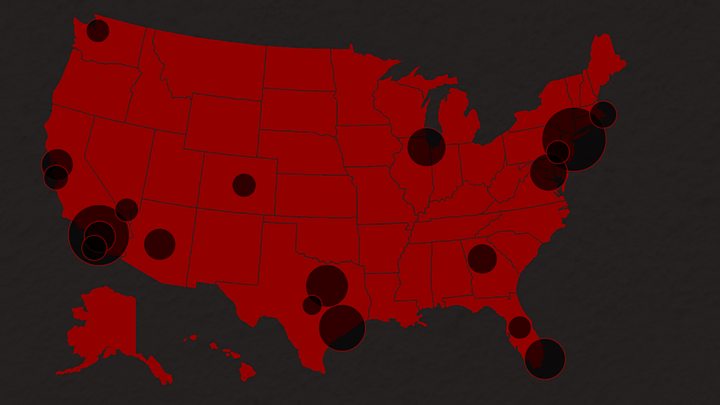
Media captionWhere do America’s undocumented immigrants live?
In order to qualify for Daca, applicants under the age of 30 are required to submit personal information to the Department of Homeland Security (DHS), including addresses and phone numbers.
They must go through an FBI background check and have a clean criminal background, and either be in school, recently graduated or have been honourably discharged from the military.
In exchange, the US government agrees to “defer” any action on their immigration status for a period of two years.
It is only available to individuals residing in the US since 2007.
Who is for and against ending Daca?
The Trump administration has argued that President Obama did not have the authority to create the Daca programme through executive order, though Mr Trump has appeared sympathetic to the Dreamers’ plight.
Mr Trump successfully ordered DHS to stop accepting new applications in 2017, but his second order to end renewals for Daca recipients was blocked last January and is the one up before the Supreme Court.
In 2018, the then-DHS Secretary Kirstjen Nielsen wrote that the programme should end as it is “critically important for DHS to project a message that leaves no doubt regarding the clear, consistent, and transparent enforcement of the immigration laws against all classes and categories of aliens”.
The White House has tried to negotiate with lawmakers on a plan to allow the undocumented immigrants a path towards citizenship in exchange for funding for Mr Trump’s border wall with Mexico to no avail.
Two out of three US adults back Daca, according to surveys conducted last year.
Image copyrightGETTY IMAGESImage captionImmigration advocates began a march to Washington DC ahead of the oral arguments
A poll conducted in June by the president’s preferred news outlet, Fox News, also found most voters support allowing Dreamers to stay in the US.
Democrats strongly support the programme, and are joined by moderate Republicans.
A number of companies and Silicon Valley leaders have also backed Daca, including Microsoft, who joined one of the lawsuits being heard by the court on Tuesday.
But many of President Trump’s right-wing supporters are against protecting Daca recipients.
Mr Trump tried to end other immigration programmes, including the Temporary Protected Status (TPS) for 200,000 migrants from El Salvador and the diversity green card lottery, but both moves have become mired in court battles.
Media captionWhat is temporary protected status – and why is El Salvador losing it?
What could the Supreme Court do?
If the Supreme Court agrees with the White House’s claim that Daca was an unconstitutional use of presidential power to begin with, it could limit the power of future presidents to issue similar immigration orders.
The court could also eventually uphold the lower court’s decisions that the Trump administration did not offer sufficient explanation for ending Daca, and the White House would need to re-submit its explanations for ending the programme.
Or, the Supreme Court could overturn the lower rulings, allowing the administration an easier path forward.
Media captionThe missing – consequences of Trump’s immigration crackdown
The nation’s highest court presently leans conservative with two Trump-appointees, Neil Gorsuch and Brett Kavanaugh.
The justices have been split along ideological lines in recent decisions regarding immigration, including Mr Trump’s travel ban on mostly-Muslim countries and the attempt to add a citizenship question to the 2020 census.
In both cases, Chief Justice John Roberts was the deciding vote; he sided with the conservatives regarding the ban, but with liberals on the census.
What happens next?
The Supreme Court is hearing arguments on Tuesday and will deliberate until next summer.
One of the lawyers appearing before the justices to argue in favour of Daca is Luis Cortes, a 31-year-old recipient of the programme, who told CNN: “I will be looking at nine individuals who will ultimately decide whether my clients will be deported and me with them.”
In the meantime, Republicans and Democrats in Congress can attempt to reach a deal regarding the Dreamers.
If the programme is dismantled, Dreamers would again become undocumented, losing their work permits, health insurance and in some states, their drivers’ licences.
Or, lawmakers could agree upon a law to protect Dreamers, whether through Daca or a similar programme.
Mr Trump tweeted in October if the Supreme Court does not let Daca stand, “the Republicans and Democrats will have a DEAL to let them stay in our Country, in very short order”.
President Obama said that he did not have the right to sign DACA, that it will never hold up in court. He signed it anyway! If the Supreme Court upholds DACA, it gives the President extraordinary powers, far greater than ever thought. If they do what is right and do not let……
….DACA stand, with all of its negative legal implications, the Republicans and Democrats will have a DEAL to let them stay in our Country, in very short order. It would actually benefit DACA, and be done the right way!
Image copyrightREUTERSImage captionProtesters continued to clash with police across the city on Tuesday
Hong Kong’s rule of law has been pushed to the “brink of total collapse” after more than five months of protests, police have warned.
The warning came as protesters clashed with police across the city on Tuesday.
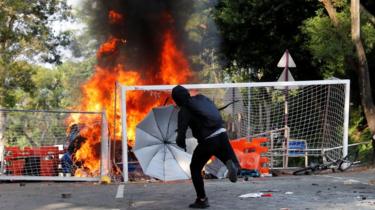
At the Chinese University of Hong Kong, police fired tear gas and rubber bullets at protesters who built barricades on the campus.
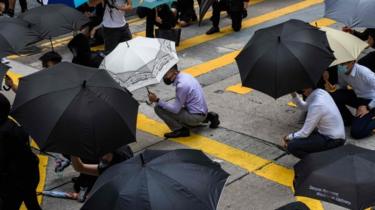
Earlier in the day, around 1,000 protesters rallied in central Hong Kong during the lunch hour blocking roads
Protesters, wearing office clothes, were seen chanting: “Fight for freedom, stand with Hong Kong!”
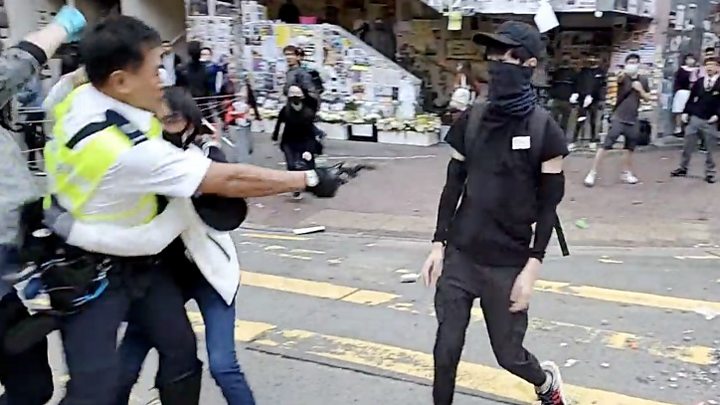
The demonstrations come just a day after the territory saw a marked escalation in violence, with police shooting one activist in the torso. A pro-Beijing supporter was set on fire by anti-government protesters.
The protests started in June against a now-withdrawn plan to allow extradition to mainland China, but have since morphed into wider demonstrations, with activists demanding greater democracy and police accountability in Hong Kong.
On Tuesday afternoon, police spokesman Kong Wing-cheung hit out at the protesters, saying they had “countless examples of rioters using random and indiscriminate violence against innocent” people.
“Hong Kong’s rule of law has been pushed to the brink of total collapse as masked rioters recklessly escalate their violence under the hope that they can get away with it,” he told reporters, adding that Monday’s attack on the pro-Beijing supporter was being investigated as attempted murder.
Image copyrightAFPImage captionProtesters and office workers were seen blocking roads in Hong Kong’s financial district
Speaking at the same conference, Supt Li Kwai-wah defended the officer’s decision to shoot the protester on Monday.
“We found out that our colleague did not only face threat from one person, instead it was a group of people with an organised plan attempting to steal the gun,” he said.
“In a situation like this, we believe our police are reacting according to the guideline, to protect themselves as well as the people around them.”
Both the protester and the pro-Beijing supporter remain in hospital, with the latter in a critical condition.
What happened on Tuesday?
Clashes erupted at the Chinese University of Hong Kong, with police firing tear gas to disperse students, while at City University there was a standoff between students and riot police which continued into the evening.
Police continued to use tear gas to try to disperse the protesters who responded with bricks and petrol bombs. Hundreds of protesters remain at the Chinese University of Hong Kong.
Image copyrightREUTERSImage captionStudents at Hong Kong’s Chinese University fought with police throughout the day
Students built roadblocks on streets in and around City University campus to stop police from entering. At one stage, a van used as part of a street barricade was set on fire.
Students at Hong Kong Polytechnic also tried to disrupt traffic near their campus.
In the morning, suspended railway services and road closures had already led to long traffic jams in the early rush hour. At noon, protesters moved into the city’s central business district for a flash mob protest.
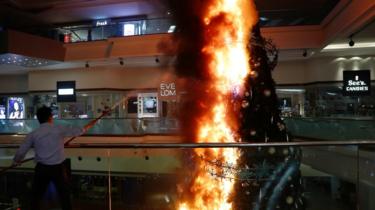
Image copyrightREUTERSImage captionAt Festival Walk shopping mall, a Christmas tree was set on fire
Protests continued to intensify throughout the day. A Christmas tree inside Festival Walk shopping mall was set on fire by protesters while others were seen smashing a glass railing with hammers.
Train stations were closed across the city.
Media captionThis Hong Kong protester’s shooting was livestreamed on Facebook
Eight universities have announced they will suspend classes on Wednesday.
Monday’s protests saw 260 people arrested bringing the number to more than 3,000 since the protests began in June.
Why are there protests in Hong Kong?
Hong Kong is part of China but as a former British colony it has some autonomy and people have more rights.
The protests started in June against plans to allow extradition to the mainland – which many feared would undermine the city’s freedoms.
The bill was withdrawn in September but demonstrations continued and now call for full democracy and an inquiry into police behaviour.
Clashes between police and activists have become increasingly violent and in October the city banned all face masks.
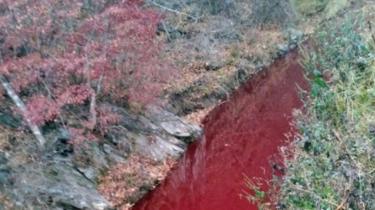
The river turned red from the blood of thousands of slaughtered pigs
A river near the inter-Korean border has turned red after being polluted with blood from pig carcasses.
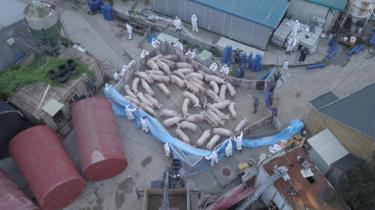
South Korean authorities had culled 47,000 pigs in an attempt to halt the spread of African swine fever (ASF).
Heavy rains caused blood to flow from a border burial site into a tributary of the Imjin River.
African swine fever is highly contagious and incurable, with a near zero survival rate for infected pigs, but it is not dangerous to humans.
Local authorities dismissed concerns that the blood could cause the spread of African swine fever to other at-risk animals, saying the carcasses had already been disinfected before being slaughtered.
It also said emergency steps had been taken to prevent further pollution.
An outbreak across Asia
The pig-culling operation was carried out over the weekend. The carcasses were said to have been left inside multiple trucks at a burial side near the inter-Korean border.
A delay in the production of plastic containers used for burial disposal meant that burials could not be carried out immediately.
Image copyrightGETTY IMAGESImage captionSouth Korea has been culling pigs in response to swine fever
ASF was only discovered in South Korea recently, and there was speculation it arrived via pigs crossing the heavily guarded demilitarised zone (DMZ) that separates the North and South.
The first case of ASF was recoded in North Korea in May, and the South made great efforts to keep it out, including border fences.
The South Korean military was authorised to kill any wild boars seen crossing the DMZ.
Despite the precautions, South Korea reported its first case on 17 September – with the total now at 13. There are around 6,700 pig farms in South Korea.
Much of Asia has been affected by the outbreak, including China, Vietnam and the Philippines. Some 1.2 million pigs have been culled in China alone.
The deported man is allegedly a captured member of the Islamic State group
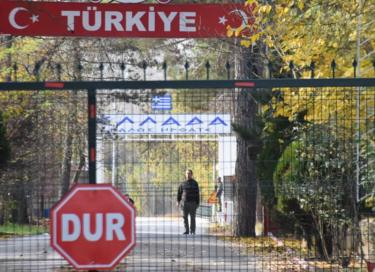
A US citizen suspected of being an Islamic State militant is stranded on the border between Greece and Turkey, after Turkey expelled him.
The alleged militant was deported on Monday as Turkey launched a drive to repatriate captured jihadist fighters held in its prisons.
Greek police said they refused him entry when he tried to cross the border near the Greek town of Kastanies.
The man is reported to have spent the night stuck between the two borders.
He has been named by Turkey’s Demiroren News Agency as Muhammed Darwis B and is said to be a US citizen of Jordanian descent.
A Turkish official told AFP news agency that he had refused to be returned to the US and instead asked to be sent to Greece.
On Tuesday he was still stuck on a strip of road between the two countries and witnesses said he had been trying to shout to reporters on the Turkish side.
The fate of foreign IS fighters has been a key question since the defeat of the group in territory it controlled in Syria and Iraq.
Turkish President Recep Tayyip Erdogan has indicated that 2,500 such militants are in prison in Turkey.
Unfinished business since defeat of IS
There can be few more graphic illustrations than this of the unfinished business left over from the US-led Coalition’s military campaign to defeat IS.
More than 70 countries got together to defeat and dismantle the jihadist caliphate that had terrorised huge swathes of Iraq and Syria. But as with other military campaigns in the Middle East, they failed to plan sufficiently for the aftermath.
Following the final battle against IS at Baghuz in Syria in March, thousands of IS fighters and their dependants were interned in camps. Turkey, which has been arresting IS members for years, now has around 2,000 of them in its prisons.
Turkey, Iraq and the Kurdish authorities all want Europe and the West to hurry up and take back their citizens but so far governments have been extremely reluctant to do so, partly for fear that prosecutions may fail.
Turkey’s current expulsions now threaten to force them into action.
Who else has Turkey deported?
Turkey’s interior ministry said it had also deported a Dane alleged to be an IS member on Monday. Danish authorities said their citizen had been arrested on arrival in Copenhagen.
Germany said one of its citizens had also been expelled.
Turkey said more than 20 other European suspects, including 11 French citizens, two Irish nationals and several more Germans, are in the process of being repatriated to their countries of origin.
Turkey has long accused Western countries of refusing to take responsibility for citizens who joined Islamic State.
Germany, Denmark and the UK have repeatedly stripped people of citizenship for allegedly joining jihadist groups abroad, in a bid to block their return.
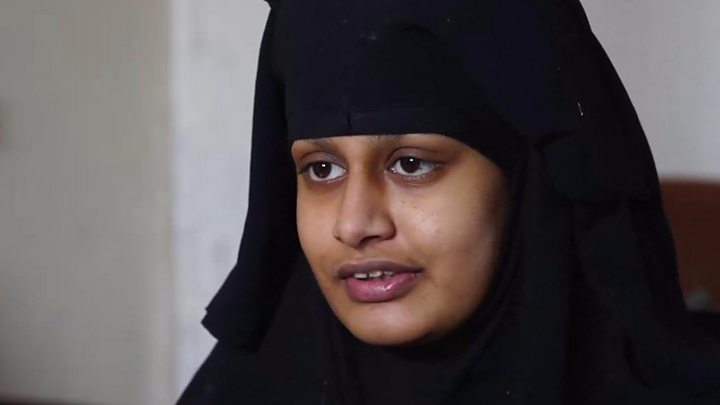
The UK is said to have withdrawn citizenship from more than 100 people – among them the IS recruit Shamima Begum, who left London as a teenager.
Media captionShamima Begum told the BBC she never sought to be an IS “poster girl”
On Tuesday UN chief Antonio Guterres called for international co-operation to resolve issues around foreign jihadists, saying it was not up to Syria and Iraq “to solve the problem for everyone”.
The UN has previously said countries should take responsibility for their own citizens unless they are to be prosecuted locally, in accordance with international standards.
Turkey has not confirmed whether those being repatriated were seized in Syria, or in Turkish territory.
Some IS members and their relatives were captured in north-eastern Syria in October, when Turkey launched a cross-border operation against the Kurdish-led Syrian Democratic Forces (SDF) there.
At the time, the SDF said it was holding more than 12,000 suspected IS members in seven prisons in the area, at least 4,000 of them foreign nationals.
Relatives of suspected IS militants were also being held at a number of camps for displaced people – the largest of which, al-Hol, housed almost 70,000 people.
How will the repatriations work?
A French foreign ministry source told AFP news agency last week that suspected jihadists were often returned to France from Turkey under a 2014 agreement.
“Jihadists and their families are regularly sent back to France and arrested as they leave the plane. Most of the time it is done secretly. The news is not published, or released much later,” the source said.
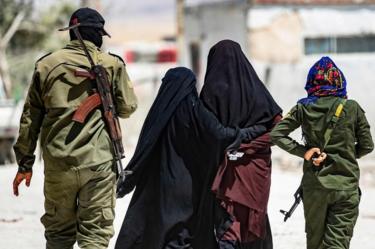
Image copyrightAFP/GETTY IMAGESImage captionA security patrol escorts women, reportedly wives of Islamic State group fighters, at a camp in Syria
Germany’s interior ministry said this week that “it did not wish to oppose the return of German citizens”.
A German foreign ministry official confirmed that legal proceedings involving at least three men, five women and two children were under way in Turkey.
On Monday a court in the Netherlands ruled that the country should take back the children of Dutch women who joined IS – but not necessarily their mothers.
Some 23 Dutch women and their 56 children are currently being held in detention camps in Syria, AFP reports.
It is unclear whether Turkey will be able to repatriate IS suspects who have had their home citizenships revoked.








 Empieza el desalojo en la Jonquera con uso de gases lacrimógenos, ante gente que solo pide el derecho a la libertad pacificamente.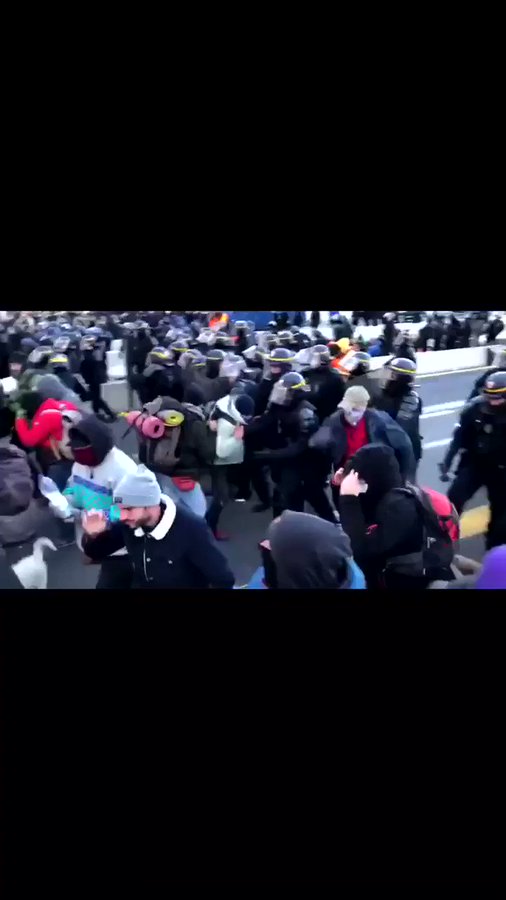





 OP's News