Three people have been arrested on suspicion of helping a billionaire jeweller to defraud one of India’s largest banks of millions.
Nirav Modi, a diamond broker and luxury jeweller to celebrities, is being investigated in a $44m (£31m) fraud case at Punjab National Bank (PNB).
Late on Friday, India’s federal police arrested two bank officials and a business associate of Mr Modi’s.
Mr Modi has not yet commented on the case, and no charges have been filed.
PNB has also claimed Mr Modi is involved in a $1.8bn (£1.3bn) fraud. That amount is almost a third of the bank’s market value, and many times its quarterly profits.
Nirav Modi is one of India’s richest people, with a personal wealth of $1.75bn, according to Forbes.
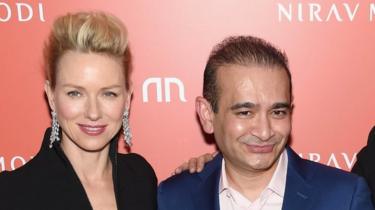
He has also been the jeweller for celebrities such as Naomi Watts and Kate Winslet – while one of India’s biggest stars, Priyanka Chopra, is his company’s brand ambassador.
Image copyrightGETTY IMAGESImage captionNirav Modi (right) is a jeweller to the stars including Naomi Watts (left)
While no charges have been brought against Mr Modi, police have conducted several high-profile raids of his luxury jewellery shops.
India’s Central Bureau of Investigation (CBI) named the three arrested as former deputy manager Gokulnath Shetty, Manoj Kharat, and Hemant Bhat, Mr Modi’s associate.
A spokesman told the AFP news agency that Hemant Bhat was the “authorised signatory” of several companies linked to Mr Modi.
The three are jointly suspected of making fraudulent lines of credit available to companies linked to Mr Modi and his uncle, Mehul Choksi, the spokesman said.
Mr Choksi is head of the Gitanjali Group, which has about 4,000 shops across India.
PNB said a series of transactions at a single branch in Dubai were made “for the benefit of a select few account holders with their apparent connivance”.
Many reports say Mr Modi has left the country, and police have as yet been unable to speak with him.
Both Mr Modi and his uncle have had their passports suspended.
A spokeswoman for India’s tax authority told Reuters it had seized 105 bank accounts and 29 properties linked to Mr Modi and his companies, as it investigates possible tax evasion.
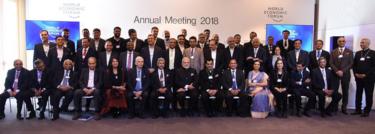
Image copyrightHANDOUTImage captionNirav Modi (middle row, third from left) attended an event with the prime minister (front, centre) earlier this year
Meanwhile, opposition political parties have been seeking to link Mr Modi to Prime Minister Narendra Modi after a photo emerged of the pair together at the World Economic Forum in January – along with dozens of others. The men are not related.
Nirav Modi was born into a diamond trading dynasty, based in the industry capital Antwerp, and later established Firestar Diamond – his own diamond making operation in India almost 20 years ago.
He started trading under his own name in 2010, specialising in diamonds.
The brand made its mark in some style after one of his earliest pieces was featured on the front cover of a Christies catalogue and was sold by the auction house in Hong Kong for $3.8m.
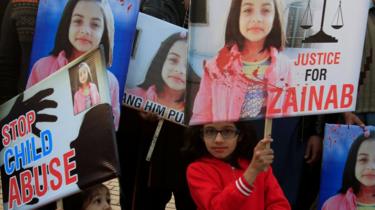
The victim’s father was in court to hear the verdict, amid heavy security.
Zainab’s killer has also been linked by police and the chief minister of Punjab province to the murders and assaults of other girls in the area.
Ali’s alleged crimes stretch back at least a year and angry residents say authorities should have been quicker to identify him as the perpetrator.
Ali will be tried over the rest of the cases later, government prosecutor Ehtisham Qadir Shah told Reuters news agency.
Dozens of witnesses testified against Ali in the trial, where forensic evidence including DNA and polygraph tests was also presented.
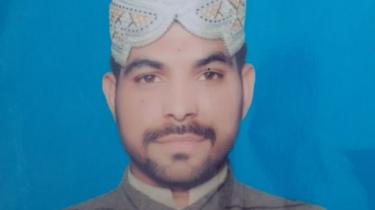
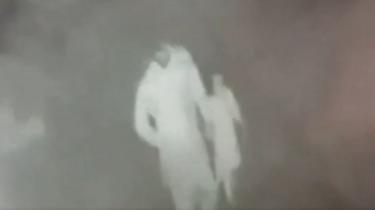
Image copyrightPOLICE HANDOUTImage captionImran Ali, shown in a police handout image, confessed to killing Zainab AnsariImage copyrightCCTV IMAGESImage captionIt was family members – not police – who recovered CCTV footage showing Zainab being led awayImage copyrightREUTERSImage captionAli has also been linked to other crimes against young girls
His lawyer had withdrawn from the case after Ali confessed, reports say.
Ali was handed death sentences for kidnapping, rape, murder and an act of terrorism, a life sentence for sodomy and a large fine. He now has a 15-day window in which he may appeal against the verdict.
The news of his sentencing sparked strong reactions on social media, including by Hamza Ali Abbasi, a Pakistani actor, model and director.
Some echoed calls by Zainab’s parents for Ali to be hung in public at the spot in which he kidnapped her, but commentator Ali Moeen Nawazish disagreed.
Other Twitter users suggested there could be a wider network of criminals behind the spate of child killings, and have called for investigations to continue before Ali is executed.
Police have been under huge pressure to find who killed Zainab and the other children.
Zainab’s family say the police did not take action during the five days from when she was reported missing and her body was found. Relatives recovered CCTV footage of her last movements.
The video, which showed a girl being led away by a man, was circulated widely on social media.
Ali, who lived near Zainab, was arrested by police on 23 January.
Media captionThe Russian foreign minister called for “facts” before commenting further
Russia’s foreign minister has dismissed as “blather” the charges levelled by the FBI special counsel against 13 Russians for election meddling.
Sergei Lavrov said at a major security conference in Germany he would not comment further until he saw “facts”.
The charges brought by Special Counsel Robert Mueller are seen as a major development in his continuing probe into the US 2016 election.
President Trump has said the indictment shows his campaign did “nothing wrong”.
The Russian foreign minister was being questioned by participants at the Munich Security Conference.
Asked about the charges, he said that even Vice-President Mike Pence had called the investigation into question.
“So until we see the facts, everything else is just blather.”
But Mr Trump’s National Security Adviser, H R McMaster, said evidence of Russian meddling was “now incontrovertible”.
It would become harder to conceal attempts to “interfere in our democratic process”, he added.
In a tweet on Friday evening, Mr Trump repeated that there had been “no collusion” between his campaign and Russia.
However, he did appear to concede that Russia had sought to influence the election. The president has previously disputed US intelligence agency assessments suggesting this.
Deputy Attorney General Rod Rosenstein said there was no allegation that any American was “a knowing participant in this illegal activity” nor was it alleged that the meddling altered the election outcome.
Three of the people named have also been accused of conspiracy to commit wire fraud and five have been accused of aggravated identity theft. Three companies have also been charged.
The 37-page indictment says a group of Russians:
Posed as Americans, and opened financial accounts in their name; some visited the US
Spent thousands of dollars a month buying political advertising
Purchased US server space in an effort to hide their Russian affiliation
Organised and promoted political rallies within the United States
Posted political messages on social media accounts that impersonated real US citizens
Promoted information that disparaged Hillary Clinton
Received money from clients to post on US social media sites
Created themed groups on social media on hot-button issues, particularly on Facebook and Instagram
Operated with a monthly budget of as much as $1.25m (£890,000)
Financed the building of a cage large enough to hold an actress portraying Hillary Clinton in a prison uniform
The indictment says those involved systematically monitored the success of their internet posts.
Media captionRussians recruited ‘real Americans’ as part of ‘information warfare’
“By 2016, defendants and their co-conspirators used their fictitious online persons to interfere with the 2016 US presidential election,” the indictment continues.
“They engaged in operations primarily to communicate derogatory information about Hillary Clinton, to denigrate other candidates such as Ted Cruz and Marco Rubio, and to support Bernie Sanders and then-candidate Donald Trump.”
One of the companies targeted is the Internet Research Agency, based in St Petersburg, which the indictment said “had a strategic goal to sow discord in the US political system, including the 2016 US presidential election”.
Any reaction from those named?
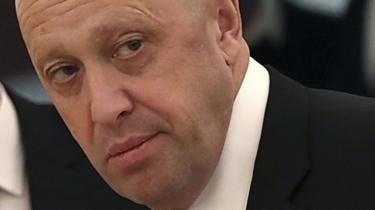
One of the people named in the indictment – Yevgeny Prigozhin, who is known as “Putin’s chef”, denied election tampering.
Image copyrightREUTERSImage captionYevgeny Prigozhin, known as “Putin’s chef”, has denied election tampering
“The Americans are very impressionable people, they see what they want to see…,” he was quoted as saying by Russian news agency Ria Novosti on Friday. “I’m not at all upset that I’m on this list. If they want to see the devil, let them see him.”
Mr Prigozhin has been a friend of Mr Putin since the 1990s. He has built up a business empire and has been accused of using companies to diffuse pro-Kremlin opinions via fake internet identities.
Heat is increasing
Analysis by OP’S NEWS
On Friday, Robert Mueller’s team released a slate of indictments that lays bare what it asserts is the full shape of the Russian meddling apparatus.
And what an apparatus it was. In the run-up to the US presidential election “Project Lakhta”, as it was called, had an operating budget of more than $1m a month.
The indictment does not suggest collusion between the Trump campaign and the Russians, however, and the White House may breathe a sigh of relief at this.
But the heat is increasing, and the investigation isn’t over yet. At the very least, if Mr Mueller’s allegations hold up in court, it will become increasingly difficult for the president to argue that Russian meddling on his behalf is an unsubstantiated hoax.
What do social media companies say?
Politicians from both major parties have responded with calls for social media to do more to prevent political interference via their platforms.
Twitter said the activities were “intolerable” and that it was working with investigators, but that tech companies could not defeat the new threat alone.
What is the investigation about?
US intelligence agencies believe Russia tried to sway the 2016 presidential election in favour of Mr Trump.
In May last year, Mr Mueller was appointed special counsel to investigate whether anyone from his campaign colluded in the effort.
Media captionAll you need to know about the Trump-Russia investigation
As part of the inquiry, former Trump campaign manager Paul Manafort has been charged with conspiring to defraud the US in his dealings with Ukraine, conspiracy to launder money and more recently with submitting false information to obtain a mortgage.
A business associate of Mr Manafort’s, Rick Gates, was also charged with conspiracy to launder money. A third adviser to the Trump campaign, George Papadopoulos, pleaded guilty to lying to the FBI.
In December, Mr Trump’s former national security adviser, Michael Flynn, pleaded guilty to making false statements about a meeting he had with the Russian ambassador in 2016.
This week President Trump’s former chief strategist, Steve Bannon, was interviewed by Mr Mueller.
Mr Trump has been accused by opponents of trying to interfere with the investigation, which he denies.
Image captionThe indictments from Special Counsel Robert Mueller investigations were unexpected
Special Counsel Robert Mueller has dropped another Friday blockbuster with his sweeping indictment of three organisations and 13 Russian nationals for meddling in the 2016 US presidential election.
For the first time the special counsel’s team has taken dead aim at its central mandate in the investigation and laid bare the scope of what it alleges was a multi-million-dollar Russian operation to sow discord in American politics as far back as 2014.
Here’s a look at some of the key passages of the 37-page indictment and what they mean.
Image captionRussians recruited ‘real Americans’ as part of ‘information warfare’
No knowledge, no collusion
” Some defendants, posing as US persons and without revealing their Russian association, communicated with unwitting individuals associated with the Trump campaign and with other political activists to seek to co-ordinate political activities. “
This is the key passage for the White House’s effort to downplay the threat this indictment poses to Donald Trump and his presidency.
Image copyrightGETTY IMAGES
Image captionA congressional committee earlier questioned Facebook and Twitter about attempts by Russian operatives to spread disinformation
Deputy Attorney General Rod Rosenstein, in announcing the indictments, added that there was “no allegation in this indictment that any American had knowledge” of Russian activity.
Critics will highlight the “in this indictment” portion of that statement. While Mr Mueller’s document asserts no Trump-connected individuals knew they were dealing with Russians, this isn’t the end of the investigation.
The president, via Twitter and in a White House statement, insists this is proof that there was no collusion. It’s better to say that there’s no collusion alleged here. That certainly bolsters the White House’s principal argument, but it doesn’t cover any possible indictments to come. What this indictment, if it is substantiated, does do is devastate Mr Trump’s past insistence that allegations of Russian meddling were a hoax.
It wasn’t just Donald Trump and Hillary Clinton
” They engaged in operations primarily intended to communicate derogatory information about Hillary Clinton, to denigrate other candidates such as Ted Cruz and Marco Rubio, and to support Bernie Sanders and then-candidate Donald Trump. “
The indictment paints a picture of a multi-year, multi-prong effort to “sow discord” in the US political process dating back to 2014, before Mr Trump entered the presidential race.
The Russians, according to Mr Mueller’s team, familiarised themselves with the US political process and then took action to support – or undermine – a variety of political candidates. They allegedly attacked several of Mr Trump’s rivals in the Republican primary and backed Bernie Sanders, who mounted a populist challenge to Mrs Clinton for the Democratic nomination.
Image copyrightGETTY IMAGES
Image captionTed Cruz was one of the candidates Russians allegedly tried to disparage
They also used social media, investigators say, to rally support for Green Party candidate Jill Stein in the general election, including an Instagram account that told black liberal activists to “choose peace and vote for Jill Stein” and that it wasn’t “a wasted vote”.
In several key Mid-western states, the number of Stein votes was greater than Mr Trump’s margin of victory over Mrs Clinton.
A cloak and dagger operation
” Krylova and Bogacheva, together with other Defendants and co-conspirators, planned travel itineraries, purchased equipment (such as cameras, SIM cards and drop phones) and discussed security measures (including “evacuation scenarios”) for Defendants who travelled to the United States. “
One of the more breathtaking revelations of the indictment was that Russian attempts to influence the US presidential election went well beyond “virtual” efforts on social media. It included actual Russian nationals entering the US under false pretences and posing as Americans to conduct clandestine activities, according to the document.
It’s the kind of espionage activity that harkens back to the Cold War and an indication of the seriousness and sophistication behind the Russian efforts.
Crimes were committed
” Defendants, together with others known and unknown to the grand jury, knowingly and intentionally conspired to defraud the United States by impairing, obstructing and defeating the lawful functions of the Federal Election Commission, the US Department of Justice and the US Department of State in administering federal requirements for disclosure of foreign involvement in certain domestic activities. “
There had been a line of argument from some Donald Trump supporters that Russian meddling efforts, even if proven, wouldn’t constitute a criminal offence and a connection between Russia and the Trump campaign, if established, wouldn’t be a fatal blow.
Mr Mueller’s indictment lays out a number of ways in which what Russia is alleged to have done constitutes actual violations of criminal statutes – including wire fraud, identity theft and violations of election law.
It seems unlikely in the extreme that any of the individuals named in this indictment will end up facing any trial in the US. The Russian government has already said that the allegations are “absurd”. That is probably not the point. This all matters because it establishes that any Americans who had knowledge of the Russian activity participated in a criminal endeavour and consequently could be vulnerable to prosecution.
No Americans have been named, of course, the investigation isn’t over yet.
A targeted effort
” Defendants and their co-conspirators, posing as US persons, communicated with a real US person affiliated with a Texas-based grassroots organisation. Defendants and their co-conspirators learned from the real US person that they should focus their activities on “purple states like Colorado, Virginia & Florida.”
This is another of the more remarkable revelations of the extent to which Russian nationals tried to gather information about US electoral process and strategy as part of their alleged attempts to influence the US presidential race.
They contacted actual US political experts, who directed them to target key states in the Electoral College – including Virginia, Colorado and Florida.
It appears, from the indictment, that the Russians paid particular attention to Florida, which Mr Trump would eventually win by a 1.2% margin (Mrs Clinton carried the other two states mentioned).
Real people, real rallies
” Defendants and their co-conspirators updated an internal organization list of over 100 real US persons contacted through organization-controlled false US persona accounts and tracked to monitor recruitment efforts and requests. “
Up until now, much of the attention on Russian election meddling had been focused on their social media efforts – fake Twitter accounts, Facebook adverts and the like. The indictment, however, details much more.
Image copyrightGETTY IMAGES
Image captionAmong the things allegedly paid for by the Russian operatives: People dressing up as an imprisoned Hillary Clinton (not this one)
Hundreds of Americans were allegedly contacted and recruited to support pro-Trump efforts. Individuals were paid to attend Trump events, including one who went to several dressed like Mrs Clinton in prison garb, investigators say. They even allegedly ordered the construction of a mock cage for the Clinton impersonator that could be transported on the back of a flatbed truck.
Rallies themselves were organised and promoted. A Florida-based grassroots activist was allegedly wired money to purchase materials for a Miami event.
All in all, Russian operatives were effectively engaging in – and funding – traditional on-the-ground campaign activities. Mr Trump has asserted that the “results of the election were not impacted”.
While it’s impossible to tell whether Russia’s alleged multi-million-dollar effort tipped the balance to the Republican, it’s much more difficult to say it had no effect whatsoever.
It didn’t end on election day
” After the election of Donald Trump in or around November 2016, Defendants and their co-conspirators used false US personas to organise and co-ordinate US political rallies in support of then president-elect Trump, while simultaneously using other false U.S. personas to organise and co-ordinate US political rallies protesting the results of the 2016 US presidential election. “
If the real point of the alleged Russian meddling was to “sow discord” in the US political system, those efforts wouldn’t conclude upon Mr Trump’s election – and, according to the indictment, they didn’t.
Image copyrightGETTY IMAGES
Image captionAfter the election, protesters clashed over the Donald Trump’s impending presidency
In the days after the election, Russians were playing both sides against each other – encouraging rallies both for and against Mr Trump.
The president’s supporters have cited this as evidence that the Russians were as interested in undermining their man as much as helping him – although that’s undermined by actual communications Mr Mueller cites in the indictment, in which “specialists” were told the organisation supported Mr Trump and Mr Sanders.
What the post-election rallies demonstrate, however, is that the Russian efforts haven’t ended. US intelligence officials, in testimony before Congress earlier this week said essentially the same thing – that the Russians, undeterred, will seek to continue to foment chaos in the days ahead, including during the 2018 US congressional midterm elections.
The question, then, is what the US does – or does not do – to prepare and respond.
Copyright @2018 OP’S NEWS IS NOOT RESPONSIBLE FOR SAME CONTENT FROM EXTERNAL SITES
Media captionRussians recruited ‘real Americans’ as part of ‘information warfare’
Thirteen Russians have been charged with interfering in the US 2016 election, in a major development in the FBI investigation.
Three of those named have also been accused of conspiracy to commit wire fraud and five have been accused of aggravated identity theft.
The announcement was made by Special Counsel Robert Mueller, who is investigating alleged Russian meddling.
Three Russian companies are also named in the indictment.
One of them is the Internet Research Agency, based in St Petersburg, which the 37-page indictment said “had a strategic goal to sow discord in the US political system, including the 2016 US presidential election”.
Speaking at a news conference, Deputy Attorney General Rod Rosenstein said there was no allegation that any American was “a knowing participant in this illegal activity” nor was it alleged that the meddling altered the election outcome.
Russia has repeatedly denied interfering in the US presidential election.
What does the indictment say?
It says a group of Russians:
Posed as Americans, and opened financial accounts in their name
Spent thousands of dollars a month buying political advertising
Purchased US server space in an effort to hide their Russian affiliation
Organised and promoted political rallies within the United States
Posted political messages on social media accounts that impersonated real US citizens
Promoted information that disparaged Hillary Clinton
Received money from clients to post on US social media sites
Created themed groups on social media on hot-button issues, particularly on Facebook and Instagram
Operated with a monthly budget of as much as $1.25m (£890,000)
Financed the building of a cage large enough to hold an actress portraying Hillary Clinton in a prison uniform
The indictment says those involved systematically measured how well their internet posts were doing and adjusted their strategies to maximise effectiveness.
It also says those named in the indictment had visited the US posing as American citizens and had begun discussing how to affect the election as early as 2014.
“By 2016, defendants and their co-conspirators used their fictitious online persons to interfere with the 2016 US presidential election,” the indictment continues.
“They engaged in operations primarily to communicate derogatory information about Hillary Clinton, to denigrate other candidates such as Ted Cruz and Marco Rubio, and to support Bernie Sanders and then-candidate Donald Trump.”
Mr Trump was briefed on the indictment earlier on Friday, White House spokeswoman Sarah Sanders said.
The president later tweeted that his campaign had done nothing wrong.
US politicians from both major parties have responded with calls for social media companies like Facebook to do more to prevent political interference via their platforms.
Facebook said in a statement that it had worked “proactively” with Mr Mueller’s investigation, but admitted that it had “more to do to prevent further attacks”.
How has Russia reacted?
“There were 13 of them, according to the US Department of Justice. Thirteen people interfered with the US elections?” said Maria Zakharova, a Russian foreign ministry spokesman. “Thirteen against the billion-dollar budgets of the security services? Against espionage and counter-espionage, against new developments and technologies? Absurd? Yes.”
Image copyrightREUTERSImage captionYevgeny Prigozhin, known as “Putin’s chef”, has denied election tampering
One of the men named in the indictment – Yevgeny Prigozhin, who is known as “Putin’s chef”, denied election tampering.
“The Americans are very impressionable people, they see what they want to see,” he was quoted as saying by Russian news agency Ria Novosti on Friday. “I have great respect for them. I’m not at all upset that I’m on this list. If they want to see the devil, let them see him.”
Mr Prigozhin has been a friend of Mr Putin since the 1990s. He has built up a business empire and has been accused of using companies to diffuse pro-Kremlin opinions via fake internet identities.
Heat of investigation is increasing
By OP’S NEWS
On Friday, Robert Mueller’s team released a slate of indictments that lays bare what it asserts is the full shape of the Russian meddling apparatus.
And what an apparatus it was. In the run-up to the US presidential election “Project Lakhta”, as it was called, had an operating budget of more than $1m a month.
Russians associated with the organisation travelled to the US, posed as Americans and gathered information on where best to target its attempts to “sow discord” in the US political process. Swing states were identified and efforts, according to the indictment, were made to boost the prospects of Republican Donald Trump and undermine Democrat Hillary Clinton.
Although the indictment does not suggest collusion between the Trump campaign and the Russians, it says the meddling effort may have been aided by “unwitting individuals” associated with the Republican nominee.
The White House may breathe a sigh of relief with that particular revelation. But the heat is increasing, and the investigation isn’t over yet. At the very least, if Mr Mueller’s allegations hold up in court, it will become increasingly difficult for the president to argue that Russian meddling on his behalf is an unsubstantiated hoax.
What is the investigation about?
US intelligence agencies believe Russia tried to sway the 2016 presidential election in favour of Republican candidate Donald Trump.
In May last year, Mr Mueller was appointed special counsel to investigate whether anyone from his campaign colluded in the effort.
Media captionAll you need to know about the Trump-Russia investigation
As part of the inquiry, former Trump campaign manager Paul Manafort has been charged with conspiring to defraud the US in his dealings with Ukraine, and conspiracy to launder money.
A business associate of his, Rick Gates, was also charged with conspiracy to launder money. A third adviser to the Trump campaign, George Papadopoulos, pleaded guilty to lying to the FBI.
This week President Trump’s former chief strategist, Steve Bannon, was interviewed by Mr Mueller.
Mr Trump has been accused by opponents of trying to interfere with the investigation. The president denies this – as well as any allegation of collusion with Russia during the campaign.
Image copyrightAFPImage captionMany journalists have been targeted in Turkey’s post-coup crackdown
A Turkish court has sentenced six journalists to life in jail for alleged links to the July 2016 coup plotters.
The judgement came as another Turkish court decided to release German-Turkish journalist Deniz Yucel, who has been held for a year without charge.
The six were found guilty of links to US-based Islamic preacher Fethullah Gulen, blamed over the failed coup.
The court ruling was condemned by human rights groups, including the UN and OSCE representatives on media freedom.
“These harsh sentences are an unacceptable and unprecedented assault on freedom of expression and on the media in Turkey,” said David Kaye, the UN Special Rapporteur on the right to freedom of expression, and Harlem Desir, the representative on media freedom for the Organization for Security and Co-Operation in Europe (OSCE).
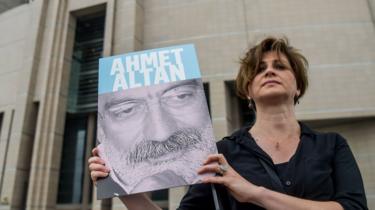
The six sentenced journalists are Nazli Ilicak, Ahmet Altan, Mehmet Altan, Fevzi Yazici, Yakup Simsek and Sukru Tugrul Ozsengul.
The Istanbul court found them guilty of “attempting to abolish the order prescribed by the Turkish constitution or to bring in a new order”, Turkish media reported.
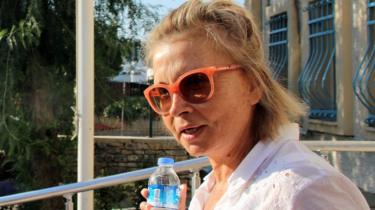
Image copyrightAFPImage captionNazli Ilicak was among the six jailed for life
All six denied the charges.
The Altan brothers – both veteran journalists and writers – were accused of giving coded messages in a television talk show on the eve of the coup attempt.
Nazli Ilicak is also a well-known journalist in Turkey and has written for a number of newspapers, including Hurriyet and Sabah.
Military officers led a mutiny against President Recep Tayyip Erdogan on 15 July 2016 which resulted in the deaths of 250 civilian protesters.
Since the abortive coup the Turkish authorities have jailed more than 50,000 people and dismissed more than 150,000 public servants, including journalists, teachers, police and justice officials.
Mehmet Altan, who is also an economics professor, had won a constitutional court ruling in his favour – but it was overruled on Friday.
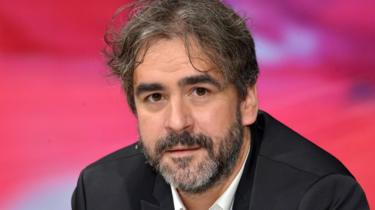
Image copyrightAFP/GETTYImage captionDeniz Yucel had been reporting on leaked emails
Separately, Die Welt journalist Deniz Yucel – who holds German-Turkish dual citizenship – was freed from jail on Friday. He had been accused of spreading propaganda.
Mistrust and bad blood
By OP’S NEWS
I watched last year as President Erdogan spoke of Deniz Yucel at a political rally. “They are hiding a terrorist, a spy, in the German embassy,” he bellowed, to roars of approval. “Merkel asked me to release him. I told her we have an independent judiciary. He’ll pay for being a terrorist.”
Today Deniz Yucel was released, after more pressure by the German chancellor. “It seems like some problems in our relations have disappeared,” the Turkish prime minister told reporters. Yet Turkey still claims judicial independence.
Was there a deal for his release? We’ll never know. But while the biggest impediment to improved Turkish-German ties has been removed, several more remain.
A German human rights activist still faces trial here. Germany has repeatedly criticised the erosion of democracy in Turkey. And Turkey accuses Germany of harbouring terror supporters. The two countries need each other, but mistrust and bad blood run deep.
The Yucel case was an irritant in German-Turkish relations, and on Thursday Chancellor Angela Merkel had pressed for his release.
Mr Yucel, 44, was arrested in Istanbul a year ago and accused of writing propaganda in support of terrorism.
Turkey labels separatist militants in the Kurdish community as “terrorists”.
The arrest came after Mr Yucel reported that the Turkish energy minister’s email account had been hacked.
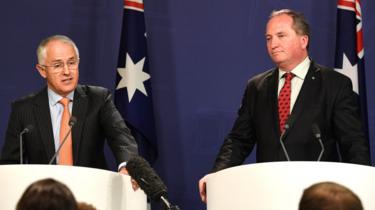
Image copyrightGETTY IMAGESImage captionMalcolm Turnbull and Barnaby Joyce at a press conference in 2016
Australian Deputy PM Barnaby Joyce has sharply criticised the nation’s leader, Malcolm Turnbull, in an escalation of tensions that have rocked the government.
On Thursday, Mr Turnbull admonished Mr Joyce for making a “shocking error” over his affair with a former staffer – saying it had set off a “world of woe”.
Mr Joyce said Mr Turnbull’s remarks were “inept” and “unnecessary”.
“In many instances, they caused further harm,” said Mr Joyce, who leads junior coalition party the Nationals.
‘Coalition in crisis’
The opposition party, Labor, said the Liberal-Nationals coalition was “in crisis”.
Mr Joyce said he would try to repair his relationship with Mr Turnbull, but again stared down calls to resign.
Mr Turnbull has repeatedly said Mr Joyce’s future is a decision for the Nationals, most of whom have publicly backed their leader.
Mr Joyce’s relationship with his former media adviser, Vikki Campion, has raised several politically damaging questions since it was revealed last week.
Whatever happened to the bromance?
By OP’S NEWS
It’s just two months since Barnaby Joyce and Malcolm Turnbull posed in matching plaid shirts as they celebrated “getting the band back together” after Mr Joyce’s by-election victory.
It looks like the band has struck some musical differences.
Mr Joyce clearly didn’t like being openly castigated by the PM over his extramarital affair, and so has gone on the attack.
As the leaders of different parties within a coalition, you would expect a little friction from time to time.
But by engaging in some very public name-calling, the pair have given the opposition plenty of ammunition for the days and weeks ahead.
On Thursday, Mr Turnbull said Mr Joyce’s affair had caused “terrible hurt and humiliation” to his estranged wife Natalie Joyce, their four daughters and Ms Campion.
Mr Joyce said on Friday: “I would not wish on friend nor foe the hurt, the scrutiny, the intense intrusion into your life that I have gone through [in] this process.”
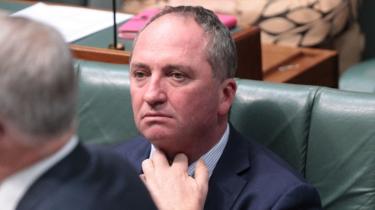
Image copyrightGETTY IMAGESImage captionMr Joyce says the PM’s criticism of his affair was unnecessary
Leader of the Opposition Bill Shorten said the government was “eating itself alive”, and called on Mr Turnbull to sack Mr Joyce immediately.
“When the two most senior leaders of the government hate each other and are criticising each other, the people of Australia’s interests are not being served,” Mr Shorten said.
Mr Turnbull technically has the power to sack Mr Joyce, but such a move would be politically untenable, said Australian Broadcasting Corp election analyst Antony Green.
“It’s very difficult for the prime minister to sack him without breaking the coalition agreement,” he said.
The coalition has only a one-seat majority in the House of Representatives.
Mr Joyce has faced scrutiny over the timing of two jobs offered to Ms Campion within the Nationals last year, and whether he sought a gift of free housing from a businessman. Mr Joyce denies ministerial standards were broken in either case.
He will take a week of leave from Monday, meaning he will not be acting prime minister when Mr Turnbull conducts a visit to the US.
Mr Joyce had only returned to parliament in December after briefly losing his job over his New Zealand dual citizenship.
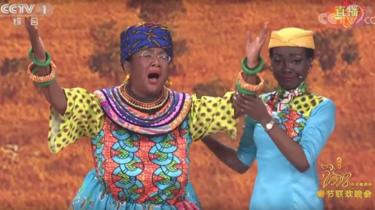
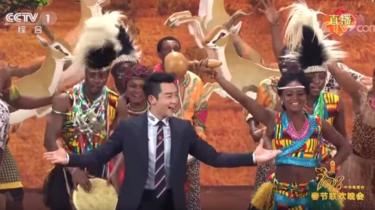
The controversial sketch was part of the four-hour CCTV New Year Gala – also known as the Spring Festival Gala – which aired on Thursday night. By some estimates, the show is the most watched entertainment programme on earth.
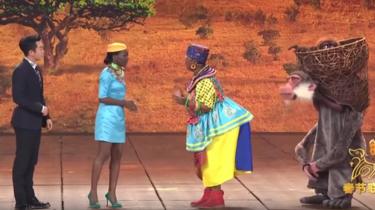
The skit begins with a routine by a group of African dancers in “tribal” attire and people dressed up as zebras, giraffes, lions and antelopes. This is followed by a comedy skit where a young black woman asks a Chinese man to pose as her husband when meeting her mother.
While the young woman is played by a black actor, her mother appears to be an Asian actor in blackface make-up, donning a traditional outfit complete with huge fake buttocks.
Image copyrightYOUTUBE/CCTVImage captionThe African mother is played by a Chinese lady with extra buttocks added on
She walks on stage carrying a fruit plate on her head and is accompanied by what is thought to be have been a black actor in a monkey suit, carrying a basket on his back.
The skit praises Chinese-African cooperation, showing how much Africans benefit from Chinese investment and how grateful they are to Beijing. At one stage, the character of the African mother exclaims how much she loves China.
China has over the past years stepped up investment into many African countries. The sketch was set around people working on the Nairobi-Mombasa railway project.
China’s soft-power a work in progress
By OP’S NEWS
China’s TV gala has become as much a part of the spring festival tradition as dumplings and lanterns. The gaudy sets, highly choreographed dance troupes and sentimental ballads serve as the background noise to hundreds of millions of private family reunions and provide the mass media glue that binds them all into a genuine national moment.
In recent years though there have been grumblings that the gala is taking on a more political tone and this year was no exception – with the whole event a kind of pageant to China’s rising power and national rejuvenation.
The Africa skit was clearly meant to be part of this same vision and is, if nothing else, proof that art is rarely improved by a large dollop of propaganda. But what’s particularly striking about the whole toe-curling spectacle is that it is also strangely at odds with China’s own message.
Chinese investment in Africa is one of the defining economic stories of our time and it has been accompanied by a massive publicity drive.
Bristling at any suggestion that it is involved in neo-colonialism, China insists that it comes not to exploit, but in partnership with and for the mutual benefit of its African partners.
The sight then, of a Chinese actress in blackface, leading an African man dressed as a monkey around a stage as a way of celebrating a vital trading relationship on prime-time national TV, seems particularly ill-judged.
Simply naive and clumsy? Or a sign of something deeper? Either way it suggests China’s soft-power project is still a work in progress.
Europe’s racist history
The notion of blackface being racist is linked to the history of minstrel shows in the US and Europe in the 19th and 20th centuries where white actors would paint their skin black for condescending portrayals of black people.
In China, the vast majority of people have no experience of interacting with black people and are less aware of Europe’s and the US’ history of slavery and racism.
Nonetheless, Chinese users on the country’s biggest social media website Weibo have condemned the programme.
Comments included “it’s full of racism,” that “it makes me feel like I’m living in the last century,” and that “we are going to lose face internationally”.
Putting it into a larger context beyond the specific history of blackface, one user asks “if an American white person painted yellow, says I love the USA and recites some Trump quotes while pulling his eyes, how would you feel?”
Some Chinese articles criticising the annual gala on the eve of Lunar New Year, China’s biggest holiday, have been blocked overnight, as have some critical comments on Chinese social media sites.
The ad featured a black man with paint stains on his face who gets put into a washing machine by a young Chinese woman to later re-emerge as a fair-skinned Chinese man.
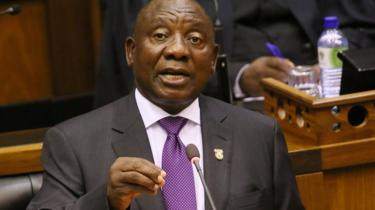
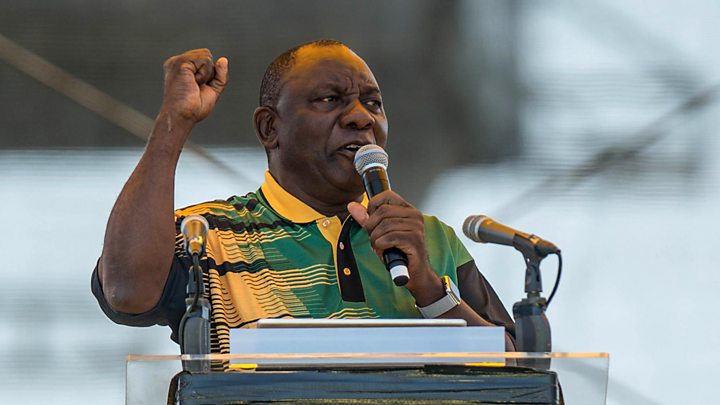
Image copyrightREUTERSImage captionCyril Ramaphosa, 65, is one of South Africa’s wealthiest politicians
New South African President Cyril Ramaphosa has spoken of a “new dawn” in his first State of the Nation address.
Mr Ramaphosa, who was sworn in on Thursday, promised to “turn the tide of corruption”.
He also spoke of accelerating land redistribution and outlined plans to boost the economy and create jobs.
His predecessor, Jacob Zuma, stepped down on Wednesday after pressure from the governing ANC party. He faces numerous corruption allegations.
Mr Ramaphosa, a 65-year-old former businessman, dedicated much of his address to parliament to job creation. He said that the country faced “tough decisions” because of its stagnating economy and large national debt.
He highlighted youth unemployment and said he planned to create a million paid internships in the coming years.
“This is the year in which we will turn the tide of corruption in our public institutions,” he said.
“We are determined to build a society defined by decency and integrity, that does not tolerate the plunder of public resources, nor the theft by corporate criminals of the hard-earned savings of ordinary people.”
He drew applause when he thanked South Africans for their patience during the last turbulent week.
Opposition Democratic Alliance leader Mmusi Maimane said the president could have pledged “bolder action”, and complained, “I heard more of the same stuff”.
But Julius Malema, head of the far-left Economic Freedom Fighters party, said he would give the new leader “the benefit of the doubt”.
Media captionCyril Ramaphosa: The long road to power
Earlier in the week, the ANC (African National Congress) had told Mr Zuma to step down or face a vote of no-confidence in parliament on Thursday.
Mr Zuma, who had been in power since 2009, finally gave way in a resignation speech late on Wednesday.
The allegations of corruption he faces include claims that he allowed the wealthy Gupta family, to whom he has personal ties, to wield influence over government policy.
Both Mr Zuma and the Guptas have denied wrongdoing.

 GETTY IMAGES
 HANDOUT




 OP's News