Image copyrightGETTY IMAGESImage captionThe island nation plans to protect 30% of its seas by 2020
The Seychelles has created protected areas “the size of Great Britain” in the Indian Ocean.
In exchange for getting some of its national debt paid off, the island nation has agreed to protect 210,000 sq km (81,000 sq miles) of ocean.
The reserves will limit tourism and fishing activities in the Seychelles to halt further damage to aquatic life.
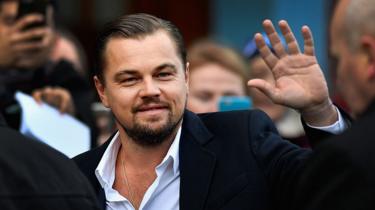
A foundation set up by actor Leonardo DiCaprio is one of the investors that worked on the deal.
The Oscar winner said: “This effort will help the people of Seychelles protect their ocean for future generations, and will serve as a model for future marine conservation projects worldwide.”
Image copyrightGETTY IMAGESImage captionLeonardo DiCaprio is among investors who helped fund the deal
Seychelles President Danny Faure said: “Our large ocean brings development opportunities but also responsibility.
“By planning properly to protect our environment, we can be sure we are also protecting our people and their livelihoods against an uncertain future. “
What is the deal?
This is understood to be the first debt swap designed to protect ocean areas in the world.
The Seychelles government agreed the debt swap with the Nature Conservancy, a US charity, and a number of investors back in 2016.
Under the terms of the $21m (£15m) deal, the charity and the investors – including the Leonardo DiCaprio Foundation – paid for a portion of the Seychelles national debt.
The country will then direct future national debt payments into a new trust, the Seychelles Conservation and Climate Adaptation Trust (SeyCCAT).
This trust will offer lower interest rates on debt repayments, and any savings will go to fund new projects designed to protect marine life and handle the effects of climate change.
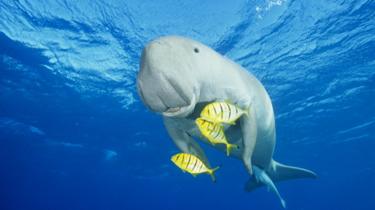
Image copyrightSCIENCE PHOTO LIBRARYImage captionThe dugong is one of the sea animals that will be protected
What will be protected?
The Seychelles is raising the percentage of its protected waters from 0.04% to 30% by 2020 as part of the agreement.
This first part of the plan creates two new marine parks.
The first covers the Aldabra islands, home to hundreds of thousands of tortoises, nesting bird colonies, and the dugong – one of the more endangered species in the Indian Ocean.
This area will be fully protected, with only research and regulated tourism allowed.
The second area concerns the seas around the Seychelles’ main islands and will limit the fishing and tourism activities there.
“This is a critical accomplishment in our mission to bring conservation to scale across the globe,” said Nature Conservancy CEO Mark Tercek.
“What you see today in Seychelles is what we expect to introduce in the Caribbean and other ocean regions facing the threats of climate change.”
French rail worker Eric Libert claimed his right to a private life was breached when his employer opened files with pornography on his work computer.
Now the European Court of Human Rights has ruled against him, agreeing that the files should have been clearly identified as private.
Mr Libert was fired by the national rail company, SNCF, in 2008 when the files were unearthed.
The Strasbourg court found SNCF had a right to open them.
Mr Libert, deputy head of the regional surveillance unit in Amiens, was suspended in 2007 and his computer searched in his absence.
SNCF found pornographic images, videos and forged certificates on his computer.
Mr Libert appealed to an industrial tribunal after his sacking, lost, and took his case all the way up to the French court of appeal.
In its ruling, The European Court of Human Rights (ECHR) decided there had been no breach of Article Eight of the European Convention on Human Rights – the right to respect for privacy and a family life.
Its ruling noted that French law does provide for some privacy when it comes to files marked as personal on a work computer. However, they can be opened in the presence of the employee, or if he or she is told in advance.
‘Serious breach’
In the case of Mr Libert, the ECHR agreed with French rulings that the files had not been properly identified as being private, though they had been flagged personal.
It also noted the findings of French courts that SNCF had been legitimately ensuring that its computers were being used “in line with contractual obligations and the applicable regulations”.
The ECHR noted that France’s court of appeal had ruled that Mr Libert committed “a serious breach of the SNCF professional code of ethics and of the relevant internal guidelines”.
“According to the court of appeal, his actions had been particularly serious because, as an official responsible for general surveillance, he would have been expected to set an example.”
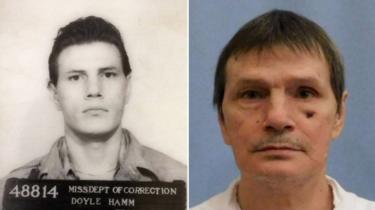
Image copyrightALABAMA DEPARTMENT OF CORRECTIONSImage captionDoyle Lee Hamm has been on death row for 30 years
Alabama is set to execute a cancer-stricken inmate despite his plea to spare him potentially unnecessary pain.
Doyle Lee Hamm, 61, argues his veins are too damaged from cancer and past drug use, and the lethal injection would be unconstitutionally painful.
He was convicted of fatally shooting motel clerk Patrick Cunningham in 1987 in a robbery where $410 was taken.
Hamm is one of three US death row inmates due to be executed on Thursday. The other two are in Texas and Florida:
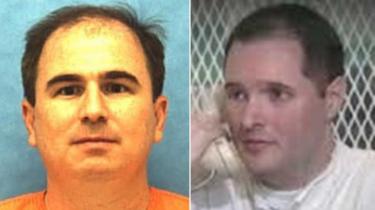
Image copyrightAFP/ FLORIDA DEPARTMENT OF LAW ENFORCEMENTImage captionEric Scott Branch (left), and Thomas Whitaker also face execution
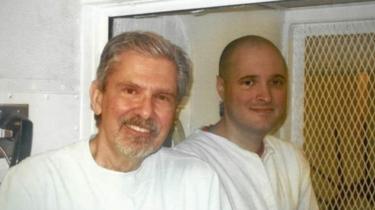
Thomas “Bart” Whitaker, 38, was sentenced to death for the 2003 murder of his mother and brother. His father, who was shot in the chest but survived, has been pleading with the state of Texas to save his son’s life and change his sentence to a life in prison. Kent Whitaker, a devout Christian who once believed in the death penalty but now forgives his son, said he does not want to “lose the last member of my direct family in the name of justice that I think is wrong”.
Eric Scott Branch, 47, was charged with the rape and killing of 21-year-old Susan Morris while she was a student at the University of West Florida. Branch was sentenced to death in 1993 and has spent 24 years on death row. Governor Rick Scott of Florida signed his death warrant in January.
If all the executions occur as planned, it would be the first time three prisoners have been killed on the same day since 2010, according to the Death Penalty Information Center.
Capital punishment in the US was reinstated in 1976.
A judge denied the inmate’s appeal and said the state would not use any veins in his arms and hands in the execution.
Image copyrightGETTY IMAGESImage captionBart Whitaker (right) has been forgiven by his father Kent (left) for arranging a hit man to kill him
US Chief District Judge Karon O Bowdre wrote in her order on Tuesday: “The court’s independent medical expert reported that Mr Hamm has accessible peripheral veins in his lower extremities, and that the peripheral veins in his upper extremities, while accessible, would be more difficult to access and would require a more advanced practitioner using ultrasound guidance.”
Hamm was diagnosed with B-cell lymphoma in 2014. His lawyer has argued that cancer, hepatitis C and previous drug use compromised his veins and could result in a botched execution.
His lawyer, Bernard Harcourt, unsuccessfully urged the state to block the execution several times. It is scheduled for 18:00 local time (00:00 GMT).
The attorney also argued that the state should not kill a man already dying with cancer.
“We’ve past the point of ghoulish justice,” Mr Harcourt told the New York Daily News on Thursday. “We are at the point of human sacrifice.”
Experts at the United Nations supported his lawyer’s claim and encouraged Alabama to halt his execution, saying that killing Hamm in his condition could amount to cruel or unusual punishment.
“We are seriously concerned that attempts to insert needles into Mr Hamm’s veins to carry out the lethal injection would inflict pain and suffering that may amount to torture,” the UN said in a statement.
Alabama officials said they will alter their traditional execution protocols and instead connect an intravenous line to Hamm’s legs or feet after an expert determined those veins would be accessible.
He asserted that Hamm’s crime of killing Mr Cunningham, a father of two, was worthy of the death penalty.
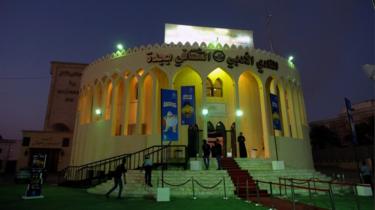
Image copyrightREUTERSImage captionOther measures, like allowing cinemas to be opened, have already been announced
Saudi Arabia says it will invest $64bn (£46bn) in developing its entertainment industry over the next decade.
The head of the General Entertainment Authority said 5,000 events were planned this year alone, including those by Maroon 5 and Cirque du Soleil.
Construction of the country’s first opera house has also begun in Riyadh.
The investment is part of a social and economic reform programme, known as Vision 2030, unveiled two years ago Crown Prince Mohammed bin Salman.
The 32 year old wants to diversify the economy and reduce the kingdom’s reliance on oil, including by increasing household spending on culture and entertainment.
In December, the government lifted a ban on commercial cinemas.
General Entertainment Authority chief Ahmed bin Aqeel al-Khatib said: “In the past, investors would go outside the kingdom to produce their work, and then showcase it back in Saudi Arabia.
“Today, change will happen and everything related to entertainment will be done here.”
“God willing, you will see a real change by 2020.”
Image copyrightREUTERSImage captionIn January, circus troupe Cirque Eloize performed in Saudi Arabia for the first time
Last year, Prince Mohammed declared his ambition that Saudi Arabia would once again be “a country of moderate Islam that is open to all religions, traditions and people”.
Seventy per cent of the population were under 30 and they wanted a “life in which our religion translates to tolerance, to our traditions of kindness”, he said.
Saudi Arabia’s royal family and religious establishment adhere to an austere form of Sunni Islam known as Wahhabism, and Islamic codes of behaviour and dress are strictly enforced.
Media captionArmenia’s mass killings – explained in 60 seconds
The Dutch parliament has passed a motion recognising that the mass killing of Armenians by Ottoman Turks during World War One was a “genocide”.
Armenians say up to 1.5 million of their people died in the atrocities of 1915. Turkey says the toll was much lower and rejects the term “genocide”.
The move is likely to heighten Dutch-Turkish tensions at a time when they are already strained.
Turkey condemned the vote, saying it was not valid or legally binding.
“The politicisation of 1915 events by taking them out of historical context is unacceptable,” a spokesman for the Turkish foreign ministry said.
Only three Dutch MPs opposed the motion, which includes sending a cabinet-level representative to the Armenian capital, Yerevan, for a commemoration event in April.
But the government has stressed that it will not change the Netherlands’ official policy.
“The government will not follow the judgment of the parliament,” Foreign Minister Sigrid Kaag told Dutch television before the vote.
“This cabinet wants to be very careful about relations with Turkey, which have been better,” she added.
Since then, relations have deteriorated and earlier this month the Netherlands formally withdrew its ambassador to Turkey.
The vote in parliament is unlikely to alleviate these tensions, but other countries have tabled similar motions in the past.
More than 20 nations, including France and Russia, as well as Pope Francis, have recognised the 1915 killings as genocide.
Turkey denies that there was a systematic campaign to slaughter Armenians as an ethnic group during World War One. It also points out that many Turkish civilians died in the turmoil during the collapse of the Ottoman Empire.
Armenian genocide dispute
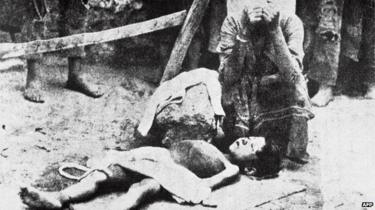
Image copyrightAFPImage captionArguments have raged for decades about the Armenian deaths in 1915-16
Hundreds of thousands of Christian Armenians died in 1915 at the hands of the Ottoman Turks, whose empire was disintegrating
Many of the victims were civilians deported to barren desert regions where they died of starvation and thirst. Thousands also died in massacres
Armenia says up to 1.5 million people were killed. Turkey says the number of deaths was much smaller
Most non-Turkish scholars of the events regard them as genocide – as do more than 20 states including France, Germany and Russia, and some international bodies such as the European Parliament
Turkey rejects the term “genocide”, maintaining that many of the dead were killed in clashes during World War One, and that many ethnic Turks also suffered in the conflict
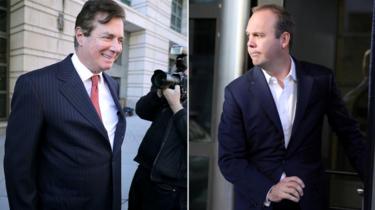
Image copyrightGETTY IMAGESImage captionPaul Manafort (L) and Rick Gates allegedly controlled a $75m offshore account
The special counsel investigating claims of Russian political meddling in the US has filed new charges against two former aides to Donald Trump.
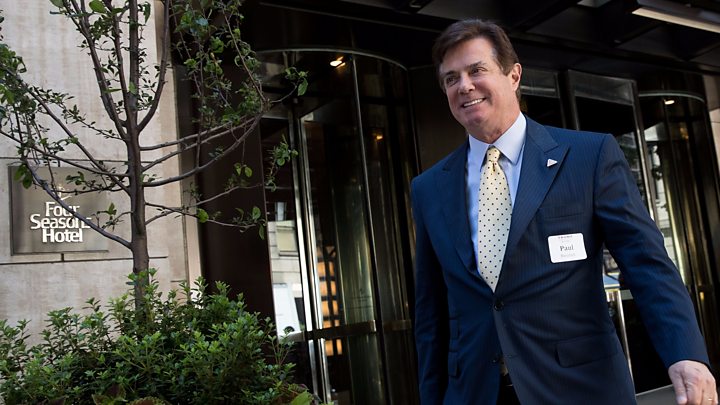
Robert Mueller indicted Mr Trump’s former campaign chairman Paul Manafort and business associate Rick Gates on multiple counts of tax and bank fraud.
Both were charged in October with conspiracy to launder money.
But there are no criminal allegations of collusion with Russia, the Justice Department investigation’s main thrust.
Mr Manafort resigned as chairman of the Trump campaign in August 2016 after being accused over his dealings with pro-Russian politicians in Ukraine.
The seasoned political operative has worked on several Republican presidential campaigns, beginning with Gerald Ford’s in 1976.
What are the new charges?
Thursday’s 32-count indictment alleges that Mr Manafort and Mr Gates conspired to hide more than $30m (£22m) in Mr Manafort’s personal income from tax officials.
It also claims that Mr Gates concealed more than $3m of his own income.
The money “flowed through” a $75m offshore account controlled by them, according to the indictment filed by a federal grand jury in Alexandria, Virginia.
It is also alleged the two defendants filed tax returns to the US authorities from 2010-14 that they knew to be factually incorrect.
Media captionManafort’s indictment: Where did all the money go?
Mr Gates is accused of using his share of the cash to pay for “personal expenses, including his mortgage, children’s tuition” and re-decorating his Virginia home.
Earlier on Thursday a court denied Mr Manafort’s request to modify the terms of his house arrest.
The judge ruled that Mr Manafort’s pledge to use his properties in Virginia and New York as bail collateral was “unsatisfactory”.
The special counsel had opposed the bail application.
Mr Mueller’s team argued the Manafort properties were related to “additional criminal conduct” and could be confiscated in the event of foreclosure.
How many people has Mueller charged?
Nineteen people, including four former Trump advisers, have been indicted by the special counsel.
But as President Trump has repeatedly pointed out, the ongoing inquiry has filed no charge that any of his associates colluded with an alleged Kremlin plot to influence the result of the 2016 presidential election.
Mr Manafort and Mr Gates pleaded not guilty last October to 12 counts including money laundering and conspiracy against the US, relating to the pair’s Ukrainian business dealings.
Michael Flynn, the former US national security adviser, pleaded guilty to lying to the FBI over meetings he had with the Russian Ambassador, Sergei Kislyak.
George Papadopoulos, a former Trump campaign adviser, admitted lying to the FBI about his contacts with Russians.
Last week, 13 Russians were charged with tampering in the 2016 US election and a California man, Richard Pinedo, admitted an identity theft charge.
This week a London-based lawyer, Alex van der Zwaan, pleaded guilty in court to making false statements when questioned about his work for Ukraine’s Ministry of Justice.
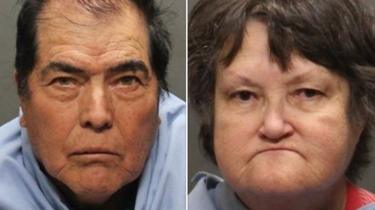
Image copyrightPIMA COUNTY SHERIFF DEPTImage captionBenito and Carol Gutierrez had passed all checks to adopt children, police said
A couple in Arizona have been charged with locking up their adopted children for up to 12 hours at a time with only a bucket for a toilet.
Benito and Carol Gutierrez are accused of keeping the four children, aged between six and 12, locked in rooms with no light or food.
Police were alerted when one boy left the house in Tucson.
He entered a shop to call a relative, but an employee called police because of concerns about the boy’s appearance.
The Pima County Sheriff’s Department said they discovered that the children “were kept in separate bedrooms, which were locked from the outside, with no access to food, water, lights, or bathroom facilities for up to twelve hours at a time on a regular basis”.
Police said the children – all biological siblings adopted by the couple – did not realise the conditions in which they lived were unusual. They were excellent students and had no reported problems in school.
At a press conference, Detective Pat Willson praised the employee of the Family Dollar shop who contacted police. “We commend this citizen,” he said. “He wasn’t sure the situation was a crime, but he reported his concerns.”
The couple had passed all required background checks to be allowed to adopt children, Mr Willson said, adding that there had been no reported problems in the past.
They have now been charged with child abuse.
The arrests come a month after a California couple were held after police found their 13 children held captive at home.
David Allen Turpin and Louise Anna Turpin were held on charges of torture and child endangerment. Police said some of their children had been “shackled to their beds with chains and padlocks”.
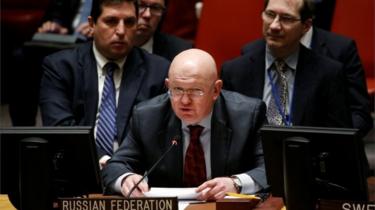
Image copyrightREUTERSImage captionRussia’s ambassador says Moscow has put forward amendments
Russia has said there is no agreement on a UN Security Council resolution to bring in a 30-day truce in Syria.
Russia’s UN ambassador, Vassily Nebenzia, told the council in New York his country had presented amendments.
Speaking at an emergency meeting of the council, he called for “feasible” rather than “populist” action.
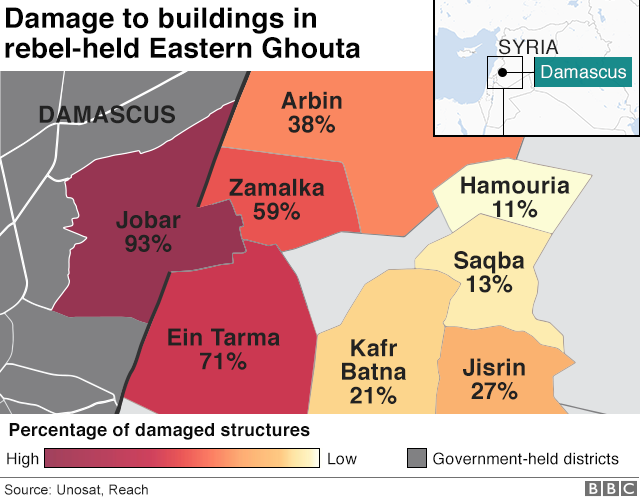
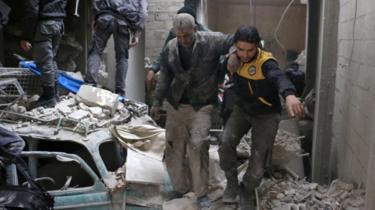
Calls for a truce have grown louder as civilians in the besieged rebel enclave of the Eastern Ghouta come under more intensive bombardment.
What does the resolution say?
The draft, put forward by Kuwait and Sweden, calls for a 30-day nationwide truce to go into effect 72 hours after the resolution is passed.
Medical evacuations and aid deliveries would start 48 hours after that. The draft says 5.6 million people in 1,244 communities across the country are in acute need.
But any ceasefire would not apply to the Islamic State group, al-Qaeda and the al-Nusra Front.
Russian Foreign Minister Sergei Lavrov has made clear that Hayat Tahrir al-Sham, an al-Qaeda-linked alliance that has a presence in the Eastern Ghouta, must not be included.
Mr Lavrov said he also wanted to exclude rebel groups in the enclave who are “co-operating” with Hayat Tahrir al-Sham and shelling nearby government-held areas.
The draft also calls for all parties to avoid establishing military positions in civilian areas, including schools and hospitals. Sieges of populated areas should be lifted.
The United States, the UK and France are calling for the resolution to be approved without delay.
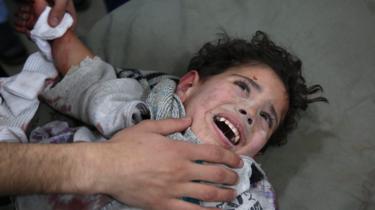
Image copyrightAFPImage captionAlready overwhelmed hospitals are struggling to cope with the influx of casualties
What are the Russian objections?
Russia’s UN ambassador, whose country is one of the five powers that can veto a resolution, stressed the need for something that would actually work.
“The ceasefire carries great significance in principle and not merely for the delivery of humanitarian assistance,” he said.
“The challenge is how to achieve this. And here what we need is not symbolism, not decisions for the sake of decisions, but rather measures that are undertaken that are commensurate with conditions on the ground.”
Russia is a key backer of Syria’s President Basher al-Assad in the civil war and the suspicion among Western powers is that Moscow is stalling to allow their ally to deal a final blow to rebel forces.
Deputy US ambassador to the UN Kelley Currie accused Russia of standing in the way of “any meaningful effort” to halt the fighting in the Eastern Ghouta.
How bad is the situation in the Eastern Ghouta?
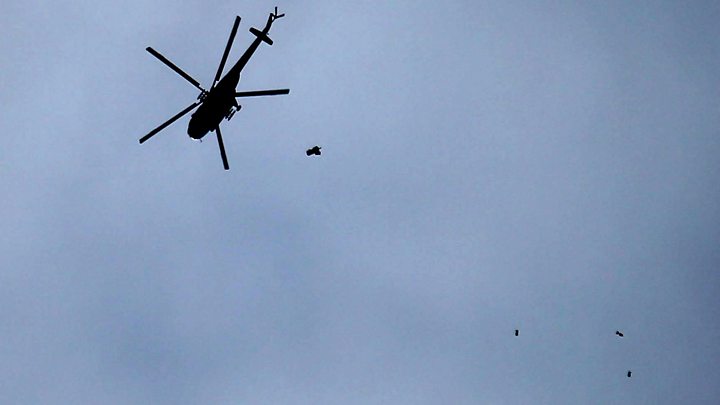
For the fifth day running, Syrian government forces carried out a wave of air and artillery strikes.
The number killed since Sunday has risen to at least 403, the Syrian Observatory for Human Rights monitoring group says, as 46 more died on Thursday.
Barrel bombs and shell fire have rained down in what the UN has described as “hell on earth” for the 393,000 people trapped there.
Spokesman Siraj Mahmoud also asserted that the organisation was being deliberately targeted by government aircraft, with four rescuers killed since Sunday night. “Everyone knows it is an extermination,” he told the Associated Press.
Media captionEastern Ghouta resident: “Missiles are dropping like rain”
The UN humanitarian co-ordinator for Syria, Panos Moumtzis, echoed calls for a ceasefire.
Referring to the harrowing images coming out of the Eastern Ghouta, he said: “If this is not going to convince [UN security] council members, council states, of the need for a ceasefire, honestly we don’t know what is it that would convince them.”
Image copyrightAFPImage captionRescue workers said the town of Douma came under sustained attack on Thursday
The Syrian government has denied targeting civilians and insisted it is trying to liberate the Eastern Ghouta from “terrorists” – a term it has used to describe both jihadist militants and the mainstream rebel groups that dominate the enclave.
Aid groups report dozens of hospitals being put out of action since Sunday.
Médecins Sans Frontières (MSF) said the government’s siege was also preventing medics from obtaining essential life-saving supplies, warning that its facilities had completely run out of supplies of blood bags, general anaesthetic drugs and intravenous antibiotics.
Media captionSeven things the NRA blames after Florida
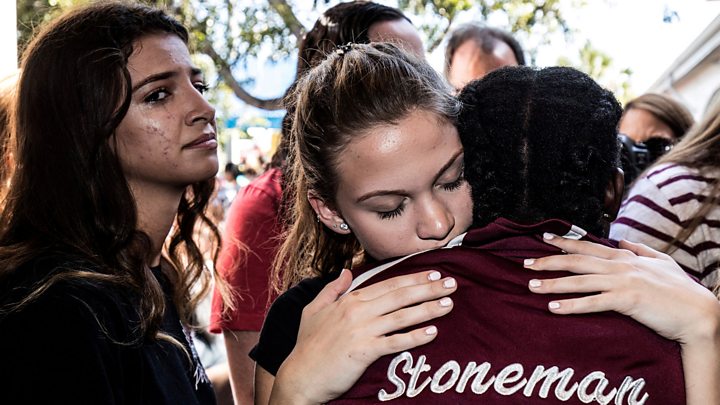
The head of the most powerful gun lobby in the US has accused Democrats and media of “exploiting” a Florida school shooting that left 17 people dead.
Wayne LaPierre said “opportunists” were using the 14 February tragedy to expand gun control and abolish US gun rights.
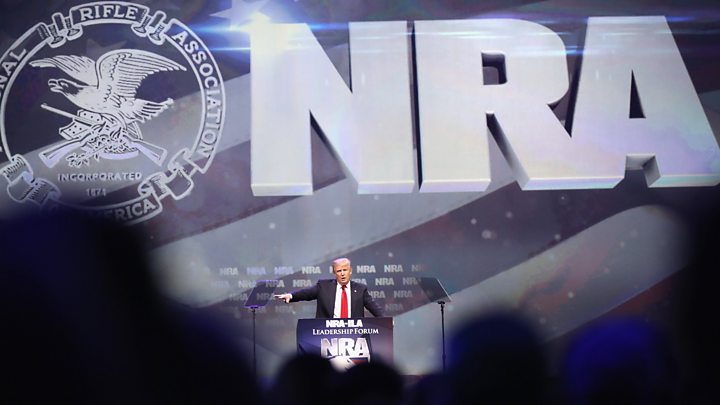
Mr LaPierre’s comments came during the Conservative Political Action Conference (CPAC) in Washington.
Meanwhile, US President Donald Trump suggested teachers could receive bonuses for carrying guns.
“As usual, the opportunists waited not one second to exploit tragedy for political gain,” said Mr LaPierre, who is head of the National Rifle Association (NRA).
“They hate the NRA. They hate the second amendment. They hate individual freedom,” he said, referring to the second amendment in the US constitution, which governs the “right to keep and bear arms”.
Separately, it has emerged that an armed guard who was at the school during the shooting stood outside the building where the attack was taking place and did not go in to confront the gunman.
Scot Peterson, the school resource officer, has now resigned after being suspended, Broward County Sheriff Scott Israel said.
Media captionFlorida shooting: Why the NRA wields so much power
Mr LaPierre’s comments were the gun lobby’s first more than a week after the massacre at Marjory Stoneman Douglas High School in Parkland, Florida.
Mr LaPierre lambasted the FBI for failing to follow up on a tip about the former student suspected of carrying out the attack.
He also criticised America’s “European-style socialists” for urging gun control.
“They don’t care if their laws work or not,” said Mr LaPierre. “They just want to get more laws to get more control over people. But the NRA, the NRA does care.”
Survivors of last week’s deadly shooting have called for stricter gun laws, prompting the nationwide activist movement #NeverAgain.
Mr LaPierre accused Democrats of trying to smear the NRA.
Mr LaPierre reiterated the NRA’s backing for the proposal of arming teachers.
He said the NRA would help any US school with their safety and security, free of charge.
Media captionTeacher at Florida school where 17 people died says arming some teachers would be wrong
“Evil walks among us and God help us if we don’t harden our schools and protect our kids,” he said.
But Randi Weingarten, president of the 1.7 million-member American Federation of Teachers union, disagreed.
“Anyone who wants guns in schools has no understanding of what goes on inside them – or worse, doesn’t care,” she said.
What did Trump say?
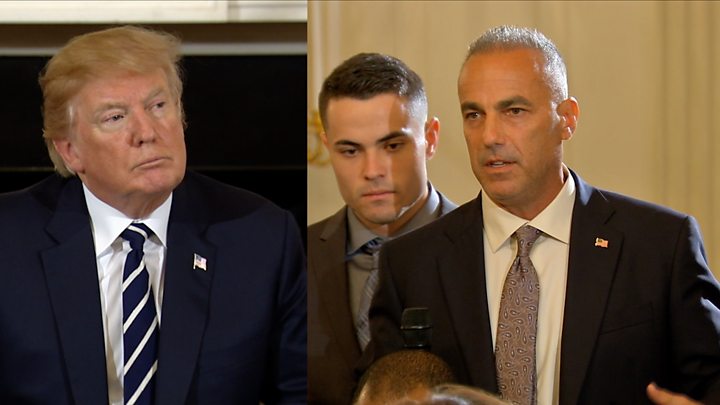
The US president has stepped up his calls for teachers to be armed, a day after he floated the proposal at a White House event to hear from survivors of the Florida school shooting.
Discussing school safety with state and local officials on Thursday, he said: “Shooters won’t walk into a school if 20% of people have guns.”
Mr Trump added: “What I’d recommend doing is the people that do carry, we give them a bonus. We give them a little bit of a bonus.”
The president also said he supports raising the age at which a person can buy a gun from 18 to 21, insisting the NRA would back such a proposal.
“I don’t think I’ll be going up against them,” Mr Trump said of the gun lobby. “They’re good people.”
Mr Trump also took to Twitter to push for national background checks for the mentally ill, a policy which the NRA chief later echoed at the conference.
“Anyone adjudicated as mentally incompetent or dangerous to society should be prevented from getting a gun,” said Mr Trump.
Media captionVictim’s father tells Trump of rage
Reshaping the new gun debate
Analysis by OP’S NEWS
On the first day of CPAC, the NRA had an uninterrupted hour to offer its response to Parkland – and respond it did. In a one-two punch, Dana Loesch and Wayne LaPierre launched a blistering attack against the mainstream media, the FBI and pro-gun-control Democratic politicians.
The media “love mass shootings” because of the ratings, Ms Loesch said. The FBI rank-and-file should rise up against a “corrupt” senior staff that has failed to stop mass shooters, Mr LaPierre railed. Democrats, he said, “hate individual freedom”.
Media captionWhat’s Donald Trump said about guns and gun control?
The rhetoric may be an effort to reshape a firearm debate that, over the past week, has shifted towards calls for bans on so-called assault weapons and the emergence of students seeking action on gun control.
The NRA would prefer this to be a conversation about media bias, “European socialist” Democrats and an FBI that has lately become a conservative bogeyman.
When it comes to policy proposals, turning schools into “hard targets” with armed teachers and airtight security is the preferred option.
The NRA has a vast political war chest and a president who views it as a loyal ally. It has been down this road before – after Columbine, Newtown and other school shootings. The NRA’s work is just beginning.

 AFP
AFP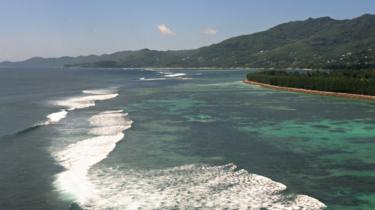


 OP's News