“We look forward to congratulating Team USA and celebrating all that our athletes have achieved.”
White House press secretary Sarah Sanders will be one of five members in the delegation.
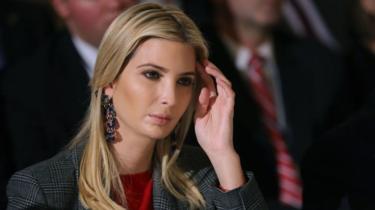
Ms Trump will have dinner with South Korean President Moon Jae-in on Friday night, South Korean media reported.
The Olympic Games, which began on 9 February, are being held in the South Korean town of Pyeongchang.
North Korea at the Olympics
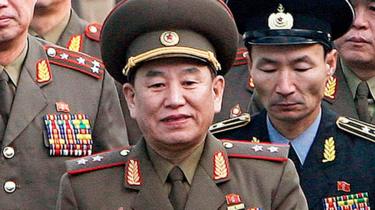
North Korea intelligence chief Gen Kim, who is the former head of Pyongyang’s spy agency the Reconnaissance General Bureau, will arrive in the South on Sunday with an eight-member delegation.
Image copyrightAFPImage captionFile picture of Kim Yong-Chol
South Korean lawmakers on Friday protested against the visit, calling him a war criminal.
Gen Kim’s agency was accused of masterminding attacks on South Korea, including the sinking of the Cheonan navy ship which killed 46 South Korean sailors in 2010.
It is unclear if Gen Kim himself gave the order to torpedo the ship. North Korea has denied any involvement in the sinking.
Earlier this month, US Vice-President Mike Pence attended the opening ceremony of the Winter Olympics.
North Korean leader Kim Jong-un’s sister Kim Yo-jong, who has been dubbed the “Ivanka of the North”, attended the same event, representing Pyongyang.
US officials say the duo were due to meet during the Games, but North Korea pulled out at the last moment.
Image copyrightAFP/GETTY IMAGESImage captionKim Jong-un’s sister Kim Yo-jong was seated in the row behind US Vice-President Mike Pence at the opening ceremony
North Korea’s attendance at the games has been seen as a thaw in relations between the Koreas who have been on tense terms because of North Korea’s nuclear weapons programme.
However, there are concerns Pyongyang has been using the event simply to improve its international image.
The US – among others – has warned against easing pressure on North Korea to abandon its nuclear programme and improve human rights
An armed officer who stood outside a Florida school where a gunman killed 17 people last week “certainly did a poor job”, US President Donald Trump says.
Deputy Scot Peterson resigned after an investigation found he failed to confront the suspect.
Mr Trump said Mr Peterson might be a “coward” who “didn’t react properly under pressure”.
Florida’s governor meanwhile called for law enforcement officers to be placed in every public school in the state.
Media captionHow young conservatives view #NeverAgain
What did Trump say?
Speaking to reporters outside the White House on Friday morning, President Trump criticised the police officer who did not confront the perpetrator of the 14 February massacre in Parkland, Florida.
“He trained his whole life but when it came time to do something he didn’t have the courage,” he said.
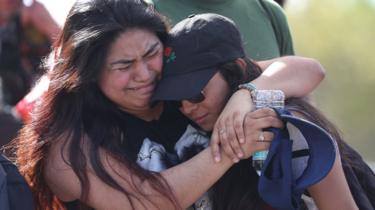
Image copyrightGETTY IMAGESImage captionMourning for the shooting victims continued in Parkland on Friday
“He certainly did a poor job.”
“But that’s a case where somebody was outside, they’re trained, they didn’t react properly under pressure or they were coward,” he added.
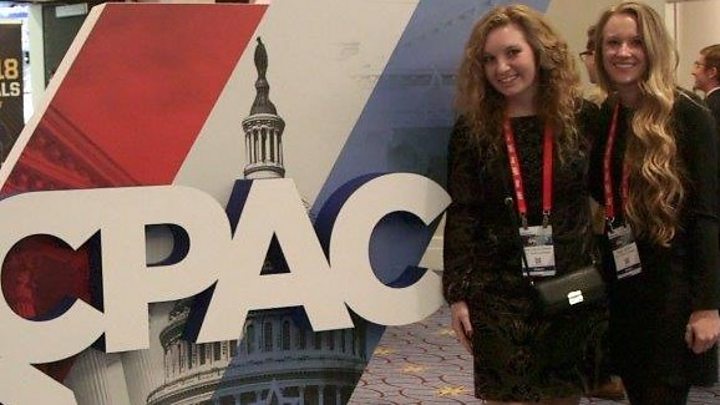
The Republican president later touted his love for gun rights on Friday at the Conservative Political Action Conference (Cpac) in Maryland.
He again proposed arming teachers as a solution to school safety, a method long championed by the National Rifle Association (NRA) gun lobby.
Media captionWhat the British think of arming teachers
What did the officer do?
Broward County Sheriff Scott Israel revealed on Thursday that Mr Peterson, the 54-year-old school resource officer, stood outside while the alleged gunman shot students at Marjory Stoneman Douglas High School.
He said video footage showed Mr Peterson arriving at the building where the shooting broke out about 90 seconds after the first shots were fired, and that he remained outside for about four minutes. The attack lasted six minutes, Sheriff Israel said.
“I am devastated. Sick to my stomach. He never went in,” Sheriff Israel said.
Asked what Mr Peterson should have done, Sheriff Israel said: “Went in, addressed the killer, killed the killer.”
Mr Peterson is yet to publicly comment on what happened. Officers are reportedly guarding his home. It is unclear if he will face charges.
The suspect used a semi-automatic AR-15 rifle, police say, and escaped the scene before being captured later.
What was Deputy Peterson’s role?
School resource officers are sworn law enforcement officers who are responsible for safety and crime prevention in schools, although their exact roles differ from school to school and authority to authority.
Employed by the local police or sheriff’s office, they document incidents and can make arrests, as well as working on areas such as mentoring and education.
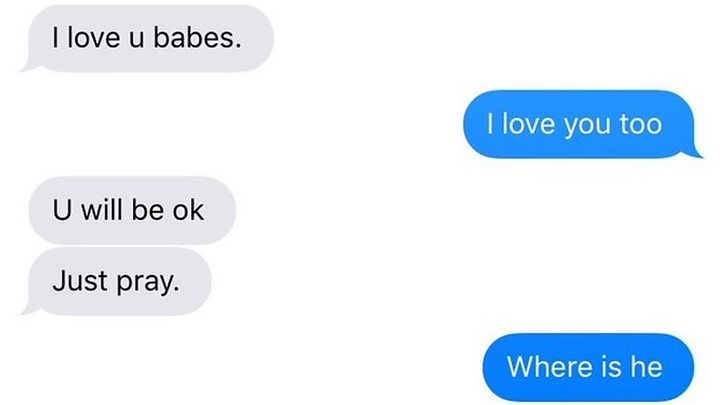
Media captionAs a gunman opened fire in a Florida high school, students inside reached for their phones.
There are between 14,000 and 20,000 such officers in the US, according to the National Association of School Resource Officers.
Mr Peterson had been in his position at the school since 2009, local media report.
The Sun-Sentinel newspaper said he had worked for the sheriff’s office since 1985 and office records showed his salary for 2016 was $75,673 (£54,137).
Were there any other failures?
Concerns have been raised about both the school’s video surveillance system and whether warnings about the former student charged with the massacre were ignored.
It has been reported that the person watching the surveillance system was relaying information 20 minutes old to police, so officers believed the gunman was in a certain area when he was not.
Calls were also reportedly made to the authorities in 2016 and 2017 expressing concern about the suspect, including one saying he was planning to attack the school.
A transcript of one call to the FBI was released to US media on Friday, in which a tipster warns that Mr Cruz “wants to kill people” and that “he’s going to explode”.
The female caller, whose identification was redacted in the report, said that Mr Cruz once brought a bird inside “threw it on his mother’s kitchen counter and he started cutting it up”.
She also warned that Mr Cruz was receiving an inheritance of $25,000 per year, and that he may spend that money on guns.
What is Florida’s governor proposing?
Governor Rick Scott called for “active shooter training” for all students and staff at public schools in the state.
He said he planned to raise Florida’s minimum age for buying guns to 21 years old.
Governor Scott also pledged to make it “virtually impossible for anyone who has mental health issues to use guns.”
“If a court involuntarily commits someone because they are a risk to themselves or others, they would be required to surrender all firearms and not regain the right to purchase or possess a firearm until a court hearing,” he said during a speech about a new proposal on guns in Tallahassee.
Media captionSeven things the NRA blames after Florida
Mr Trump added: “What I’d recommend doing is the people that do carry, we give them a bonus. We give them a little bit of a bonus.”
But Randi Weingarten, president of the 1.7 million-member American Federation of Teachers union, disagreed that arming teachers was a suitable solution.
“Anyone who wants guns in schools has no understanding of what goes on inside them – or worse, doesn’t care,” she said.
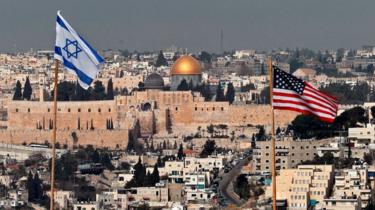
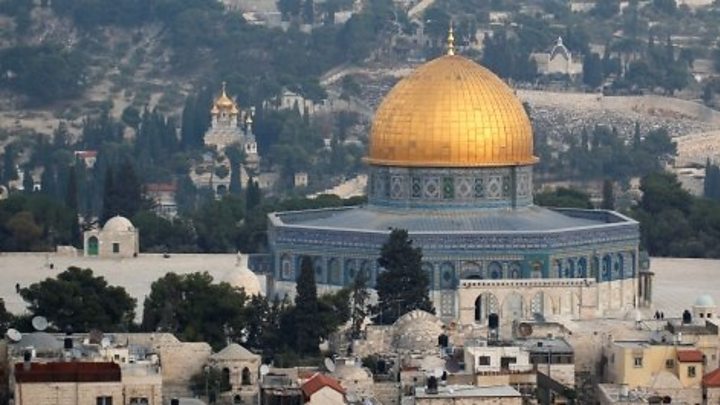
Image copyrightGETTY IMAGESImage captionThe Israeli and US flags fly high over Jerusalem in December 2017
The US Department of State has said that a new American embassy in Jerusalem will open in May.
The opening of the mission will coincide with Israel’s 70th anniversary, the statement said.
The announcement brings forward the controversial plan, announced by President Trump in December, by at least a year.
A senior Palestinian official, Saeb Erekat, called the move a “blatant provocation”.
The anniversary of Israel’s founding is mourned by Palestinians as the Nakba, or “catastrophe”.
On Friday, Israeli Prime Minister Benjamin Netanyahu hailed the embassy announcement as “a great day for the people of Israel”.
Donald Trump’s decision last year that the US would recognise Jerusalem – not Tel Aviv – as Israel’s capital infuriated Palestinians.
The US Department of State spokeswoman said the embassy would initially be located at existing consular facilities in the Arnona district of the city.
Why is the move controversial?
The status of Jerusalem goes to the heart of the Israeli-Palestinian conflict.
Israel regards Jerusalem as its “eternal and undivided” capital, while the Palestinians claim East Jerusalem – occupied by Israel in the 1967 Middle East war – as the capital of a future state.
Media captionWhy the city of Jerusalem matters
Jerusalem contains sites sacred to the three major monotheistic faiths – Judaism, Islam and Christianity – and Israeli sovereignty over the city has never been recognised internationally.
President Trump’s initial announcement in December overturned a long-standing US policy, and led to near-universal condemnation from the international community.
Last month, US Vice-President Mike Pence told the Israeli parliament that the move would occur sometime before the end of 2019.
The sudden change to this May has been seen by some as a deliberate snub to Palestinians.
Media captionPalestinians and Israelis react to US plan to recognise Jerusalem as Israel’s capital
Mr Erekat said the US move “reflects their total insensitivities to what goes on in this region”.
It “reaffirms our position that the US can no longer be part of the peace process,” he added. “The US administration has become part of the problem and not part of the solution.”
Israel’s Prime Minister Benjamin Netanyahu disagreed, saying: “This decision will turn Israel’s 70th Independence Day into an even bigger celebration.”
“Thank you President Trump for your leadership and friendship,” he said.
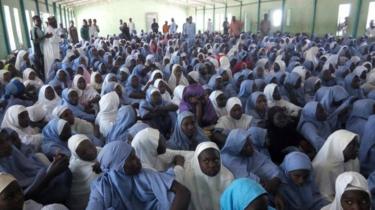
Image copyrightYOBE GOVERNMENTImage captionParents have expressed their anger over the government’s handling of the attack
Nigerian President Muhammadu Buhari has called the suspected kidnapping of dozens of schoolgirls by Boko Haram militants a “national disaster”.
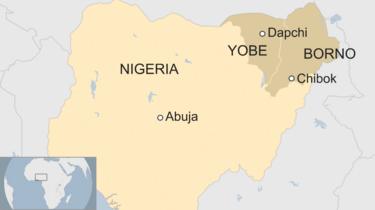
Jihadists stormed the school in the town of Dapchi in the north east on Monday but it is unclear how many girls are missing.
Parents have told the OP’S NEWS that at least 100 students have not been found.
The country’s leader said surveillance aircraft and more troops were being sent to help with the search.
Anger has been growing among parents about the government’s handling of the incident, which has revived memories of the Chibok schoolgirl abduction four years ago.
Dapchi, about 275km (170 miles) north-west of Chibok, came under attack on Monday, causing students and teachers to flee into the surrounding bush.
Residents say that Nigeria’s security forces, backed by military jets, later repelled the attack.
Authorities initially denied the students had been kidnapped, saying they were hiding from their attackers.
The Nigerian president apologised for the attack on Friday, in his first extended comments about the incident.
“We are sorry that this could have happened. We pray that our gallant armed forces will locate and safely return your missing family members,” he said in a statement.
The Yobe state government had to apologise after mistakenly issuing a statement on Wednesday that said some of the girls had been saved by the army.
The Nigerian activist group, Bring Back Our Girls, has been lobbying the government to release a list of names in order to clarify how many pupils are missing.
The group was established after the abduction almost four years ago of 276 girls from a school in Chibok. The location of more than 100 of those girls is still unknown.
Residents of Dapchi told the AFP news agency that soldiers had been deployed in the town, but had left last month. Nigeria’s defence spokesman denied that any troops had been withdrawn.
Boko Haram militants have been fighting a long insurgency in the country’s north in their quest for an Islamic state in the region.
The conflict is estimated to have killed tens of thousands of people, and led to the abduction of thousands.
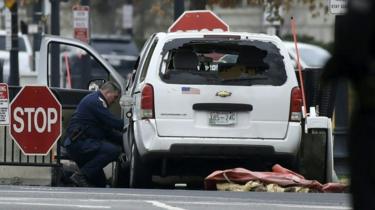
Image copyrightRUTHERFORD COUNTY SHERIFF’S OFFICEImage captionJessica Ford was reportedly arrested last year while climbing the White House fence
She was arrested again in July last year when she violated a stay-away order at the White House, reports NBC.
In Friday’s incident, the vehicle did not breach the security barrier of the White House.
No shots were fired, the Secret Service says. President Trump was inside the White House at the time meeting Australian Prime Minister Malcolm Turnbull.
Media captionScene outside White House after car incident
Eyewitness Chris Bello, 50, of New York, told reporters near the scene: “This minivan came and crashed into the barricade and tried to push through the barricade and his tires were burning rubber and a lot of smoke was coming up.”
Images of the small white Chevrolet van showed that the back windscreen and a side window had been shattered.
The vehicle has a number plate registered in Rutherford County in Tennessee, part of metropolitan Nashville.
The van had an American flag emblem on the back, according to Reuters news agency.
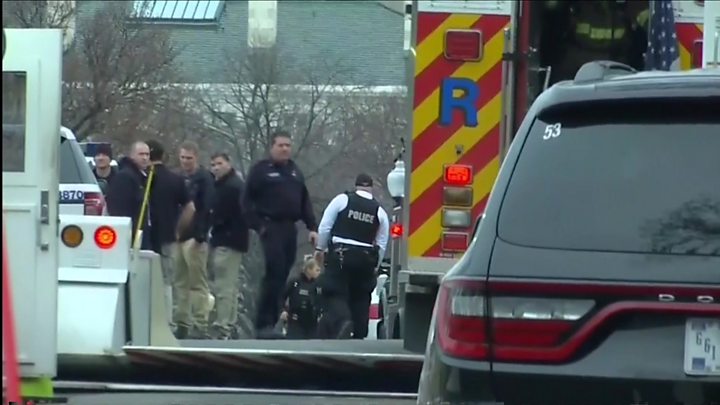
A witness reported seeing officers pull a woman out of the vehicle’s window at gunpoint, according to a journalist from a local Fox channel affiliate.
According to reporters locked in the press room, Secret Services officers were seen running toward the residence at about 15:00 (20:00 GMT).
The White House was placed on lock down and security officials were on high alert, reporters said.
The incident took place near a security post on a road leading up to the South Lawn of the White House.
There have been a number of security incidents at the White House in recent years:
March 2017: A man armed with pepper spray spent more than 16 minutes inside the White House grounds after jumping the fence. Mr Trump was not at home at the time
September 2014: A US military veteran armed with a knife entered the White House East Room after jumping the fence, leading to the resignation of then-Secret Service director Julia Pierson
October 2013: A female dental hygienist from Connecticut made a U-turn after trying to enter a White House checkpoint. After a high-speed chase, she was shot dead by officers near the US Capitol. Her 13-month-old daughter was found uninjured strapped in the back car seat
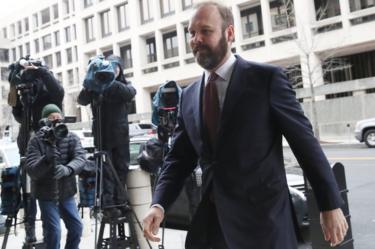
Image copyrightEPAImage captionRick Gates said he had “had a change of heart” after his initial not-guilty plea
US President Donald Trump’s former deputy campaign manager has admitted charges of conspiracy and lying to investigators in a plea deal.
Rick Gates pledged to co-operate in “any and all matters” with the US special counsel’s inquiry into alleged Russian political meddling in the US.
Mr Gates, 45, had been indicted on more serious criminal counts, including bank fraud and money laundering.
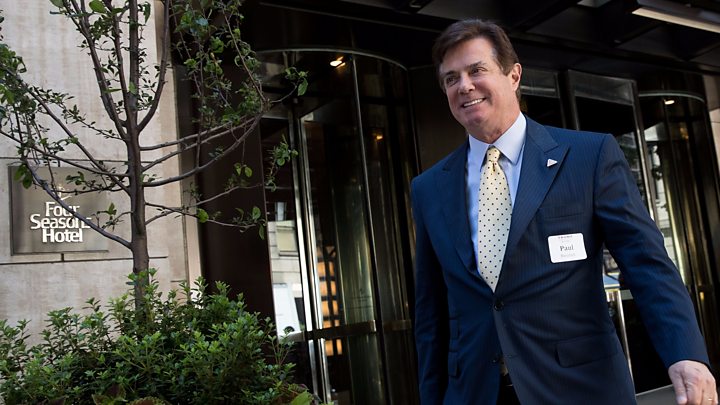
Ex-Trump campaign manager Paul Manafort was hit with new charges on Friday.
There are no allegations that either man colluded with Russia to influence the outcome of the 2016 presidential election, which is the main thrust of the Department of Justice investigation.
What happened in court?
On Friday, Mr Gates admitted to lying to the FBI about a March 2013 meeting in Washington with a US lawmaker while Mr Manafort was present.
Mr Gates falsely claimed Ukraine was not discussed, according to the indictment.
Sentencing guidelines for him suggest a prison term of between 57 and 71 months. He could have been locked up for decades under the more serious charges.
Special counsel Robert Mueller could petition the court for a reduced sentence depending on how much Mr Gates co-operates.
Mr Gates filed a motion requesting permission to take his children to Massachusetts during their spring break from school.
“The purpose of this trip is for Mr Gates to show his children around the Boston area to learn about American history in general, and the Revolutionary War in particular,” his motion requests.
What are the latest Manafort charges?
On Friday afternoon, Mr Mueller piled the pressure on Mr Manafort by filing a third indictment against him.
He accused Mr Manafort of secretly hiring former senior European politicians to lobby in the US for positions favourable to Ukraine.
The ex-politicians, dubbed the Hapsburg Group, were allegedly paid from an offshore account for their lobbying efforts.
The indictment says the group was led by a former European chancellor, identified in the charge sheet only as Foreign Politician A.
These charges and Mr Gates’ plea deal come a day after both men were indicted on 32 additional criminal counts.
What do Gates and Manafort say?
Mr Manafort – who resigned as Trump campaign chairman in August 2016 after five months amid questions over his business dealings – maintains his innocence.
“I had hoped and expected my business colleague would have had the strength to continue the battle to prove our innocence,” he said in a statement on Friday.
Media captionManafort’s indictment: Where did all the money go?
“For reasons yet to surface he chose to do otherwise.
“This does not alter my commitment to defend myself against the untrue piled up charges contained in the indictments against me.”
Mr Manafort has worked on several Republican presidential campaigns, beginning with Gerald Ford’s in 1976.
In a letter to family and friends, Mr Gates said he had “had a change of heart” after his initial not-guilty plea, according to ABC News.
He reportedly said he was ready to accept “public humiliation” to avoid inflicting prolonged pain on his children.
“The reality of how long this legal process will likely take, the cost, and the circus-like atmosphere of an anticipated trial are too much,” he reportedly wrote.
“I will better serve my family moving forward by exiting this process.”
What were the charges?
Mr Mueller’s team alleged in a 32-count indictment on Thursday that Mr Gates and Mr Manafort concealed more than $30m of income from US tax authorities.
Mr Gates was accused of hiding more than $3m of income and using the cash to pay for his mortgage, children’s tuition and re-decorating his Virginia home.
The court filing charged the pair with a scheme to defraud the US by making false representations to banks and other financial institutions between 2008-17.
Both men pleaded not guilty in October when they were first indicted on charges of laundering $75m through an offshore account.
They were also accused of illegally lobbying for a foreign government, Ukraine, without first registering in that capacity with the US government.
How many people has Mueller charged?
Nineteen people – including Mr Manafort and Mr Gates – have been indicted by the special counsel.
Michael Flynn, a former US national security adviser, pleaded guilty to lying to the FBI over meetings he had with the Russian Ambassador, Sergei Kislyak.
George Papadopoulos, a former Trump campaign adviser, admitted lying to the FBI about his contacts with Russians.
Last week, 13 Russians were charged with tampering in the 2016 US election and a California man, Richard Pinedo, admitted an identity theft charge.
This week a London-based lawyer, Alex van der Zwaan, pleaded guilty in court to making false statements when questioned about his work for Ukraine’s Ministry of Justice.
Mr Trump has said there was no collusion. Moscow has rejected US intelligence claims of interference.
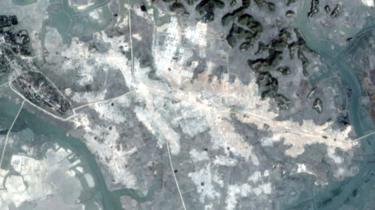
Image copyrightPLANET LABS INC / HRWImage captionThe rights group says it believes the white ground in this image has been recently bulldozed
Satellite images of Myanmar suggest entire Rohingya villages have been destroyed, campaign group Human Rights Watch says,
The group said at least 55 villages – many of which were already damaged by arson – had been completely bulldozed.
The villages “should be treated as crime scenes” and preserved, it added.
More than half a million Rohingya people fled the destruction of their homes last year in what the UN called a “textbook example of ethnic cleansing”.
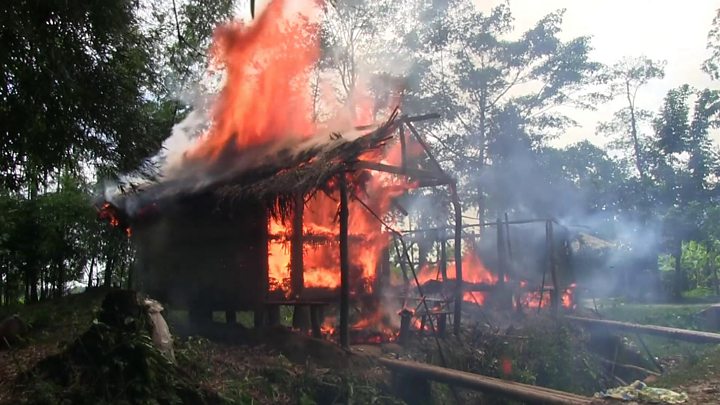
Villages where Rohingya had lived were burned and several thousand people were killed in retaliation after Rohingya militants staged a series of attacks on police outposts.
Myanmar’s military says it is fighting the militants and denies targeting civilians.
Most fleeing Rohingya made the journey across the border to neighbouring Bangladesh.
Human Rights Watch said the apparent destruction of homes erases evidence for legal claims from the exiled Rohingya.
United Nations staff have not been allowed access to the area to carry out an investigation.
“Many of these villages were scenes of atrocities against Rohingya and should be preserved so that the experts appointed by the UN to document these abuses can properly evaluate the evidence to identify those responsible,” said Brad Adams, Asia director at Human Rights Watch.
“Bulldozing these areas threatens to erase both the memory and the legal claims of the Rohingya who lived there.”
Media captionWho is burning down Rohingya villages?
The repatriation is voluntary – and rights groups have raised concerns about the conditions awaiting those who return. Many of those living in camps in Bangladesh have said they need guarantees of their safety.
Mr Adams said the clearing of villages “only heightens concerns” about the repatriation plans.
He said governments donating to the cause should be careful not to help “efforts to pretend the Rohingya do not have the right to return to their villages”.
Previously, Myanmar officials have said land needs to be cleared before new houses can be built.
The Rohingya are a Muslim ethnic group which has lived in majority-Buddhist Myanmar for generations.
But they are denied citizenship and other rights by the country, which considers them to be illegal immigrants from Bangladesh.
The United States is imposing a fresh set of sanctions on North Korea – the “largest ever”, President Trump says.
The measures target more than 50 ships and maritime transport companies in North Korea, but also China and Taiwan.
North Korea is already under a range of international and US sanctions over its nuclear programme and missile tests.
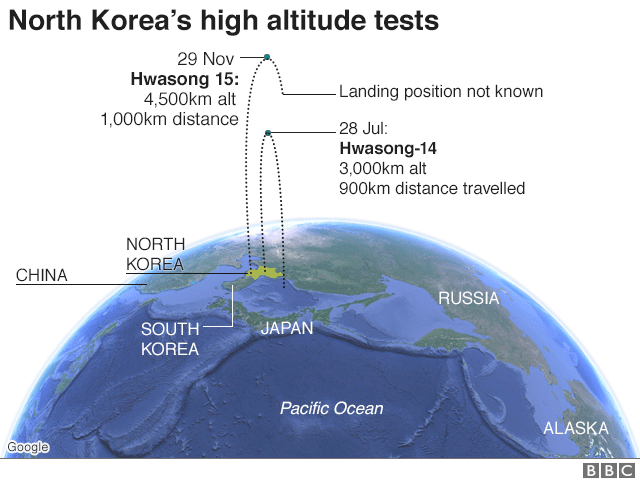
But it continued tests last year, including tests of a nuclear weapon and a long-range ballistic missile capable of reaching the US.
The US says the new sanctions are designed to put a further squeeze on North Korea, cutting off sources of revenue and fuel for its nuclear programme and clamping down on evasion of already existing restrictions.
Sixteen, mainly shipping companies, are based in North Korea, but five are registered in Hong Kong, two on the Chinese mainland, two in Taiwan, one in Panama and one in Singapore.
Twenty-eight ships are on the list, again mostly North Korean, but two are Panama-flagged, one from the Comoros and one Tanzania-flagged.
Speaking at a new conference on Friday, President Trump warned of serious consequences if the latest round of sanctions did not generate results.
“If the sanctions don’t work we’ll have to go phase two – and phase two may be a very rough thing, may be very, very unfortunate for the world,” he said.
“It really is a rogue nation. If we can make a deal it’ll be a great thing and if we can’t, something will have to happen.”
He did not specify what “phase two” would entail.
The US has been building sanctions against the regime since 2008 and the latest restrictions could come on top of sanctions announced in November – directed at North Korean shipping operations, as well as Chinese companies trading with Pyongyang.
The United Nations followed that up in December with a raft of sanctions, backed by all 15 members of the Security Council, which included measures to cut North Korea’s petrol imports by up to 90%.
‘Charm offensive’
The Trump administration’s announcement comes as North Korea conducts what is being seen by Western powers as a charm offensive at the Winter Olympics in South Korea.
US leaders have been keen to stress that North Korea still poses a nuclear threat despite warming ties with the South.
However, no meetings have taken place with senior North Korean officials attending, including Kim Yo-jong, sister of the North Korean leader Kim Jong-un.
Sanctions have done nothing to deter North Korea in its development of missiles and nuclear technology.
Last year saw the first test of a long-range missile thought capable of reaching Washington, but it is still not clear if North Korea has mastered the technology needed to miniaturise a nuclear device for a warhead.
Also on Friday, Treasury Secretary Steve Mnuchin said Mr Trump’s administration is working on new sanctions against Russia over alleged meddling in the 2016 presidential election and other activities.
“I can assure you that is in the process. I will be back here within the next several weeks to talk about that,” he said.
North Korea’s response to sanctions
30 November 2016: UN sanctions targeted North Korea’s valuable coal trade with China, slashing exports by about 60% under a new sales cap. Exports of copper, nickel, silver, zinc and the sale of statues were also banned
What happened next? On 14 May 2017, North Korea tested what it said was a “newly developed ballistic rocket” capable of carrying a large nuclear warhead
2 June 2017: UN imposed a travel ban and asset freeze on four entities and 14 officials, including the head of North Korea’s overseas spying operations
What happened next? On 4 July, North Korea claimed it had carried out its first successful test of an intercontinental ballistic missile (ICBM)
6 August 2017: UN banned North Korean exports of coal, ore and other raw materials and limited investments in the country, costing Pyongyang an estimated $1bn – about a third of its export economy
What happened next? On 3 September, North Korea said it had tested a hydrogen bomb that could be miniaturised and loaded on a long-range missile.
21 November 2017 US unveils more sanctions targeting North Korean shipping and Chinese companies that trade with Pyongyang
What happened next? North Korea tested a new long-range missile, Hwasong-15, which it claimed could reach anywhere in the US
22 December 2017 The UN Security Council imposed new sanctions, including measures to slash North Korean petrol imports by up to 90%
What happened next? On 1 January 2018 Kim Jong-un warned a nuclear launch button “is always on my table”, but also raised the prospect of sending a team to the Winter Olympics in the South
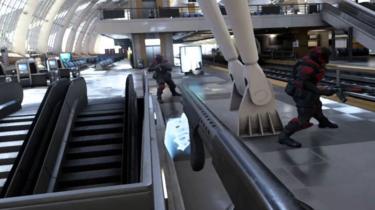
Image copyrightEPIC GAMESImage captionBullet Train is set in a train station
Facebook has said it regrets promoting a virtual reality shooting game on its stand at a US conservatives’ event.
The game allows the player to shoot imaginary weapons against enemies in a public train station.
Facebook said it removed the display at the Conservative Political Action Conference “out of respect” for victims of a recent school shooting in Florida.
“We regret that we failed to do so in the first place,” Hugo Barra, the company’s head of VR, told the OP’S NEWS.
The tech titan had already defended its presence at the political jamboree in Maryland this week.
“Facebook routinely participates in events hosted by organizations across the political spectrum,” a company spokesman said.
The event has been dominated by discussions over gun control following a school shooting that left 17 people dead in Parkland, Florida, last week.
One of the features of Facebook’s stand this year was a demonstration station for Oculus Rift, its virtual reality product.
Media captionHow young conservatives view #NeverAgain
One game being played by delegates was Bullet Train, a free title first unveiled in 2015.
Footage of the game being played at the event was posted to Twitter by Sean Morrow, a journalist at Now This News.
Facebook’s head of VR added: “There is a standard set of experiences included in the Oculus demos we feature at public events.
“A few of the action games can include violence.
“In light of the recent events in Florida and out of respect for the victims and their families, we have removed them from this demo.”
Media captionWhat the British think of arming teachers

 GETTY IMAGES
 AFP
AFP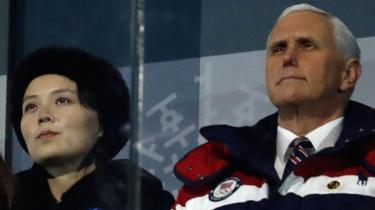 AFP/GETTY IMAGES


 OP's News