Energy firms will be banned from charging catch-up bills for gas and electricity used more than 12 months earlier.
Regulator Ofgem’s new rule, to start in May for domestic customers, should stop shock bills of thousands of pounds.
Customers who pay via direct debit often receive bills based on estimated meter readings.
When an actual reading is taken, the supplier “back-bills” the customer for any shortfall.
Other supposed arrears have occurred as a result of errors in suppliers’ billing systems.
Ofgem said the typical back bill was £1,160 and in extreme cases they have exceeded £10,000. Most customers struggle to pay and some are driven into debt. The regulator said it was aware of 10,000 complaints in a year.
The ban will start in May for domestic customers and in November for the smallest businesses. The only exception is when customers have purposefully prevented the company from taking a reading.
A voluntary agreement to stop back-billing of more than 12 months has been in place among the biggest suppliers since 2007. However, some have not fully complied and smaller firms were not signed up.
“Getting billing right is an essential part of customer service, and it’s unfair that consumers should be left out of pocket when through no fault of their own they’re issued with a shock bill from their supplier,” said Rob Salter-Church, from Ofgem.
Victoria MacGregor, director of energy at Citizens Advice, said: “We have long called for the changes announced today. The new rules will deliver better protections for households and small businesses across the country. No-one should face a massive unforeseen bill that goes back years when it is their supplier that is at fault.
“Previously we’ve seen evidence of suppliers trying to game the rules by blaming customers for billing errors, cases where suppliers have ignored their commitments entirely, and small businesses receiving unexpected bills running to tens of thousands of pounds.”
Image captionAntonio Russo, his father Raffaele and cousin Vincenzo disappeared on 31 January
Mexican authorities have launched criminal proceedings against four police officers over the disappearance of three Italian men.
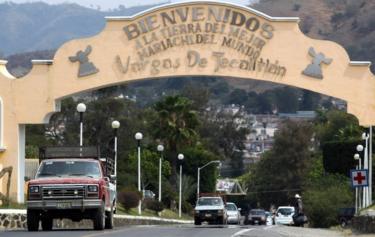
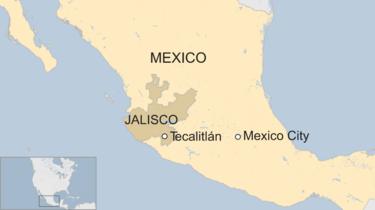
The missing men – all from Naples – were last seen on 31 January in Tecalitlán, in the western state of Jalisco.
The state’s governor said the officers had confessed to handing the Italians over to a local criminal gang.
The police had allegedly arrested them at a petrol station beforehand.
What is alleged to have happened?
Raffaele Russo, 60, his 25-year-old son Antonio, and his nephew, Vincenzo Cimmino, 29, had stopped at a petrol station in Tecalitlán, an agricultural town.
The last relatives back in Italy heard from them was a Whatsapp message from Mr Russo saying they had been approached by police officers who arrived on cycles and in a van.
The police told them to follow them, according to the message.
The son of one of the disappeared earlier told Italian radio that the men had been “sold to a gang for €43” ($53; £38), but regional officials said they could not confirm that information.
The area is controlled by the Jalisco New Generation cartel, one of Mexico’s most powerful criminal gangs.
Four police, including a female officer, have been detained and charged. The Mexican authorities say three more police are being sought in connection with the disappearance.
Following the trio’s disappearance, the town’s entire police force was sent for retraining, although some local media speculated that they were sent away so that they could not be intimidated by local cartel members into changing their story.
What were the Italians doing in Mexico?
Image copyrightAFP/GETTY IMAGESImage captionTecalitlán lies in territory controlled by one of Mexico’s most powerful criminal gangs
It is not absolutely clear, but reports say they were there to sell Chinese merchandise.
Jalisco State Prosecutor Raúl Sánchez said he had information showing the three were selling cheap generators and agricultural machinery which they passed off as high-quality branded goods.
Relatives in their home town denied the three were doing anything illegal in Mexico.
Who are the Jalisco New Generation cartel?
A government crackdown on drug cartels since 2006 led to fragmentation, internal conflicts and new groups forming
The cartel was founded when Milenio Cartel, originally a branch of Sinaloa syndicate, split
It was created in 2011 in western Jalisco state and is notorious for violent attacks on security forces, including the shooting down of a government military helicopter
It’s led by Nemesio Oseguera Cervantes, alias El Mencho, 53. The group has fought for supremacy with Zetas Cartel in Veracruz state, leaving dozens dead
It presents itself to residents in its territory as a force to rid them of other crime gangs
Its interests include opium and marijuana growing, with assets estimated in the billions of dollars
The state prosecutor in that case said that the students were handed by corrupt local police to a criminal gang, who killed them and burned their bodies.
Local police, who are poorly trained and poorly paid, are often threatened or bribed by criminal gangs to turn a blind eye or even do their bidding.
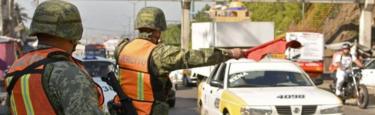
For that reason, federal authorities often send federal police forces and even soldiers to the most violent areas.
Is it safe to travel to Mexico?
Image copyrightAFP
Most visits to the country are trouble free, but violent crime and gang activity pose a risk in certain areas.
Last month, the US state department warned tourists to “completely avoid” five states because of rampant crime levels.
Colima, Guerrero, Michoacán, Sinaloa and Tamaulipas are classified as a level-four risk, the highest in the scale, and the same as countries such as Iraq and Syria.
The state department says tourists should avoid driving at night, be extra vigilant when using ATMs and avoid wearing expensive jewellery.
The UK Foreign Office says tourists should research their destination thoroughly before travelling because violence is concentrated in specific areas.
It says drug-related violence is a problem in Jalisco, where the three missing men were last seen.
The Foreign Office also says kidnapping is a risk, and there have been allegations of police involvement.
It advises tourists to be discreet about discussing financial affairs in public and to inform relatives and friends of your travel plans.
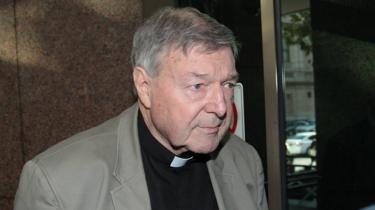
Image copyrightEPAImage captionCardinal George Pell arrives at a court in Melbourne on Monday
Cardinal George Pell has returned to an Australian court for a hearing that will determine whether he stands trial on sexual assault charges.
The Catholic cleric, 76, has strongly denied what police have described as historical accusations by “multiple complainants” in the state of Victoria.
He will plead not guilty to all charges, his lawyer said last year.
The court hearing in Melbourne is expected to run for a month. Much of it will be closed to the public and media.
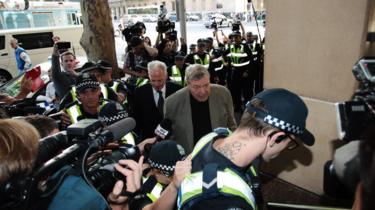
Cardinal Pell was given a police escort into the Melbourne Magistrates’ Court on Monday as dozens of media representatives and bystanders watched on.
Who is Cardinal Pell?
Australia’s most senior Catholic figure is considered the third-ranking official at the Vatican, where he is in charge of the Church’s finances.
Last year, Cardinal Pell took a leave of absence from as Vatican to fight the sexual assault charges in Australia.
What is known about the allegations?
Last June, Victoria Police charged Cardinal Pell with “multiple” sexual offence charges involving “multiple complainants”.
Authorities described the accusations as historical, but did not give further details. On Friday, prosecutors dropped one charge.
Last year, Cardinal Pell said: “I am innocent of these charges, they are false. The whole idea of sexual abuse is abhorrent to me.”
Image copyrightEPAImage captionAbout 50 witnesses are expected to give evidence at the month-long hearing
In a hearing in October, Cardinal Pell’s barrister, Robert Richter QC, said he intended to prove that “what was alleged was impossible”.
What will happen during the hearing?
Up to 50 witnesses are expected to give evidence at the committal hearing, which is likely to run for the next four weeks.
The hearing was closed on Monday so accusers could give testimony, as required by law in Victoria in sexual offence cases. Evidence was expected to be given via video link.
At the end of the hearing, Magistrate Belinda Wallington will decide if there is enough evidence for the case to proceed to a trial in the County Court of Victoria.
The cardinal may then be required to enter a plea.
Image copyrightAFPImage captionThe fictional state of Tabarnia has its own flag, anthem and even currency
Thousands of opponents of Catalan secession from Spain have attended a demonstration in Barcelona, in support of a fictional state called Tabarnia.
They say Tabarnia would itself split from Catalonia in order to stay part of Spain, were Catalonia to become independent.
The concept, established as a parody, has spread online.
Police in Barcelona said 15,000 people attended the march while organisers said it was far more.
Supporters waved Catalan, Spanish and invented Tabarnian flags, shouting: “The joke is over! Free Tabarnia!”
The name Tabarnia is an amalgamation of Barcelona and the coastal province of Tarragona. Creators of the fictional would-be state have also created their own national anthem and even currency.
The imaginary state would include areas where unionists outvoted separatists in December’s regional elections.
“We are here because we are fed up, fed up of the independentist process and that a minority is leading us towards the brink,” Mari Carmen Guerrero, a 33-year-old protester with a Tabarnia flag round her neck, told AFP news agency.
Image copyrightREUTERSImage captionThe “Tabarnia” protesters claim the patron saint of Catalonia, Sant Jordi (Saint George) as their own
Among those joining the march were Alberto Fernandez Diaz, regional head of Spain’s ruling Popular Party and Javier Ortega Smith, head of the ultra-conservative Vox party, the agency reported.
The mobilisation called upon “all Tabarnese, Catalans, Spaniards and Europeans” to “put fraternity and optimism above the search for rupture and false differentiation”, said Tabarnia spokesman Jaume Vives, according to Efe news agency.
Catalans voted in favour of independence in October but the referendum was deemed illegal by Spanish courts.
The central government in Madrid then sacked the Catalan regional government, imposed direct rule and called new elections – but pro-independence parties returned with a slim majority.
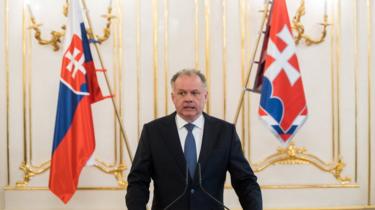
Image copyrightEPAImage captionPresident Kiska accused senior officials of an “arrogance of power”
Slovakia’s President Andrej Kiska has called for a radical government reshuffle or new elections to rebuild public trust after the murder of a journalist and his fiancée.
But Prime Minister Robert Fico disagreed, accusing the president of “dancing on the graves” of the victims.
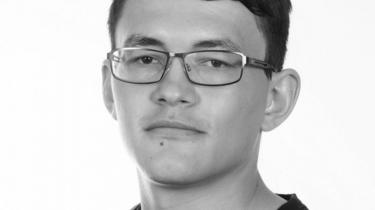
The killing of Jan Kuciak and Martina Kusnirova sparked protests in Slovakia.
Kuciak, 27, had been investigating alleged political corruption linked to Italian organised crime.
He was shot dead before he had finished the article, but it was published posthumously.
All of the seven people arrested in connection with the murders were released on Saturday because no evidence had emerged during the 48 hours they could be legally detained, police said.
One of the men released is an Italian who had done business deals with officials close to Mr Fico.
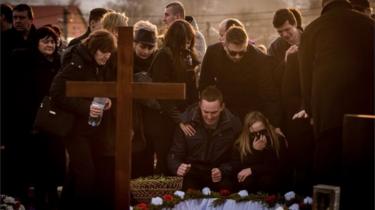
Image copyrightAFPImage captionJan Kuciak’s funeral was held on Saturday
Mr Kiska called for a “radical reconstruction” of the government, but Mr Fico said this would undermine the results of the 2016 elections.
The president, who does not have formal powers to dissolve the government, accused senior officials of an “arrogance of power”, and bemoaned a lack of action on the part of the government to restore public trust and defuse tensions after the killings last weekend.
He said he would meet political parties to find a way out.
Mr Fico said any government changes would have to be agreed by his Smer party’s two coalition partners, adding: “In this process, the constitution does not recognise any role of the president.”
He added: “Our goal is the investigation of this brutal act. We won’t dance on the graves of two young people, unlike opposition, media and, now, the president.”
Image copyrightEPA/HANDOUTImage captionKuciak had been investigating the presence of the Italian mafia in eastern Slovakia
The Slovak National Party, a junior government member, said it was ready to talk to the president. The other party in the coalition, Most-Hid, wants the interior minister to resign by 12 March.
Slovakia joined the European Union in 2004.
In his investigation, Kuciak alleged that Italian businessmen with ties to the feared Calabrian organised crime syndicate ‘Ndrangheta had settled in eastern Slovakia, and spent years embezzling EU funds for this relatively poor region on the border with Ukraine.
Image copyrightAFPImage captionThe widow of one of the troops killed later became embroiled in a row with US President Donald Trump
The Islamic State (IS) group has published a video purporting to show an ambush in Niger in which four US soldiers were killed last October.
It is not clear why the release of the video – on an IS outlet on messaging app Telegram – was delayed until now.
The video consists mainly of raw footage, including images apparently filmed using a helmet camera belonging to one of the soldiers.
The video seems to suggest that the attack was carried out by IS militants.
It begins with still images showing an alleged pledge of allegiance to IS leader Abu Bakr al-Baghdadi by members of the al-Qaeda-linked, Sahel-based group Jamaat Nusrat al-Islam wal-Muslimin (JNIM).
The alleged pledge was reported last month by a number of analysts but it had not been promoted by IS outlets on Telegram.
The deaths later caused controversy when the widow of one of the soldiers said President Donald Trump had made her cry during a condolence phone call by suggesting her husband “knew what he signed up for”.
The video shows several armed militants walking and running in a desert area apparently heading for the ambush, reports BBC Monitoring.
It then shows footage that appears to have been filmed by one of the US soldiers. At one point the footage shows US soldiers seemingly exchanging fire with their assailants.
One soldier is then shown apparently dead.
Fighting continues until the other soldiers are killed, including apparently the one who was filming.
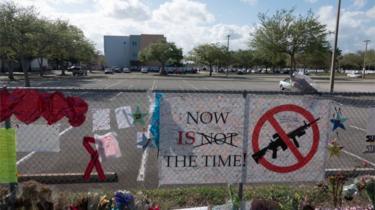
Image copyrightREUTERSImage captionThe deadly 14 February shooting has renewed calls for gun control in the US
A convicted school shooter has praised the survivors of last month’s attack in Parkland, Florida, for their efforts in support of gun controls in the US.
Jon Romano, then 16, entered his New York high school in 2004 with a pump-action shotgun, but was disarmed by his principal before he could kill anyone.
In a letter to a local newspaper sent from prison, Romano labelled the students “courageous and inspiring”.
Since the shooting, many of the survivors have lobbied for change.
That weapon has been used in several high profile US mass shootings, including at Sandy Hook Elementary School and in the Florida school attack.
Gun control advocates are calling for outlawing assault-style rifles from commercial sale.
Media caption“Those 17 people aren’t going to be there” – Florida student reflects on first day back in class
Writing from Coxsackie Correctional Facility, Romano labelled the principal who thwarted the shooting as “a hero who I owe my life to.”
“I believe the students at Marjory Stoneman Douglas High School in Parkland are courageous and inspiring for demanding action from politicians,” Romano wrote.
Image copyrightREUTERSImage captionStudent survivors from the school have already lobbied at the state capital in Tallahassee
In the aftermath of the 14 February shooting, pressure has mounted on US politicians to act on gun control and for corporations to cut ties with the powerful National Rifle Association (NRA).
Firms including Hertz car rental, United airlines and Delta airlines have ended discounts to NRA members.
Image copyrightEPAImage captionXi Jinping – on track to secure lifelong rule of China?
China’s “two sessions” – the annual meetings of the national legislature and the top political advisory body – are opening in Beijing.
The meetings are significant markers on the country’s carefully choreographed political stage.
This year, the parliament is expected to rubberstamp major constitutional changes that will elevate the power of President Xi Jinping.
It will also confirm dropping China’s two-term presidential limit.
That would mean Xi Jinping could stay in power for life, leading China according to his new ideological guidelines, known as “Xi Jinping Thought”.
Here’s what will go on during the sessions.
Who is meeting?
The National People’s Congress (NPC). That’s the legislature or parliament. Think the House of Commons in the UK, or the US House of Representatives.
According to the constitution, the NPC is the most powerful state organ – but it’s often labelled a “rubber-stamp” body by international observers, meaning it will always approve what it’s told to approve.
This year, the NPC has 2,980 deputies representing China’s provinces, autonomous regions, centrally-administered municipalities, the special administrative regions of Hong Kong and Macau, and the armed forces.
Among those are 742 women – that’s around 25% this time, more than the last NPC – and also 438 ethnic minority deputies.
The Chinese People’s Political Consultative Conference (CPPCC). That’s the most powerful political advisory body. Think House of Lords or the US Senate. The CPPCC is strictly advisory in nature – it does not have any legislative power.
The current CPPCC has 2,158 members, including people from entertainment, sports, science, business and non-Communist parties.
Image copyrightAFPImage captionMore than 5,000 delegates will attend the sessions
Referred to as the “two sessions” (liang hui), these meetings traditionally last between one to two weeks.
This year the CPPCC started on 3 March and the NPC will start on 5 March.
What can we expect?
The “two sessions” have special significance this year as they come after the once-in-five-years Communist Party Congress of October 2017.
ratify the inclusion of the president’s political philosophy – “Xi Jinping Thought” – in the constitution.
confirm China’s new government line-up for the next five years, kicking off Xi Jinping’s second term as president.
approve the removal of the two-term limit on the presidency, meaning Xi Jinping can stay in office beyond 2023.
ratify a law to set up a new powerful anti-corruption agency.
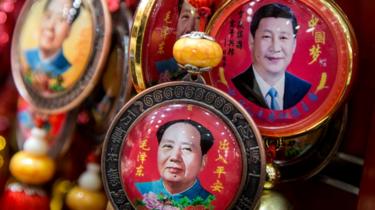
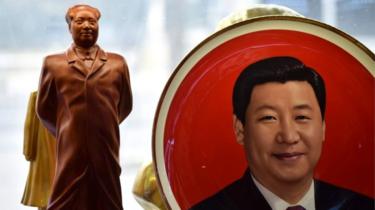
Image copyrightAFPImage captionXi Jinping has been elevated to the same level as Mao Zedong
The “two sessions” will also look at any plans for economic reform, as well as Mr Xi’s other two focus areas: corruption and protecting the environment.
Meanwhile, the CPPCC will review past policies of central and local governments and formulate plans for the future.
Economic issues will be a key focus as 2018 marks the 40th anniversary of China’s reform and opening up policy.
Will there be any opposition?
Don’t expect too many surprises at what some describe as Asia’s largest political pantomime. Whatever will be decided or debated usually is pre-determined by the Communist Party.
There have been instances, though, where the NPC did raise objections. In 2006 for instance, the government deferred a property tax law after it sparked a debate in the NPC.
Commonly referred to as a one party state, China does in fact have several other official parties alongside the Communists.
Largely dismissed inside and outside the country as mere democratic window dressing, these parties unanimously support the Communists within the NPC.
Media captionBBC blocked from visiting China independent candidate
How is it viewed in China?
Chinese state media are giving extensive coverage to the two sessions but you won’t find any criticism undermining the two assemblies as mere rubber stamp groups.
China Radio International praises the fact the “long-awaited revamping of state institutions” will be high on the NPC’s agenda.
Beijing-based website China Finance Online lists sustainable industrial growth, building on benefits from the Belt and Road initiative and poverty alleviation as the key themes for the meetings.
Meanwhile, dissident media such as US-based NTDTV.com report that petitioners from several provinces are heading to Beijing to highlight their grievances.
In a tradition dating back to imperial times, each year, petitioners stream into the capital to seek justice by appealing to the country’s rulers. During the two sessions, they are usually kept out of the public eye so as to not disrupt the political theatre.
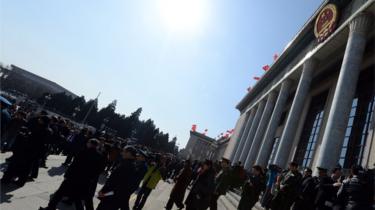
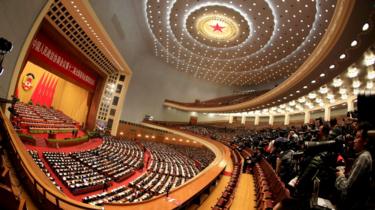
Image copyrightEPAImage captionThe CPPCC will meet in the Great Hall of the People
But there has been some criticism also within China of the proposal to end the presidency term limit.
“It [two-term limit on the presidency introduced in the 1982 constitution] was the highest and most effective legal restriction meant to prevent autocracy or putting individuals above the party and the state”, the former editor of state-run China Youth Daily said in an open letter to the legislators.
He told the OP’S NEWS such a move would be “considered a farce in Chinese history in the future”.
Image copyrightGETTY IMAGESImage captionPollsters do not expect any party to win an outright majority
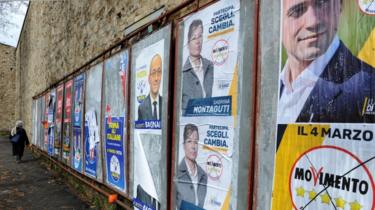
Italy is on course for a hung parliament after voters backed right-leaning and populist parties, exit polls suggest.
Initial projections say ex-PM Silvio Berlusconi’s centre-right coalition is set to win the most seats in the lower house of parliament.
It is expected to get between 225-265 seats, polls say – below the 316 needed for an absolute majority.
Exit polls put the anti-establishment Five Star Movement in second place.
It has made significant gains and could emerge as the largest single party, with about 30% of votes and 195-235 seats.
The country’s ruling centre-left Democratic Party stands in third place with a projected 115-155 seats – its prospects battered by public anger over unemployment and immigration.
Early exit polls have sometimes proved misleading in previous Italian elections. Final results are not expected for several hours.
It may take weeks of negotiation and coalition-building to find a definitive winner, our Italy Correspondent James Reynolds says.
BBC Europe editor Katya Adler tweeted that it is “theoretically possible for the EU’s nightmare result to come true: a coalition between the ‘populist Eurosceptics’: Five Star and Lega [the League party]”.
The surge in support for populist parties has prompted comparisons to Brexit and the election of Donald Trump in the US.
“The European Union is going to have a bad night,” tweeted Marine Le Pen, leader of France’s far-right National Front.
Figures based on early vote counting suggest Five Star and the League have also done better than expected in voting for Italy’s Senate, the upper house of parliament.
Who’s in Berlusconi’s coalition?
The centre-right bloc includes Mr Berlusconi’s Forza Italia (Go Italy!) party, the eurosceptic League, and the far-right Brothers of Italy.
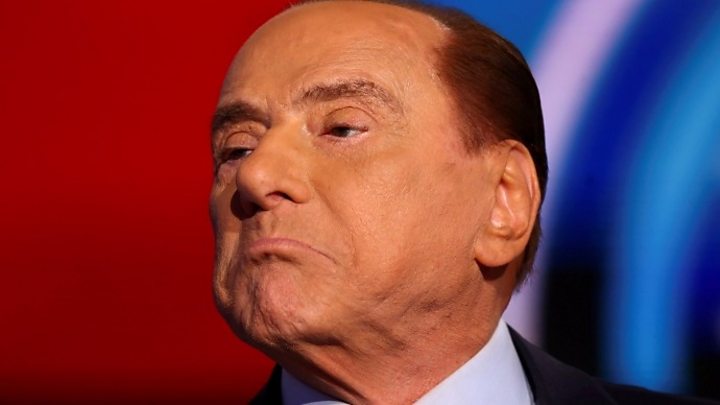
Mr Berlusconi, 81, cannot hold public office himself until next year due to a tax fraud conviction.
The four-time prime minister – who has allied himself with the anti-immigrant League party – has backed European Parliament President Antonio Tajani as his choice to lead the country.
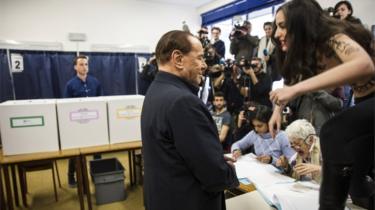
Image copyrightGETTY IMAGESImage captionMr Berlusconi was ambushed by a topless protester from a feminist activist group as he voted
Who are the other parties?
The anti-establishment Five Star party was founded in 2009 by comedian Beppe Grillo, who denounced cronyism in Italian politics. Current leader Luigi Di Maio has pledged a universal basic income scheme
Matteo Renzi’s Democratic Party has partnered with three smaller parties to form a centre-left, pro-EU bloc that has staked its campaign on proposals to revive the economy. Mr Renzi resigned as PM in December 2016.
How was the turnout?
Officials at 19:00 (18:00 GMT) said that voter turnout stood at more than 58%, with several hours still to go.
Long queues were seen at voting centres around the country, with residents in Rome asked to turn up well before polls closed at 23:00 (22:00 GMT) to make sure they had time to cast their ballots.
The delays are thought to have been caused by a new voting system and new in-depth, anti-fraud checks.
In Palermo, Sicily, 200,000 ballots had to be reprinted because of errors, which led to a delay in some polls opening.
What are the key issues?
Immigration
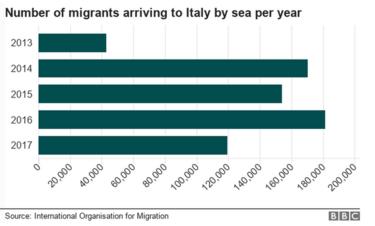
More than 600,000 migrants have made the treacherous journey from Libya across the Mediterranean to reach Italy since 2013.
The huge number of arrivals has upset many Italians – with politicians, including from the mainstream, toughening their rhetoric as a result.
Mr Berlusconi has called the presence of illegal migrants a “social time-bomb” and pledges mass deportations.
The campaign has seen violent clashes between far-right supporters and anti-fascist protesters.
Italy’s economy has started to expand once again. But nearly 10 years on from the global financial crisis, Italy’s gross domestic product – or total economic output – remains 5.7% lower than pre-crisis levels.
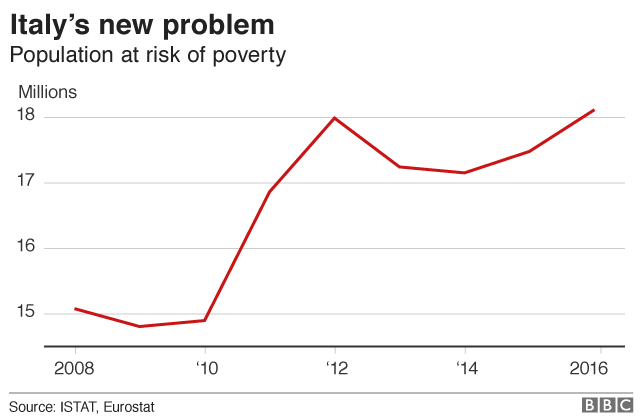
In 2016, some 18 million people were at risk of poverty, and unemployment is at 11%.
Economic policy has been a key battleground, but observers say they have heard more from parties about pensioners than youths, which could be due to young voters’ high vote abstention rates.
Why is this election important?
Italy is the EU’s fourth-largest economy and the gains by populist and far-right parties are a major concern in some European capitals and in Brussels.
Contenders have lined up to blame EU budget rules for hampering economic recovery. Five Star and the League had promised to hold a referendum to leave the euro but dropped that rhetoric.
Image copyrightEPAImage captionKabul was just one of several places to be targeted in the latest violence
A wave of attacks across Afghanistan has left more than 25 people dead, most of them soldiers, officials say.
In the worst incident, Taliban militants stormed an army post in the western province of Farah, killing 22 soldiers.
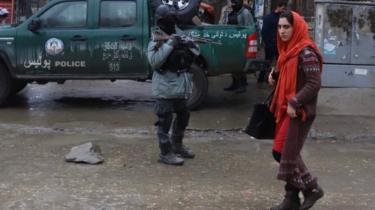
A suicide attack in the capital Kabul left at least three security officers dead.
There has been a surge in militant attacks in recent months and the army is often targeted.
Some analysts see it as a response to a new, more aggressive strategy announced by US President Donald Trump last year, which committed the US army to an open-ended conflict, with the focus on “killing terrorists”
Early on Saturday, Taliban forces mounted an overnight attack on a base in Farah.
Weapons were seized and the Afghan military said the Taliban had incurred a “lot of casualties”.
In Kabul, a suicide bomber detonated his explosives in an area dotted with key diplomatic buildings.
Media captionTaliban ‘threaten 70% of Afghanistan’ BBC investigation finds.
“I was driving nearby when I heard a big explosion, the windows of my car were smashed. I saw several wounded people on the street near me,” a witness told Afghan channel Tolonews TV.
Jihadist group Islamic State said it carried out the attack, Reuters reported.
There were further suicide attacks in Helmand province in the south, leaving two army members dead, and others, including women and children, injured.
The Taliban control large swathes of Afghanistan – but IS militants hold sway in a much smaller number of districts.
However, both groups have demonstrated their ability to hit targets across the country.
They have often come into conflict with each other, too.

 GETTY IMAGES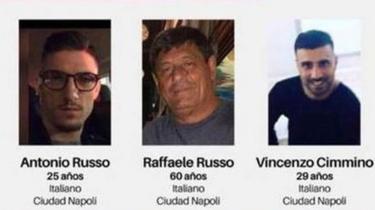




 OP's News