The US opioid crisis claimed 63,600 lives in 2016, the National Center for Health Statistics has previously said.
The CDC said tracking hospital visits was more comprehensive than counting overdose related deaths.
“Long before we receive data from death certificates, emergency department data can point to alarming increases in opioid overdoses,” said acting director Anne Schuchat.
US Midwestern states – Wisconsin, Illinois, Indiana, Ohio and Missouri – noticed the highest jump in cases.
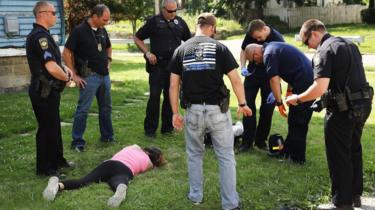
Image copyrightGETTY IMAGESImage captionMedical workers in Ohio treat a woman who overdosed on heroin
The highest jump among the Midwestern states was 109% in Wisconsin.
Research shows that people are more likely to have a second overdose when they have already had one, said CDC behavioural scientist Alana Vivolo-Kantor.
“Emergency department education and post-overdose protocols, including providing naloxone and linking people to treatment, are critical needs,” said Ms Vivolo-Kantor.
Naxolone, which has increasingly been distributed among US police departments, can stop and reverse an overdose as it is occurring.
More from the CDC study:
Overdoses increased for men and women and all age groups
All five main US regions experienced rate increases in this order: Midwest (70%), West (40%), Northeast (21%), Southwest (20%), Southeast (14%)
Individuals aged 35-54 saw a 36% increase in opioid overdose cases
The only significant decrease was in the state of Kentucky (15%)
Cities with over 1m people saw a 54% increase, but a continued rise in cities and towns of all sizes was recorded
President Trump called the opioid epidemic a “national shame” in October and declared it a public health emergency.
He announced a plan to tackle the crisis, which takes 140 lives per day across the country.
More on the US opioid crisis
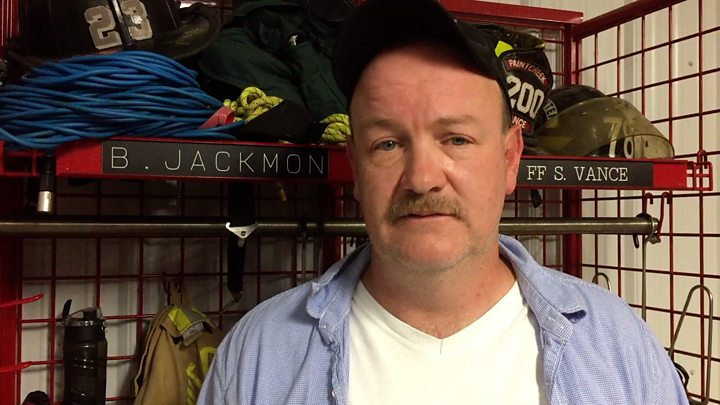
Media captionUS opioid crisis ‘ruining my marriage’, says emergency responder
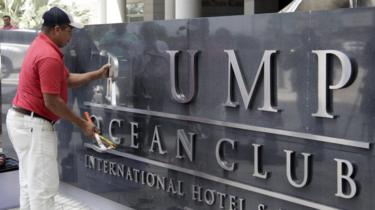
Image copyrightAFPImage captionThe Trump name was removed from the hotel hours after the court ruling
The majority owner of a luxury hotel in Panama City has regained control of the building after a legal battle with its management – the Trump Organization.
Within hours of the verdict from a Panamanian court, hotel staff removed the Trump name from its main entrance.
Cypriot businessman Orestes Fintiklis has been fighting to cancel the contract with the Trump Organization, which he blames for a fall in profits.
The Trump Organization said it had appealed against the decision.
Mr Fintiklis, majority owner of the Trump Ocean Club International Hotel and Tower, hailed the court’s decision, saying: “Panama has made us proud.
“Today, this dispute has been settled by the judges and the authorities of this country.”
The standoff between Miami-based Mr Fintiklis and the management team at the hotel had lasted more than a week.
On Monday, police and a court official enforced the owner’s claim to the hotel as Trump Organization executives and security staff abandoned the building.
Hotel employees then pried the Trump logo from the entrance.
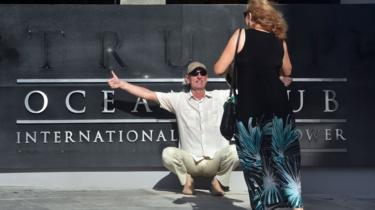
Image copyrightAFPImage captionThe new-look hotel sign was a hit with some tourists
Tourists later gathered at the spot to have their pictures taken.
The legal battle began last month when Mr Fintiklis said he intended to force the Trump Organization out before its management contract was up, and to rebrand the hotel.
According to lawsuits filed in the US, he said the number of guests at the hotel was falling.
For its part, the Trump Organization said Mr Fintiklis was breaching his contractual commitments.
“Trump Hotels remains fully confident that it will not only prevail, but recover all of its damages, costs and attorneys’ fees, including those… arising from today’s events,” the Trump Organization said in a statement.
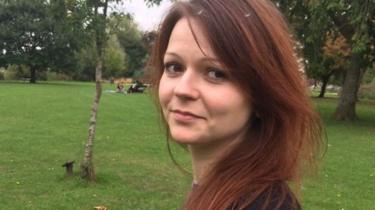
Image copyrightYULIA SKRIPAL/FACEBOOKImage captionYulia Skripal and her father Sergei are critically ill in hospital
The UK would respond “robustly” to any evidence of Russian involvement in the collapse of former spy Sergei Skripal, Boris Johnson has said.
Mr Skripal, 66, and his daughter Yulia, 33, are critically ill in hospital after being found unconscious in Salisbury, Wiltshire.
The foreign secretary said he was not pointing fingers at this stage, but described Russia as “a malign and disruptive force”.
Russia has denied any involvement.
Downing Street said Home Secretary Amber Rudd will chair a meeting of Cobra, the government’s emergency committee, on Wednesday to discuss the Salisbury investigation.
Counter Terrorism Police have taken over the investigation from Wiltshire Police.
But in a statement, the unit said the inquiry had not been declared a terrorist incident and there was no risk to the wider public.
Family deaths
Relatives of Mr Skripal – a former Russian colonel convicted of spying for Britain – have told the BBC Russian Service that he believed the Russian special services might come after him at any time.
His wife, elder brother and his son have died in the past two years, some in mysterious circumstances, the family believe.
Ms Skripal lives in Moscow and has visited her father in the UK regularly, especially over the past two years.
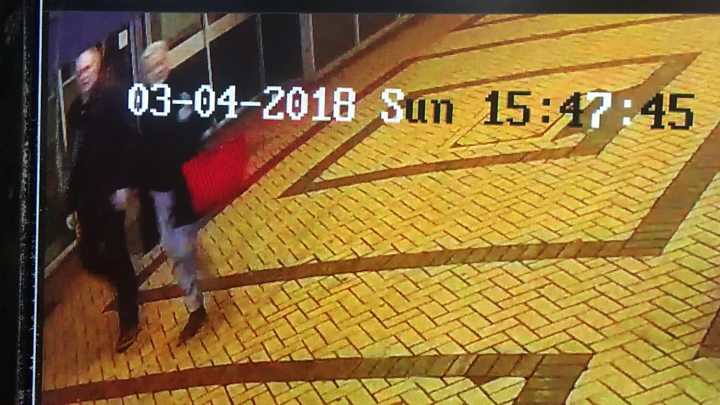
Media captionCCTV footage shows a man and woman walking near the bench where Sergei and Yulia Skripal were found
Mr Skripal and his daughter were found slumped and unconscious on a bench outside a shopping centre on Sunday afternoon.
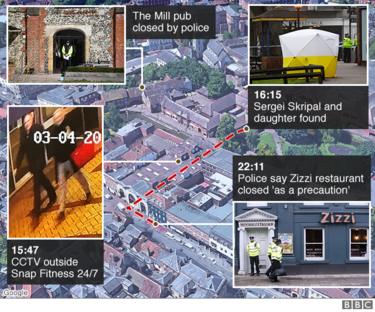
CCTV footage has been released by police which appears to show the pair walking through an alleyway near a Zizzi restaurant shortly before they collapsed.
Police have since sealed off the restaurant and The Bishop’s Mill pub was also cordoned off as a precaution. On Tuesday evening, police extended the cordon and shut off a bridge.
Eyewitness Jamie Paine said the woman he saw was passed out, frothing at the mouth and her eyes “were wide open but completely white”.
He added: “The man went stiff, his arms stopped moving but he was still looking dead straight.”
Two police officers caught up in the suspected contamination have been treated in hospital for minor symptoms, before they were given the all clear. It is understood their symptoms included itchy eyes and wheezing.
A third member of the emergency services remains in hospital.
Scientists at Porton Down – the UK’s secret weapons research facility in Wiltshire – are studying the “unknown substance”.
On Tuesday evening, BBC Newsnight’s diplomatic editor Mark Urban said there are concerns the pair’s conditions could worsen.
Despite the sending of samples, scientists have still not identified the substance and one official at Porton Down said “we are treating symptoms rather than causes”, Urban said.
Speaking in the Commons on Tuesday, Mr Johnson said: “Honourable members will note the echoes of the death of Alexander Litvinenko in 2006.
“I say to governments around the world that no attempt to take innocent life on UK soil will go unsanctioned or unpunished.”
Mr Johnson said the UK was “in the lead across the world” in trying to counteract a “host of malign activity” by Russia.
Media caption“He was doing strange hand movements, looking up to the sky”: What we know so far
Russia has insisted it has “no information” about what could have led to the incident, but says it is open to co-operating with British police if requested.
In a statement, the Russian embassy in London said: “Media reports create an impression of a planned operation by the Russian special services, which is completely untrue.”
Responding to Mr Johnson’s comments, the embassy added: “Looks like the script of yet another anti-Russian campaign has been already written.”
BBC Newsnight’s diplomatic editor Mark Urban said Boris Johnson’s strongly-worded statement indicates that the Government is “party to some kind of intelligence”.
“It’s evident from the foreign secretary’s statement, and certainly the view in Whitehall is, he would not have gone this far unless the government was party to some kind of intelligence about what had gone on,” Urban said.
Who is Sergei Skripal?
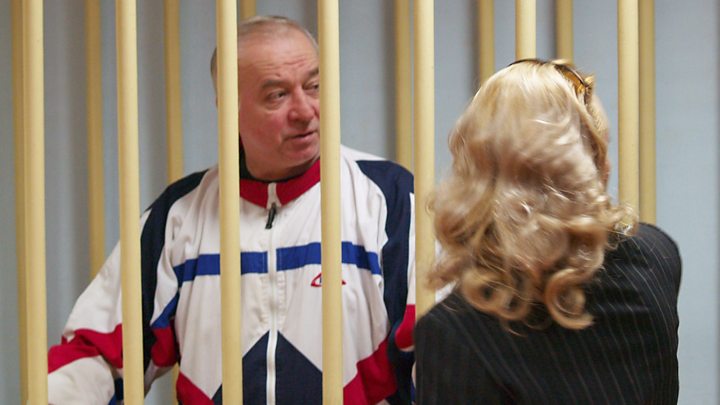
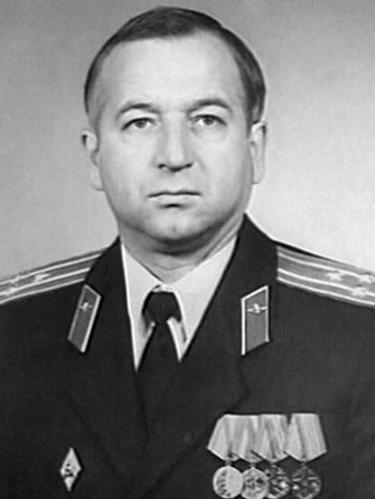
Image captionCol Skripal, 66, had been living in Salisbury after being released by Russia in 2010
Colonel Skripal, a retired Russian military intelligence officer, was jailed for 13 years by Russia in 2006.
He was convicted of passing the identities of Russian intelligence agents working undercover in Europe to the UK’s Secret Intelligence Service, MI6.
In July 2010, he was one of four prisoners released by Moscow in exchange for 10 Russian spies arrested by the FBI as part of a swap. He was later flown to the UK.
According to OP’S NEWS Newsnight’s diplomatic editor Mark Urban, in recent years Col Skripal gave lectures at military academies offering insight into Russia’s foreign military intelligence agency, the GRU.
Tony Brenton, the former British ambassador to Russia, suggested that Mr Skripal would have had many enemies – including many former colleagues
He said: “The fact that he blew a whole range of Russian agents, there may be personal animosities there.
“In most Russians’ minds he would be categorised as a traitor. There are people there who would be delighted to see him dead.”
The Russian dissident and former intelligence officer died in London after drinking tea laced with a radioactive substance.
A public inquiry concluded that his killing had probably been carried out with the approval of the Russian President, Vladimir Putin.
Andrei Lugovoi, the former Russian agent accused of poisoning Litvinenko but who denies the claims, told the BBC that Russia would have considered the matter closed when Mr Skripal was flown to the UK as part of a spy swap in 2010.
Media captionAndrei Lugovoi, a suspect in the Litvinenko poisoning, rejects suggestions that Russia was behind Sergei Skripal’s collapse
Mr Skripal was pardoned by the Russian President and so the incident was over, Mr Lugovoi said.
Igor Sutyagin, who was one of four agents released by Moscow in the exchange, is now a research fellow at the Royal United Services Institute (RUSI).
He told the OP’sNEWS World Tonight programme that he was not yet concerned for his safety and added: “I don’t think that he (Mr Skripal) would be targeted, because he was pardoned.”
But Mr Litvinenko’s widow, Marina Litvinenko, told the programme that the latest incident felt like “deja vu” – and called for those receiving political asylum to be protected by the UK.
Meanwhile, the Home Affairs Committee has asked for a review into 14 deaths that have not been treated as suspicious by British police but have reportedly been identified as potentially linked to Russia.
The reaction in Russia
By OP’S NEWS Monitoring
Russian state TV’s coverage of the possible poisoning in the UK of former agent Sergei Skripal has been eccentric, to say the least. State TV remains the main source of news for most Russians.
The main official TV channel, Rossiya 1, covered the story early in the day, but studiously ignored any comparison with the poisoning in 2006 of former Russian FSB officer Alexander Litvinenko, which has been a prominent feature of reports in the UK media.
This evening, the main primetime bulletin on Rossiya 1 and the two other main Russian TV stations, Channel One and NTV, did not touch the story.
The oddities in the coverage did not stop there, though. On Rossiya 24, the country’s main news channel and the sister channel to Rossiya 1, the Skripal case was the main story this evening, with a report accusing the UK authorities and media of conspiring to blacken Russia’s name. The presenter described the case as a “new classic in British conspirology”
The popular tabloid Komsomolskaya Pravda described the case as “another scandal with a dash of Russophobia”.
Russian news agencies reported the indignation expressed by officials as they criticised Boris Johnson’s warning to Russia.
“The demonisation of Russia”, said a Russian embassy press release.
“This is preposterous,” the Foreign Ministry Spokeswoman Maria Zakharova was quoted as telling Interfax news agency.
Mr Johnson’s comments are “unacceptable” and in “extremely bad faith,” said Konstantin Kosachyov, head of the International Affairs Committee of the Federation Council of the upper house of parliament.
Analysis
By OP’S NEWS
Although Boris Johnson was careful to stress this was still an ongoing investigation – it’s absolutely clear he, and others in government, believe it’s highly likely this was a Russian state-sponsored attack.
The big question now – how does the government respond?
A question made more pressing by accusations that ministers were guilty of appeasement in the wake of Alexander Litvinenko’s killing.
Mr Johnson suggested there could be targeted sanctions against those close to President Putin.
And, perhaps most significantly, in an indication the government could seek to rally international support to make a stand against Russia, Mr Johnson said there could be a co-ordinated response with Nato allies.
Whatever measures are eventually decided upon – if Russian involvement is proven – it’s clear relations between London and Moscow have plunged to new depths
Image copyrightAFP/GETTY IMAGESImage captionA protest against a decision to suspend the official search for MH370 last year
On Thursday it will be four years since Malaysia Airlines flight MH370 disappeared. With the mystery still unsolved, some relatives of passengers have criticised plans for a memorial in Australia.
The memorial is scheduled to be completed in Perth, on the west coast, by September.
According to the Australian government, the site will honour the 239 people on board when the plane went missing in 2014. It is also designed to recognise Australia’s role in the failed recovery mission.
However, some relatives have condemned the idea of a memorial when the plane has not been found.
They also fear it could become a tourist attraction – or a curse – and argue they should have been better consulted.
‘Absolutely ridiculous’
A proposal for an Australian-based tribute was first floated in 2014, but it was not authorised by the government until last year.
Australian Danica Weeks, whose husband Paul was on the flight, said she was blindsided by a recent email that said the memorial’s design was up for tender.
“No-one was consulted. It’s absolutely ridiculous,” she said. “We haven’t found the plane yet, so why are we having a memorial?”
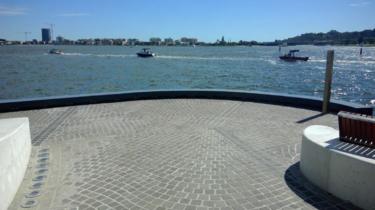
Image copyrightWESTERN AUSTRALIA GOVERNMENTImage captionThe memorial will be located on the Swan River (in the foreground) in Perth
“They’re just doing it for their own benefit,” she told the BBC. “I hate to say it, but it’s just obviously a tourist attraction.”
Jeanette Maguire, the daughter of Cathy and Bob Lawton, said she appreciated the gesture but it was ill-advised.
“There’s no point in having a memorial when we can’t get past ‘where are they?'” she said.
“We want you to spend the time and effort on actually finding them.”
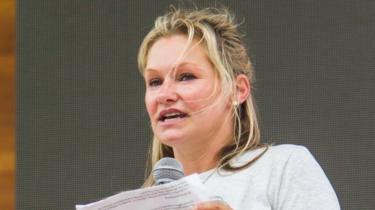
Image copyrightDANICA WEEKSImage captionDanica Weeks speaking at an event marking the third anniversary of the flight’s disappearance
Both families said they had received little information on what the memorial might look like, or include.
Authorities have said it will be built in a central, easily accessible island on the Swan River in Perth. The city was the base for the official search by Australia, Malaysia and China in the southern Indian Ocean.
More than two-thirds of those on board were from China, which lies more than 5,000km (3,100 miles) from Perth.
Jiang Hui, whose mother Jiang Cuiyun was on board, said he believed that distance would prevent Chinese families from visiting the site.
But Mr Jiang said he was also most angered by a memorial pre-dating the discovery of the plane.
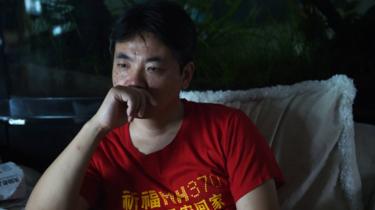
Image copyrightAFP/GETTY IMAGESImage captionJiang Hui does not support a memorial at this time
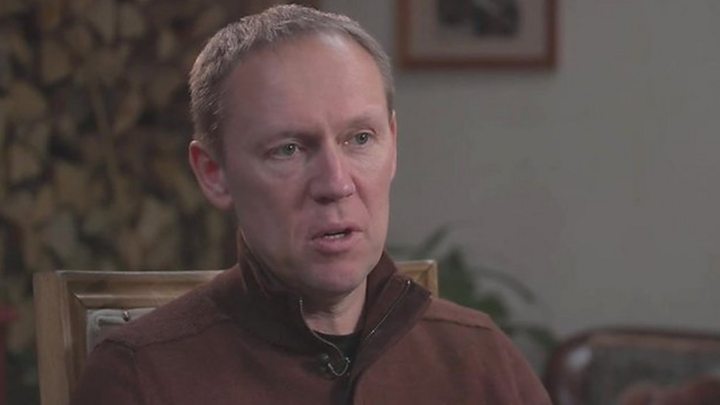
“In the eyes of the Chinese, a monument can only be erected after it is confirmed that person is dead,” said Mr Jiang, who acts as a representative for several Chinese MH370 families.
“Maybe you don’t understand Asian people’s customs. If you haven’t found the people, the monument is like putting a curse on them.”
He also accused Australian Prime Minister Malcolm Turnbull of keeping Chinese families in the dark. He said Chinese relatives only found out about the memorial from media reports.
Chinese families wrote an open letter to the Australian government in January, calling for the project to be cancelled, and asking to be consulted on future plans. They have not received a response.
When asked by the OP’S NEWS about such opposition, the Australian government said it had consulted Australian families and they would “continue to be engaged during the design process”. The government did not respond to a question about non-Australian families.
The state government of Western Australia (WA), which is funding half of the project, said it had raised relatives’ concerns with Canberra.
“The WA Government understands the sensitivities, and expected consultation with families of those missing to be very thorough,” a spokesman said.
Design interest
A public tender for the A$126,000 (£70,000; $98,000) memorial, which closed on 31 January, attracted many submissions from local and international artists, the state government said.
Artists were asked to design a site that helps “reflect upon personal loss while engendering a sense of peace”. The tender noted the island site was carefully selected because “the connection with the water is significant”.
Media captionFamilies demanded answers in a protest in Beijing in 2015
The tender also said designs should respect “Chinese cultural sensitivities”. It advised that MH370 passengers should be referred to as “those lost” rather than “those who died”, and not include a list of names.
The successful design is expected to be revealed in April and be built by September.
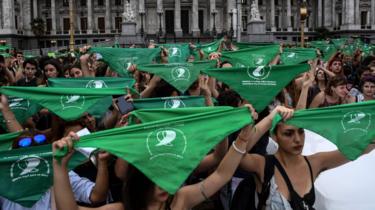
Image copyrightAFP/ GETTY IMAGESImage captionGreen handkerchiefs have come to symbolise the aboriton rights movement in Argentina and supporters of legal reform have protested carrying them
Argentina’s centre-right government has, for the first time, said it would consider holding a referendum on legalising abortion.
It is “on the table”, Cabinet Chief Marcos Peña said.
Meanwhile a bill put forward on Tuesday would allow women to terminate pregnancies during the first 14 weeks.
President Mauricio Macri said he was personally opposed to relaxing the country’s abortion laws, but he would give his Congress allies a free vote.
Abortion is a controversial issue in the predominantly Catholic nation.
It is only allowed in cases of rape, when the mother’s life is deemed to be at risk, or when there is a severe malformation of the foetus. Women seeking abortions must apply to a judge for permission, which critics say can unnecessarily delay the procedure.
More than 70 Argentine members of Congress put forward a bill during a ceremony attended by dozens of activists.
At the bill’s presentation in Buenos Aires, opposition MP Aracelia Ferreyra said reform of the Argentine abortion law was “a topic of equality and inequality”.
In several Latin American countries, abortion is illegal in any circumstance.
Uruguay, which borders Argentina, permits abortions.
Several Roman Catholic countries, including Honduras, El Salvador, Nicaragua, Malta, The Vatican and Dominican Republic, have an abortion ban in all circumstances.
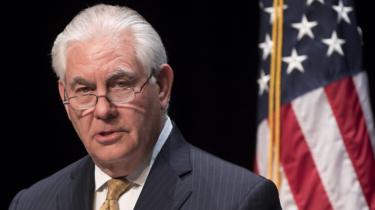
Mr Tillerson gave his speech at George Mason University in Virginia, shortly before setting off on his weeklong visit to Chad, Djibouti, Ethiopia, Kenya and Nigeria.
He outlined the themes of his trip: counterterrorism, democracy, governance, trade and investment.
Then he launched into his criticism of China. He said its investment had the potential to improve Africa’s infrastructure, but added that its approach had led to mounting debt while creating few jobs.
Over the past two decades trade between Africa and China has soared, driven by China’s demand for the continent’s minerals.
Media captionWhat do Africans think of Trump?
However, Chinese construction firms have made significant improvements to long-neglected infrastructure, including roads, in a number of countries.
“Our country’s security and economic prosperity are linked with Africa’s like never before,” said Mr Tillerson
He said the aid plan will help people affected by food shortages and conflict in Somalia, South Sudan, Ethiopia and the Lake Chad Basin.
Mr Tillerson said he has made many trips to Africa before, in his former career as an oil executive.
His latest, and his first as the US’s top diplomat, coincides with that of his Russian counterpart, Sergei Lavrov, who is this week visiting Angola, Ethiopia, Mozambique, Namibia and Zimbabwe.
Aid on one side, cuts on the other
By OP’S NEWS
Rex Tillerson’s essential message was that was a true friend to Africa… unlike China.
The US would do more to reduce trade and investment barriers for African partners, he said.
His announcement of more humanitarian assistance for several countries threatened by famine will be welcomed, but Mr Tillerson works for a president who has repeatedly spoken of reducing America’s burdens abroad.
His remarks come against the backdrop of potentially sweeping cuts to American contributions to peacekeeping and aid operations – at a time when crises in the Democratic Republic of Congo, the Central African Republic and South Sudan, among others have placed immense strain on existing UN operations.
In an administration that has often struggled for coherence in its foreign policy, and which lives by the maxim of America First, it would be unrealistic to expect Secretary Tillerson to deliver a transformation in the relationship between US and Africa.
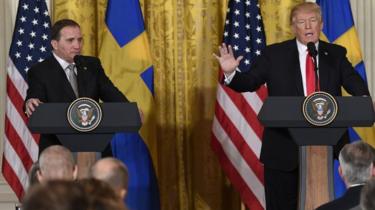
Image copyrightGETTY IMAGESImage captionMr Trump held a press conference with Swedish Prime Minister Stefan Löfven on Tuesday
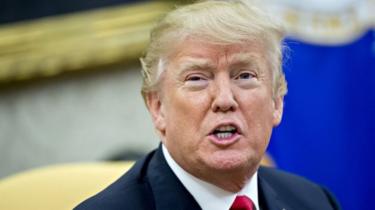
US President Donald Trump has said European Union trade rules make it “impossible” for American firms to do business with the bloc.
Defending his tariff plans as he hosted the Swedish PM at the White House, Mr Trump said other countries had “taken advantage of” the US for decades.
Shortly afterwards it was announced that White House economic adviser Gary Cohn, who opposes tariffs, would quit.
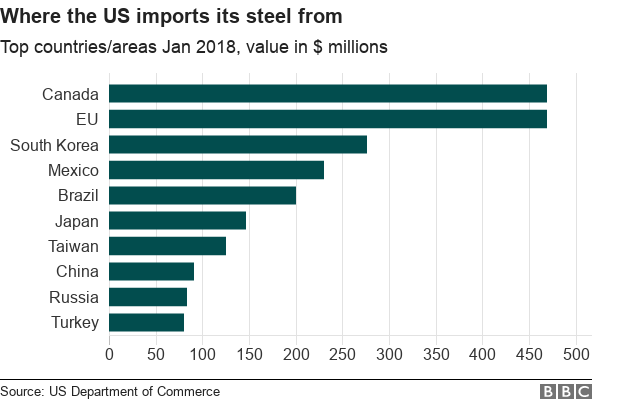
The EU has drawn up a $3.5bn (£2.5bn) hit list of retaliatory tariffs.
Motorbikes, whiskey and T-shirts are on the bloc’s list of 100 American products, the BBC understands.
The US president’s proposed global duties on steel and aluminium have raised the prospect of a tit-for-tat trade war.
Media captionTrump: ‘Everybody wants to work in the White House’
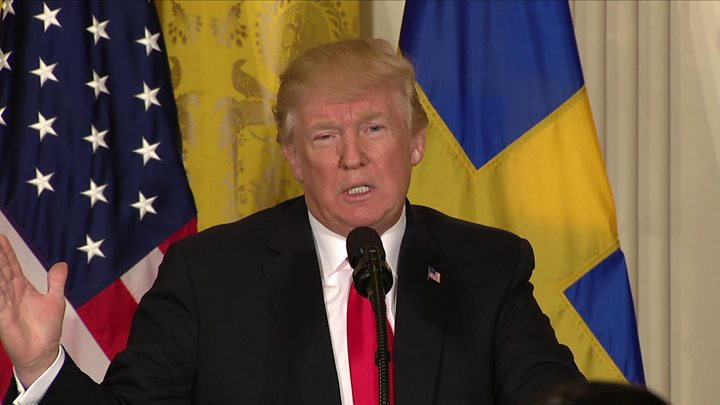
“The European Union has been particularly tough on the United States,” Mr Trump said at Tuesday’s joint press conference with the Swedish prime minister.
“They make it almost impossible for us to do business with them,” Mr Trump complained.
Mr Trump said if the EU retaliated, the US would impose a 25% tax on European cars.
But the US president also said America would levy tariffs in a “loving, loving way”.
“They’ll like us better and they’ll respect us more,” he said about US trade partners who object to the plan.
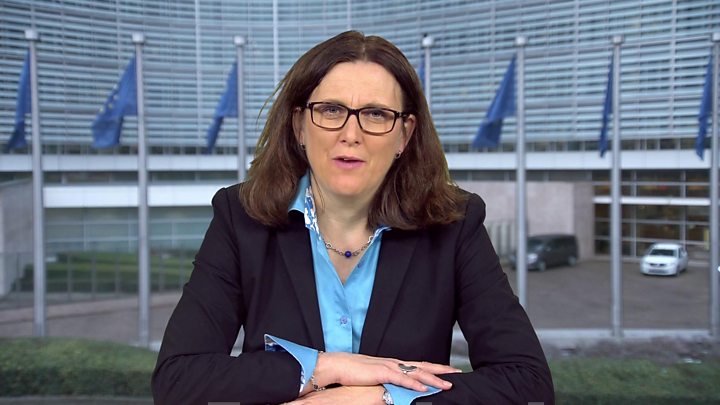
Media captionCecilia Malmström, EU Commissioner for Trade
Mr Trump repeated his belief that the US would win any trade war, since it was running such a large trade deficit.
“When we’re behind on every single country, trade wars aren’t so bad,” he told reporters at the White House.
Mr Trump’s decision to raise import taxes on steel to 25% and aluminium to 10% prompted strong reactions around the world last week.
Swedish PM Stefan Lofven said: “I am convinced that increased tariffs will hurt us all in the long run.”
Mr Lofven is the first European leader to visit the White House since the tariffs were announced last week.
Members of Mr Trump’s Republican party have voicing disquiet at his proposal.
Just before Mr Trump spoke, Senate leader Mitch McConnell said: “There is a lot of concern among Republican senators that this could sort of metastasise into sort of a larger trade war.”
Earlier on Tuesday, Speaker of the House Paul Ryan said the tariffs were too broad.
He urged Mr Trump “to be more surgical” when selecting which countries to target “so we do not have unintended consequences”.
Congressman Mark Meadows, who chairs the ultraconservative Freedom Caucus, said most lawmakers had told him they did not support the president’s decision.
Mexican Economy Minister Ildefonso Guajardo said his country was planning its own tariffs on US goods.
He said they would issue them in a way that is most politically damaging to Mr Trump.
“We would have to target our response at the things they export that are most politically sensitive and hit exactly those goods,” he told Mexican broadcaster Televisa.
Media captionKim Jong-un welcomes South Korean officials
Donald Trump has reacted cautiously to news that North Korea is willing to talk about giving up its nuclear weapons if it did not feel threatened.
The US president said “the statements coming out of South Korea and North Korea have been very positive”, but also said it might be a “false hope”.
South Korea earlier said the subject was raised when its officials met the North’s leader, Kim Jong-un, on Monday.
Seoul said Mr Kim was also open to US talks, and would pause weapons testing.
However previous talks with North Korea have come to nothing.
There has also been no immediate comment from Pyongyang itself.
Further news that the leaders of North and South Korea have also agreed to meet at a summit next month, came via the leader of the South’s delegation, Chung Eui-yong.
It would be the first such meeting for more than a decade and the first since Kim Jong-un took power in North Korea in 2011.
What did President Trump say?
“We have come certainly a long way, at least rhetorically, with North Korea,” Mr Trump said.
“The statements coming out of South Korea and North Korea have been very positive. That would be a great thing for the world.”
Image copyrightGETTY IMAGESImage captionPresident Trump warned of a “false hope”
The US leader also praised Pyongyang for its decision to take part in the Pyeongchang Olympics in South Korea.
But he earlier posted a cautious tweet, warning about a “false hope”.
While the US president said he believed Pyongyang’s offer to hold denuclearization talks was “sincere” he said it was “also because of the sanctions and what we’re doing with respect to North Korea.”
Meanwhile, US Vice-President Mike Pence said the US remained “committed to applying maximum pressure on the Kim regime to end their nuclear program”.
All options were on the table, he said, and US posture towards the regime would not change “until we see credible, verifiable, and concrete steps toward denuclearisation”.
The US has maintained that North Korean gestures of rapprochement would carry little weight without a commitment on nuclear weapons – particularly following last year’s nuclear and missile tests carried out by the North.
The South Korean delegation is expected to visit Washington later this week to brief US officials on their talks in the North.
What is North Korea reported to have said?
A statement from the South Korea president’s office issued earlier on Tuesday said: “The North showed willingness on denuclearisation in the Korean Peninsula. If military threats to the North Korea decrease and regime safety is guaranteed, the North showed that it has no reason to retain nukes.”
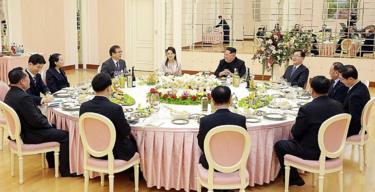
Image copyrightREUTERSImage captionKim Jong-un was pictured welcoming delegates from the South to a dinner on Monday
The North’s KCNA news agency said Mr Kim had “warmly welcomed” the delegates and held an “openhearted talk” with them.
It said the dinner took place “in a warm atmosphere overflowing with compatriotic feelings”.
However, some critics have suspicions over North Korea’s intentions. In the past, they have failed to follow through on deals, notably an aid-for-disarmament agreement in 2005.
What happened at the Pyongyang dinner?
South Korean officials had a four-hour dinner with Kim Jong-un on Monday. Among the delegation were intelligence chief Suh Hoon and National Security Adviser Chung Eui-yong.
Pictures showed Mr Kim and visitors from the South smiling broadly around a dinner table.
Also present was Mr Kim’s wife, Ri Sol-ju, who rarely appears at official events, and his sister Kim Yo-jong, who was part of a North Korean delegation to the Pyeongchang Olympics.
The two sides appear to be aiming to capitalise on the reduced tensions after the Games, which saw the Koreas march together under one flag.
Image copyrightGETTY IMAGES
During their visit, the South’s officials also held a boardroom meeting and passed on a letter from South Korean President Moon Jae-in, in which he invited Mr Kim to attend further talks.
KCNA said Mr Kim had “exchanged views and made a satisfactory agreement” on the letter and gave orders for it to be acted on.
Why is North Korea acting now?
It is difficult to be certain. Since the South made the announcement, there has been no comment from North Korea.
Some US and South Korean officials have said that Pyongyang may simply be trying to buy time to develop weapons programmes.
There have also been suggestions that Mr Kim is trying to soften the impact of biting sanctions on the impoverished country, seeking food and other aid from overseas.
Another factor may be growing diplomatic pressure from North Korea’s neighbours, particularly from China – the regional superpower and Pyongyang’s only real ally.
History of broken promises
A series of six-party talks have been held since North Korea decided to withdraw from the Nuclear Non-Proliferation Treaty (NPT) in 2003.
But attempts to negotiate aid-for-disarmament deals have repeatedly failed.
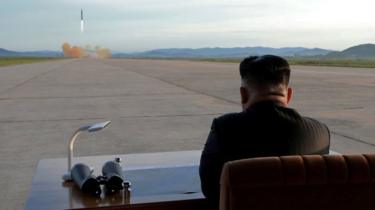
Image copyrightKCNA VIA REUTERSImage captionNorth Korean leader Kim Jong-un watches the launch of a Hwasong-12 missile
In 2009, North Korea pulled out of the talks and expelled all nuclear inspectors from the country, in response to UN Security Council criticism of a rocket launch. Pyongyang also vowed to resume its nuclear activities.
A number of bids to restart the talks collapsed, including in 2012 when North Korea launched another rocket, two weeks after announcing a “leap day” agreement with the US.
The North said it was commemorating the birth of its founding father, with a new satellite, but it was condemned by others as a provocative test of missile technology.
Throughout 2017 Mr Kim ordered a series of incendiary ballistic missile tests, significantly raising the stakes.
In response the UN implemented increasingly tough sanctions.
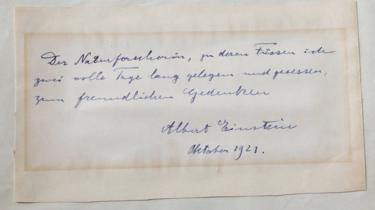
Image copyrightREUTERSImage captionA note from Albert Einstein to a young female scientist he was “interested in meeting” has sold at auction.
A note written by Albert Einstein in 1921 to an Italian scientist who had refused to meet him has sold for $6,100 (£4,300) at an auction in Jerusalem.
The Nobel-winning scientist, then 42, wrote to Elisabetta Piccini, a 22-year-old chemistry student.
Ms Piccini lived one floor above his sister, Maja, in Florence.
“Einstein was very interested in meeting her. [But] Ms Piccini was too shy to meet with such a famous person” Winner’s auction house said.
In the letter written in his native German, Einstein uses an idiom signalling affection.
“To the scientific researcher, at whose feet I slept and sat for two full days, as a friendly souvenir,” the note to Ms Piccini said.
“You know nowadays the ‘Me Too’ campaign? Probably Einstein would have been in this campaign by leaving such a note to this lady,” Gal Wiener, chief executive of Winner’s, told the Associated Press news agency.
The note was sold alongside a number of other letters from Einstein, including a 1928 note in which Einstein set out his thoughts for his “Third Stage of the Theory of Relativity” which was auctioned off for $103,000 (£74,000).
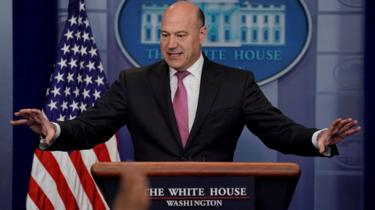
“It has been an honour to serve my country and enact pro-growth economic policies to benefit the American people, in particular the passage of historic tax reform,” Mr Cohn said in his statement.
“I am grateful to the president for giving me this opportunity and wish him and the administration great success in the future.”
Media captionTrump: ‘Everybody wants to work in the White House’
Mr Cohn’s exact departure date has yet to be determined, a White House official quoted by AFP news agency said.
In a statement, Mr Trump described his outgoing economics adviser as “a rare talent”.
“Gary… did a superb job in driving our agenda, helping to deliver historic tax cuts and reforms and unleashing the American economy once again,” he said .
“He is a rare talent and I thank him for his dedicated service to the American people.”
Earlier on Tuesday, President Trump tweeted that there was no chaos at the White House but there were “still… some people that I want to change”.
The White House has seen a string of senior figures leave since President Trump took office.
Last week, one of his closest aides, Hope Hicks, resigned. She was the fourth person to have served as the president’s communications chief.
It came a day after she had testified in front of the House Intelligence Committee investigating possible Trump campaign ties to Russia, but White House sources said this was not the reason.

 GETTY IMAGES
 OP's News